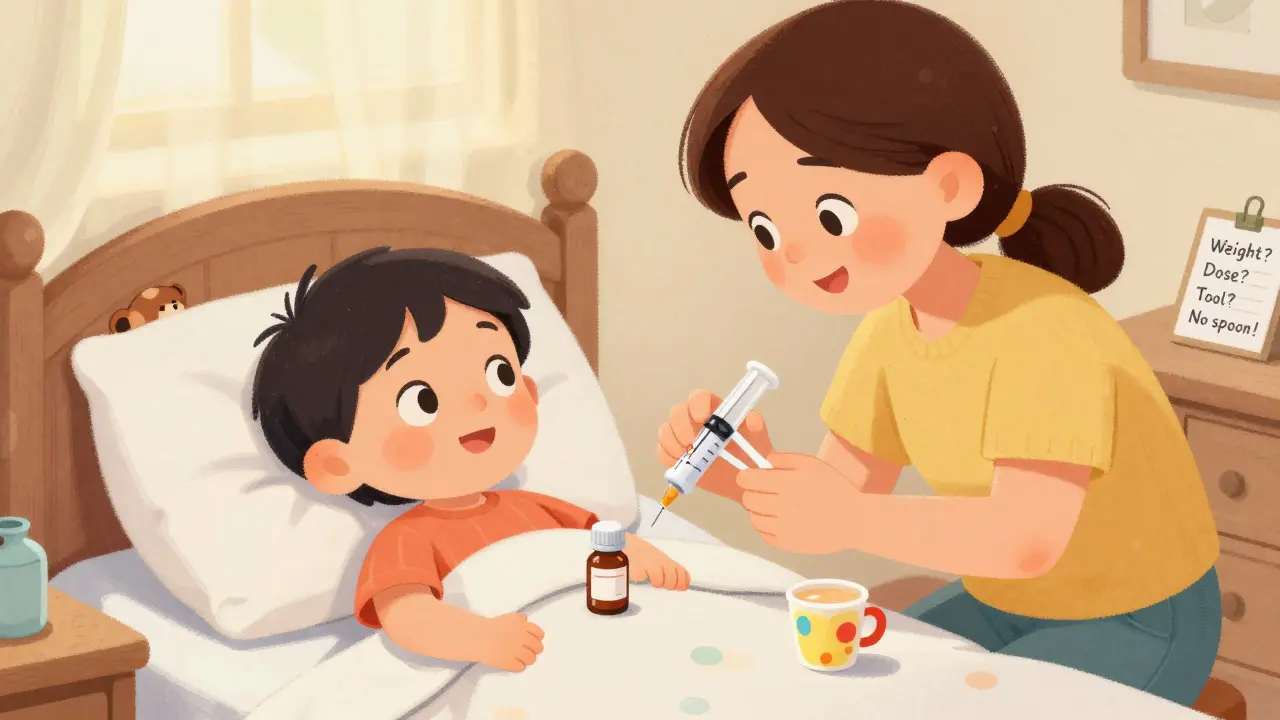
When your child is sick, you want them to feel better fast. But giving them the wrong medicine-or the wrong dose-can do more harm than good. Kids aren’t small adults. Their bodies process drugs differently, and what’s safe for you could be dangerous for them. That’s why age-appropriate medications aren’t just a nice idea-they’re a medical necessity.
Why Kids Need Different Medicines
For decades, doctors guessed at pediatric doses by shrinking adult amounts. That approach led to serious mistakes. In 2023, the CDC reported that about 4% of pediatric hospital admissions were caused by medication errors. Half of those happened in kids between 1 and 10 years old. The reason? Children’s livers and kidneys aren’t fully developed. Their metabolism, body fat, and water content change dramatically as they grow. A dose that works for a 12-year-old could overdose a 2-year-old-even if they weigh the same. The solution? Medications designed for specific age groups, not just scaled-down adult pills. The FDA now requires drug makers to test new medicines in children. The Pediatric Research Equity Act (PREA) made this mandatory in 2003, and since then, 89% of new drugs include pediatric data-up from just 12% before.How Dosing Works: Weight, Not Age
Age matters, but weight is king. Most pediatric doses are calculated in milligrams per kilogram (mg/kg). For example:- Acetaminophen: 10-15 mg/kg every 4-6 hours (max 75 mg/kg/day, capped at 3,750 mg/day)
- Ibuprofen: 5-10 mg/kg every 6-8 hours (max 40 mg/kg/day)
- Amoxicillin: 25-35 mg/kg/day divided every 8 hours (max 500 mg per dose)
Formulations Matter More Than You Think
A child who can swallow a pill isn’t the same as one who can’t. The World Health Organization’s 2023 Essential Medicines List for Children breaks down formulations by age:- Under 1 year: Liquid suspensions only
- 1-5 years: Liquids, chewables, or orally disintegrating tablets
- 6-11 years: Chewables or small tablets
- 12+: Standard tablets or capsules
Medications to Avoid in Children
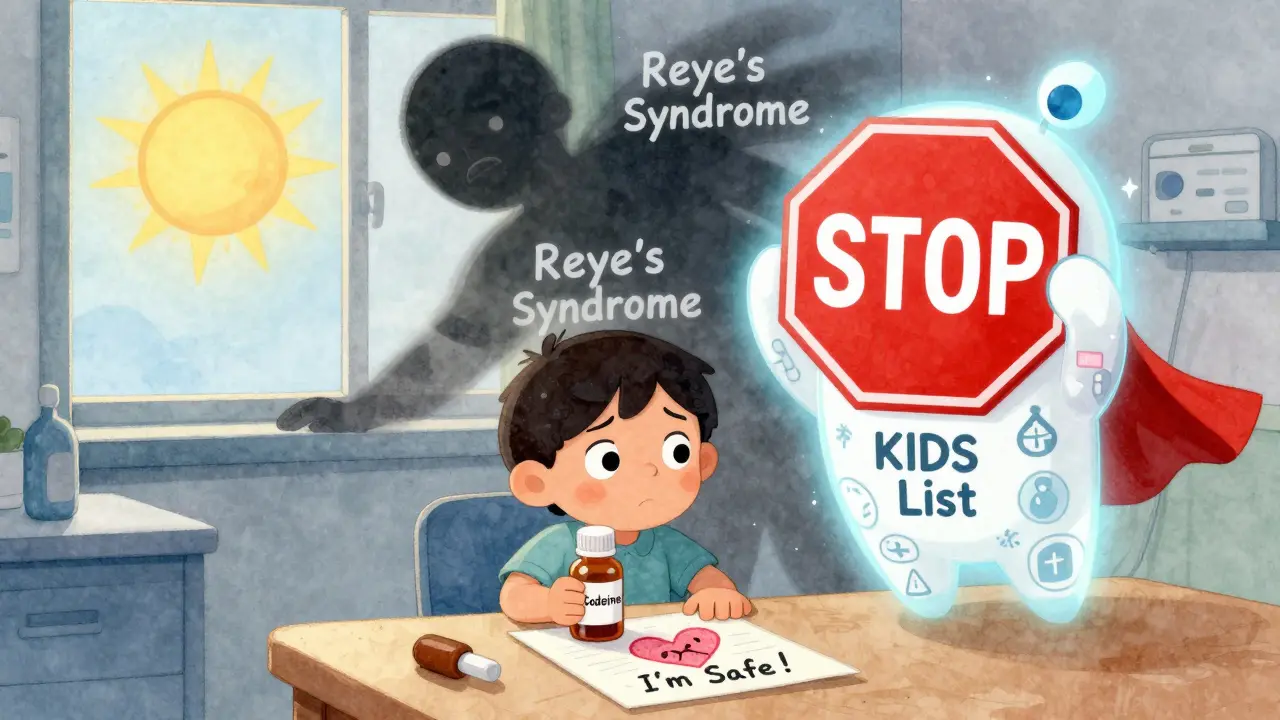
Some drugs are simply unsafe for kids, no matter the dose. The Pediatric Pharmacy Association’s 2025 KIDs List (Key Potentially Inappropriate Drugs in Pediatrics) is the gold standard for what to avoid:- Codeine and tramadol: These opioids can cause fatal breathing problems in children. The FDA banned them for kids under 12 and restricted them for teens.
- Aspirin: Never give aspirin to anyone under 18. It can trigger Reye’s syndrome-a rare but deadly condition affecting the liver and brain.
- Fluoroquinolones (like ciprofloxacin): These antibiotics can damage growing cartilage. Avoided in children under 18 unless absolutely necessary.
- Angiotensin receptor blockers (like losartan): Risk of kidney failure in infants under 1 month.
- Montelukast (Singulair): Linked to sleep disturbances and behavioral changes in children under 18.
- Molnupiravir: Not approved for anyone under 18 due to potential DNA damage risks.
Antibiotics: What’s First-Line, and Why
Antibiotics are the most commonly prescribed drugs for kids. But overuse is fueling resistance. The CDC says 30% of pediatric outpatient antibiotic prescriptions are unnecessary. For common infections:- Ear infections (otitis media): Amoxicillin is first-line. It works in 87% of cases. If it fails, amoxicillin-clavulanate is next. Azithromycin is only for kids allergic to penicillin-even though it’s easier to take (once daily), resistance rates are 25-40%.
- Sinus infections: Amoxicillin for 10-14 days. Shorter courses don’t work as well in kids.
- Strep throat: Penicillin or amoxicillin. Macrolides (like azithromycin) are second-line due to resistance.
- UTIs: Cephalexin or trimethoprim-sulfamethoxazole. Avoid fluoroquinolones unless no other option.
What to Do When the Right Formulation Isn’t Available
Here’s the hard truth: half of all medications used in kids aren’t officially labeled for them. That’s called off-label use. It’s common-especially in newborns, where 90% of prescriptions are off-label. When the right dose or form isn’t available:- Ask your pharmacist to compound a custom suspension. Many pharmacies can mix a child-friendly version from tablets.
- Use a pediatric dosing calculator. The FDA’s free app is used by 63% of pediatric pharmacists.
- Check Lexicomp Pediatric Dosage Handbook (2024 edition). It has 1,247 drug monographs with age-specific guidance.
- Never split tablets unless they’re scored. Crushing or splitting can change absorption and dose accuracy.
Technology Is Helping-But Not Everywhere
Children’s hospitals are leading the way. 92% have dedicated pediatric pharmacists. Community clinics? Only 38%. That gap means kids in rural or low-income areas are more likely to get the wrong dose or the wrong drug. Electronic health records with built-in safety alerts are making a difference. Hospitals using Epic’s pediatric modules saw inappropriate dosing drop by 61%. But these systems aren’t in every doctor’s office. Future solutions are coming. Cincinnati Children’s Hospital is testing 3D-printed pills customized for a child’s exact weight. Nanoparticle delivery systems could make drugs more effective in newborns. The WHO wants 90% of essential pediatric medicines available in low-income countries by 2030. Right now, only 34% are.What Parents Can Do
You don’t need to be a pharmacist-but you do need to be informed:- Always ask: “Is this the right dose for my child’s weight?”
- Use the measuring tool that comes with the medicine. Never use a kitchen spoon.
- Ask if there’s a better-tasting version available.
- Know the KIDs List. If your doctor prescribes codeine, tramadol, or aspirin, ask why.
- Keep a list of all medications your child takes-including vitamins and supplements.
Can I give my child adult medication if I cut the dose in half?
No. Adult pills aren’t designed to be split safely, and the inactive ingredients (fillers, dyes, coatings) may not be safe for children. Even if you calculate the right dose, the formulation itself could cause stomach upset, allergic reactions, or poor absorption. Always use medications made for kids.
My child refuses to take liquid medicine. What can I do?
Try mixing it with a small amount of applesauce, yogurt, or juice-only if the pharmacist says it’s safe. Some medications lose effectiveness when mixed. Ask if a flavored version is available. If your child still refuses, ask your doctor about compounding it into a chewable or dissolvable tablet. Never force-feed; it can cause choking or create long-term aversion to medicine.
Are over-the-counter cough and cold medicines safe for kids?
No. The FDA advises against giving OTC cough and cold medicines to children under 6. They don’t work well in kids and carry risks of drowsiness, rapid heart rate, and even seizures. For a stuffy nose, use saline drops and a bulb syringe. For fever or pain, stick to acetaminophen or ibuprofen. Always check the label-many cold medicines already contain acetaminophen, so combining them can lead to overdose.
Why is amoxicillin used so often for kids?
It’s effective, safe, and available in child-friendly liquid forms. It covers the most common bacteria causing ear, sinus, and throat infections. It’s also less likely to cause diarrhea than broader-spectrum antibiotics. Resistance is growing, so it’s not used for every infection-but when it works, it works well.
How do I know if my child’s medication is on the KIDs List?
Ask your pediatrician or pharmacist. The 2025 KIDs List includes 27 medications with avoid or caution flags. You can also search the Pediatric Pharmacy Association’s website for the full list. If your child is prescribed something like codeine, tramadol, or montelukast, ask if it’s necessary and if there’s a safer alternative.
What should I do if I think I gave my child the wrong dose?
Call your pediatrician or Poison Control at 1-800-222-1222 right away. Don’t wait for symptoms. Even if your child seems fine, some overdoses take hours to show up. Keep the medicine bottle handy so you can tell them the exact name, dose, and time given. Most errors are fixable if caught early.
If you’re ever unsure about your child’s medication, trust your gut. Ask questions. Double-check. You’re your child’s best advocate.
Sachin Bhorde
December 17, 2025 AT 08:28Man, this post is a goldmine. As a pediatric pharmacist in Mumbai, I see dumb dosing errors daily-like parents using tablespoons for amoxicillin. The mg/kg math is non-negotiable. Also, never split unscored tablets. I’ve seen kids choke on crushed Singulair pellets. And yeah, that ‘tiny terrorist’ quote? 100% accurate. I keep a stash of grape-flavored suspensions in my bag just to win over toddlers. 🍇
Joe Bartlett
December 19, 2025 AT 06:28Us Brits got this sorted. NHS has paediatric dosing charts in every GP clinic. No guesswork. If your doc prescribes codeine? Tell ‘em to buzz off. We banned it for kids years ago. Simple. Safe. Done.
Chris Van Horn
December 20, 2025 AT 21:24While I appreciate the effort, this article fundamentally misunderstands the pharmacokinetic heterogeneity of pediatric populations. The reliance on weight-based dosing is a crude approximation that ignores ontogeny of hepatic CYP450 enzymes, glomerular filtration rate maturation, and plasma protein binding dynamics-which vary nonlinearly across developmental stages. The FDA’s PREA mandate, while politically expedient, lacks rigorous pharmacodynamic validation for neonates under 28 days. Moreover, the assertion that 89% of new drugs include pediatric data is misleading-much of it is extrapolated from adult PK models. This is not medicine. It’s statistical theater.
Virginia Seitz
December 21, 2025 AT 01:20My 3yo cried for 45 mins when I tried to give him the ‘yucky’ amoxicillin 😭 Then I found the strawberry version and he drank it like juice 🍓✨ Thank you for mentioning flavor matters!!
Peter Ronai
December 22, 2025 AT 23:03Oh please. ‘Avoid codeine’? That’s what you’re taking away from this? You’re all panicking over nothing. My kid took codeine at age 6 after tonsil surgery-no issues. The FDA is just scared of lawsuits. And ‘Singulair causes behavioral issues’? My daughter’s been on it for three years. She’s a straight-A student. This article is fear-mongering dressed as science. Wake up.
Steven Lavoie
December 24, 2025 AT 14:35Thank you for highlighting the gap in pediatric pharmacy access. I work in a rural clinic in Mississippi-no pediatric pharmacist on staff. We rely on Lexicomp and the FDA dosing app daily. The 38% stat is heartbreaking. We need more telepharmacy support and standardized concentrations in community pharmacies. This isn’t just about dosing-it’s about equity. Every child deserves precision, not guesswork.
Michael Whitaker
December 24, 2025 AT 15:17I’m not sure why you’re so obsessed with ‘age-appropriate’ formulations. Children are just small humans. If it’s safe for adults, why not just adjust the dose? You’re overcomplicating this with ‘compounding’ and ‘suspensions’ and ‘KIDs List.’ My kid took adult ibuprofen crushed in applesauce for years-no problems. Maybe you’re just trying to sell more expensive pediatric products.
Kent Peterson
December 25, 2025 AT 05:20Let’s be real: 30% of pediatric antibiotic prescriptions are unnecessary? That’s because parents are panic-buying Tamiflu for sniffles. And yet, you blame doctors? You’re the reason we’re in this mess. You demand antibiotics for every fever. You Google ‘can my kid take adult Tylenol?’ Then you blame the system when your kid ends up in the ER. The KIDs List? Fine. But fix the parents first. Stop treating kids like fragile porcelain dolls. They’re tougher than you think.
Josh Potter
December 26, 2025 AT 13:13Bro, I just gave my 5yo half a chewable adult melatonin because I ran out. 😅 No big deal right? …Wait, is that on the KIDs List? Should I be worried? 😬