Aminoglycoside Ototoxicity Risk Calculator
Personal Risk Factors
Treatment Factors
When you’re fighting a life-threatening infection, antibiotics like gentamicin or amikacin can save your life. But for many patients, that救命药 comes with a hidden cost: aminoglycoside ototoxicity - permanent hearing loss and balance problems that can change your life forever. This isn’t rare. Studies show 20% to 47% of people treated with these drugs develop some level of hearing damage. And in most cases, it’s irreversible.
How Aminoglycosides Attack Your Inner Ear
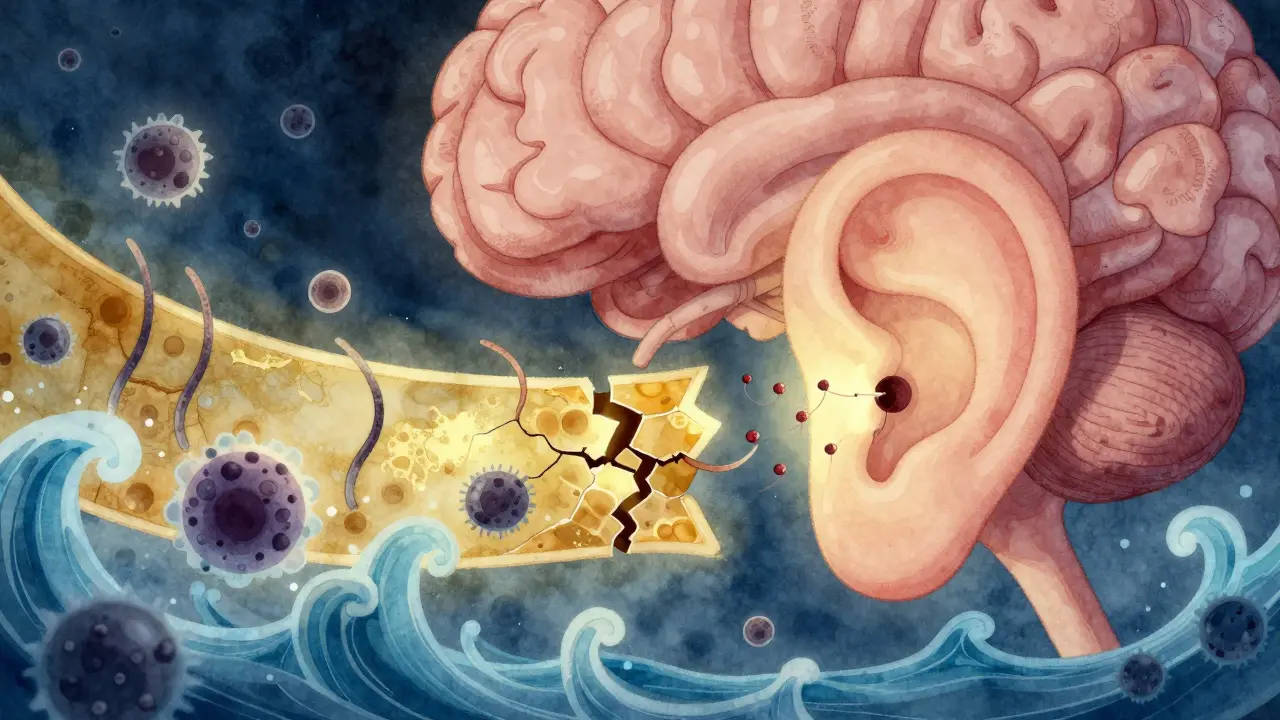
Aminoglycosides don’t just target bacteria. Once they enter your bloodstream, they find their way into the inner ear. They cross the blood-labyrinth barrier - a protective wall around your cochlea and vestibular system - either through the stria vascularis or by seeping through the round window membrane. Once inside, they latch onto hair cells, the tiny sensory receptors that turn sound and movement into electrical signals your brain understands. These hair cells don’t regenerate. Once they die, they’re gone for good. Aminoglycosides trigger a chain reaction: they overactivate NMDA receptors, leading to a flood of nitric oxide and free radicals. This oxidative stress turns on cell death pathways, causing both apoptosis and necrosis. Unlike cisplatin, which mainly kills cells through apoptosis, aminoglycosides cause a messy, widespread destruction - like a bomb going off in your inner ear. The damage usually starts in the base of the cochlea, where high-frequency sounds are processed. That’s why patients first notice trouble hearing birds chirping, doorbells, or children’s voices. Over time, the damage spreads to lower frequencies, making conversation harder. In 15% to 30% of cases, the vestibular system is hit too, causing dizziness, unsteadiness, and blurred vision when moving your head.Why Some People Are at Much Higher Risk
Not everyone who gets aminoglycosides loses their hearing. Genetics play a huge role. About 1 in 500 people carry a mutation in their mitochondrial DNA - specifically the A1555G or C1494T variants in the 12S rRNA gene. These mutations make their mitochondria extra sensitive to aminoglycosides. Even a single dose can trigger massive hair cell death. The T1095C mutation increases gentamicin-induced apoptosis by 47% compared to normal cells. There’s also a hidden danger: pre-existing hearing loss. If you already struggle to hear high frequencies before treatment, you’re 3.2 times more likely to lose hearing in lower frequencies afterward. Noise exposure makes it worse. If you’ve been around loud music, construction, or machinery in the weeks before or after treatment, your risk spikes by 38% to 52%. Inflammation from infections like sepsis also helps aminoglycosides slip into the inner ear 63% more easily.What It Feels Like to Lose Your Hearing and Balance
Real patients describe it as sudden, silent, and devastating. On Reddit’s r/audiology, 78% of users who reported aminoglycoside exposure said their hearing loss was permanent. Two-thirds said they still have constant tinnitus - a ringing or buzzing that never fades. One 34-year-old patient from Johns Hopkins lost his balance completely after 10 days of gentamicin for a urinary infection. He spent 14 months in vestibular rehab just to walk without holding onto walls. A 2022 survey of 217 patients on the Hearing Loss Association of America forum found that 89% were never warned about these risks. Most didn’t know antibiotics could cause deafness. Seventy-four percent said their hearing loss cut their quality of life in half. They couldn’t follow conversations, avoided social events, and felt isolated. For many, the emotional toll was worse than the physical damage.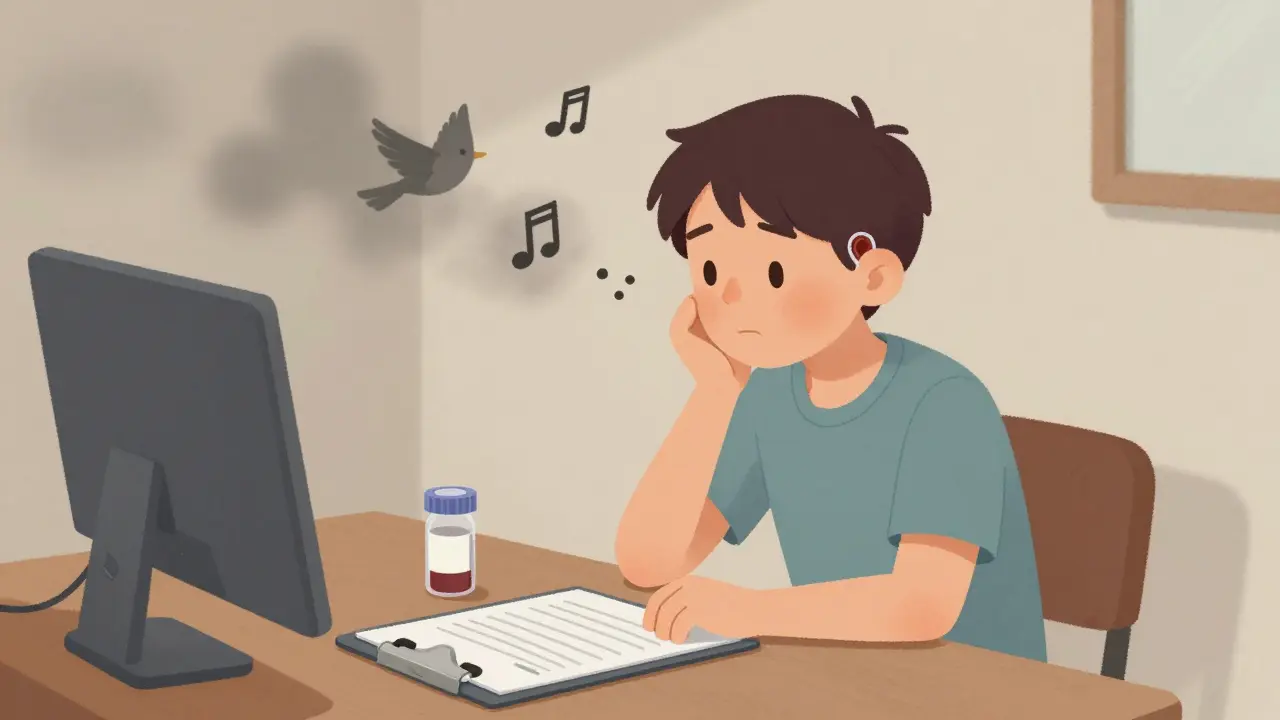
How Doctors Miss the Warning Signs
Standard hearing tests - the kind done in most clinics - only check frequencies from 250 Hz to 8 kHz. But aminoglycoside damage shows up first at 9 kHz to 16 kHz. That means by the time a routine audiogram picks up a problem, the damage is already advanced. High-frequency audiometry can catch it 5 to 7 days earlier. Yet, only 37% of U.S. hospitals have formal ototoxicity monitoring protocols. Therapeutic drug monitoring helps. Measuring peak and trough blood levels of aminoglycosides reduces risk by 28%. But even that’s not enough. A 2022 American Hospital Association survey found most hospitals don’t test for genetic risk before prescribing. The OtoSCOPE® test - which screens for A1555G and C1494T mutations - is 94.7% accurate. It’s available. But in low- and middle-income countries, where aminoglycosides are used most often, it’s rarely offered.What’s Being Done to Stop It
There’s progress - but it’s slow. The FDA now requires black box warnings on all aminoglycosides. The European Medicines Agency recommends genetic screening for long-term use. But implementation is patchy. One of the most promising developments is ORC-13661, a drug designed to protect hair cells. In Phase II trials, it preserved 82% of hair cells when given with amikacin. It’s now in Fast Track review by the FDA. Another approach targets the MET channels in hair cells - the very entry points aminoglycosides use. In animal studies, blocking these channels with transtympanic injections saved 25 to 30 dB of hearing across frequencies. Gene therapy is also on the horizon. The Hearing Restoration Project, backed by $28.7 million from the Oak Foundation, is testing ways to correct mitochondrial mutations. In mice, they reduced ototoxicity by 67%. If this works in humans, it could make aminoglycosides safe for everyone - even those with the high-risk mutations.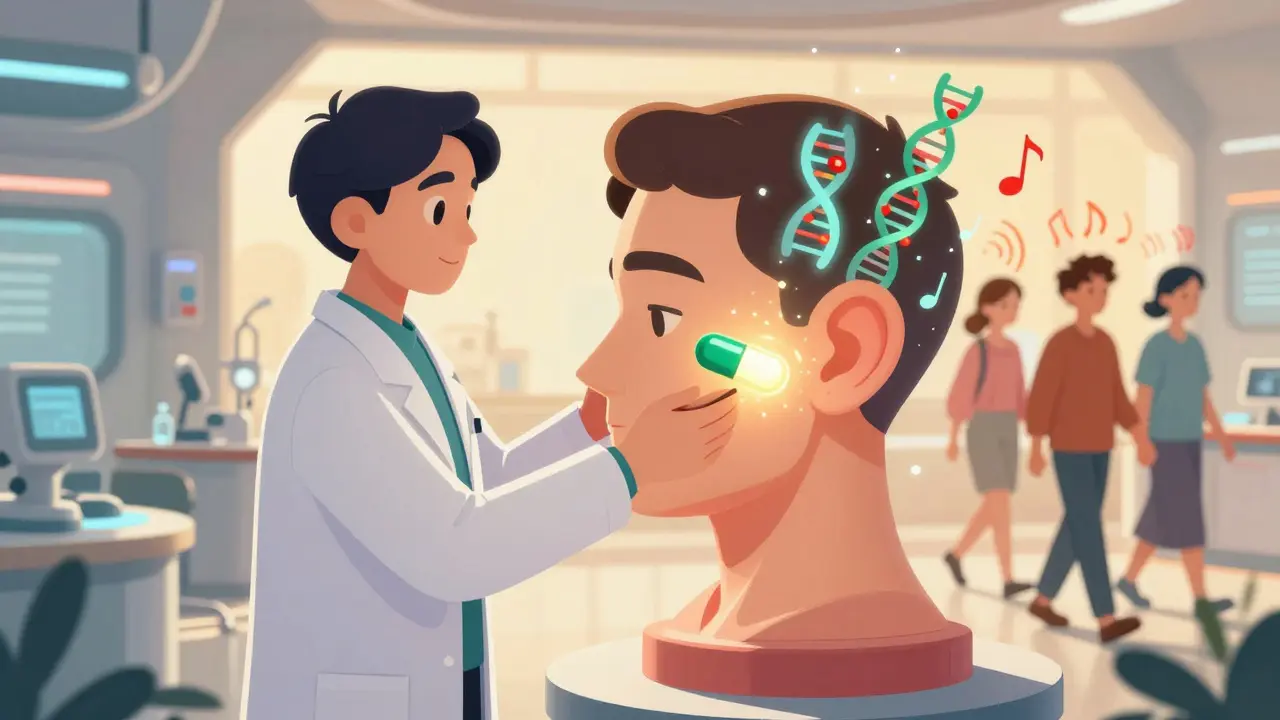
What You Can Do - Before, During, and After Treatment
If you’re about to get an aminoglycoside:- Ask if you can be tested for the A1555G or C1494T mutation. If you have a family history of hearing loss, this is critical.
- Request high-frequency audiometry before treatment starts. Keep the results as a baseline.
- Ask your doctor to monitor blood levels of the drug. Avoid long courses unless absolutely necessary.
- Stay away from loud noises - even background noise from TVs or traffic - during and for weeks after treatment.
- If you start hearing ringing, muffled sounds, or feel dizzy, tell your doctor immediately. Early detection might save what’s left.
Keith Oliver
January 29, 2026 AT 04:55So let me get this straight - we’re giving people poison because it’s cheap, and then acting shocked when they go deaf? Classic American healthcare. We’ll spend $50k on a new cancer drug but won’t spend $50 on a genetic screen. The real antibiotic here is profit.
Kacey Yates
January 30, 2026 AT 04:29my cousin got gentamicin for a UTI and lost her hearing in one ear and now has vertigo 24/7 no one told her this could happen she’s 28 and can’t work anymore
Laura Arnal
January 31, 2026 AT 05:12This is so important 😭 I’ve seen this happen too. High-frequency testing should be STANDARD. No excuses. Doctors need to stop treating patients like lab rats. We have the tech - use it! 🙏
ryan Sifontes
January 31, 2026 AT 12:47they say its rare but i bet its way more common and they just dont report it...also wonder if big pharma pays off the audiology boards to keep it quiet
Jasneet Minhas
February 1, 2026 AT 01:17How quaint. In India, we use aminoglycosides like water - no tests, no warnings, just pray to Shiva. The real tragedy? The poor don’t even know they’re being sacrificed for antibiotic efficacy. 🙃
Eli In
February 2, 2026 AT 12:12Thank you for writing this. I’m from a rural community where antibiotics are handed out like candy. This needs to be translated into Spanish, Hindi, Swahili - everywhere. Hearing loss isn’t just a medical issue - it’s a human rights issue. 🌍❤️
Doug Gray
February 4, 2026 AT 11:09The ontological paradox here is that the very mechanism that confers therapeutic efficacy - mitochondrial membrane disruption - is identical to the pathogenic cascade leading to ototoxicity. Thus, the cure is the disease, and the disease is the cure. We are caught in a dialectical loop of pharmaceutical necessity.
Pawan Kumar
February 4, 2026 AT 20:01One must question the epistemic authority of the FDA’s black box warnings. If the mechanism is well-documented, and the genetic markers are known, then the absence of mandatory pre-screening constitutes a form of institutional negligence - a violation of the Hippocratic Oath under the guise of cost-efficiency. This is not medicine. It is triage capitalism.
Kristie Horst
February 6, 2026 AT 15:00It’s ironic. We screen for BRCA mutations before prescribing certain chemotherapies - but we won’t screen for a mutation that causes deafness after a 7-day course of a $10 antibiotic? The disconnect between scientific knowledge and clinical practice is not just negligent - it’s cruel.
Laia Freeman
February 7, 2026 AT 04:14OMG YES I’M SO GLAD THIS POST EXISTSSSS!!! My mom got amikacin and now she can’t hear me call her name from the next room 😭 I begged the nurse to test her hearing BEFORE and they said "it’s fine, it’s rare" - IT’S NOT RARE AND THEY NEED TO STOP DOING THIS. PLEASE SHARE THIS WITH EVERYONE YOU KNOW!!!