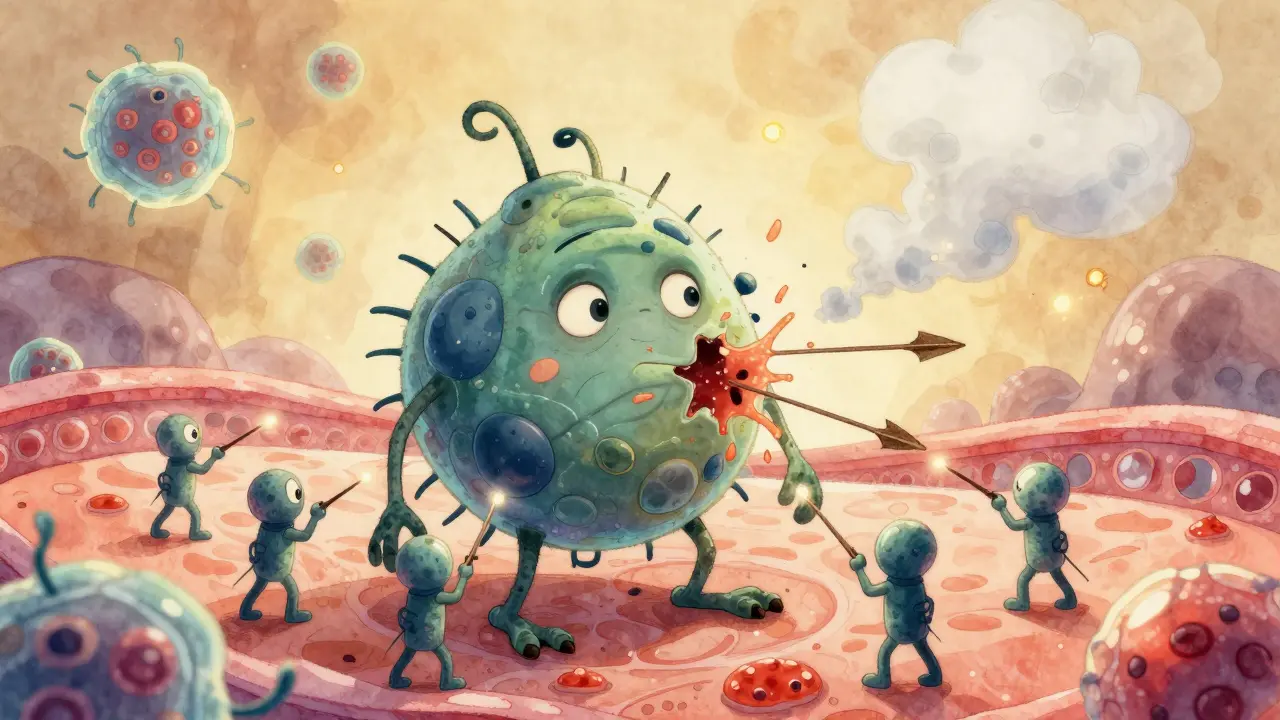
Antibiotics are one of the most important medical breakthroughs in history. Before they existed, even a simple cut or sore throat could turn deadly. Today, they save millions of lives every year - but only if used correctly. The problem isn’t that antibiotics don’t work. It’s that we often don’t know how they work, or when to use them. Many people think antibiotics cure colds or the flu. They don’t. Those are viral infections. Antibiotics only work on bacteria.
How Antibiotics Actually Kill or Stop Bacteria
Antibiotics don’t just float around and randomly kill germs. They attack very specific parts of bacterial cells - parts that human cells don’t have. That’s why they can fight infection without wrecking your body. There are four main ways antibiotics do this.The first and most common method is by stopping bacteria from building their cell walls. Bacteria are surrounded by a tough outer shell made of peptidoglycan. It’s like their armor. Without it, they swell up and burst from internal pressure. Drugs like penicillin, amoxicillin, and cephalosporins work this way. They mimic a piece of the cell wall and trick the bacteria into stopping its own construction. This is called inhibition of cell wall synthesis.
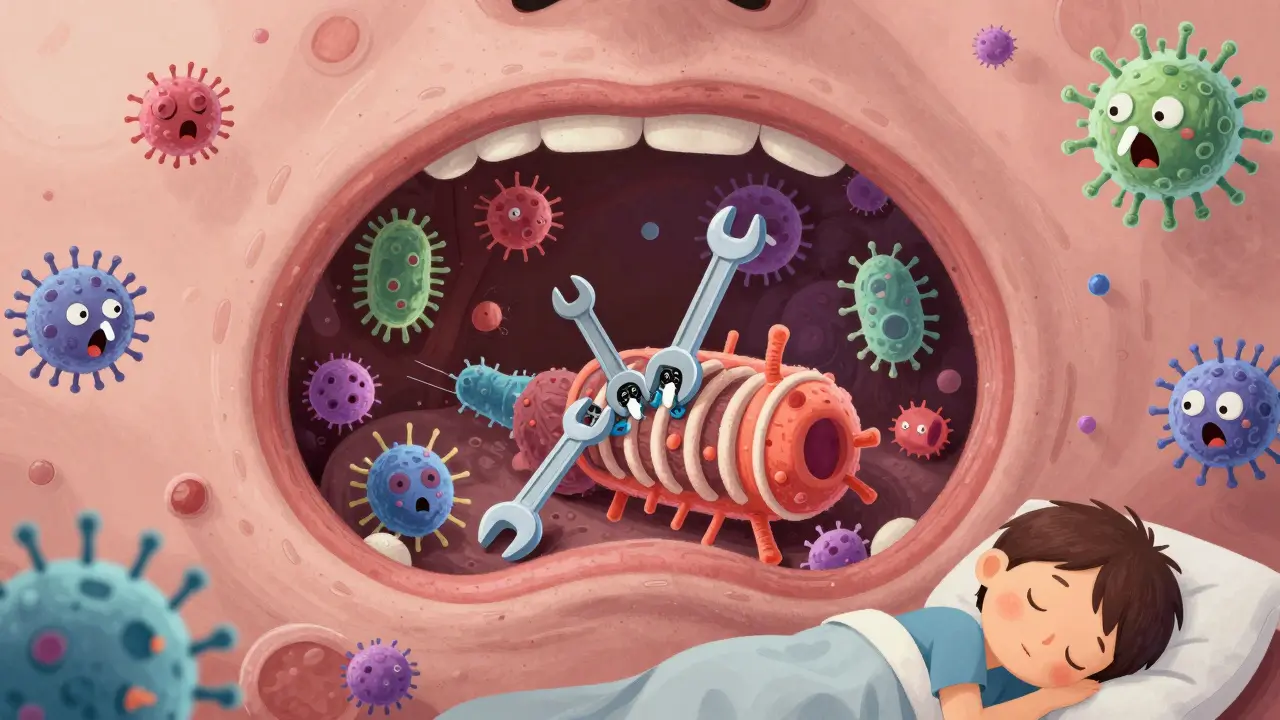
The second method targets protein production. Bacteria need proteins to survive, just like we do. But they build them using ribosomes - tiny machines inside the cell. Antibiotics like azithromycin, doxycycline, and gentamicin lock onto these ribosomes and jam the process. Macrolides like azithromycin bind to the 50S part of the ribosome, stopping the chain from growing. Tetracyclines like doxycycline stick to the 30S part, blocking the instructions from getting in. Aminoglycosides like gentamicin cause the ribosome to misread the genetic code, so the bacteria make broken, useless proteins.
The third method hits DNA and RNA. Fluoroquinolones - such as ciprofloxacin and levofloxacin - shut down two key enzymes: DNA gyrase and topoisomerase IV. These enzymes are like molecular scissors that untangle DNA so it can be copied. Without them, bacteria can’t reproduce. This is why fluoroquinolones are often used for serious infections like kidney infections or pneumonia. But they come with risks. The FDA has warned they can cause tendon tears and nerve damage, especially in older adults.
The fourth method is less common but still vital. Some antibiotics, like metronidazole, work inside anaerobic bacteria - bugs that live where there’s no oxygen. Metronidazole gets activated by the bacteria’s own enzymes and then shreds their DNA. It’s especially good for infections like bacterial vaginosis, C. diff colitis, and abscesses in the abdomen. But it has a big downside: if you drink alcohol while taking it, you can get violently sick. That’s because it interferes with how your body breaks down alcohol.
Major Antibiotic Classes and What They’re Used For
There are dozens of antibiotics, but they fall into a few main families. Knowing which class you’re dealing with helps doctors pick the right one.Beta-lactams include penicillins (like amoxicillin), cephalosporins (like cefalexin), and carbapenems (like meropenem). These are the most commonly prescribed antibiotics. Penicillins are often first-line for strep throat, ear infections, and skin infections. Cephalosporins come in generations - each one better at fighting different kinds of bacteria. First-gen (cefazolin) is good for Gram-positive bugs like staph. Third-gen (ceftriaxone) can handle tougher Gram-negative bugs like E. coli and even some meningitis strains. Fourth-gen (cefepime) covers even more, including Pseudomonas.
Tetracyclines like doxycycline are broad-spectrum. They work against everything from acne to Lyme disease to certain types of pneumonia. But they can’t be given to kids under 8 or pregnant women. Why? They bind to calcium in developing teeth and bones, causing permanent gray or brown stains. They also make your skin super sensitive to sunlight - you can get burned easily.
Macrolides like azithromycin and clarithromycin are often used when someone is allergic to penicillin. Azithromycin is famous for its short 5-day course for pneumonia or bronchitis. It also builds up in tissues and stays active for days after you stop taking it. That’s why it’s sometimes called the “Z-Pak.”
Aminoglycosides like gentamicin and tobramycin are powerful but dangerous. They’re usually given in hospitals by IV because they can damage your kidneys and hearing. They’re reserved for life-threatening infections like sepsis or complicated UTIs. They also don’t work on anaerobic bacteria - the ones that live without oxygen - because they need oxygen to get inside the cell.
Fluoroquinolones like ciprofloxacin and levofloxacin are strong, fast-acting, and penetrate deep into tissues - even bones and the prostate. They’re used for urinary tract infections, respiratory infections, and some types of food poisoning. But because of their side effects, doctors now avoid them unless absolutely necessary.
Linezolid is a newer antibiotic that blocks protein synthesis at the very start. It’s synthetic - meaning it wasn’t made by a microbe, but by chemists. It’s one of the few drugs that still works against MRSA and VRE, two of the most dangerous drug-resistant bacteria. It’s expensive and usually kept in reserve.
Metronidazole is the go-to for anaerobic infections. It’s also used for parasitic infections like giardia. But as mentioned, alcohol and metronidazole are a bad mix. Even a sip of beer can trigger nausea, vomiting, and a racing heart.
Why Antibiotics Stop Working: Resistance Is Real
Antibiotics used to be magic bullets. Now, too many of them are losing their power. The World Health Organization calls antibiotic resistance one of the biggest threats to global health. In 2021, over 73 billion daily doses of antibiotics were used worldwide. Much of that was unnecessary.Every time you take an antibiotic, you kill the weak bacteria - but the strong ones survive. They multiply. Soon, you’ve got a whole population of superbugs. Some bacteria now produce enzymes called beta-lactamases that chop up penicillin and cephalosporins before they can work. Others change their cell walls so the drugs can’t bind. Some pump the antibiotics right back out.
Resistance is worst in places where antibiotics are overused - like in livestock farming, or when patients demand them for viral colds. In the U.S., 30% of outpatient antibiotic prescriptions are unnecessary, according to the CDC. In some countries, you can buy antibiotics over the counter without a prescription. That’s a disaster waiting to happen.
Even worse, resistance spreads. A resistant E. coli strain in a person’s gut can pass its resistance genes to other bacteria - even different species. That’s why a simple urinary tract infection can turn into a nightmare if the wrong antibiotic is chosen.
And it’s not just about the drugs. Antibiotics also wreck your gut microbiome. Studies show that after just one course, the diversity of good bacteria in your intestines can take up to a year to recover. That increases your risk of C. diff infection - a severe, sometimes fatal diarrhea caused by an overgrowth of bad bacteria. Broad-spectrum antibiotics are especially damaging here. Narrow-spectrum ones, like penicillin for strep throat, are much gentler on your gut.
When Antibiotics Are Right - and When They’re Not
Not every infection needs antibiotics. Here’s what you need to know:- Use antibiotics for: Strep throat (confirmed by test), urinary tract infections, bacterial pneumonia, skin abscesses, whooping cough, Lyme disease, and some sinus infections that last more than 10 days.
- Don’t use antibiotics for: Colds, flu, most sore throats (viral), bronchitis, most sinus infections (they’re often viral too), and ear infections in older kids (many clear on their own).
Doctors are getting better at telling the difference. Tests like procalcitonin - a protein that spikes during bacterial infections - help cut down unnecessary prescriptions. One study showed using this test reduced antibiotic use by 23% in patients with lung infections.
Still, pressure remains. Patients want something to fix their symptoms fast. Doctors feel guilty saying no. But giving antibiotics when they’re not needed doesn’t help - it hurts everyone in the long run.
What’s Next for Antibiotics?
The pipeline for new antibiotics is dry. In 2023, only 16 new antibiotics in development targeted the WHO’s highest-priority drug-resistant bacteria. Most big pharmaceutical companies have stopped investing in them because they’re not profitable. A new antibiotic might cost over $1.5 billion to develop but only make $17 million a year in sales.Some hope lies in new approaches. Cefiderocol, approved in 2019, tricks bacteria into pulling it inside by pretending to be iron - a nutrient they desperately need. That lets it slip past defenses that block other drugs. It’s working against some of the toughest superbugs.
Phage therapy - using viruses that eat bacteria - is also making a comeback. Clinical trials are underway for ear infections caused by Pseudomonas. In Europe, regulators are creating special pathways to speed up approval.
And there’s a new idea: pay for access, not volume. The UK is testing a “Netflix model” where hospitals pay a flat fee for access to new antibiotics, no matter how many doses they use. That way, companies get paid fairly, and doctors save the newest drugs for when they’re truly needed.
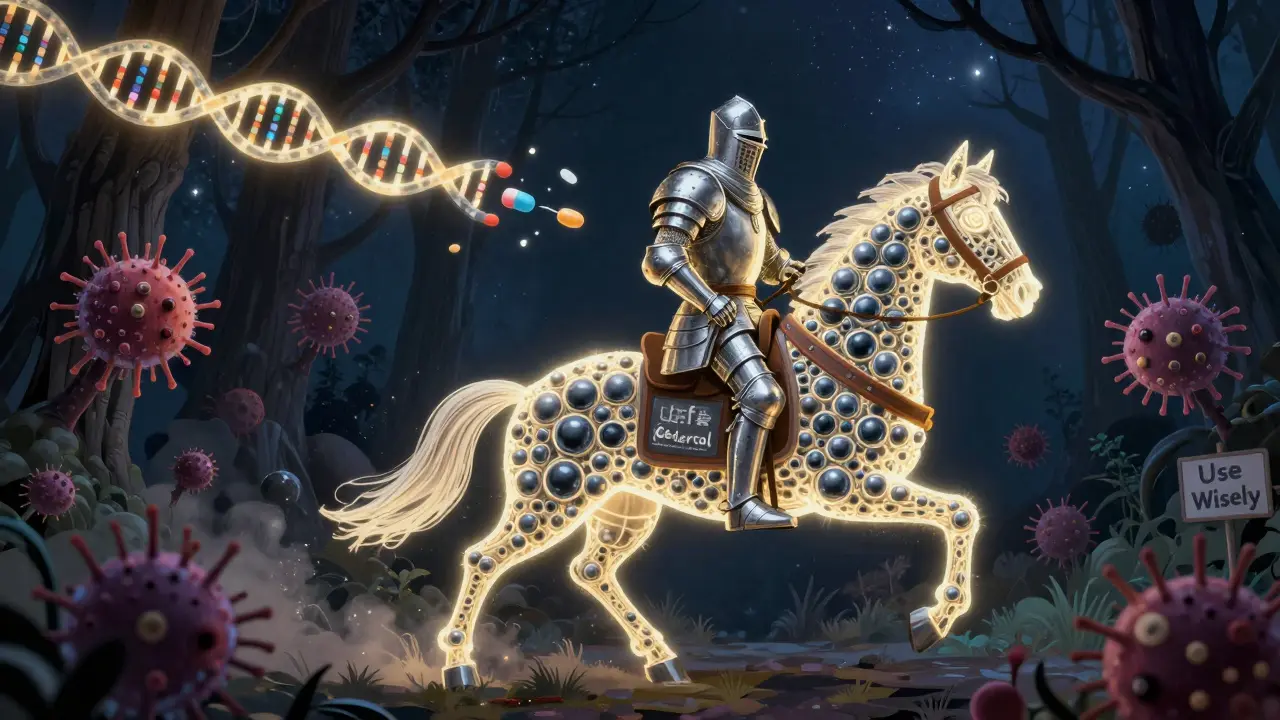
For now, the best weapon we have is still using antibiotics wisely. Know what they are. Know what they’re not. And never take them unless a doctor says so - and only for the full course, even if you feel better.
Can antibiotics treat viral infections like the flu or colds?
No. Antibiotics only work on bacteria. Colds, flu, most sore throats, and bronchitis are caused by viruses. Taking antibiotics for these won’t help you feel better faster, won’t prevent spreading the virus, and only increases your risk of side effects and antibiotic resistance.
Why do some antibiotics cause diarrhea?
Antibiotics kill both bad and good bacteria in your gut. When the good bacteria drop too low, harmful ones like C. diff can take over and cause severe diarrhea. This is more common with broad-spectrum antibiotics like clindamycin or fluoroquinolones. Probiotics may help, but the best protection is using antibiotics only when necessary.
Are all antibiotics the same strength?
No. Antibiotics vary in spectrum (how many types of bacteria they cover) and strength. Narrow-spectrum drugs like penicillin target only a few bacteria and are preferred when possible. Broad-spectrum drugs like ciprofloxacin hit many types, but they’re stronger, more disruptive to your microbiome, and reserved for serious or unknown infections.
Can I stop taking antibiotics once I feel better?
No. Stopping early leaves behind the strongest bacteria - the ones that survived. These can multiply and cause a worse, harder-to-treat infection later. It also increases the chance of resistance spreading. Always finish the full course, even if you feel fine.
Why can’t I drink alcohol with metronidazole?
Metronidazole blocks an enzyme your liver uses to break down alcohol. This causes acetaldehyde - a toxic byproduct - to build up in your blood. That leads to severe nausea, vomiting, flushing, rapid heartbeat, and headaches. This reaction can happen even with small amounts of alcohol, including mouthwash or cough syrup. Avoid alcohol for at least 48 hours after your last dose.
Are there natural alternatives to antibiotics?
Some natural substances like honey, garlic, or tea tree oil have mild antibacterial properties in lab tests. But none have been proven to reliably cure serious bacterial infections in humans. Relying on them instead of prescribed antibiotics can delay proper treatment and lead to life-threatening complications. Always consult a doctor for suspected bacterial infections.
What to Do If You’re Prescribed an Antibiotic
If your doctor gives you an antibiotic, ask three questions: Why am I getting this? Is it really needed? What are the risks? Write down the name, dose, and how long to take it. Don’t save leftovers for next time. Don’t share them with others. Return unused pills to a pharmacy take-back program.Antibiotics are powerful tools - but they’re not harmless. Every pill you take changes the balance of bacteria in your body and in the world around you. Use them only when necessary. Take them exactly as directed. And never, ever pressure your doctor for them when they’re not needed. Your health - and everyone else’s - depends on it.
Philip House
January 21, 2026 AT 17:50Ryan Riesterer
January 23, 2026 AT 16:13Akriti Jain
January 25, 2026 AT 04:02Mike P
January 27, 2026 AT 01:07Jasmine Bryant
January 27, 2026 AT 21:37Liberty C
January 29, 2026 AT 14:30shivani acharya
January 30, 2026 AT 04:53Sarvesh CK
January 30, 2026 AT 10:00Hilary Miller
February 1, 2026 AT 03:49Philip House
February 1, 2026 AT 18:50