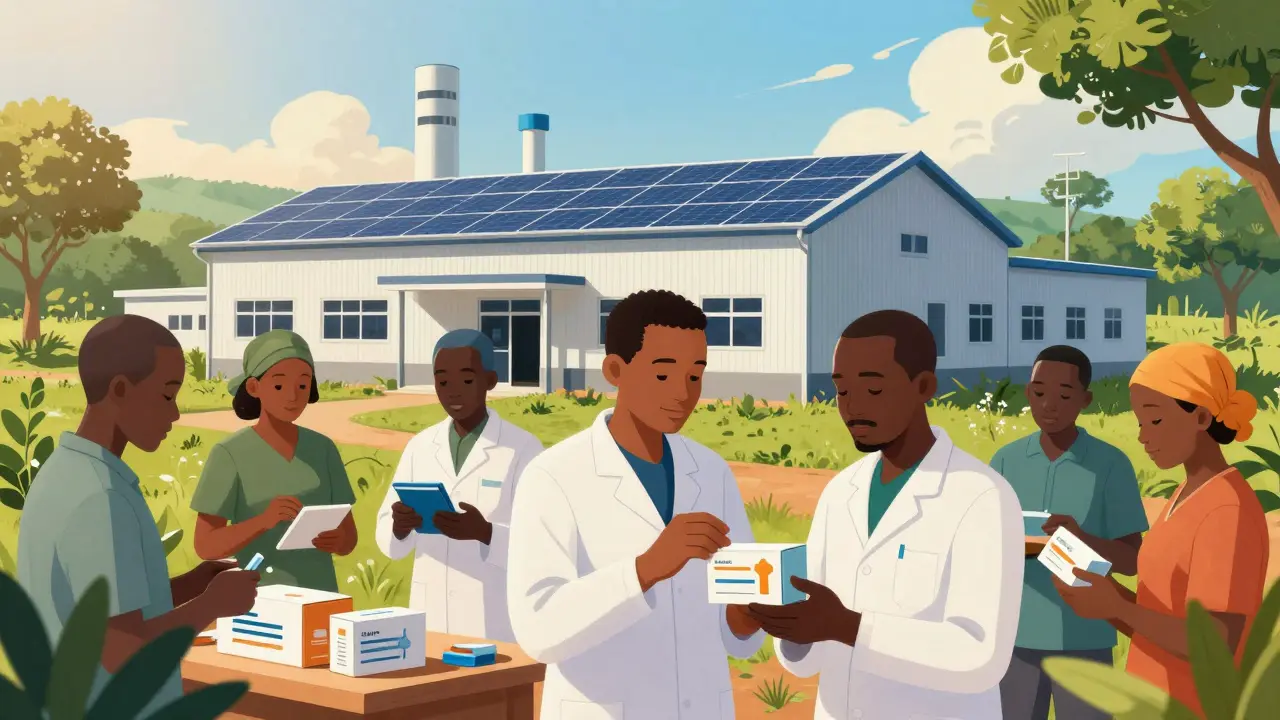
For decades, the fight against HIV in Africa relied on a fragile supply chain that stretched thousands of miles from factories in Asia to clinics in Sub-Saharan Africa. But that model is changing fast. On May 6, 2025, a historic milestone was reached when the Global Fund to Fight AIDS, Tuberculosis and Malaria procured African-made first-line HIV treatment for the first time in its history. This wasn't just a symbolic gesture; it was a massive shipment of WHO-prequalified antiretroviral medicine destined for Mozambique, enough to treat over 72,000 people annually. This shift toward local production marks a critical turning point in how we think about health sovereignty and access to life-saving drugs.
The Shift Toward Health Sovereignty
Sub-Saharan Africa carries a disproportionate burden of the global HIV epidemic. The region accounts for approximately 65% of all global HIV cases, despite having only 17% of the world's population. Historically, this high demand was met by importing roughly 80% of the continent's pharmaceutical needs. This heavy reliance on external suppliers created significant vulnerabilities. When the COVID-19 pandemic disrupted global logistics, these weaknesses became painfully clear. Delays in shipments meant delays in treatment, which could be fatal for patients managing chronic conditions like HIV.
The move to produce antiretroviral generics locally is a strategic response to these risks. It’s not just about convenience; it’s about security. By building local manufacturing capacity, African nations can reduce their dependence on imports and enhance their ability to respond swiftly to public health challenges. Dr. Ussene Hilário Isse, Minister of Health of Mozambique, highlighted this shift, noting that growing local production capacity reduces import dependence and strengthens the region's resilience. This approach aligns with the broader goals of the African Union's Pharmaceutical Manufacturing Plan for Africa (PMPA), which aims to increase local pharmaceutical production from a mere 2-3% to 40% of the continent's needs by 2040.
Universal Corporation Ltd and the TLD Breakthrough
The cornerstone of this new era is the success of Universal Corporation Ltd, a Kenyan pharmaceutical company. In 2023, Universal became the first African manufacturer to receive WHO prequalification for TLD, a combination of tenofovir, lamivudine, and dolutegravir. This formulation represents the current standard of care for first-line HIV treatment in resource-limited settings. Dolutegravir-based regimens are preferred because they offer superior efficacy, a higher genetic barrier to resistance, and fewer side effects compared to older treatments.
| Attribute | Detail |
|---|---|
| Components | Tenofovir, Lamivudine, Dolutegravir |
| Manufacturer | Universal Corporation Ltd (Kenya) |
| WHO Prequalification Status | Granted in 2023 |
| Clinical Benefit | High efficacy, low resistance risk, minimal side effects |
| Procurement Milestone | First African-made ARV purchased by Global Fund (May 2025) |
WHO prequalification is no small feat. It requires manufacturers to meet stringent quality, safety, and efficacy standards equivalent to those of the most rigorous regulatory authorities worldwide. Without this stamp of approval, large-scale buyers like the Global Fund cannot procure the medicines. Universal’s achievement proves that African facilities can meet these international benchmarks. Mark Edington, Head of Grant Management at the Global Fund, emphasized that accelerating the procurement of competitively priced, quality African-made health products will remain a top priority. This institutional commitment creates a predictable market for local manufacturers, encouraging further investment and expansion.
Beyond Pills: Diagnostics and Long-Acting Injectables
The push for local capacity isn't limited to oral medications. Diagnostic capabilities are also advancing rapidly. Codix Bio, a Nigerian in-vitro diagnostics company, recently received a sublicense from global diagnostics firm SD Biosensor to manufacture HIV rapid diagnostic tests (RDTs). This technology transfer, facilitated by WHO's Health Technology Access Programme and the Medicines Patent Pool, ensures that testing kits-the first step in the HIV care continuum-are also produced locally. Having local production for both tests and treatments creates a more integrated and resilient healthcare system.
Perhaps even more exciting is the arrival of long-acting injectable treatments. South Africa made headlines in October 2025 by becoming the first African country to register cabotegravir long-acting, a twice-a-year anti-HIV injection. This innovation offers a powerful alternative to daily pill-taking, improving adherence and reducing stigma. Six companies have received licenses from Gilead Sciences to manufacture generics of this formulation. Experts predict that once these generics hit the market, prices could drop 80-90% below brand-name costs. ViiV Healthcare has also extended voluntary licensing agreements to enable generic production of cabotegravir combined with rilpivirine for 133 countries, including all Sub-Saharan African nations.
Meeting the UNAIDS Targets
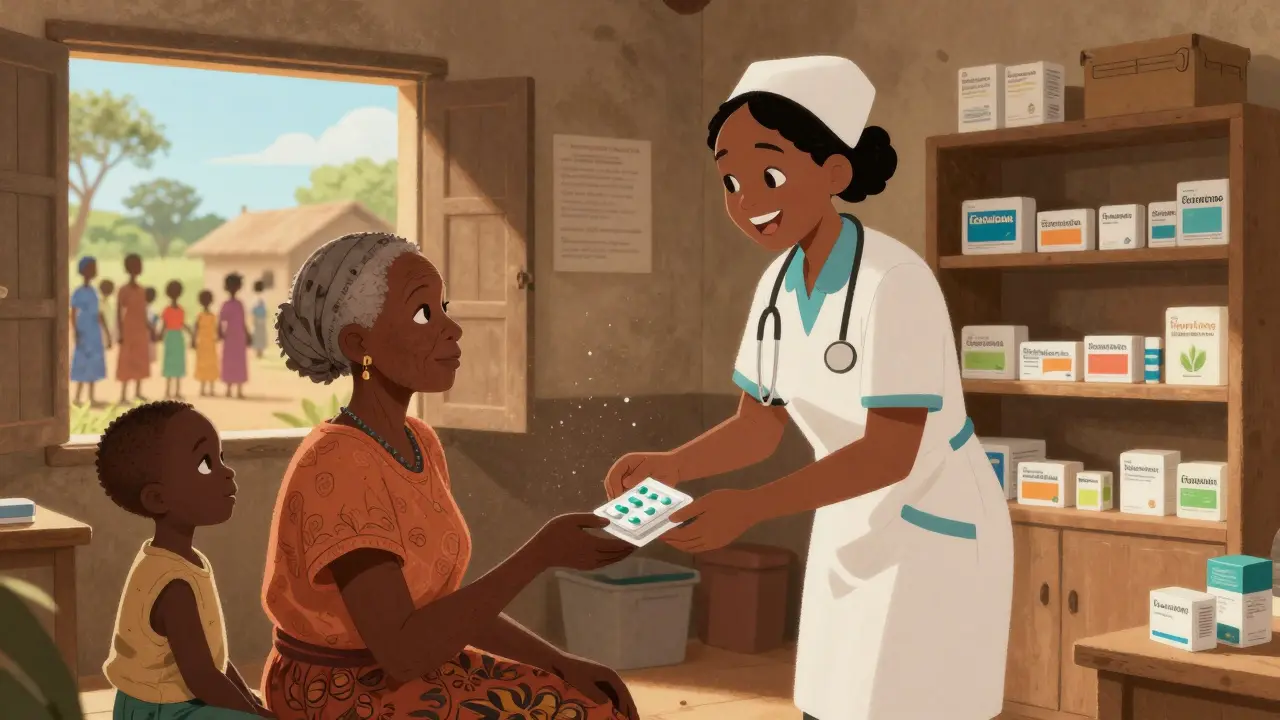
All these developments serve a larger goal: achieving the UNAIDS 95-95-95 targets. These targets aim for 95% of people living with HIV to know their status, 95% of those diagnosed to receive continuous antiretroviral therapy, and 95% of those on treatment to achieve viral suppression. Progress has been significant but uneven. In 2023, Eastern and Southern Africa achieved 93% awareness, 83% treatment coverage, and 78% viral suppression. Western and Central Africa lagged slightly behind with figures of 81%, 76%, and 70% respectively. Expanding access to affordable, locally produced generics is essential for closing these gaps, particularly in regions where supply chains are longest and most vulnerable.
The economic impact of expanded treatment is profound. Between 2010 and 2022, global AIDS-related deaths dropped by 52%, from 1.3 million to 630,000, largely due to increased access to effective treatment. Indian generic manufacturers played a huge role in this by driving costs down from $10,000 per patient per year in 2000 to under $100 by 2015. Now, African manufacturers are stepping into this role, ensuring that price reductions are sustained and supply remains stable regardless of geopolitical shifts abroad.
Challenges and Future Outlook
Despite the progress, significant hurdles remain. The continent currently requires approximately 15 million person-years of first-line ARV treatment annually. Current African manufacturing capacity is nowhere near meeting this full demand. New facilities are expected to come online by Q4 2025, supported by funding from Unitaid, the Gates Foundation, and CIFF through the NextGen market shaping approach. However, scaling up requires more than just factories; it demands regulatory harmonization across borders, technical capacity building, and consistent market incentives.
Gilead Sciences is also playing a crucial role in bridging the gap until local generics can fully scale. They have implemented an unprecedented access strategy for lenacapavir, another long-acting option, supplying it at no profit to PEPFAR and the Global Fund-supported countries. This allows millions of people to access cutting-edge prevention and treatment while local industries ramp up production. By the end of 2025, Gilead aimed to complete regulatory submissions for lenacapavir PrEP in 18 high-burden countries, representing 70% of the HIV burden in the voluntary license region.
The trajectory suggests that by 2030, African-manufactured ARVs could supply 20-30% of the continent's treatment needs. This would dramatically reduce supply chain vulnerabilities and create substantial economic opportunities. As noted in the African Competition Forum's 2025 study, African countries must reshape their approach to address over-reliance on external funding and shift towards self-sustainability. This includes "Africanizing" research and development to ensure treatments align with regional epidemiological patterns and patient needs. The integration of HIV services with broader health systems remains a critical challenge, requiring a move from siloed programs to integrated governance structures.
What is TLD antiretroviral medication?
TLD is a fixed-dose combination tablet containing three active ingredients: tenofovir, lamivudine, and dolutegravir. It is considered the standard first-line treatment for HIV because dolutegravir offers high efficacy, a strong barrier to drug resistance, and fewer side effects than older medications. It was the first African-manufactured ARV to be procured by the Global Fund in 2025.
Why is WHO prequalification important for African manufacturers?
WHO prequalification certifies that a medicine meets international standards for quality, safety, and efficacy. For large-scale buyers like the Global Fund, this certification is mandatory before they can purchase drugs for distribution. It validates that African factories can produce medicines comparable to those from established global manufacturers, enabling them to enter the international procurement market.
How does local production improve HIV treatment access?
Local production shortens supply chains, reducing the risk of delays caused by global disruptions like pandemics or shipping crises. It also keeps money within the local economy, supports job creation, and allows for faster responses to changing epidemiological needs. Additionally, it reduces dependence on foreign aid and volatile international markets.
What are the UNAIDS 95-95-95 targets?
These are global goals set to end the AIDS epidemic by 2030. They aim for 95% of people living with HIV to know their status, 95% of those diagnosed to be on continuous antiretroviral therapy, and 95% of those on treatment to have suppressed viral loads. Achieving these targets requires reliable, affordable, and accessible treatment options.
When will long-acting HIV injections be widely available in Africa?
South Africa registered the twice-yearly cabotegravir injection in October 2025. Generic versions are expected to follow soon, with prices potentially dropping 80-90% below brand-name costs. Companies have already received licenses to manufacture these generics, and access is expected to expand significantly through 2026 as local production scales up.