Azithromycin Liver Risk Assessment Tool
Personal Risk Factors
Liver Injury Risk Assessment
Your risk assessment will appear here after calculation
Symptom Checker
Watch for these signs after finishing azithromycin:
Don't wait: If you experience any of these symptoms, contact your doctor immediately for liver enzyme testing (ALT, AST, ALP, bilirubin).
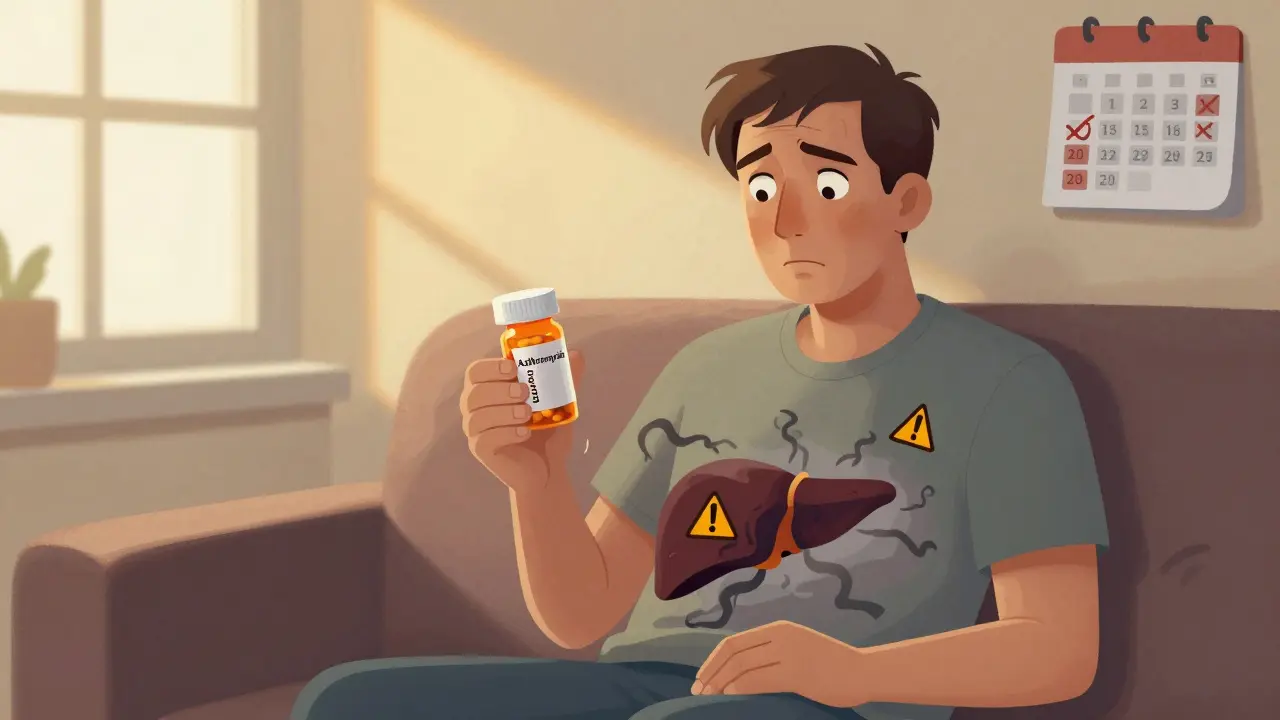
Most people think of azithromycin as a safe, go-to antibiotic. It’s the drug doctors reach for when treating pneumonia, sinus infections, or chlamydia - often prescribed as just five pills over a few days. But behind its reputation for convenience and low side effects lies a hidden risk: azithromycin can seriously harm the liver. Even if you feel fine while taking it, liver damage might not show up until days or weeks after you’ve finished the course. And when it does, it can be severe - even life-threatening.
How Azithromycin Affects the Liver
Azithromycin doesn’t attack the liver on purpose. It’s not meant to be toxic. But in some people, the body reacts in unexpected ways. The liver, which processes everything you take orally, can get overwhelmed or confused by the drug. This leads to drug-induced liver injury (DILI), a known but underrecognized side effect.
Studies show that about 1% to 2% of people on short courses of azithromycin develop mild, temporary spikes in liver enzymes - usually no symptoms, just a lab result that catches attention. But in 1 out of every 2,500 to 65,000 prescriptions, the damage becomes serious enough to cause real illness. The pattern is often cholestatic: bile flow gets blocked, leading to jaundice, itchy skin, dark urine, and pale stools. In about 1 in 5 cases, the injury looks more like liver cell damage - with high ALT levels, fatigue, nausea, and abdominal pain.
What makes azithromycin tricky is timing. Most people assume side effects happen while they’re still taking the drug. Not here. In nearly 9 out of 10 cases, symptoms appear after the treatment ends. A patient finishes their 5-day course on Monday, feels fine, and by Wednesday of the next week, they’re yellow and exhausted. Doctors often mistake it for viral hepatitis. That delay means treatment gets delayed - and the damage gets worse.
Who’s at Highest Risk?
Not everyone is equally at risk. Certain factors make liver injury from azithromycin more likely:
- Pre-existing liver disease - Even mild fatty liver or chronic hepatitis increases vulnerability.
- Older adults (65+) - 38% of severe cases occur in this group. Their livers process drugs slower.
- Long-term use - While most prescriptions are 3-5 days, some patients get azithromycin for weeks (like for chronic bronchitis). Risk jumps to 5-7% in these cases.
- Combination with other liver-stressing drugs - Taking azithromycin with atovaquone (for babesiosis) or certain antifungals raises the danger. The FDA issued a warning about this combo in February 2023.
Interestingly, azithromycin is often chosen over other antibiotics because it’s safer for the heart. Erythromycin, for example, can prolong the QT interval and cause dangerous heart rhythms. But that heart safety comes at a cost: more widespread use means more people are exposed - and more cases of liver injury pile up, even if the individual risk is low.
How It Compares to Other Antibiotics
Not all antibiotics are equal when it comes to liver damage. Here’s how azithromycin stacks up:
| Antibiotic | Hepatotoxicity Risk | Typical Injury Pattern | Recovery Time |
|---|---|---|---|
| Azithromycin | 1:2,500 to 1:65,000 prescriptions | Cholestatic (78%) or mixed | 4-8 weeks (92% recover) |
| Erythromycin | 1:1,000 prescriptions | Cholestatic | 6-12 weeks |
| Clarithromycin | 1:10,000 prescriptions | Cholestatic | 6-10 weeks |
| Doxycycline | Very low (rare cases) | Usually no injury | N/A |
| Isoniazid (TB drug) | 10-20% of users | Hepatocellular | Months |
While azithromycin has a lower incidence than erythromycin, its massive usage makes it one of the top 10 causes of DILI overall. Isoniazid, used for tuberculosis, causes liver damage in 1 out of 5 people - but it’s reserved for serious infections. Azithromycin, on the other hand, is often given for minor illnesses like sinusitis or bronchitis, where the benefit barely outweighs the risk.

Real Cases and Missed Diagnoses
There are documented cases of people who took a standard 5-day azithromycin course for pneumonia - and ended up needing a liver transplant. One 62-year-old patient developed bilirubin levels over 28 mg/dL (normal is under 1.2) six weeks after finishing treatment. His liver was failing. He survived only because a transplant was performed in time.
Another case involved a woman with sinusitis. She developed jaundice 10 days after her last pill. Her doctor thought it was hepatitis A. It took three weeks to realize azithromycin was the cause. By then, her bile ducts were already scarred. She needed an ERCP - a procedure to clear blocked ducts - and still has long-term liver issues.
Doctors aren’t always warned. A 2023 Medscape poll found that 78% of primary care physicians rarely consider liver damage when prescribing azithromycin - even though 92% knew it was possible. That gap between knowledge and action is dangerous. Patients are told, “This drug is safe.” So when symptoms appear, they don’t connect the dots.
What to Watch For
If you’ve taken azithromycin in the past 4-6 weeks, watch for these signs:
- Yellowing of skin or eyes (jaundice)
- Dark urine or pale stools
- Unexplained fatigue or nausea
- Itchy skin without rash
- Pain in the upper right abdomen
These aren’t normal side effects. They’re warning signs. If you notice even one, get your liver enzymes checked - ALT, AST, ALP, and bilirubin. Don’t wait. Early detection means better recovery.

What Doctors Should Do
The American Association for the Study of Liver Diseases recommends stopping azithromycin immediately if:
- ALT is more than 3 times the upper limit of normal
- Bilirubin is more than 2 times the upper limit of normal
This combination - known as Hy’s Law - predicts a 10-14% chance of acute liver failure. It’s a red flag. If either value is high, call a hepatologist. Don’t delay.
Some hospitals, like Kaiser Permanente, now require liver tests for anyone on azithromycin for more than 7 days. Mayo Clinic checks only if the patient already has liver disease. But with azithromycin being prescribed over 23 million times a year in the U.S., a blanket approach might save lives.
The Bigger Picture
Azithromycin isn’t going away. It’s cheap, effective, and convenient. It’s still the best choice for chlamydia - because resistance to alternatives is rising. But for common colds, sinus infections, or bronchitis? The evidence for its benefit is weak. And the risk, though rare, is real.
Some experts believe the future will see fewer azithromycin prescriptions for respiratory infections. Doxycycline, for example, works just as well for many of these conditions - with far less liver risk. In fact, the Antimicrobial Resistance Action Plan Working Group predicts azithromycin use will drop 4.2% per year through 2028, mainly because of safety concerns.
But until then, patients and doctors need to be smarter. Just because a drug is popular doesn’t mean it’s harmless. The liver doesn’t show symptoms until it’s badly hurt. And by then, it might be too late.
Can azithromycin cause permanent liver damage?
Yes, in rare cases. About 0.5% to 1% of severe azithromycin-induced liver injury cases progress to chronic liver damage or vanishing bile duct syndrome, which can require a liver transplant. Most people recover fully if the drug is stopped early, but delays in diagnosis can lead to lasting harm.
How long after taking azithromycin can liver damage appear?
Symptoms typically show up 1 to 3 weeks after starting the drug - and in nearly 9 out of 10 cases, they appear after you’ve finished the course. The average time from last dose to symptom onset is about 9 days. This delay is why many cases are misdiagnosed as viral hepatitis.
Should I get my liver tested before taking azithromycin?
Routine testing isn’t needed for healthy people on short courses. But if you have liver disease, are over 65, are taking other medications, or will be on azithromycin for more than 7 days, ask your doctor about checking liver enzymes before and after treatment. A simple blood test can catch problems early.
Is azithromycin safe if I have fatty liver?
It’s not recommended. Even mild fatty liver increases your risk of drug-induced liver injury. Studies show patients with pre-existing liver conditions are more likely to develop severe reactions. If you have fatty liver, ask your doctor about alternatives like doxycycline, which carries much lower liver risk.
Are there any foods or supplements that make azithromycin more dangerous for the liver?
Yes. Alcohol can worsen liver stress while you’re on azithromycin. Also, avoid high-dose vitamin E or herbal supplements like kava, green tea extract, or black cohosh - these can also affect liver function. The combination with atovaquone (used for babesiosis) is especially dangerous and has been linked to severe liver failure. Always tell your doctor about everything you’re taking.
What You Can Do Now
If you’ve taken azithromycin recently and feel off - even slightly - don’t ignore it. Get your liver checked. If you’re prescribed azithromycin for a condition that might have safer alternatives (like bronchitis or sinusitis), ask: "Is there another option?" Doxycycline, amoxicillin, or even watchful waiting might be better choices.
Azithromycin saved lives and made treatment easier. But medicine isn’t about convenience alone. It’s about balance. The liver doesn’t scream until it’s too late. Listen to it - before it’s too late.
Sarah B
February 7, 2026 AT 22:56Also why is no one talking about how this drug got so popular? Because it's cheap and easy. Not because it's better. It's not.
Tola Adedipe
February 9, 2026 AT 14:01Eric Knobelspiesse
February 10, 2026 AT 17:27is it because we're too lazy to think? or because the pharmaceutical industry just... knows how to market? like, it's the 'no-brainer' antibiotic. easy 5-day course. no need to take 7. no need to take 3x a day. just pop 5 pills. perfect for people who forget to take meds.
but here's the thing: the liver doesn't care about convenience. it just processes. and sometimes, it breaks. and then we're like 'oh wow, that's weird' 2 weeks later. we're not paying attention until it's too late. and honestly? that's kinda tragic. 😔
Marcus Jackson
February 11, 2026 AT 17:18Natasha Bhala
February 13, 2026 AT 17:17Jesse Lord
February 13, 2026 AT 17:43Catherine Wybourne
February 15, 2026 AT 14:00Amit Jain
February 17, 2026 AT 03:57Niel Amstrong Stein
February 18, 2026 AT 07:10the fact that symptoms show up AFTER you finish the course is wild. like imagine finishing a 5-day course feeling great, then boom - 10 days later you're yellow and confused. it's like the drug is playing a trick on you. 🤖
and doctors? they're like 'oh you got hepatitis' and miss it. it's a silent assassin. and we're all just walking around thinking antibiotics are safe. they're not. they're weapons. and the liver is the battlefield. 💥
Joey Gianvincenzi
February 19, 2026 AT 12:36