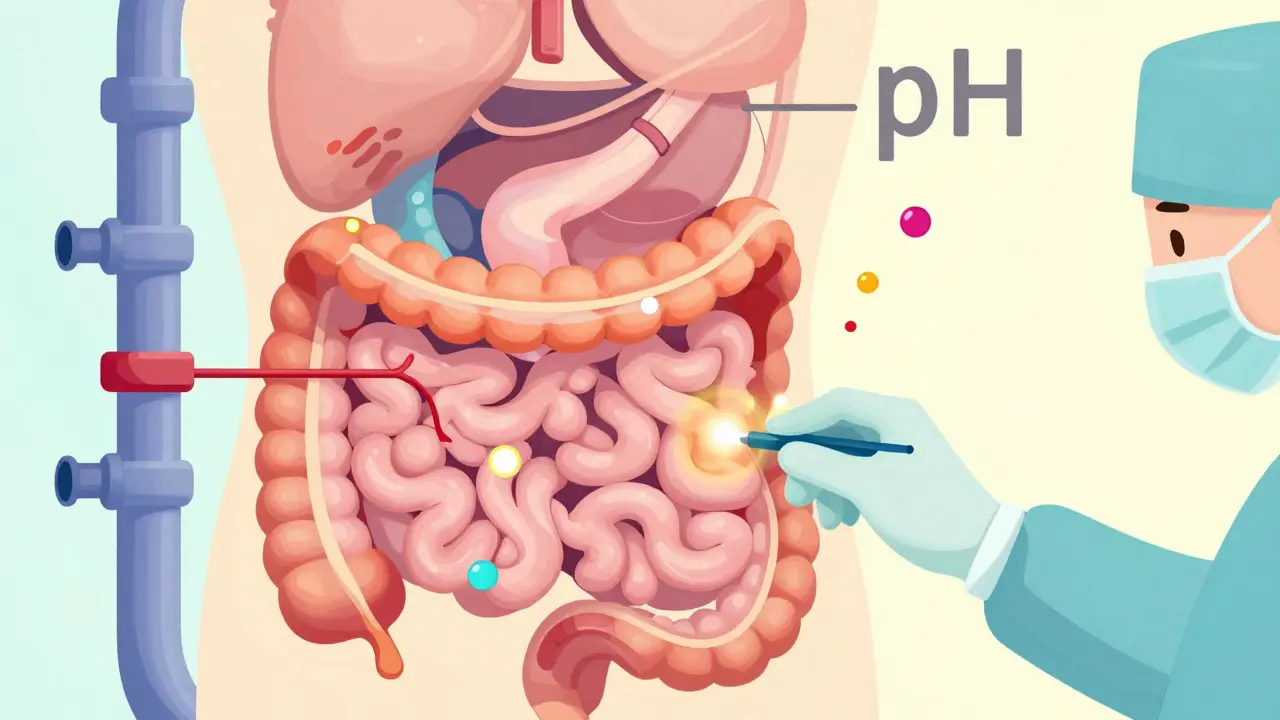
Imagine taking a medication you've relied on for years, only to find it suddenly stops working after weight loss surgery. This isn't a rare glitch; it's a biological reality. When surgeons reshape the stomach and reroute the intestines, they aren't just changing how you eat-they are fundamentally altering how your body absorbs chemistry. From the pH levels in your gastric pouch to the length of your intestinal path, the "plumbing" of your digestive system determines whether a pill reaches your bloodstream or simply passes through you.
The core challenge is that most medications are designed for a "standard" digestive tract. For someone who has undergone bariatric surgery medication absorption changes, the standard rules no longer apply. Whether you have a sleeve or a bypass, you're dealing with a new internal environment that can either accelerate drug delivery or block it entirely. This guide breaks down why this happens and how to adjust your regimen to stay safe and healthy.
How Surgery Changes Your Internal Chemistry
To understand why your meds might fail, you have to look at what happened during surgery. Most procedures create two primary hurdles: a change in acidity and a change in surface area.
Gastric pH is the measure of acidity in the stomach, which typically ranges from 1.5 to 3.5. After a procedure like a sleeve gastrectomy, the stomach's surface area drops by as much as 90%. This means less hydrochloric acid is produced, pushing the pH up to a more neutral 4.0 to 6.0. Why does this matter? Many drugs need a highly acidic environment to dissolve. If the pH is too high, the pill stays intact and never gets absorbed.
Then there is the "bypass" factor. In a Roux-en-Y gastric bypass (RYGB) is a surgical procedure that creates a small stomach pouch and redirects the small intestine , the body skips the duodenum and the first part of the jejunum. This represents about 25-30% of your total absorptive surface. If a drug is primarily absorbed in those bypassed sections, your body simply misses the window to take it in.
Comparing the Impact of Different Procedures
Not all bariatric surgeries are created equal. A restrictive surgery (which just makes the stomach smaller) has a very different impact than a malabsorptive surgery (which changes the route of digestion).
| Procedure | Primary Mechanism | Absorption Impact | Common Issue |
|---|---|---|---|
| Sleeve Gastrectomy | Restrictive | Low to Moderate | pH changes affecting tablet dissolution |
| Roux-en-Y (RYGB) | Restrictive & Malabsorptive | High | Bypassing the duodenum; fast gastric emptying |
| Gastric Banding | Restrictive | Minimal | Food-drug interactions due to lower intake |
| Duodenal Switch | Highly Malabsorptive | Severe | Significant loss of bioavailability (50-70%) |
As the data shows, if the duodenum remains in the nutrient pathway, you generally retain about 85% of your normal absorption capacity. Once you bypass that section, that number can drop to 60-70% or lower.
The Danger of "Extended-Release" Formulations
If you see "ER," "XR," or "CR" on your prescription bottle, pay attention. These Extended-Release Formulations are medications designed to release active ingredients slowly over several hours as they travel through the gut . They rely on a predictable transit time and specific pH triggers to work.
Post-surgery, your "transit time" is often warped. In RYGB patients, gastric emptying can shrink from the usual 2-5 hours down to just 30-60 minutes. The drug is rushed through the system before it has time to dissolve. This is why many patients see a massive drop in efficacy with drugs like metformin ER or glipizide XL. In some clinical series, nearly half of all time-release medications required a switch to an immediate-release version to maintain therapeutic levels.

High-Risk Medications and Necessary Adjustments
Some drugs have a "narrow therapeutic index," meaning the difference between a dose that works and a dose that is toxic is very small. These require the most vigilance.
- Thyroid Hormones: Levothyroxine is notoriously tricky. Because it is acid-dependent, many patients see their requirements jump-for example, moving from 75mcg to 125mcg-to keep TSH levels stable. Taking this on an empty stomach, 30-60 minutes before eating, is critical.
- Blood Thinners: Warfarin often requires a dose increase of 25-35% in bypass patients to maintain the same level of anticoagulation.
- Antiepileptics and Immunosuppressants: These often require Therapeutic Drug Monitoring (TDM), which is the practice of measuring drug concentrations in the blood to adjust dosing to ensure the drug is actually reaching the target concentration.
- Lipophilic Drugs: These are fats-soluble medications. Since bariatric surgery reduces bile-salt mixing, these drugs may not be absorbed as well unless taken with a small amount of healthy fat.
Practical Strategies for Medication Management
You shouldn't just guess with your dosages. There is a systematic way to handle this transition. First, work with your doctor to convert extended-release pills to immediate-release (IR) versions. While IR versions might mean taking a pill more often (e.g., twice a day instead of once), they are far more reliable in a reshaped gut.
For the first few months post-op, liquid formulations are the gold standard. They skip the "dissolution" phase that causes so many tablets to fail. If you are on a critical medication, your doctor might proactively increase the dose by 20-30% while monitoring your blood levels.
A helpful rule of thumb for timing: administer acid-dependent drugs 30-60 minutes before meals. This prevents food from further raising the pH and interfering with the drug's ability to break down.

The Future of Personalized Dosing
We are moving away from a one-size-fits-all approach. New technologies are emerging to solve these gaps. For instance, pH-adaptive capsules are being developed that can dissolve regardless of whether the environment is acidic or neutral. There is also a push toward subcutaneous implants for certain medications, which bypass the digestive tract entirely, ensuring 90%+ efficacy regardless of your surgical anatomy.
Even more promising is the use of pharmacogenomics. By testing your CYP450 enzyme status alongside your surgical anatomy, doctors can predict with much higher accuracy how you will metabolize a drug before you even take the first dose.
Why do I have to switch from ER to IR medications?
Extended-release (ER) medications are designed to dissolve slowly over hours. Because bariatric surgery (especially bypass) speeds up the time it takes for food and pills to leave the stomach and enter the intestine, ER pills often pass through the system before they can release the full dose of medicine. Immediate-release (IR) versions dissolve quickly, making them more reliable in a shortened digestive path.
Does a gastric sleeve affect medication as much as a bypass?
Generally, no. A sleeve is primarily restrictive and does not bypass the duodenum, meaning you keep more of your natural absorptive surface. However, the sleeve still increases gastric pH (making the stomach less acidic), which can still prevent some tablets from dissolving properly. You are less likely to need drastic dose changes, but formulation changes may still be necessary.
What are the signs that my medication isn't being absorbed?
The most common sign is a return of symptoms that were previously controlled. For example, if you have hypertension and your blood pressure starts creeping up despite taking your meds, or if your thyroid symptoms (fatigue, cold intolerance) return. If you feel the medication "isn't working" as it used to, it's time to request a blood test or a dose review.
Can I take my medications with food after surgery?
It depends on the drug. Acid-dependent medications (like levothyroxine) are usually absorbed better on an empty stomach, 30-60 minutes before you eat. Conversely, lipophilic (fat-soluble) drugs may actually need a small amount of food to be absorbed. Always check with your pharmacist about the specific timing for each of your prescriptions.
What is therapeutic drug monitoring (TDM)?
TDM is when your doctor takes regular blood samples to measure the exact concentration of a drug in your system. This is vital for high-risk meds like anticoagulants or antiepileptics because it allows the doctor to adjust the dose based on your actual blood levels rather than guessing based on standard weight-based charts.
Next Steps for Patients and Caregivers
If you are planning surgery or are already post-op, don't wait for a medication failure to happen. Start by creating a complete list of every supplement and prescription you take, noting whether they are "ER," "XR," or "CR." Schedule a consultation with a pharmacist who specializes in bariatric care to review these formulations.
For those already recovering, keep a log of any new or returning symptoms. If you notice that a pill feels "harder to swallow" or you feel like it's not working, don't just increase the dose on your own-this could lead to toxicity if the drug suddenly becomes absorbable again. Instead, ask your provider for a therapeutic drug monitoring test to see exactly what's happening in your bloodstream.
Betty Kawira
April 28, 2026 AT 15:32This is such a crucial point for anyone prepping for surgery. Just a heads up, definitely talk to your pharmacist about liquid versions of your meds early on. It's way easier than trying to deal with pill malfunctions three months post-op when you're already feeling drained. Also, don't forget to double-check your prenatal or bariatric vitamins because those absorption issues hit the supplements just as hard as the prescriptions!
Jenna Riordan
April 30, 2026 AT 04:59I had a RYGB three years ago and my blood pressure meds stopped working almost immediately. I didn't even realize it until I had a dizzy spell at work. It's scary how much your body changes and how you just have to trust the blood tests to know if you're actually getting the dose.
Sharon Mathew
April 30, 2026 AT 20:44Oh please, as if a simple pill change is the only thing we need to worry about! The absolute drama of rearranging your entire internal organ system just to avoid a few medication glitches is honestly mind-blowing. Why do we even pretend this is a 'standard' transition when it's clearly a complete biological gamble!
Aubrey Johnson
April 30, 2026 AT 23:59It is quite obvious that the average patient lacks the discipline to manage such a complex regimen. Most people simply cannot handle the intellectual rigors of TDM without constant hand-holding from their physicians.
Raymond Lipanog
May 1, 2026 AT 14:14It is perhaps worth considering that these physiological alterations represent a profound shift in one's relationship with their own body. While the clinical data provided is most illuminating, we must also remain mindful of the psychological patience required to navigate such a transition in health.
lalit adesara
May 2, 2026 AT 23:58Modern science is just a crutch. True health comes from within, not from rerouting intestines and chasing doses with blood tests. Pathetic.
Nigel Gosling
May 3, 2026 AT 12:38The sheer audacity of the pharmaceutical industry to sell 'extended-release' garbage that fails the moment a human being dares to change their anatomy is a moral tragedy of epic proportions!
We are essentially paying for expensive placebos while our bodies struggle to survive. It is a systemic failure of the highest order! How can we possibly trust a medical system that treats the human gut like a predictable machine when it is clearly a chaotic storm of chemistry and failure? This is not just a medical oversight; it is an affront to the very concept of care! I find it utterly exhausting that the burden of monitoring always falls on the patient, who is already recovering from a major operation, while the labs just keep taking their fees. It is a grotesque cycle of inefficiency that mirrors the decay of modern society itself! I can't even wrap my head around the laziness of the initial drug design. Why is the 'standard' digestive tract the only benchmark? It's almost as if they don't care about the outliers at all. Absolutely shambolic!
Angela Cook
May 3, 2026 AT 23:37USA leads the way in this surgery and we'll find the best way to fix the meds too!