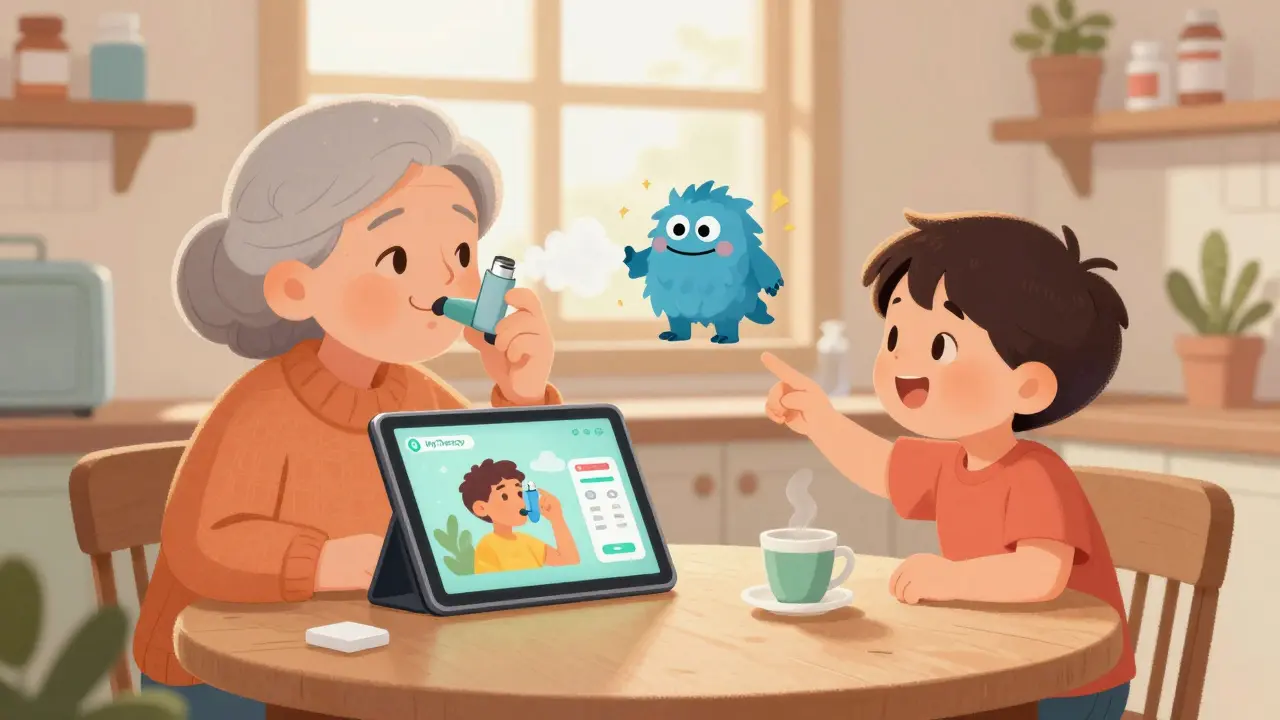
When patients understand their condition, treatment, and self-care steps, they recover faster, make fewer mistakes, and feel more in control. But getting that information across isn’t easy. Paper handouts get lost. Verbal instructions are forgotten. And not everyone has a caregiver to explain things again. That’s where digital tools come in - not as fancy gadgets, but as real helpers that turn confusion into clarity.
Why Patient Education Needs Digital Tools
Think about someone newly diagnosed with diabetes. They need to learn how to check blood sugar, count carbs, recognize low-sugar symptoms, and adjust insulin. That’s a lot. And it’s not something they can absorb in one doctor’s visit. Studies show patients who use digital education tools have 32% better medication adherence and 28% fewer hospital readmissions than those who don’t (Journal of Medical Internet Research, 2025).
Traditional methods rely on memory. Digital tools rely on repetition, visuals, and interaction. A video showing how to use an inhaler sticks better than a 10-page pamphlet. An app that reminds you to take your pill at the same time every day cuts down on missed doses. These aren’t just conveniences - they’re safety nets.
Top Apps for Patient Education in 2025
Not all apps are made equal. Some are flashy but useless. Others are simple, reliable, and built by people who actually work in healthcare. Here are the ones making a real difference.
- Khan Academy Kids - While designed for young children, its clear visuals and simple language make it a go-to for caregivers teaching basic health concepts to kids with chronic conditions like asthma or epilepsy. Free, no ads, works offline.
- Epocrates - Used by doctors and nurses, but now available to patients too. It gives plain-language explanations of medications: what they do, side effects, and what to avoid. No jargon. Just facts.
- MyTherapy - Tracks meds, symptoms, and appointments. Sends reminders. Lets you export data to share with your doctor. Used by over 3 million people globally. Integrates with Apple Health and Google Fit.
- Ada Health - An AI-powered symptom checker that doesn’t just list possibilities - it explains them. If you’re worried about chest pain, it tells you what might be happening, what to watch for, and when to call 911. Not a replacement for a doctor, but a smart first step.
- HealthTap - Lets patients ask questions to licensed doctors and get answers in text or video. Over 1.2 million questions answered in 2024. Great for follow-up questions after a clinic visit.
These tools don’t replace human care. They extend it. They give patients the chance to learn on their own time, in their own way.
E-Learning Platforms That Work for Patients
Apps are great for daily use, but deeper learning needs structure. That’s where e-learning platforms come in. These are like mini-courses designed specifically for patients.
- PatientsLikeMe - A community-driven platform where people with the same condition share experiences and educational content. Someone with MS can watch a video from another patient on managing fatigue. Real stories. Real advice.
- MedlinePlus - Run by the U.S. National Library of Medicine. Free. No ads. Covers over 1,000 diseases and conditions with videos, animations, and downloadable guides. Used by hospitals as a trusted resource.
- Mayo Clinic Patient Education - Offers structured online modules for conditions like heart failure, COPD, and kidney disease. Each module ends with a short quiz to check understanding. Hospitals often link patients directly to these.
- Diabetes UK Learn - A UK-based platform with interactive lessons on insulin use, diet, and foot care. Translated into 12 languages. Proven to improve HbA1c levels in users after 6 months.
These aren’t just websites. They’re learning systems. They guide you step by step. They test your knowledge. They give you certificates of completion - which many insurers now recognize as part of care management programs.
How AI Is Changing Patient Learning
AI isn’t just about chatbots that give vague answers. In 2025, the smartest tools are using AI to personalize education.
Take NotebookLM - Google’s AI research tool adapted for healthcare. A patient can upload their discharge summary, lab results, or doctor’s notes. The AI reads it, pulls out key points, and explains them in simple terms. It can even answer follow-up questions like, “What does ‘eGFR 45’ mean?” or “Why do I need to avoid grapefruit with this pill?”
Another example is Snorkl. Originally built for classrooms, it’s now being used in clinics. Patients record themselves explaining how they take their meds. The AI listens, checks for misunderstandings, and gives feedback. “You said you take your blood pressure pill after breakfast - but your log shows you missed it three times last week. Want to talk about why?”
These tools don’t replace nurses. They free them up. Instead of repeating the same instructions to 10 patients, a nurse can focus on the ones who need extra help.
What Doesn’t Work - And Why
Not every app labeled “health education” is helpful. Many fail for the same reasons:
- Too complex - Apps with 10 menus and tiny fonts. If a 70-year-old can’t figure it out in 30 seconds, it’s not usable.
- No offline access - Patients in rural areas or low-income homes often have spotty internet. Tools that require constant connectivity fail them.
- No multilingual support - Over 25% of U.S. households speak a language other than English at home. Tools that only offer English exclude large groups.
- Just a reminder app - “Take your pill!” isn’t education. Education explains why it matters.
Also avoid tools that collect data but give nothing back. If an app tracks your steps but never tells you what those steps mean for your heart health, it’s not helping - it’s surveillance.
Choosing the Right Tool for Your Needs
Not every patient needs the same thing. Here’s how to pick:
- What’s the goal? Is it learning how to use an inhaler? Managing diabetes? Understanding surgery risks? Match the tool to the task.
- Who’s using it? Is it the patient? A caregiver? A child? Tools for seniors need big text and voice options. Tools for kids need games and animations.
- Can it work offline? If the patient doesn’t have reliable Wi-Fi, pick something that downloads content.
- Is it free or covered by insurance? Many hospitals and insurers now pay for tools like MyTherapy or PatientsLikeMe. Ask your provider before downloading.
- Does it connect to your health records? Tools that sync with Apple Health, Google Health, or your EHR (like Epic or Cerner) are more accurate and less work to maintain.
Start small. Try one tool for one condition. If it helps, add another. Don’t try to use 10 apps at once - that’s overwhelming.
Real Stories, Real Results
Carol, 68, was diagnosed with congestive heart failure. Her doctor gave her a stack of papers. She didn’t understand half of it. Her daughter downloaded MyTherapy and set up daily reminders for her meds and weight checks. After three months, Carol’s weight stabilized. Her hospital visits dropped from once a month to once every three months.
James, 12, has asthma. His school uses Khan Academy Kids to teach him how to use his inhaler with a cartoon character. He practices every morning. His teacher says he’s more confident in gym class now.
Marisol, who speaks Spanish, used MedlinePlus in Spanish to learn about her high blood pressure. She watched videos, printed out the diet guide, and brought it to her next appointment. Her doctor said, “I’ve never seen someone come in so prepared.”
These aren’t outliers. They’re the new normal.
The Future Is Personal, Not Just Digital
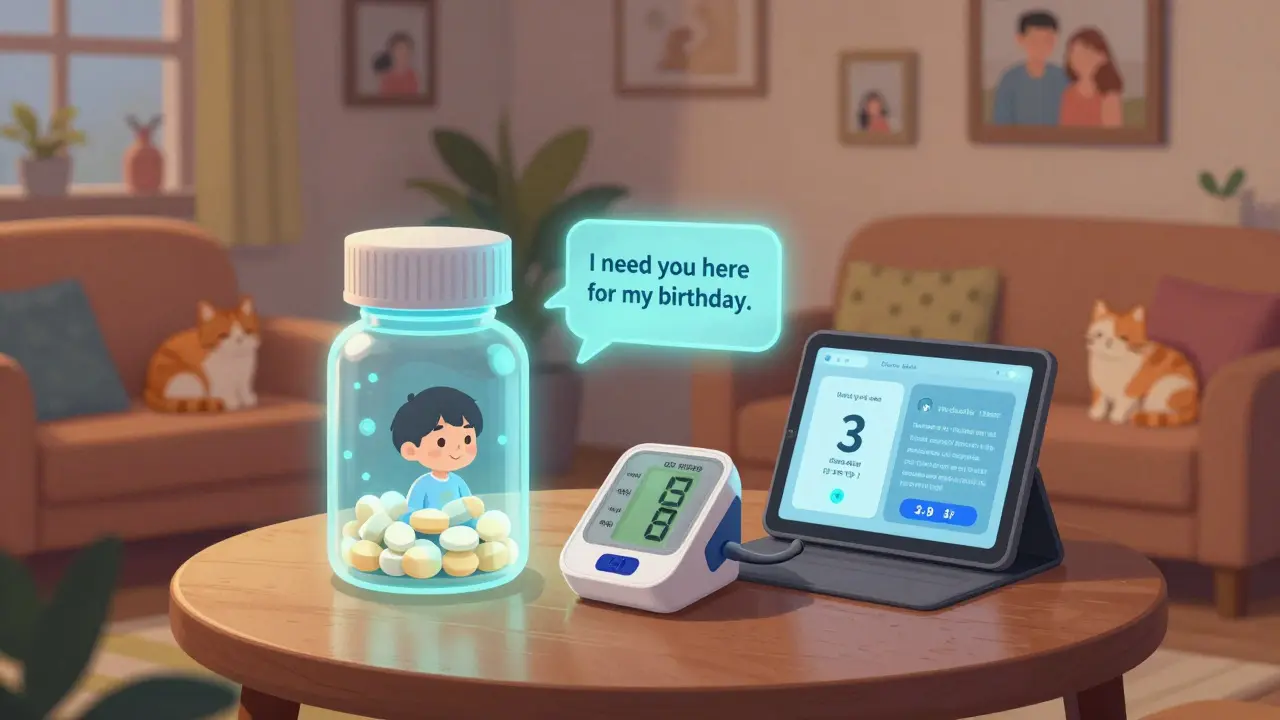
The next big step isn’t more apps. It’s smarter integration. Imagine this: your blood pressure monitor sends data to your phone. Your app notices a spike. It doesn’t just alert you - it opens a 3-minute video explaining what to do next, then texts your doctor with a summary.
Or your pill bottle has a chip that detects if you took your dose. If you didn’t, your phone plays a message from your grandchild: “I need you here for my birthday.”
Technology doesn’t have to be cold. It can be human. The best digital tools don’t just inform - they connect, support, and empower.
Where to Start Today
Don’t wait for the perfect tool. Start with what’s free, simple, and trusted:
- Ask your doctor: “Do you recommend any apps or websites to help me understand my condition?”
- Try MedlinePlus - it’s free, reliable, and works on any phone.
- Download MyTherapy - set up one reminder for one medicine. See if it helps.
- Use Epocrates to look up one pill you’re taking. Read the explanation out loud.
Small steps. Big results.
Kevin Lopez
December 30, 2025 AT 18:53Most of these apps are just glorified reminder bots. Real patient education requires cognitive load management and health literacy scaffolding - none of these tools address metacognitive barriers or behavioral economics principles. If you're not integrating nudge theory or dual-process framework design, you're just noise.
Duncan Careless
December 31, 2025 AT 23:38honestly, i tried mytherapy last year after my mum’s diagnosis. it’s not perfect, but it actually worked. the reminders? yeah, they helped. the bit where it lets you export data? that saved us a whole visit to the gp. not flashy, but it did the job. thanks for listing it.
Samar Khan
January 2, 2026 AT 16:36OMG YES 😭 I used ada health when I had that weird chest pain last month and it literally told me to call 911. I did. Turned out it was anxiety… but what if it wasn’t? 🙏 this is the future. why are we still giving people paper?
Russell Thomas
January 3, 2026 AT 19:59Oh wow, Khan Academy Kids? For asthma? That’s adorable. Next you’ll tell me we should use TikTok dances to teach insulin dosing. 🤡 I’m sorry, but if your patient can’t read a pamphlet, maybe they shouldn’t be managing their own meds. This is healthcare, not a preschool playdate.
Joe Kwon
January 5, 2026 AT 00:57I’ve been using Epocrates as a patient for a year now - and honestly, it’s the only app that doesn’t talk down to you. The side effect breakdowns are clinically accurate but plain-spoken. Also, the integration with Apple Health is seamless. If you’re using any of these tools, start here. It’s not marketing fluff - it’s medical-grade clarity.
Nicole K.
January 6, 2026 AT 12:15This whole post is irresponsible. You’re telling people to rely on apps instead of doctors? What if someone reads Ada Health and decides not to go to the ER? Someone’s going to die because of this. These apps are toys for tech bros, not real medicine.
Fabian Riewe
January 8, 2026 AT 05:09Just wanted to say - I’m a nurse in rural Ohio. We hand out printed copies of MedlinePlus to every patient who can’t get good Wi-Fi. They print it, laminate it, stick it on the fridge. No app beats that. Simple. Free. Works everywhere. Don’t overlook the low-tech heroes.
Amy Cannon
January 9, 2026 AT 01:12While I find the enumeration of digital tools both comprehensive and commendable, I must express a certain degree of consternation regarding the implicit assumption that technological ubiquity equates to therapeutic efficacy. The sociocultural dimensions of health literacy - particularly among elderly, non-native English-speaking, and digitally disenfranchised populations - are not adequately addressed by mere app deployment. One must consider the epistemological gap between interface design and patient agency. A tool that cannot be navigated by a 72-year-old with presbyopia and limited digital exposure is not a tool - it is an exclusionary artifact.
Jasmine Yule
January 9, 2026 AT 01:35So glad someone finally said it - MyTherapy saved my life. I was missing meds, not because I forgot, but because I was ashamed. The app didn’t judge. It just asked, ‘You good?’ 🤍 I started sharing my logs with my doc. We adjusted my dose. Now I’m stable. This isn’t tech. This is care.
Greg Quinn
January 9, 2026 AT 20:02It’s interesting how we treat patient education like a software problem. But learning isn’t about data delivery - it’s about trust, repetition, and emotional safety. The real innovation isn’t in AI or syncing with EHRs. It’s in tools that make patients feel less alone. That’s why PatientsLikeMe works. Not because it’s smart - because it’s human.
Lisa Dore
January 10, 2026 AT 12:22Just started using Diabetes UK Learn with my mom - she’s 74, speaks only Spanish, and was terrified of insulin. The videos in Spanish? The step-by-step animations? She watched them with my nephew. Now she teaches other people at her senior center. This isn’t just education - it’s community building. 🌟
Sharleen Luciano
January 11, 2026 AT 00:17MedlinePlus? Really? That’s the best you’ve got? It’s a 1998-era website with stock photos of smiling elderly people holding pill bottles. Meanwhile, NotebookLM and Snorkl are using LLMs to personalize education in real-time. If you’re still recommending static PDFs while AI interprets lab results and tailors explanations to cognitive load, you’re not helping - you’re delaying progress. This isn’t innovation. It’s nostalgia dressed in healthcare.