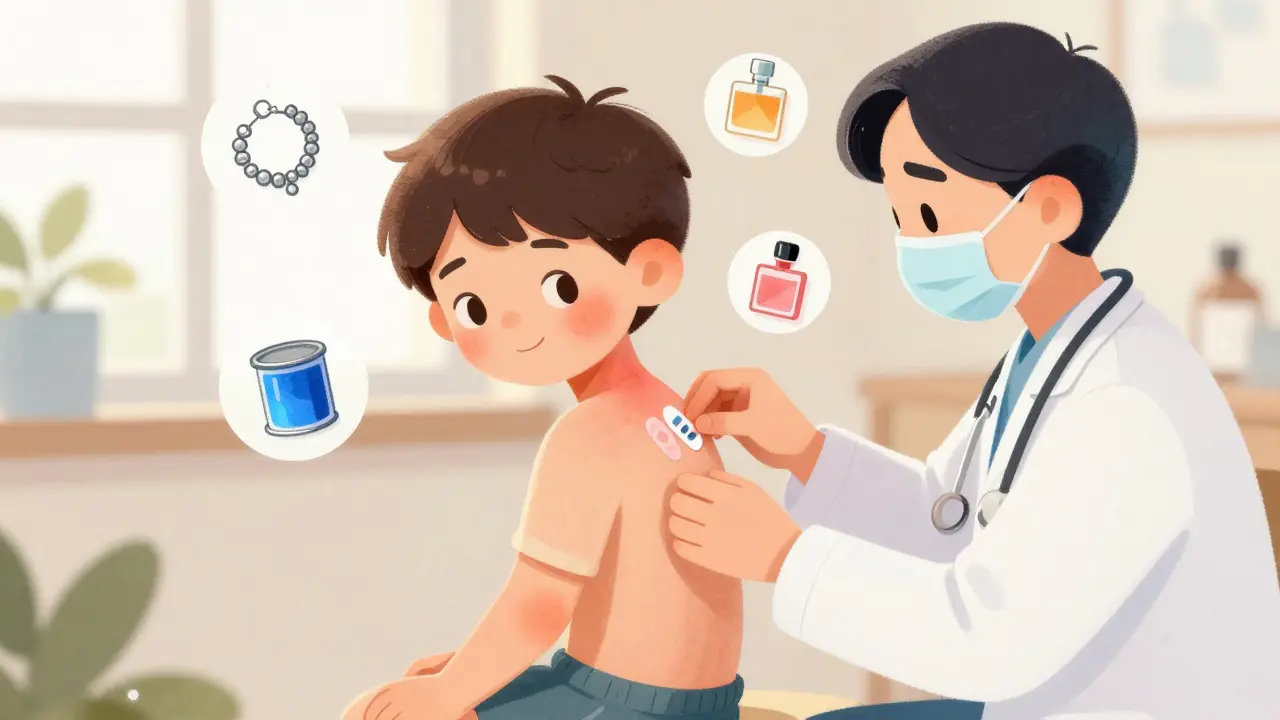
If you’ve had a rash that won’t go away-especially on your hands, ears, or neck-and nothing seems to help, you might be dealing with contact allergy. Unlike immediate allergic reactions like hives or anaphylaxis, contact allergies develop slowly. They’re caused by your immune system reacting to something touching your skin, often after months or even years of exposure. The most common culprits? Metals like nickel and cobalt, and fragrances hiding in lotions, soaps, shampoos, and even laundry detergent.
What Is Patch Testing, and Why Does It Matter?
Patch testing is the only reliable way to confirm a contact allergy. It’s not a blood test. It’s not a skin prick. It’s a slow, careful process that looks for delayed reactions, the kind caused by T-cells in your skin. This is called Type IV hypersensitivity, and it’s behind most cases of chronic eczema that doctors can’t explain with simple triggers. The test works by placing tiny amounts of common allergens on your back, covered with small patches. You wear them for 48 hours without getting them wet. Then, a dermatologist checks for redness, swelling, or blisters. A second reading happens at 72 to 96 hours, because some reactions take longer to show up. In some cases, a final check at seven days is needed. Why does timing matter? Because if you check too early, you’ll miss the reaction. If you shower, sweat, or peel off the patches, you’ll get a false negative. That’s why so many people walk away from patch testing thinking it didn’t work-when in reality, they didn’t follow the rules.What Metals Are Tested, and Why Are They So Common?
Nickel is the biggest offender. About 1 in 5 people tested for contact dermatitis react to it. It’s in jewelry, belt buckles, zippers, coins, eyeglass frames, and even cell phones. Cobalt shows up in metal alloys, paints, and some cosmetics. Chromium is found in leather, cement, and tools. These metals don’t cause a reaction the first time you touch them-they build up over time. Standard patch test panels include:- Nickel sulfate (5% in petrolatum)
- Cobalt chloride (1% in petrolatum)
- Potassium dichromate (0.5% in petrolatum)
Fragrance Allergy Is Hidden Everywhere-And Harder to Catch
Fragrance isn’t just perfume. It’s in toothpaste, deodorant, shampoo, hand sanitizer, and even “unscented” products. That’s because many “unscented” items still contain masking fragrances to cover up chemical smells. The term “fragrance” on an ingredient list can mean hundreds of different chemicals. Testing for fragrance allergies isn’t simple. The old method used two mixes: Fragrance Mix I and Fragrance Mix II. But relying on these alone misses up to 15% of cases. Why? Because some allergens like lyral, hydroxycitronellal, and farnesol were removed from the mixes years ago due to instability. They’re still common in products-and still cause reactions. Today’s best practice includes testing both mixes and at least 15 individual fragrance chemicals. The North American Contact Dermatitis Group now uses a “Fragrance 20” panel, which includes newer allergens like citral and linalool. In Europe, 26 fragrance allergens must be labeled on products if they exceed tiny thresholds. But labels don’t help if you don’t know what you’re allergic to.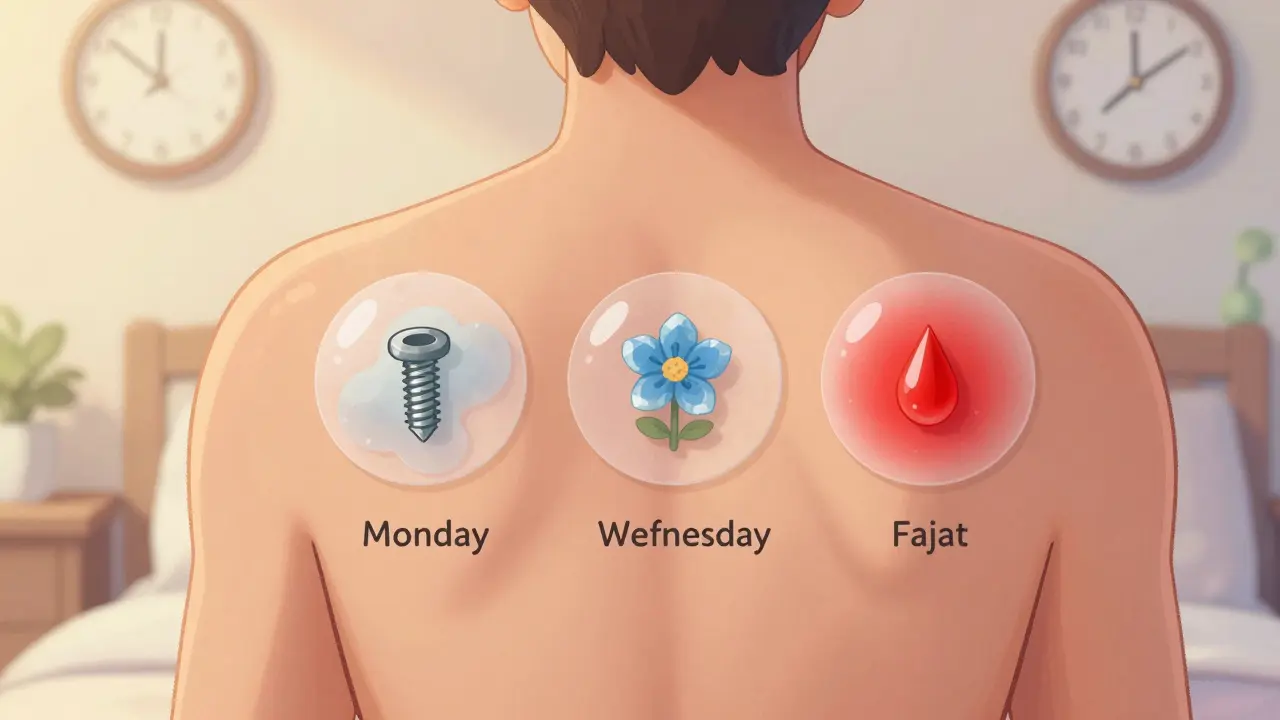
How Accurate Is Patch Testing?
Patch testing has a specificity of 95-98%. That means if you test positive, you’re almost certainly allergic. Sensitivity is around 85-90%, meaning it catches most true allergies. Compare that to blood tests, which have a sensitivity of only 60-70% and aren’t even standardized for fragrance allergies. Still, false positives happen. About 5-10% of reactions are irritant responses, not true allergies. That’s why only board-certified dermatologists trained in patch testing should interpret results. A red bump might look like an allergy-but if it’s raised, burns, or appears right away, it’s probably just irritation from the tape or sweat. And false negatives? They happen too. About 22% of patients in one survey reported negative results but still had symptoms. Often, it’s because they only got the basic panel. If you suspect fragrance or a rare metal, ask for an extended series.What to Expect During the Process
You’ll need three visits over one week:- Monday: Application. The patches are applied to your upper back. It takes 30-45 minutes. You won’t feel anything.
- Wednesday: First reading. The patches are removed. The doctor checks for early reactions.
- Friday: Final reading. Reactions that develop slowly are graded using a standard scale: − (no reaction), + (doubtful), ++ (strong positive), +++ (extreme reaction).
What Happens After a Positive Result?
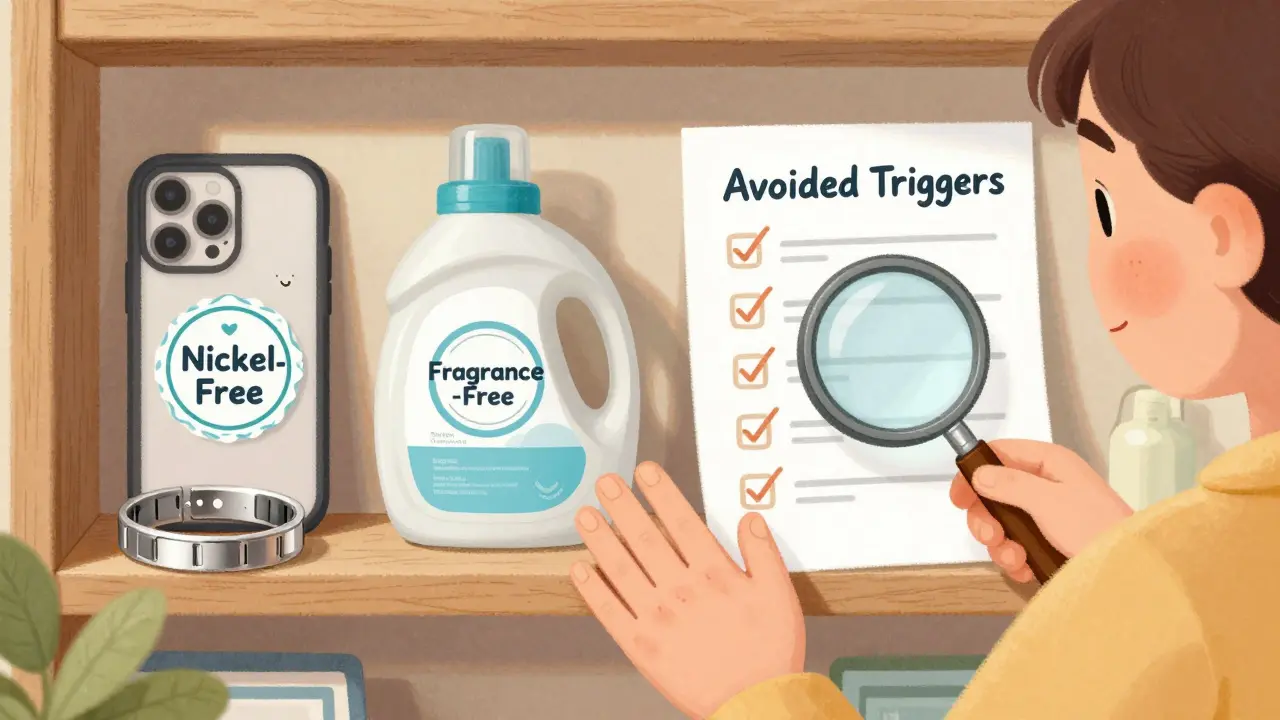
Finding the trigger is only half the battle. The real win is avoiding it. Studies show 60-80% of patients see their rash clear up completely once they avoid the allergen. If you’re allergic to nickel:- Switch to titanium or surgical-grade stainless steel jewelry.
- Use plastic or ceramic phone cases.
- Check your belt buckles and bra clasps.
- Use products labeled “fragrance-free,” not “unscented.”
- Check ingredient lists for common allergens like limonene, linalool, or Myroxylon pereirae.
- Test new products on your inner forearm before using them widely.
Why So Many People Get It Wrong
Many doctors still offer only the basic patch test panel. But the North American Contact Dermatitis Group’s 2023 data shows comprehensive testing finds the cause in 68.7% of patients. Limited testing? Only 42.3%. Also, patients often don’t follow instructions. A Cleveland Clinic report found 15% of people removed patches early because of itching. That’s not an allergic reaction-it’s irritation. But without the full 48 hours, the real signal gets lost. And here’s the kicker: even “hypoallergenic” products can trigger reactions. A 2024 study found that 30% of products labeled “fragrance-free” still contained hidden sensitizers. That’s why knowing your exact allergen matters more than ever.Is Patch Testing Worth It?
On RealSelf.com, 87% of 1,243 users said it was “worth it,” even with the inconvenience. Reddit users describe it as “life-changing.” One person wrote: “I had hand eczema for 12 years. Patch test found I was allergic to balsam of Peru in my lip balm. I stopped using it. My skin is normal now.” The cost? Usually covered by insurance in Canada and the U.S. The time? One week. The payoff? Freedom from rashes, endless creams, and guessing games.What’s Next in Contact Allergy Testing?
Research is moving fast. Scientists are testing peptide-based methods for metal allergies that could one day replace or supplement patch testing. The European baseline series now includes 32 fragrance markers. The NACDG is studying how to test for allergens in “fragrance-free” products-because today’s labels are misleading. But for now, patch testing remains the gold standard. It’s not perfect. But it’s the only test that gives you real, actionable answers.Can patch testing detect all types of allergies?
No. Patch testing only detects contact allergies-specifically delayed-type (Type IV) reactions to substances touching the skin. It won’t detect food allergies, inhalant allergies like pollen, or immediate reactions like hives. For those, you’d need skin prick tests or blood tests like IgE testing.
How long do patch test results last?
Your allergy doesn’t go away after testing. Once you’re sensitized to nickel or a fragrance chemical, you’ll likely always react to it. The goal isn’t to cure the allergy-it’s to identify it so you can avoid exposure and prevent flare-ups. Some people develop new allergies over time, so retesting every few years may be helpful if symptoms return.
Can I do patch testing at home?
No. Patch testing requires controlled application of standardized allergens in precise concentrations, followed by expert interpretation. Over-the-counter kits or DIY methods are unreliable and can cause severe irritation or false results. Always see a board-certified dermatologist trained in patch testing.
What if my patch test is negative but I still have a rash?
A negative result doesn’t rule out contact allergy. You may have been tested with an incomplete panel, especially if fragrance chemicals weren’t included. Other possibilities include irritant contact dermatitis (from soap or friction), fungal infections, or underlying conditions like psoriasis. Your doctor may recommend further testing or a biopsy.
Are there alternatives to patch testing?
There are no reliable alternatives for diagnosing contact allergy. Blood tests like lymphocyte transformation tests (LTT) lack standardization and sensitivity for fragrance allergens. Use testing-applying your own products to the skin-is unreliable and not standardized. Patch testing remains the only method with proven accuracy and clinical utility.
anthony epps
December 15, 2025 AT 14:44I had a rash on my hands for years and thought it was just dry skin. Turned out it was nickel from my phone case. Never even thought to check. Patch test was a game changer.
Joanna Ebizie
December 17, 2025 AT 14:10Ugh. People still don't get that 'unscented' doesn't mean no fragrance. I had a flare-up from a 'hypoallergenic' lotion that had limonene in it. Like, really? You call that hypoallergenic?
And why do doctors still use the old patch panels? It's 2024. Get with the program.
Mike Smith
December 19, 2025 AT 00:43Thank you for sharing this detailed and clinically accurate overview. For those navigating chronic skin conditions, this information is invaluable.
It's critical to emphasize that patch testing should only be administered by board-certified dermatologists with specialized training in contact dermatitis. The interpretation of results requires nuanced understanding - distinguishing true sensitization from irritant reactions is not something that can be reliably done without expertise.
Additionally, the avoidance strategies outlined - such as selecting titanium jewelry or verifying ingredient lists for hidden allergens - are evidence-based and have been shown to yield significant clinical improvement in over 70% of cases.
Please do not self-diagnose or rely on over-the-counter kits. The risks of misinterpretation far outweigh any perceived convenience.
This is not just medical advice - it's a pathway to reclaiming your quality of life.
Randolph Rickman
December 19, 2025 AT 05:47Guys, I was skeptical too - until I did it. I had eczema on my neck for 8 years. Tried every cream, changed my diet, switched to natural products… nothing.
Got patched, found out I was allergic to balsam of Peru in my lip balm. Yes, my lip balm.
I stopped using it. Skin cleared in three weeks. I cried.
If you’ve been struggling and nothing’s worked - just do the test. One week of not showering? Totally worth it. You’re not being dramatic. You’re being smart.
sue spark
December 19, 2025 AT 16:03Tiffany Machelski
December 20, 2025 AT 10:25i got patch tested and it said i was allergic to fragrance mix but i dont use perfume?? turns out my hand soap had it. and my laundry detergent. and my baby's wipes. i thought i was being careful but i wasnt. now i read every label like its a contract. its exhausting but worth it.
Josias Ariel Mahlangu
December 20, 2025 AT 11:49It's disappointing how many people treat this like a fad. Contact dermatitis isn't a trend. It's a real immune response. People who dismiss patch testing as 'overkill' are the same ones who blame stress for every rash. You can't 'meditate away' nickel allergy.
And if you're using 'natural' products - please. Essential oils are among the most common triggers. Lavender? Tea tree? They're fragrances too. Stop romanticizing the word 'natural'.
Andrew Sychev
December 21, 2025 AT 13:51My dermatologist told me I was allergic to nickel in my jeans buttons. I cried. Not because I was allergic - but because I had to stop wearing my favorite jeans for 10 years.
Then I found out my bra had nickel. My belt. My phone case. My watch. My laptop hinge.
I now own 17 plastic phone cases. I wear cotton underwear with elastic waistbands. I tape down my belt buckles with duct tape.
I am not living. I am surviving. And I hate that this is my life now. But at least I know why.
Dan Padgett
December 22, 2025 AT 18:08You know, in my village back home, we don't have patch tests. We have grandmothers who know which leaves to rub on a rash, which soaps to avoid, which metals make the skin burn.
But here? We need a lab, a doctor, a week of no showers.
It's strange how we lost the old ways while chasing the new science. Maybe both matter. Maybe the science just helps us name what our bodies already knew.
I used to think my rash was bad luck. Now I know it was a message. And I finally listened.