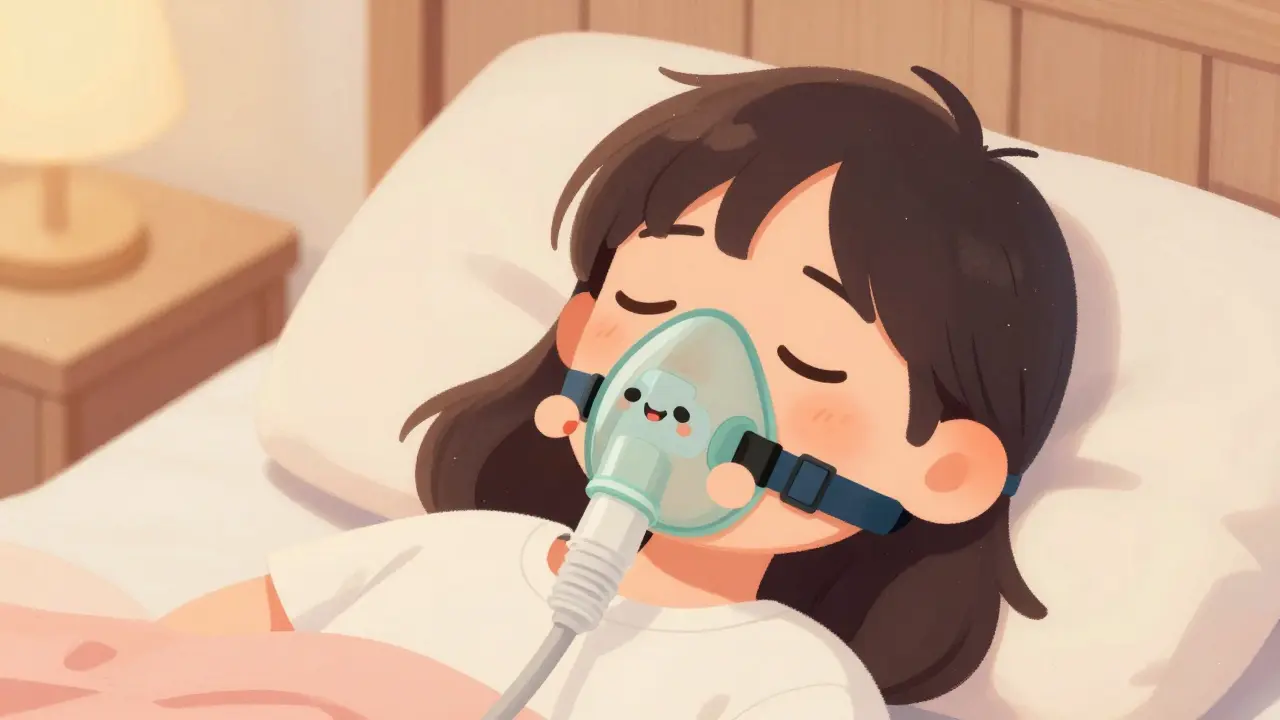
There is nothing worse than waking up in the middle of the night with a burning throat, hearing that distinct whooshing sound from your face mask, or feeling like you are being suffocated by a jet engine. If you use Continuous Positive Airway Pressure (CPAP) therapy to treat obstructive sleep apnea, these issues are not just annoyances-they are dealbreakers. You might be tempted to just take the mask off and go back to sleep without it, but that defeats the entire purpose of the treatment. The good news is that most CPAP problems have simple fixes. You do not need to call your doctor immediately for every small hiccup. With a few adjustments to your equipment and routine, you can turn a frustrating night into a restful one.
Why Your Mouth Feels Like Sandpaper at Dawn
Dry mouth is arguably the most common complaint among new CPAP users. According to data from the American Thoracic Society, about 42% of users experience this issue. It is important to understand why this happens. Most people assume their humidifier is broken or set too low. While that can be true, the primary culprit is usually something else entirely: mouth breathing.
When you sleep with your mouth open, the pressurized air from your machine escapes through your oral cavity instead of staying in your nasal passages. This constant stream of air dries out your saliva glands rapidly. Dr. Raj Dasgupta, a noted sleep specialist, points out that dry mouth is rarely a humidity problem and almost always a seal problem. If air is leaking out of your mouth, no amount of water in your chamber will fully solve the issue.
To fix this, you need to keep your mouth closed during sleep. Here are three practical steps:
- Try a Chin Strap: This simple fabric band holds your jaw in place. About 38% of mouth breathers find success with this method. It is inexpensive and easy to try.
- Switch to a Full-Face Mask: If you naturally breathe through your mouth even when awake, a nasal mask will never work well for you. A full-face mask covers both your nose and mouth, delivering air directly where you need it. Users report that switching masks eliminated dry mouth within three nights.
- Adjust Humidifier Settings: If your mouth stays closed but you still feel dry, increase the heated humidifier setting. Aim for levels 3 or 4 on a scale of 0-6. Ensure you are using distilled water to prevent mineral buildup.
If you wake up with a sore throat, check if your mask is sealed properly around your nose. If air is escaping, your mouth opens reflexively to compensate for the lack of airflow, creating a vicious cycle of dryness and leaks.
Silencing the Whoosh: How to Stop Mask Leaks
A slight leak is normal; a loud hiss is not. Dr. David White, a pioneer in sleep medicine research, warns that leaks greater than 24 liters per minute significantly reduce treatment efficacy. When air escapes, your machine works harder to maintain pressure, which increases noise and reduces the therapeutic benefit. More importantly, air blowing into your eyes can cause irritation and redness.
Leaks usually happen for two reasons: improper fit or worn-out cushions. Over time, the silicone cushion on your mask degrades. It loses its elasticity and develops micro-tears. Manufacturers recommend replacing mask cushions every three months. If you have been using the same cushion for six months, replace it before trying any other fixes.
If your cushion is new, the issue is likely fit. Many users tighten their straps too much, thinking more pressure equals a better seal. This is a common mistake. Overtightening distorts the shape of the mask frame, actually creating gaps where air can escape. Instead, follow the "airflow test" recommended by sleep therapists:
- Turn on your CPAP machine while wearing the mask.
- Place your hand under the mask to feel for air escaping.
- Tighten the bottom strap first, then the top strap, just enough to stop the airflow.
- The mask should feel snug but not tight. You should be able to slide a finger between the mask and your skin.
For those with facial hair, leaks are more challenging. Beards create tiny channels for air to escape. Shaving or trimming facial hair near the mask seal area often resolves persistent leaks. Additionally, ensure you are using the correct headgear size. Most masks come with adjustable straps, but some brands offer specific sizes for different head shapes.
| Symptom | Likely Cause | Solution |
|---|---|---|
| Air in eyes | Mask sitting too high or loose top strap | Lower mask slightly; adjust top strap tension |
| Whooshing sound from mouth | Mouth breathing with nasal mask | Use chin strap or switch to full-face mask |
| General hissing | Worn cushion or incorrect size | Replace cushion every 3 months; verify mask size |
| Leak after turning head | Straps too loose or mask shifts | Practice sleeping on back; use travel pillow for support |
Finding the Sweet Spot: Pressure Adjustments
Pressure settings are critical. Too little pressure, and your airway collapses, causing apneas. Too much pressure, and you experience discomfort, bloating, or difficulty exhaling. Modern machines like the ResMed AirSense 11 auto-adjusting CPAP device use algorithms to change pressure dynamically within seconds. However, even auto-adjusting machines have limits.
Many users complain of "pressure huffing" or chest tightness. This often means the maximum pressure limit is set too high for their current needs. Conversely, if you hear snoring or see apnea events on your data, the minimum pressure might be too low. Dr. Nancy Collop from Johns Hopkins notes that adjusting pressure below 5 cm H2O can dramatically improve comfort without losing efficacy for many patients.
You cannot legally or safely adjust the core pressure limits yourself. Doing so voids warranties and risks ineffective treatment. However, you can utilize features designed to make high pressure feel lighter:
- Expiratory Pressure Relief (EPR): Also known as C-Flex or Bi-Level relief, this feature lowers the pressure slightly when you exhale. It makes breathing out against the airflow feel more natural. Start with level 1 and increase if needed.
- Ramp Feature: This starts the machine at a lower pressure and gradually increases to the prescribed level as you fall asleep. This helps you get used to the sensation without immediate intensity.
- Heated Tubing: Cold air feels harsher and drier. Heated tubing warms the air to body temperature, making higher pressures feel softer and more comfortable.
If you consistently feel uncomfortable despite using EPR and ramp features, contact your sleep specialist. They can review your download data from the machine. Often, a slight reduction in the minimum pressure or a change in the algorithm mode can resolve discomfort. Do not ignore chronic discomfort; it leads to non-compliance, and untreated sleep apnea carries serious cardiovascular risks.
Maintenance Matters: Filters and Cleaning
Even the best-fitted mask will fail if the machine is dirty. Maintenance is not optional; it is part of the therapy. A clogged filter forces the motor to work harder, increasing noise and reducing airflow accuracy. Standard foam filters should be replaced every 30 days. Ultrafine HEPA filters last about 90 days. Check the color of your filter; if it is gray or black, replace it immediately.
Cleaning the mask and tubing prevents bacterial growth and skin irritation. Wash your mask cushion and headgear weekly with mild soap and warm water. Let them air dry completely before reassembling. Never put silicone parts in the dishwasher, as high heat degrades the material. For the tubing, soak it in a solution of white vinegar and water once a month to remove mineral deposits and biofilm. Rinse thoroughly and hang to dry.
Water chambers should be emptied and rinsed daily. Stagnant water breeds bacteria. Use only distilled water to prevent mineral scaling inside the heating element. If you notice white crusty residue, descale the unit according to the manufacturer's instructions. Regular maintenance extends the life of your equipment and ensures the air you breathe is clean.
When to Call for Help
Most issues can be resolved with user-level troubleshooting. However, some situations require professional intervention. Contact your durable medical equipment (DME) provider or sleep clinic if:
- Your machine displays an error code that does not clear after restarting.
- You experience persistent leaks despite changing masks and adjusting straps.
- You feel worse during the day, with increased fatigue or headaches.
- Your data shows high Apnea-Hypopnea Index (AHI) scores consistently above 5.
Remember, CPAP therapy is a partnership between you, your equipment, and your healthcare team. The goal is consistent use for at least four hours a night. By addressing dry mouth, fixing leaks, and optimizing pressure comfort, you can achieve this goal. Don't let minor setbacks derail your health progress. Small adjustments lead to big improvements in sleep quality and overall well-being.
How do I stop my CPAP from giving me dry mouth?
Dry mouth is usually caused by mouth breathing, not low humidity. Try using a chin strap to keep your mouth closed, or switch to a full-face mask that covers both nose and mouth. If your mouth stays closed, increase your humidifier setting to level 3 or 4 and ensure you are using distilled water.
Why is my CPAP mask leaking air?
Leaks are often due to overtightened straps, which distort the mask shape, or worn-out silicone cushions. Replace your cushion every three months. Adjust straps until airflow stops, ensuring they are snug but not tight. Facial hair can also cause leaks, so consider shaving near the seal area.
Can I adjust my CPAP pressure myself?
No, you should not change the core pressure limits yourself as this voids warranties and may reduce treatment effectiveness. However, you can enable Expiratory Pressure Relief (EPR) or Ramp features to make the pressure feel more comfortable. Consult your doctor for actual pressure prescription changes.
How often should I replace my CPAP filter?
Standard foam filters should be replaced every 30 days, while ultrafine HEPA filters last about 90 days. A clogged filter increases machine noise and reduces airflow efficiency. Check the filter monthly and replace it if it appears gray or discolored.
What is the best way to clean my CPAP mask?
Wash your mask cushion and headgear weekly with mild soap and warm water. Air dry completely before reassembly. Avoid dishwashers as heat damages silicone. Clean the tubing monthly with a vinegar solution to remove mineral buildup, and empty the water chamber daily.
Marlon Tomio
July 7, 2026 AT 20:26The moral failure here is obvious. You are treating a medical device like a toy. If you cannot discipline yourself to keep your mouth closed, that is a character flaw, not an equipment issue.
rob van oudernallern
July 9, 2026 AT 18:38hey man i totally get what u mean about the chin strap but honestly its just so uncomfortable. i tried it for like a week and gave up. feels like im wearing a muzzle lol. maybe ill try the full face mask next time though.
Sherrie Trecker
July 10, 2026 AT 16:47This article is utterly ridiculous. It suggests that simply tightening straps or buying a new cushion will solve complex physiological issues. It is insulting to assume that patients are incapable of understanding basic mechanics without such condescending instructions. The author clearly has no idea what it is like to sleep with a tube in your nose all night long. I have been using CPAP for ten years and I have never needed any of this "troubleshooting" nonsense. It is all marketing fluff designed to sell more accessories.
Sean Estabrooks
July 10, 2026 AT 23:56You think this is just about dry mouth? Wake up. The manufacturers program these devices to fail after a specific interval to force replacement cycles. The "micro-tears" in the silicone are engineered degradation points. They want you dependent on their supply chain. The pressure algorithms are not for your health; they are data harvesting tools sent back to corporate servers. Do not trust the machine. It is a surveillance state extension into your bedroom. Check the firmware logs if you dare.
Mary Howarth
July 11, 2026 AT 21:10Oh my goodness, I am so glad someone finally wrote this! I have been struggling with leaks for months and I was ready to throw my entire setup out the window! But reading about the airflow test really made me realize I was overtightening everything! I adjusted my straps last night and wow, what a difference! My eyes didn't itch at all this morning! And the tip about distilled water is so important because I used tap water for ages and wonder why my chamber was crusty! Thank you so much for sharing this helpful information!
Gavin Edley
July 13, 2026 AT 16:31I don't care what the doctor says, if it hurts, it's wrong. I've got a beard and these masks never fit right anyway. I just tape my mouth shut with surgical tape. Works every time. None of this chin strap rubbish. Also, who cares about the AHI score? As long as I'm breathing, I'm good. This whole compliance thing is just big pharma trying to control our sleep patterns. Let people breathe how they want.
jeremy pritchett
July 14, 2026 AT 12:43listen up folks. you gotta take charge of your health. stop making excuses. if ur mask leaks fix it. if ur mouth is dry use the humidifier. its not rocket science. most people are lazy and dont want to do the work. wake up and smell the coffee. your life depends on this machine. treat it with respect. get your shit together and sleep better tonight.
Alana Frassinelli
July 14, 2026 AT 14:30i hear ya on the struggle with the leaks and dry mouth its really tough when you're tired and just want to sleep but giving up isn't the answer i know how frustrating it can be to deal with all the adjustments and cleaning routines but sticking with it makes a huge difference in how you feel during the day so please don't lose hope there are always small tweaks you can make to improve comfort