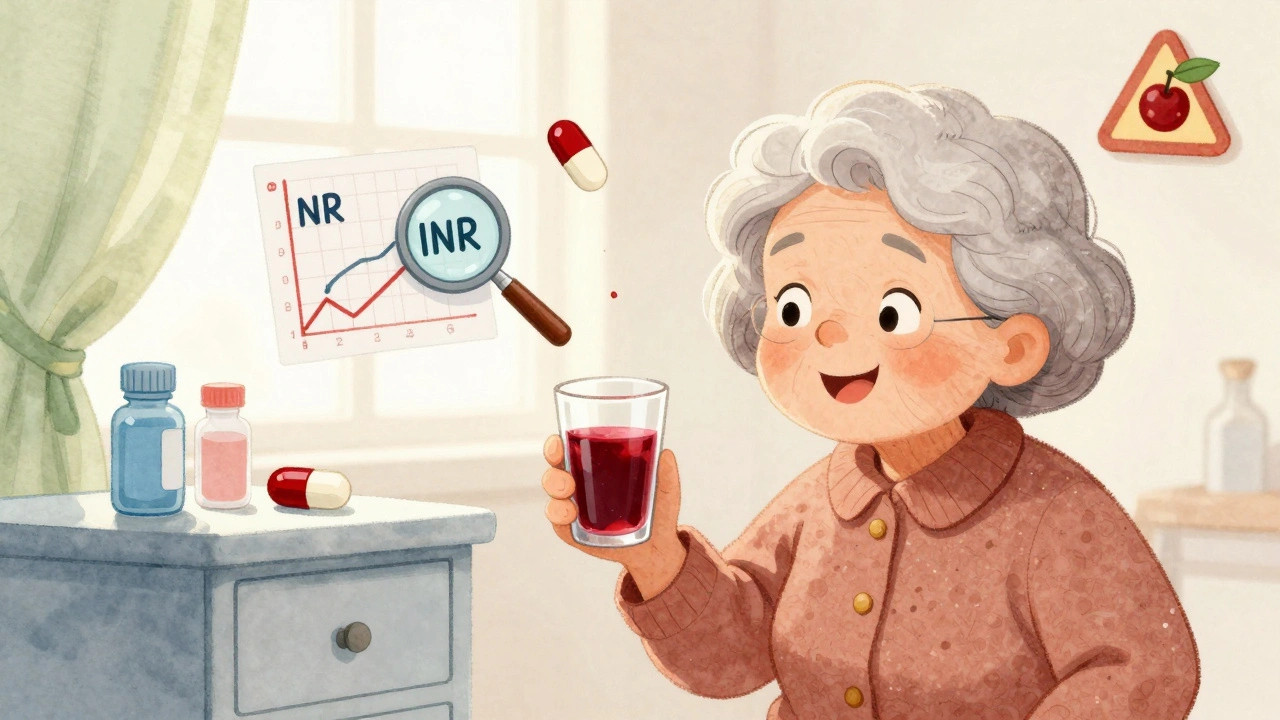
For decades, cranberry juice has been the go-to remedy for preventing urinary tract infections (UTIs). It’s in your fridge, your pantry, and even your kid’s lunchbox. But if you’re on medication-especially blood thinners like warfarin-you’ve probably heard warnings: cranberry juice might be dangerous. So is it a myth? Or is there real risk? The truth isn’t black and white. It’s messy, confusing, and full of conflicting advice. And that’s exactly why you need the facts.
Why Everyone’s Talking About Cranberry Juice and Warfarin
The scare started in 2003. A Canadian patient on warfarin, a drug used to prevent blood clots, had a sudden spike in their INR-a measure of how long it takes blood to clot. Their INR jumped from 2.5 to 5.2 after they started drinking cranberry juice daily. The doctor blamed the juice. The story went viral. Hospitals updated their guidelines. Pharmacists started warning patients. But here’s the problem: that case was just one person. Since then, researchers have run dozens of studies. Some showed no change in INR. Others showed small, temporary spikes. A 2010 review of 15 studies found that while 8 case reports suggested a link, all 4 controlled clinical trials found no significant effect. That means: real-world stories don’t always match what happens in a lab with real data. The American College of Clinical Pharmacy says patients on warfarin should avoid cranberry products. But they also admit: no large, high-quality study has proven a consistent, dangerous interaction. Meanwhile, the American Urological Association updated their 2021 guidelines to say cranberry is safe for UTI prevention-as long as you’re not on warfarin. So which side do you trust?The Science Behind the Interaction (It’s More Complex Than You Think)
Cranberry juice contains compounds called proanthocyanidins and flavonoids. In test tubes, these chemicals can block enzymes in the liver-specifically CYP2C9 and CYP3A4-that break down drugs like warfarin. If those enzymes slow down, warfarin builds up in your blood. That’s the theory. But here’s the catch: what happens in a petri dish doesn’t always happen in your body. Your stomach, liver, and gut process things differently. A 2009 study gave 18 women amoxicillin (an antibiotic) with or without cranberry juice. Even though cranberry juice might interfere with how drugs are absorbed, the total amount of antibiotic in their blood didn’t change. Same with cefaclor. No clinical effect. For warfarin, the story is murkier. A 2009 study gave 12 healthy people 250mL of cranberry juice three times a day for two weeks. Their INR didn’t budge. But other small studies, like the one that started this whole debate, showed spikes. Why the difference? One big reason: concentration. Most cranberry juice you buy at the store is only 27% cranberry. The rest is water, sugar, and apple or grape juice. The concentrated extracts-those pills or powders with 36mg+ of proanthocyanidins per serving-are a different story. Those aren’t juice. They’re supplements. And they’re growing fast. The global market hit $1.2 billion in 2022. But no one’s studying them the way they should.What About Other Medications? Antibiotics, Statins, and Alprazolam
If you’re on antibiotics for a UTI, you’re probably wondering: can I still drink cranberry juice? The answer is yes-based on solid evidence. The 2009 Kim study showed no impact on amoxicillin or cefaclor levels. The same goes for most common antibiotics. The FDA hasn’t flagged any of them. What about statins? Or blood pressure meds? Or antidepressants? For these, there’s no clinical evidence of interaction. The theoretical risk is low. No documented cases of harm in real patients. The American College of Clinical Pharmacy specifically says no significant interactions have been found with statins, antihypertensives, or most other common drugs. Now, alprazolam (Xanax) is different. It’s broken down by CYP3A4-the same enzyme cranberry might block. So logically, you might think it could raise alprazolam levels and cause drowsiness or dizziness. But here’s the kicker: no human study has ever shown this. It’s all theory. No case reports. No clinical trials. Just a lab result and a lot of guesswork. So if you’re on Xanax, don’t panic. But if you’re suddenly feeling more tired than usual after starting cranberry supplements, talk to your doctor. It’s not impossible-it’s just unproven.
What Do Real People Experience?
If you scroll through Reddit’s r/Pharmacy or Drugs.com reviews, you’ll find stories. One woman says her INR jumped from 2.8 to 4.1 after a week of cranberry pills. Another says her husband had a nosebleed after drinking cranberry juice with his warfarin. These aren’t made up. They’re real experiences. But here’s what those stories don’t tell you: most people who report these issues are taking concentrated supplements, not juice. And many aren’t tracking their INR regularly. Or they changed their diet, started a new medication, or got sick-all things that can affect warfarin too. A 2022 survey of 1,243 cranberry supplement users found 34% mentioned warfarin concerns. But only 12% reported actual INR changes. That’s a big gap. And in a 2021 survey of 587 Amazon reviewers, 43% said they got conflicting advice from doctors and pharmacists. That’s the real problem-not the juice. It’s the confusion.What Should You Actually Do?
Let’s cut through the noise. Here’s what works:- If you’re on warfarin: Avoid cranberry supplements. Stick to one 8oz glass of standard cranberry juice per day, if you want. But keep your INR checked regularly. Don’t suddenly start or stop cranberry without telling your doctor.
- If you’re on antibiotics: Drink the juice. No problem. The science says it’s safe.
- If you’re on statins, blood pressure meds, or antidepressants: No need to change anything. No evidence of harm.
- If you’re on DOACs (like apixaban or rivaroxaban): The data is still emerging. A 2023 clinical trial is underway. Until then, play it safe. Avoid concentrated extracts. Juice is probably fine.
What’s the Difference Between Juice and Supplements?
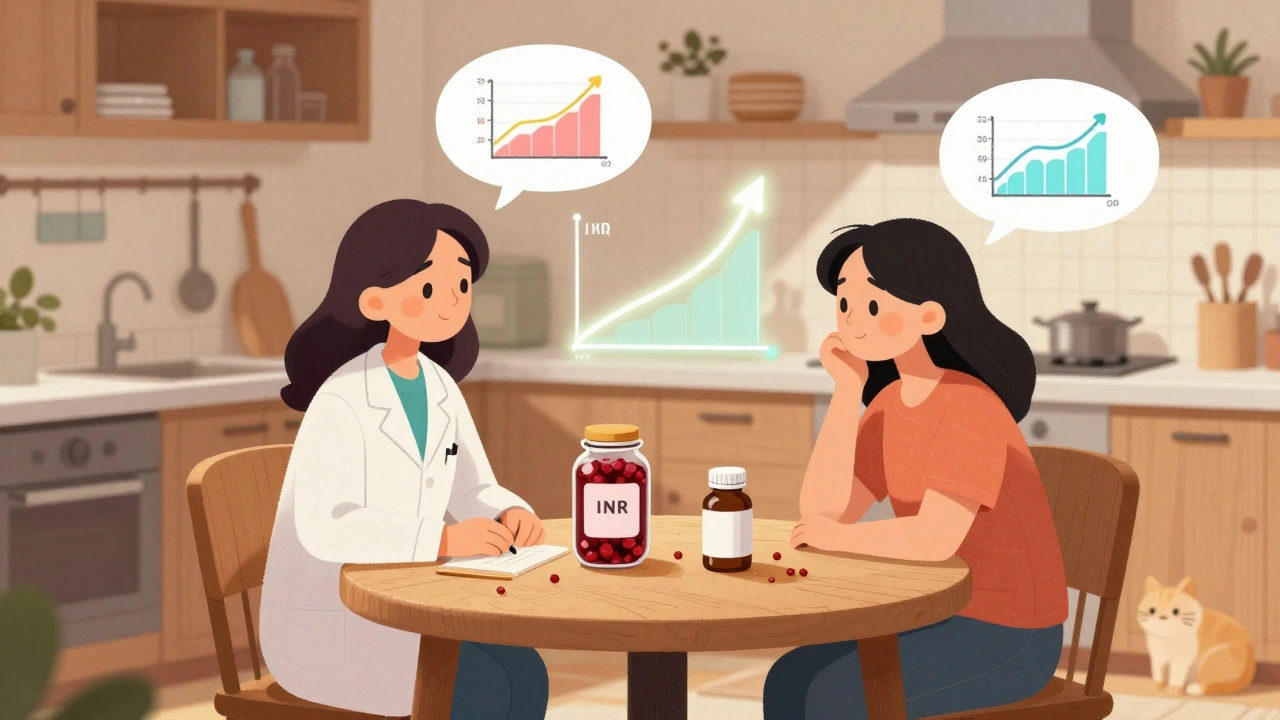
This is critical. Most people don’t realize they’re not drinking the same thing. Standard cranberry juice cocktail (like Ocean Spray) is about 27% cranberry. The rest is added sugar and other juices. It’s sweet. It’s diluted. And the proanthocyanidin content? Low. Cranberry supplements? Those pills or powders? They’re concentrated. Some contain 36mg or more of proanthocyanidins per serving. That’s like drinking 16oz of juice in one go. And that’s where the risk might be. The European Medicines Agency requires warning labels on high-concentration cranberry products. The U.S. FDA doesn’t. That’s why you’ll see conflicting advice. One country says: warn people. The other says: it’s a supplement. Use at your own risk.How to Stay Safe
You don’t need to give up cranberry juice to prevent UTIs. But you do need to be smart:- Stick to juice, not pills, unless your doctor says otherwise.
- Read labels. Look for % cranberry content. Avoid anything labeled “high potency” or “concentrated extract.”
- If you’re on warfarin, keep your INR checks regular. Don’t skip them.
- Talk to your pharmacist. They’re trained to spot these interactions. Ask: “Does this interact with my meds?”
- Don’t confuse cranberry with grapefruit. Grapefruit has 17 proven dangerous interactions. Cranberry? One possible one-warfarin-and even that’s debated.
Bottom line: cranberry juice isn’t the villain. The confusion is. The supplements are the wild card. And warfarin users need to be cautious-not scared.
Can cranberry juice interfere with warfarin?
Yes, it’s possible-but not guaranteed. Some case reports show INR spikes in people on warfarin who drank cranberry juice or supplements. But controlled studies haven’t consistently proven this. The risk is highest with concentrated supplements, not standard juice. If you’re on warfarin, avoid supplements and stick to one 8oz glass of juice per day. Always monitor your INR and tell your doctor if you start or stop cranberry products.
Is it safe to drink cranberry juice while taking antibiotics?
Yes. Multiple clinical studies, including one published in Antimicrobial Agents and Chemotherapy in 2009, found no significant effect on the absorption or effectiveness of antibiotics like amoxicillin or cefaclor when taken with cranberry juice. You can safely drink cranberry juice while on antibiotics for a UTI.
Do cranberry supplements interact with other medications besides warfarin?
There’s no strong evidence of interactions with statins, blood pressure meds, antidepressants, or most common drugs. Theoretical risks exist for drugs metabolized by CYP3A4 (like alprazolam), but no human studies have confirmed this. The only medication with consistent concern is warfarin. For everything else, standard cranberry juice is safe. Supplements are less studied-so use caution.
What’s the difference between cranberry juice and cranberry supplements?
Standard cranberry juice (like Ocean Spray) is only about 27% cranberry, with added sugar and water. Cranberry supplements are concentrated extracts-sometimes containing 36mg or more of proanthocyanidins per serving. That’s equivalent to drinking several glasses of juice. Supplements carry higher theoretical risk because of their potency. Juice is generally safe. Supplements require more caution.
Should I avoid cranberry juice if I’m on a DOAC like apixaban?
The evidence is still emerging. A 2023 clinical trial is studying cranberry extract’s effect on direct oral anticoagulants (DOACs) like apixaban. Since DOACs replaced warfarin for most patients, this is a major knowledge gap. Until results are in, it’s safest to avoid concentrated cranberry supplements. One 8oz glass of juice per day is likely fine, but check with your doctor.
Sean McCarthy
December 2, 2025 AT 22:08Cranberry juice and warfarin? Don't believe the hype. One case report in 2003 started all this. Science says no consistent link. Stick to juice, skip the pills. Simple.
Kshitij Shah
December 3, 2025 AT 06:32So in India we drink cranberry juice with our paracetamol and no one dies. Meanwhile Americans panic because one guy had a nosebleed. The real problem? Overmedicating and underthinking. Chill.
ANN JACOBS
December 4, 2025 AT 05:33It is of paramount importance to recognize that while the empirical evidence remains inconclusive in certain respects, the precautionary principle must be invoked when dealing with pharmacological agents of significant clinical consequence such as warfarin. The theoretical risk, however marginal, cannot be dismissed in populations with high baseline vulnerability to hemorrhagic events. Therefore, prudent clinical judgment dictates the avoidance of concentrated cranberry-derived supplements, while moderate consumption of commercially diluted juice may be considered acceptable under vigilant INR monitoring. Patient education and interdisciplinary communication remain indispensable.
Nnaemeka Kingsley
December 4, 2025 AT 15:21bro i been drinkin cranberry juice for years with my blood pressure med and nothin happened. why u guys so scared? its just juice. if u feel weird, stop. if u dont, keep goin. dont overthink it.
Linda Migdal
December 5, 2025 AT 23:49Of course the FDA doesn’t regulate this properly. That’s because they’re bought off by Big Juice. Meanwhile, Europe puts warning labels on it. Guess which side has the integrity? We’re being poisoned by corporate greed and lazy science.
Tommy Walton
December 7, 2025 AT 12:57The juice is a metaphor for modern medicine: diluted truth, sweetened by industry, served with a side of confusion. 🍹🧠
James Steele
December 7, 2025 AT 22:25The CYP450 enzyme system is not a mere biochemical pathway-it’s a symphony of metabolic nuance. To reduce cranberry’s potential interaction with warfarin to a binary ‘safe’ or ‘unsafe’ is to commit the fallacy of reductive materialism. The real danger lies not in the juice, but in the epistemological laziness of the lay public who mistake anecdote for evidence and fear for foresight.
Louise Girvan
December 9, 2025 AT 02:13They’re hiding the truth. Cranberry juice is a Trojan horse. The FDA, Big Pharma, and the WHO are all in cahoots. You think your INR is stable? You’re being monitored. You’re being manipulated. Don’t drink it. Ever.
soorya Raju
December 9, 2025 AT 18:34wait so cranberry juice is bad for warfarin but grapefruit is 17x worse? then why is grapefruit still in every grocery store? this whole thing is a distraction. they dont want us to know its the sugar in the juice that messes with meds, not the cranberries. #conspiracy