International Insulin Adjustment Calculator
Travel Details
Strategy Title
Description goes here.
Primary Risk
Risk description
Key Action
Action description
Step-by-Step Instructions
Enter your travel details to generate a personalized insulin adjustment plan.
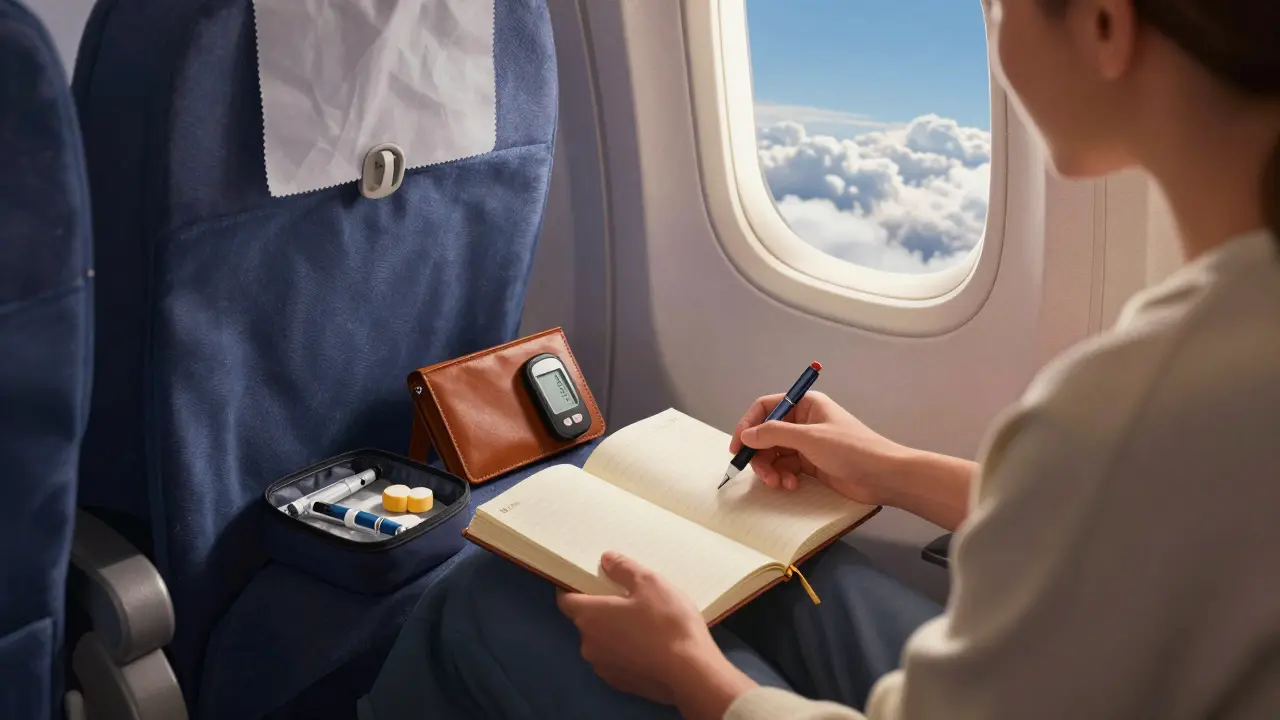
Imagine you are sitting in a window seat at 35,000 feet. You have just crossed three time zones eastbound. Your watch says it is dinner time, but your body-and your insulin levels-think it is still lunchtime. This disconnect is the single biggest risk for people managing diabetes while traveling internationally. It is not just about jet lag; it is about keeping your blood glucose stable when your internal clock and your medication schedule are fighting each other.
Getting this wrong can lead to dangerous drops or spikes in blood sugar. But getting it right requires more than just guessing. It involves understanding how direction matters, how different insulin types behave, and how to use technology to your advantage. Here is how to adjust your doses safely without turning your vacation into a medical emergency.
The Physics of Travel: Why Direction Changes Everything
When you travel, you are not just moving across space; you are compressing or stretching your day. The rule of thumb is simple: traveling east shortens your day, while traveling west lengthens it.
If you fly from Halifax to London (a roughly 5-hour difference), you are losing hours. A 24-hour cycle suddenly feels like 19 hours. Because your basal (background) insulin covers a set number of hours, taking your usual dose means you will have too much insulin active for that shortened day. This significantly increases the risk of hypoglycemia (low blood sugar).
Conversely, if you fly from New York to Honolulu (a 5-hour difference westward), your day stretches to 29 hours. Your morning dose of rapid-acting insulin will wear off before you reach your next meal. If you do not add extra coverage, your blood glucose will rise unchecked, leading to hyperglycemia.
| Travel Direction | Day Length Change | Insulin Adjustment | Primary Risk |
|---|---|---|---|
| Eastbound | Shortens | Reduce dose | Hypoglycemia (Low) |
| Westbound | Lengthens | Increase dose | Hyperglycemia (High) |
Calculating Your Dose: The Math Made Simple
You do not need a calculator app to figure out your adjustments, but you do need a formula. For most patients on a basal-bolus regimen, the adjustment depends on the number of time zones crossed.
For Eastbound Travel: You generally need less insulin. A common guideline is to reduce your evening basal insulin by approximately one-third for every 3-5 time zones crossed. If you are crossing fewer than 3 time zones, many guidelines suggest no change is needed, as the body can adapt quickly. However, if you are crossing 5 or more zones, consider splitting your long-acting insulin. Take half your usual dose at your home-time bedtime, and the other half at your destination’s bedtime.
For Westbound Travel: You need more insulin. Because the day is longer, you may need an additional dose of rapid-acting insulin. A practical approach is to take a supplemental dose of rapid-acting insulin 4-6 hours after your last meal. This dose should be roughly 50-75% of your standard mealtime correction factor. Do not skip meals to "save" insulin; skipping meals while adding extra basal insulin is a recipe for severe lows.
Dr. David Edelman from Duke University emphasizes that maintaining routine is more critical than perfect precision. Prioritize consistent meal timing over exact clock synchronization during the first 48 hours. Keep your blood glucose targets slightly higher (140-180 mg/dL) on travel days to create a safety buffer against unexpected lows.

Insulin Pumps vs. Injections: Different Rules Apply
If you use an insulin pump, the rules shift slightly because you have continuous control over your basal rates. The key decision is whether to change your pump time immediately or gradually.
Immediate Adjustment is changing your pump's clock to the destination time as soon as you arrive. This method works well if you are crossing fewer than 2 time zones. It aligns your basal profile with local time instantly. However, for larger time differences, this can cause a sudden mismatch between your programmed basal rate and your body's metabolic needs, increasing the risk of nocturnal hypoglycemia.
Staged Adjustment is changing your pump time in increments of 2 hours per day until synchronized. UCLA Health guidelines recommend this for changes exceeding 2 hours. Studies show this approach results in 27% fewer hypoglycemic events compared to immediate changes. It allows your body to adapt gradually. The downside? It is complex. You must manually adjust your pump settings daily, which can lead to errors, especially for older travelers or those with visual impairments.
Newer technology is bridging this gap. Devices like the t:slim X2 with Control-IQ technology automatically adjust basal rates based on GPS-detected time zone changes. If you have access to such technology, rely on it. If you are using an older model, stick to the staged adjustment plan and double-check your settings twice.
The Hidden Variables: Cabin Pressure and Temperature
Your insulin does not exist in a vacuum. The environment of an airplane affects both your body and your medication.
Cabin Pressure and Absorption: The Aerospace Medical Association notes that cabin pressure and dehydration can increase insulin absorption by 15-20%. This means your insulin works faster and stronger at altitude. To compensate, consider reducing your in-flight insulin doses by 10-15%. Stay hydrated; dehydration thickens blood and can skew glucose readings.
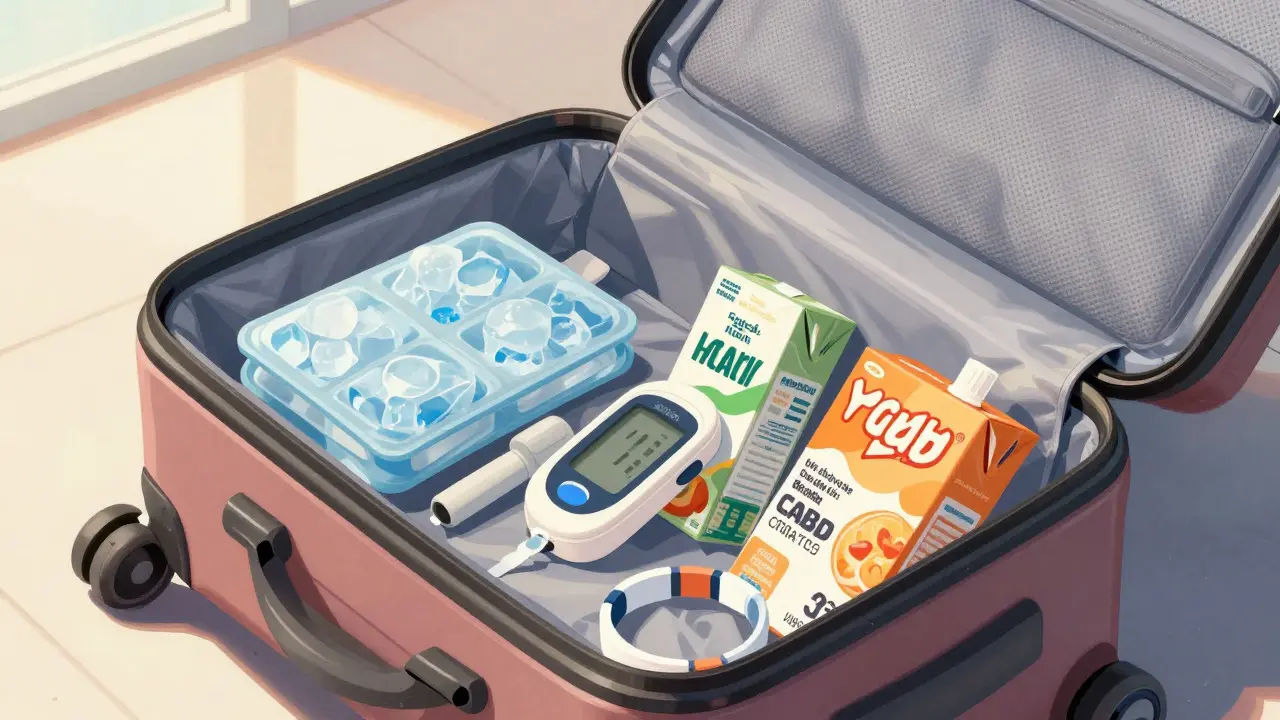
Temperature Sensitivity: Insulin is fragile. Exposure to temperatures above 86°F (30°C) for more than 24 hours causes it to lose potency-approximately 15% per day. Never check your insulin as luggage. Always carry it in your personal bag. Use an insulated cooler case with ice packs (which TSA allows) to keep it cool. If your insulin freezes, discard it. Frozen insulin loses its effectiveness permanently.
Security Screening: TSA regulations allow insulin and supplies in carry-on luggage without liquid restrictions. However, delays happen. Carry a letter from your physician detailing your medical necessity. Data shows travelers with documentation experience 89% fewer screening delays. Be prepared to remove your pump or CGM sensor for separate screening if requested, though most agents are trained to handle these devices.
Building Your Safety Net
Even with perfect calculations, things go wrong. Flights get delayed, meals get missed, and stress hormones spike blood sugar. Your safety net includes three components: monitoring, supplies, and communication.
- Continuous Glucose Monitoring (CGM): The European Association for the Study of Diabetes recommends CGMs for all travelers crossing three or more time zones. Real-time data reduces severe hypoglycemia events by 58%. Set alerts for highs and lows so you can react before symptoms appear.
- Extra Supplies: Bring 20-30% more insulin than you think you need. Pack fast-acting carbs (glucose tablets, juice boxes) in your pocket, not your bag. If you have a low in the middle of a flight, you need immediate access.
- Medical ID: Wear a medical alert bracelet or carry a card stating you have diabetes and use insulin. In an emergency, paramedics need to know this within seconds.
Consult your diabetes care team at least four weeks before international travel. They can help you create a personalized plan based on your specific regimen and health history. Patients who follow this advice experience 53% fewer travel-related disruptions.
Troubleshooting Common Scenarios
Scenario 1: You forgot to adjust your dose. If you realize you took your full evening dose after flying east, monitor your glucose closely every hour for the next 8 hours. Have fast-acting carbs ready. If you feel shaky, sweaty, or confused, treat the low immediately. Do not wait.
Scenario 2: Your pump battery dies. Carry backup syringes or pens. Know how to calculate your total daily dose (TDD) to estimate manual injections if your pump fails. Contact your pump manufacturer’s support line immediately; they often have global support networks.
Scenario 3: You are stuck in a layover. If your layover is long enough to warrant a meal, treat it as a normal meal. If it is short, skip the meal and avoid bolusing unless your glucose is high. Hydrate and walk around to keep blood flowing.
How many time zones require insulin adjustment?
Most guidelines suggest adjusting doses when crossing three or more time zones. For changes under two hours, simply changing your watch and pump time upon arrival is usually sufficient. However, individuals with tight glycemic control or brittle diabetes may need adjustments even for smaller time differences.
Should I change my insulin pump time immediately or gradually?
For time zone changes under 2 hours, change the time immediately. For changes greater than 2 hours, a staged adjustment (changing by 2 hours per day) is safer and reduces hypoglycemia risk by 27%. Immediate adjustment is simpler but carries a higher risk of nocturnal lows.
Does cabin pressure affect insulin absorption?
Yes. Cabin pressure and dehydration can increase insulin absorption by 15-20%. It is recommended to reduce in-flight insulin doses by 10-15% and stay well-hydrated to counteract this effect.
What is the best target blood glucose range while traveling?
Experts recommend keeping blood glucose slightly higher than normal, targeting 140-180 mg/dL on travel days. This creates a safety buffer against hypoglycemia, which is more dangerous than mild hyperglycemia during transit.
Can I pack insulin in checked luggage?
Never pack insulin in checked luggage. Temperatures in cargo holds can freeze insulin, rendering it useless. Always carry insulin in your personal carry-on bag, ideally in an insulated cooler case.
Do I need a doctor's note for TSA security?
While not always mandatory, carrying a physician's letter detailing your medical necessity for insulin and equipment significantly reduces screening delays. Travelers with documentation experience 89% fewer issues at security checkpoints.
How does temperature affect insulin potency?
Insulin exposed to temperatures above 86°F (30°C) loses approximately 15% of its potency per day. Keep insulin cool using insulated cases. Avoid direct sunlight and extreme heat sources.
Is Continuous Glucose Monitoring (CGM) recommended for travel?
Yes. The European Association for the Study of Diabetes recommends CGMs for all insulin-dependent travelers crossing three or more time zones. Real-time data helps prevent severe hypoglycemia events by up to 58%.
Ambarish Pal
July 19, 2026 AT 20:39You people are absolutely obsessed with these rigid formulas as if diabetes is some kind of precise science rather than a chaotic biological mess. The article suggests reducing basal insulin by one-third for every three to five time zones, but that is dangerously simplistic because it ignores individual metabolic variability which can swing wildly based on stress, sleep quality, and even the humidity in the cabin. I have flown eastbound dozens of times and followed these 'expert' guidelines to the letter, only to end up in the ER with a blood sugar of 40 mg/dL because my body decided to rebel against the predictable logic of endocrinologists. The real issue here is that the medical community loves to create rules to absolve themselves of liability when things go wrong, so they hand you a calculator instead of teaching you how to listen to your own body's screaming signals. It is dramatic, yes, but necessary to say that this advice is garbage for anyone who doesn't fit the statistical average.
Andrew Donovan
July 21, 2026 AT 18:45While Ambarish makes a passionate point about individual variability, we must remember that structure provides a safety net for those who might otherwise panic in the clouds. The concept of 'staged adjustment' for pump users is particularly elegant in its simplicity, allowing the body to acclimate gradually rather than being thrown into the deep end of a new circadian rhythm. Think of it like adjusting to a new timezone not just physically, but philosophically; we are asking our internal clocks to dance to a different beat, and sometimes that requires a gentle nudge rather than a forceful shove. The data showing a 27% reduction in hypoglycemic events with staged adjustments is compelling evidence that patience pays off in this intricate ballet of biology and technology.
Patrick Meyer
July 23, 2026 AT 12:55honestly this whole thing is overblown. most ppl dont need to be so neurotic about their insulin. i fly all the time and just wing it. if ur numbers are high u eat less next meal, if low u eat more. why do we need all these fancy charts and percentages? its just basic common sense. the elites want to complicate everything so they can sell you more gadgets and apps. keep it simple stupid.
Prashant Shishodia
July 24, 2026 AT 17:13Patrick, you are missing the point entirely. It is not about being neurotic; it is about survival. When you are at 35,000 feet, your options are limited, and a severe low can happen fast. You need a plan because panic does not help you calculate a correction dose. Listen to me: prepare before you fly. Check your supplies. Know your numbers. Do not wait until you are in the air to figure out what went wrong. Be proactive, not reactive. Your health depends on it.
Autumn LW
July 25, 2026 AT 01:20The audacity of Patrick to suggest 'winging it' with life-saving medication is precisely why so many preventable emergencies occur in airports worldwide. It is a testament to the decline of personal responsibility when individuals dismiss structured medical advice in favor of lazy improvisation. One must respect the complexity of glycemic management; it is not a casual hobby but a rigorous discipline requiring attention to detail, adherence to protocol, and a willingness to engage with the nuances of pharmacokinetics. Those who treat insulin dosing as an afterthought are not only endangering themselves but also burdening emergency services with consequences of their own negligence. We must demand higher standards of care from ourselves, not lower ones driven by apathy and ignorance.
Scott Colter
July 26, 2026 AT 21:45There is a profound philosophical implication in the way we adjust our bodies to artificial time zones. We are creatures of rhythm, yet we subject ourselves to the violent disruption of jet travel, forcing our internal metronomes to skip beats. In this dissonance, insulin becomes the mediator between our biological truth and our geographical fiction. Perhaps the true lesson is not just about math, but about humility-acknowledging that our bodies are not machines to be programmed, but gardens to be tended with care and awareness during these moments of displacement.
Paul Lyons
July 27, 2026 AT 04:54Forget the foreign guidelines and listen to someone who knows what works in America. Our healthcare system is the best in the world, and our doctors know better than some European association telling us what to do. If you are flying, you stick to the American way: tough it out, stay hydrated, and don't let those globalist health organizations dictate your life. This obsession with international protocols is a sign of weakness. Real Americans manage their diabetes with grit and determination, not by following some staged adjustment plan from UCLA or Duke. We need to take back control of our health narratives from these bureaucratic overlords who think they know better than the patient standing right there.
Deva Vidya
July 28, 2026 AT 21:33Paul, your aggression is noted, but perhaps misplaced. The goal is safety, not nationalism. Whether you are in New York or London, a low blood sugar event feels the same. Let us focus on the practical steps that keep us safe rather than dividing ourselves over geography. The staged adjustment method is helpful because it reduces risk, plain and simple. Embrace the tools that work, regardless of where they come from. We are all in this together, trying to navigate a complex world with a chronic condition. Support each other, share tips, and stay positive. You got this!
ANINDA GHOSH
July 29, 2026 AT 04:19In my culture, we often speak of balance as the highest virtue, and this article beautifully illustrates the delicate equilibrium required when traveling. The interplay between the external chaos of flight schedules and the internal order of metabolic needs mirrors the broader human experience of adapting to change while maintaining core stability. It is fascinating to see how modern technology, such as CGMs, serves as a bridge between tradition and innovation, allowing us to honor our bodily rhythms while embracing the mobility of the contemporary world. May all travelers find harmony in their journeys! :)
MiMi Stanley
July 31, 2026 AT 03:04I quietly observed the debate here and noticed a lot of noise around the philosophy and politics of travel, but very little on the actual mechanics of packing. I am an introvert, so I prefer to prepare meticulously and avoid drama. For those who are also quiet planners, consider this: pack your insulin in a clear, insulated bag with a temperature indicator strip. It gives you peace of mind without needing to argue with TSA agents. Also, keep your glucose tabs in your jacket pocket, not your carry-on. If you get separated from your bag, you still have your lifeline. Small details make a big difference.
Najmunisa Govender
July 31, 2026 AT 16:33Oh, dear reader, please do overlook the harshness of some comments above; kindness is always paramount in our shared struggles. I cannot emphasize enough the importance of hydration, for the dry air in cabins can indeed deceive us into thinking our levels are stable when they are not. Please, take extra care to drink water frequently, and do hesitate to ask fellow passengers for assistance if you feel faint. Your well-being matters deeply to all of us who understand the fragility of health. Stay safe, stay hydrated, and may your journey be smooth and free of lows.
Crystal Tadlock
August 1, 2026 AT 16:18They want you to trust the pumps and the apps because they are tracking your every move. Who owns the data from your CGM? Big Pharma? The government? They tell you to adjust your doses, but who adjusts the algorithms? It is a conspiracy to keep you dependent on their devices. I throw mine away and use my gut. Trust no one. The system is rigged to sell you more insulin and more monitors. Wake up people. The real cure is freedom from these corporate chains.
Tad Cronn
August 2, 2026 AT 16:58Crystal, your paranoia is evident, but let us look at the facts. The t:slim X2 uses GPS to detect time zone changes. That is data collection. Why do they need to know where you are? To target ads? To sell your location history? It is intrusive. But beyond that, Tad here wants to analyze your psychological state. You are projecting your fear of authority onto medical devices. Interesting defense mechanism. Meanwhile, the rest of us are trying to figure out if we should split our basal dose. Focus on the insulin, not the shadowy cabal controlling your pump. Although, honestly, who knows what else they are logging?