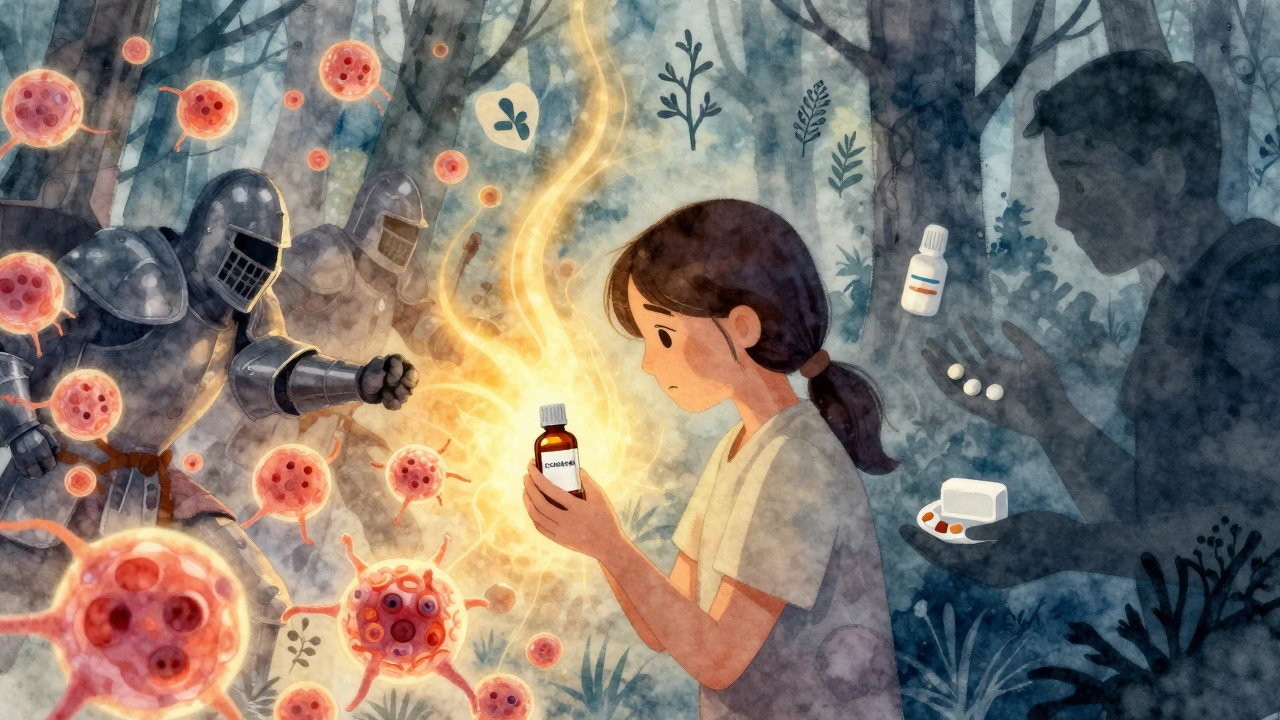
Echinacea & Immunosuppressant Interaction Checker
People take echinacea to fight colds, boost immunity, or feel more protected during flu season. It’s one of the most popular herbal supplements in the U.S., with millions of bottles sold every year. But if you’re on immunosuppressant drugs - whether after a transplant, for an autoimmune disease like lupus or rheumatoid arthritis, or for other immune-related conditions - echinacea could be putting your health at serious risk.
How Echinacea Actually Works
Echinacea isn’t just a simple herb. It’s a complex mix of chemicals, including alkamides, polysaccharides, and caffeic acid derivatives. These compounds trigger real biological changes in your body. In the short term, they activate immune cells like macrophages, neutrophils, and natural killer cells. They make these cells more active, more mobile, and more aggressive in hunting down invaders. That’s why many people feel like echinacea helps them get over a cold faster.
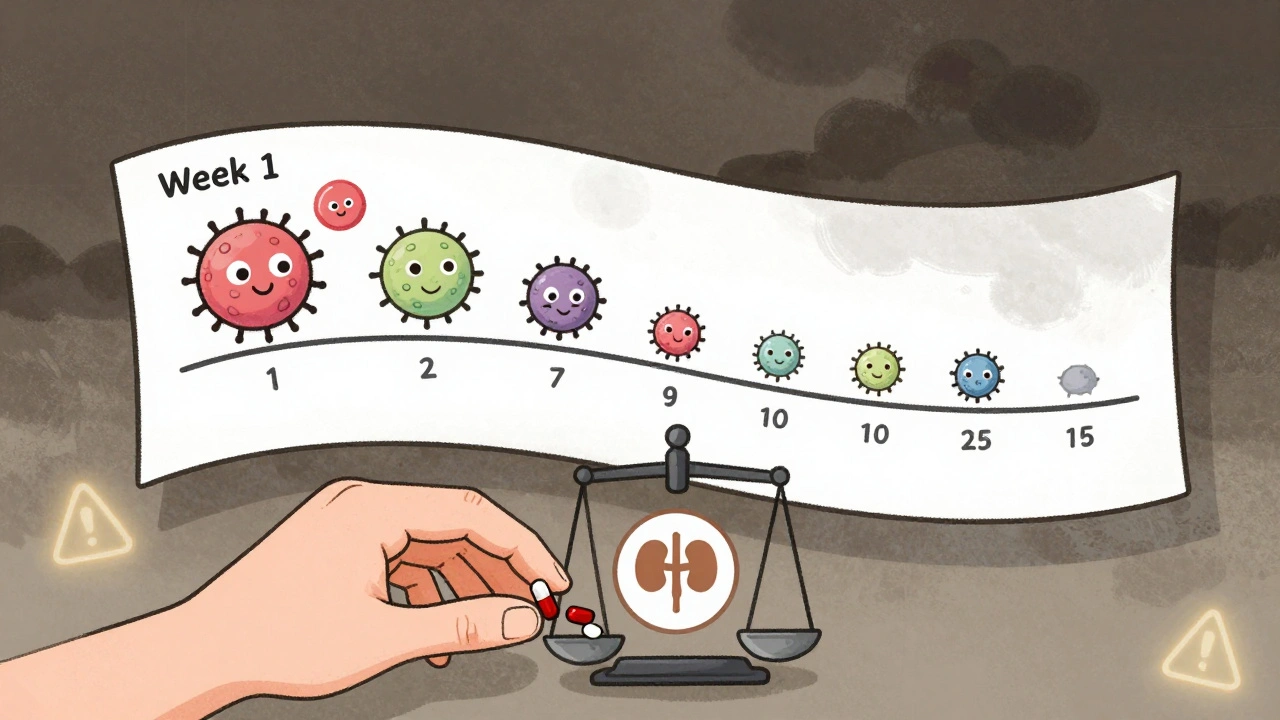
But here’s the twist: after eight weeks or more of daily use, studies show echinacea can start doing the opposite. Instead of boosting your immune system, it begins to suppress it. This isn’t a myth - it’s documented in peer-reviewed journals and confirmed by the American Academy of Family Physicians. The same herb that wakes up your immune system in the first week might quiet it down by the third month.
What Are Immunosuppressants?
Immunosuppressants are powerful drugs designed to calm down or shut off parts of your immune system. They’re essential for people who’ve had organ transplants. Without them, your body would attack the new kidney, liver, or heart like an invader. They’re also used for autoimmune diseases - conditions where your immune system mistakenly attacks your own tissues. Common immunosuppressants include:
- Cyclosporine
- Tacrolimus
- Azathioprine
- Mycophenolate mofetil
- Methotrexate
- Corticosteroids like prednisone
These drugs don’t just reduce inflammation. They lower your body’s ability to fight infections, which is why transplant patients are told to avoid crowds and raw foods. Their immune systems are intentionally weakened - and that’s by design.
The Dangerous Conflict
Now imagine taking echinacea while on one of these drugs. You’re trying to boost your immune system while your medication is trying to suppress it. It’s like stepping on the gas and the brake at the same time. The result? Your medication may not work as well.
Multiple case reports show this isn’t theoretical. A 55-year-old man with pemphigus vulgaris - a serious autoimmune skin disease - started taking echinacea for a cold. His condition worsened, and his immunosuppressant dose had to be increased just to regain partial control. Another patient, a 61-year-old with lung cancer, developed dangerously low platelet counts after combining echinacea with chemotherapy drugs. A 32-year-old man developed a rare, life-threatening blood disorder called thrombotic thrombocytopenic purpura shortly after starting echinacea.
The Memorial Sloan Kettering Cancer Center, one of the most respected oncology and transplant research institutions in the world, explicitly warns that echinacea may antagonize the effects of immunosuppressants. The American Society of Health-System Pharmacists classifies this interaction as moderate and recommends avoiding concomitant use.
Real-World Consequences
It’s not just about theory. A 2021 survey of 512 transplant recipients found that 34% had taken echinacea after their surgery. Of those, 12% reported complications their doctors suspected were linked to herbal use. Patient forums like Inspire and HealthUnlocked show dozens of stories from transplant recipients who noticed their rejection markers rising after starting echinacea. Some had to increase their medication doses. Others suffered acute rejection episodes.
The American Society of Transplantation issued clear guidance in 2020: Avoid echinacea completely if you’ve had a solid organ transplant. By 2022, 87% of transplant centers across the U.S. had adopted this rule.
It’s not just transplant patients. People with rheumatoid arthritis, lupus, or multiple sclerosis who take immunosuppressants are also at risk. The American College of Rheumatology’s 2023 guidelines state: Patients on immunosuppressive therapy for autoimmune diseases should avoid echinacea due to potential reduction in medication efficacy. Ninety-two percent of surveyed rheumatologists agreed.
Why Other Herbs Are Safer
Not all supplements are dangerous with immunosuppressants. Ginger, for example, has mild anti-inflammatory effects but doesn’t significantly alter immune cell activity. Milk thistle supports liver function and doesn’t directly interact with immune pathways. Turmeric has immune-modulating properties, but its effects are much more subtle and less likely to interfere with drug levels.
Echinacea stands out because of its dual-phase action - stimulatory at first, suppressive later - and because it directly targets the same immune pathways that immunosuppressants are designed to control. It’s not just a mild interaction. It’s a direct, biologically plausible, and clinically documented conflict.

What the Experts Say
The European Medicines Agency concluded in 2022 that the risk of interaction between echinacea and immunosuppressants cannot be excluded. That’s not a strong warning - it’s a cautious acknowledgment that the danger is real enough to require labeling changes across the EU.
The FDA issued warning letters in 2023 to three supplement companies for selling echinacea products that claimed immune-boosting benefits without disclosing the risk of interaction with transplant medications. This is rare. The FDA doesn’t send warning letters lightly.
Meanwhile, the National Institutes of Health is funding a $2.4 million study (NCT04851234) to measure exactly how echinacea affects tacrolimus levels in kidney transplant patients. Preliminary results are expected in early 2025. Until then, the evidence we have is enough to act.
What You Should Do
If you’re taking immunosuppressants:
- Stop taking echinacea immediately - even if you’ve been using it for months.
- Tell your doctor or pharmacist about every supplement you take, including teas, powders, and tinctures.
- Don’t assume ‘natural’ means safe. Many herbal products are not tested for interactions.
- Ask your provider for alternatives. There are safer ways to support your immune system without risking your medication.
If you’ve already taken echinacea while on immunosuppressants and you notice new symptoms - unexplained fever, fatigue, swelling, skin rashes, or changes in urine output - contact your healthcare team right away. These could be signs your immune system is becoming overactive again.
Bottom Line
Echinacea isn’t evil. It’s a plant with powerful chemistry. But when you’re on immunosuppressants, your body is in a delicate balance. Adding something that actively fights that balance - even if it’s labeled ‘natural’ or ‘safe’ - can have life-threatening consequences. The science is clear. The warnings are real. And the cases are documented.
Don’t gamble with your health. If you’re on immunosuppressants, leave echinacea on the shelf.
Can I take echinacea if I’m on prednisone?
No. Prednisone is a corticosteroid immunosuppressant. Echinacea can stimulate immune cells that prednisone is trying to suppress. This could reduce the drug’s effectiveness and increase your risk of rejection or disease flare-ups. Avoid echinacea completely while taking prednisone.
How long does echinacea stay in your system?
Echinacea’s active compounds, especially alkamides, can remain detectable in the bloodstream for up to 72 hours after the last dose. But its immune effects - both stimulatory and suppressive - can last much longer, especially with regular use. If you’ve been taking it daily for weeks, your immune system may still be affected even after you stop.
Is echinacea tea safe with immunosuppressants?
No. Echinacea tea contains the same active compounds as capsules or tinctures. The concentration may be lower, but it’s still enough to interfere with immunosuppressants. There’s no safe dose of echinacea if you’re on these medications.
What are safer alternatives to echinacea for immune support?
Focus on proven, low-risk strategies: get enough sleep, manage stress, eat a balanced diet rich in fruits and vegetables, stay hydrated, and wash your hands regularly. Vitamin D and zinc are generally safe for most people on immunosuppressants, but always check with your doctor first. Avoid any supplement marketed as an ‘immune booster’ - they’re often just echinacea or similar herbs in disguise.
Why don’t more doctors warn patients about this?
Many doctors don’t ask about supplements. Patients often don’t think of herbal teas or capsules as ‘medications.’ But research shows over a third of transplant patients use echinacea without telling their care team. It’s a gap in communication, not a gap in evidence. If you’re on immunosuppressants, always volunteer your supplement use - don’t wait to be asked.
Is there any research proving echinacea causes transplant rejection?
Large-scale clinical trials are still underway, but there are multiple documented case reports of transplant rejection occurring shortly after echinacea use. The mechanism is biologically plausible, the timing matches, and the risk is consistent across different patient groups. Major medical societies treat this as a proven risk, even without a randomized trial.
Isabelle Bujold
December 4, 2025 AT 10:18I’ve been a pharmacist for 22 years, and I can’t tell you how many times I’ve seen this exact scenario play out. Patient comes in on tacrolimus after a kidney transplant, says they’re fine, no issues - then mentions they’ve been drinking echinacea tea every morning ‘for immunity.’ By the time they get to me, their drug levels are all over the place, and their creatinine’s spiking. It’s not speculation - it’s clinical reality. The herb doesn’t just ‘interfere’ - it actively destabilizes the therapeutic window. I’ve had to adjust doses three times in the last six months because of this. If you’re on immunosuppressants, don’t even think about it. There’s zero benefit that outweighs the risk.
And yes, I’ve seen the ‘but it’s natural!’ argument a thousand times. Natural doesn’t mean safe. Arsenic is natural. Poison ivy is natural. Your body doesn’t care about the label - it cares about the chemistry.
Also, if you’re taking echinacea for colds, you’re already doing it wrong. The evidence for its efficacy is weak at best. There are safer, better-studied ways to support your immune system without risking your transplant or autoimmune condition. Sleep. Hydration. Handwashing. These aren’t sexy, but they work.
And if your doctor didn’t warn you? That’s on them. But don’t wait for them to ask. Volunteer this info. Always.
Just… please, stop.
George Graham
December 5, 2025 AT 08:06This is such an important post. I know so many people who think herbal = harmless, especially when they’re feeling vulnerable after a transplant or diagnosis. I had a cousin who took echinacea after her lung transplant because her friend swore by it - she ended up in the hospital with rejection symptoms. It took weeks to stabilize her meds. She’s fine now, but it was terrifying.
It’s not just about the science - it’s about trust. We trust our bodies to tell us what’s right, but sometimes, especially when we’re scared or tired, we make choices that seem logical but are actually dangerous. Please, if you’re on immunosuppressants, talk to your pharmacist. They’re the unsung heroes of medication safety.
And if you’re reading this and thinking ‘I’m only taking it for a few days’ - trust me, it doesn’t work that way. The effects linger. The pathways don’t reset overnight.
Thanks for putting this out there. Needed.
John Filby
December 5, 2025 AT 18:34Wait so… if I take echinacea tea once a week, is that still bad? 😅 I’ve been doing it since last winter and I haven’t felt any different… but I’m on methotrexate for RA…
Also, is there like a list of safe teas? I love chamomile but I don’t want to accidentally kill my meds 😭
Elizabeth Crutchfield
December 6, 2025 AT 00:51omg i just realized i’ve been drinking echinacea tea every morning for 8 months 😳 i thought it was just a ‘herbal wellness’ thing… my rheumatologist is gonna kill me. i’m gonna call her first thing tomorrow. thanks for the wake up call!! 🙏
Ben Choy
December 6, 2025 AT 13:33Just wanted to say thank you for this. I’m a transplant recipient and I’ve seen firsthand how easy it is to fall into the ‘natural remedy’ trap. Everyone’s got a cousin who ‘swears by’ something. But when your life depends on balance, you can’t afford guesswork.
Also - I started taking ginger tea instead. It’s warm, comforting, and doesn’t mess with my tacrolimus. Zero drama. Highly recommend.
And if you’re scared to tell your doctor about supplements? Don’t be. We’ve all done it. They’ve seen it all. They’re not judging - they’re trying to keep you alive.
Stay safe out there 💪
Emmanuel Peter
December 7, 2025 AT 12:09Okay but let’s be real - if you’re dumb enough to take echinacea while on immunosuppressants, you probably also think vitamin C cures cancer. This isn’t a medical issue, it’s a cognitive one. People don’t read. They don’t research. They just Google ‘best immune booster’ and buy whatever’s on sale at Whole Foods. Congratulations, you just turned your transplant into a Russian roulette game.
And don’t even get me started on ‘natural’ being safe. The most toxic substances on earth are natural. Hemlock. Botulinum. Ricin. All plants. Echinacea is just the latest one to fool people.
Stop being lazy. Read the damn label. Or better yet - don’t take anything unless your doctor wrote it on a prescription pad.
Ashley Elliott
December 9, 2025 AT 03:18Thank you for writing this with so much clarity. I’ve been on mycophenolate for lupus for 11 years now, and I’ve never touched echinacea - but I’ve had friends who did, and they didn’t know the risk. I’ve even seen ads for echinacea gummies labeled ‘immune support’ with no warning on the bottle.
It’s wild how little regulation there is in the supplement industry. The FDA doesn’t test these before they hit shelves. That’s on them. But we can’t wait for the system to fix itself.
If you’re reading this and you’re on immunosuppressants: don’t take anything new without asking your provider. Even if it’s ‘just tea.’ Even if it’s ‘just one time.’
You’re not being paranoid. You’re being smart.
And if you’re a healthcare provider? Please, ask about supplements. Don’t assume patients know to tell you.
Love this post. Sharing it with everyone I know.
Chad Handy
December 10, 2025 AT 04:38Look, I get it. You’re scared. You’re tired of getting sick. You want something - anything - to make you feel safe again. I’ve been there. I’ve taken echinacea after my bone marrow transplant. I thought I was being proactive. I thought I was ‘helping my body.’
Turns out, I was sabotaging my own recovery.
My platelets dropped. My fever spiked. My oncologist looked at me like I’d betrayed him. I didn’t even know echinacea could do that. I just saw it on a shelf and thought, ‘Hey, it’s natural!’
It took me six months to get back to baseline. I lost my job. I lost my confidence. I lost trust in my own body.
If you’re reading this and you’re thinking about trying it - don’t. Not for a cold. Not for ‘boosting.’ Not for ‘one time.’
Your life is worth more than a placebo with side effects.
I’m sorry I didn’t know sooner. Don’t make my mistake.
Augusta Barlow
December 11, 2025 AT 00:47Okay but… what if this is all just a Big Pharma scam? 🤔
I mean, why would the FDA suddenly care about echinacea? Why now? Did you know that the same companies that make immunosuppressants also own supplement brands? And that the NIH study is funded by… wait for it… pharmaceutical interests?
What if echinacea is actually helping people avoid rejection because it’s *modulating* the immune system - not fighting it? What if they’re demonizing it because it’s too cheap? Because people don’t need expensive drugs if they can just drink tea?
I’ve been reading about ‘immune suppression’ being a myth. The body doesn’t need to be ‘shut down’ - it needs balance. Echinacea might be the missing piece.
Just saying… maybe the real danger is trusting the system too much.
Joe Lam
December 11, 2025 AT 04:41Wow. What a delightfully pedestrian take on a complex pharmacological interaction. You’ve reduced a multi-system, dose-dependent, time-variable biological phenomenon to a binary ‘don’t take it’ slogan. How quaint.
The real issue here isn’t echinacea - it’s the complete lack of nuance in public health messaging. The dual-phase effect is well-documented, yes - but what about dosage? Duration? Route of administration? Individual metabolic variation?
Are you seriously suggesting a 65-year-old transplant patient on low-dose prednisone shouldn’t sip echinacea tea once a week during flu season? That’s not science - that’s fearmongering dressed up as medical advice.
And yet, here we are, treating patients like toddlers who can’t handle complexity. The medical establishment’s obsession with oversimplification is what’s truly dangerous.
Jenny Rogers
December 12, 2025 AT 00:37It is with profound moral gravity that I address this matter. The human organism, a sacred vessel of divine design, must not be subjected to the reckless whims of unregulated botanical substances - especially when those substances interfere with the divinely ordained protocols of pharmaceutical intervention. To tamper with the delicate equilibrium of immunosuppressive therapy is not merely unwise - it is an affront to the sanctity of medical science and the covenant between healer and healed.
One cannot invoke the language of ‘natural’ to justify the violation of physiological harmony. Nature, in its unguided state, is chaotic. Medicine, in its disciplined pursuit of order, is holy. To conflate the two is to commit epistemological heresy.
Let this serve as a solemn reminder: the path to health is paved not with herbal infusions, but with rigorous adherence to evidence-based protocols - protocols that have been vetted, peer-reviewed, and sanctified by centuries of accumulated wisdom.
May you find the strength to forsake the seductive allure of the unregulated, and embrace the quiet dignity of prescribed order.
Ollie Newland
December 13, 2025 AT 17:47Big fan of this breakdown. The dual-phase action of echinacea is such a critical point - most people don’t realize it flips from stimulant to suppressant after 8+ weeks. That’s not common knowledge. I’ve seen patients on azathioprine come in with ‘mysterious’ flares, and when I dig into their supplement history, it’s always echinacea. Always.
Also, the fact that it affects CYP3A4 and P-gp transporters? That’s the real kicker. It doesn’t just ‘interfere’ - it directly alters drug absorption and clearance. Tacrolimus levels can drop 30-50% in some cases. That’s not a ‘maybe’ - that’s a clinical emergency waiting to happen.
And yeah, echinacea tea? Same compounds. Same risk. No safe dose. Zero.
Just wish more pharmacists would ask about herbal stuff instead of assuming patients don’t take anything. We’re the ones who catch this stuff before it turns into a transplant failure. But we can’t if people don’t tell us.
Rebecca Braatz
December 15, 2025 AT 15:12THIS. NEEDS. TO. BE. SHARED. I’m a nurse in a transplant unit, and I’ve seen people lose their organs because they thought ‘natural’ meant ‘no side effects.’ One guy lost his liver because he took echinacea for ‘stress relief.’ He cried when he found out. So did I.
Don’t wait for your doctor to ask. Don’t assume it’s ‘fine.’ Don’t think ‘I’m only taking it for a week.’
Take it off your shelf. Right now. Delete it from your Amazon cart. Tell your family. Tell your friends.
You’re not being dramatic. You’re being alive.
And if you’re looking for safe alternatives? Sleep. Water. Walks. Deep breaths. That’s it. You don’t need a bottle to be healthy.
Love you all. Stay safe.
Michael Feldstein
December 16, 2025 AT 08:27Hey - I’m on cyclosporine for psoriasis, and I used to take echinacea every fall. I stopped after reading this. No regrets.
But I want to add: I started taking vitamin D3 + zinc instead, and my colds have actually gotten *less* frequent. Weird, right? Turns out, not being chronically deficient might be the real immune booster.
Also, I switched to ginger tea. Tastes great, no interaction risk. And I started washing my hands like I’m in a hospital. No joke - it’s been the best thing I’ve done for my health in years.
Thanks for the clarity. I feel way more in control now.
And yeah - if you’re on immunosuppressants, skip the herbal hype. Your body already has everything it needs. You just gotta give it the right conditions to work.