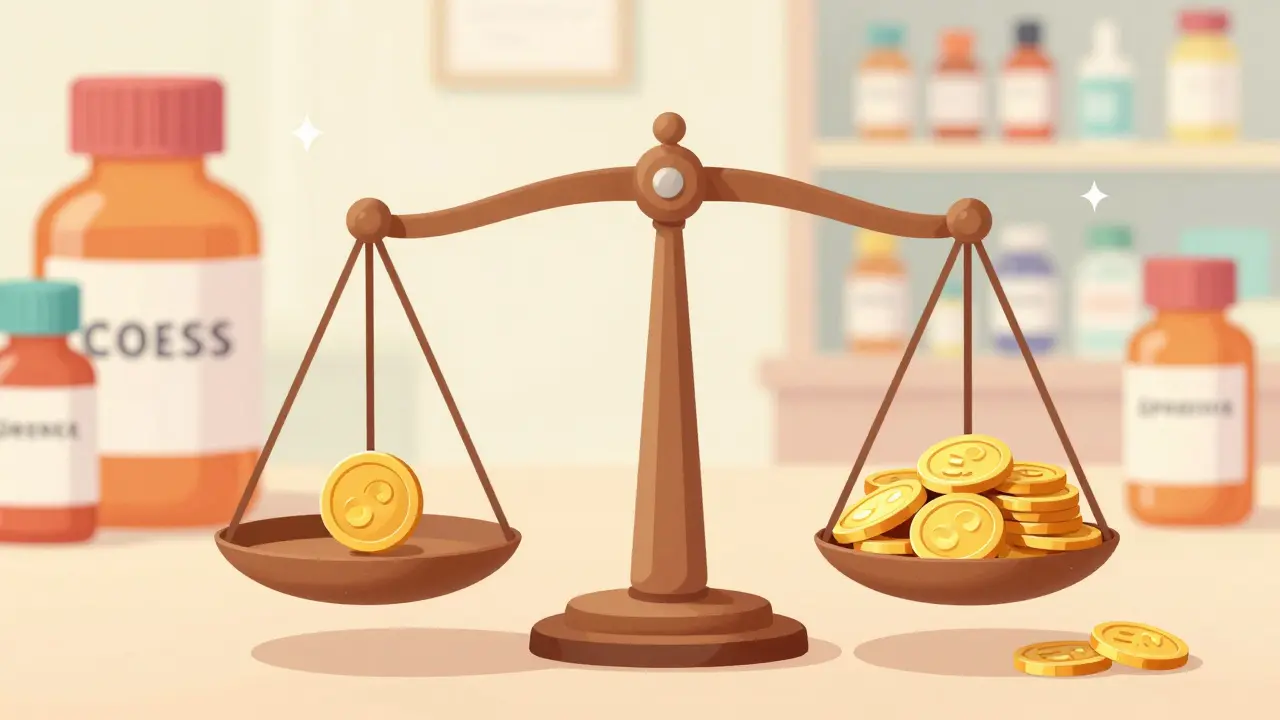
Imagine paying $100 for a medication when a version that does the exact same thing costs $20. For most of us, that sounds like a no-brainer. But when it comes to antibiotic combination products is medical formulations that integrate two or more active pharmaceutical ingredients, such as two different antibiotics, or combine a drug with a delivery device. These are designed to fight tougher infections or make dosing easier, but getting these as generics is far more complicated than swapping a standard pill for a cheaper version.
Quick Guide to Generic Availability
- What they are: Drugs containing multiple active ingredients or a drug paired with a device (like a prefilled syringe).
- Cost Impact: Generics often enter the market at 30-80% lower prices than brand names.
- The Hurdle: They require complex FDA approval through the ANDA pathway to prove they work exactly like the original.
- The Benefit: Massive healthcare savings-estimated at $2.2 trillion globally from 2010 to 2020.
How Generics Actually Reach the Market
For a generic antibiotic combination to hit your local pharmacy, the manufacturer can't just mix ingredients and hope for the best. They usually follow the Abbreviated New Drug Application (or ANDA), which is a streamlined path that doesn't require repeating every single clinical trial the original brand did. Instead, they have to prove "therapeutic equivalence."
This means the generic must produce the same clinical effect and have the same safety profile as the Reference Listed Drug (RLD). A great example of this in action was back in 2010, when Hospira launched the first generic version of piperacillin and tazobactam for injection. This was a huge win for hospitals because it provided a powerful, dual-action antibiotic at a much lower price point.
The Challenge of Drug-Device Combinations
It gets trickier when the drug comes with a gadget. These are called Generic Drug-Device Combination Products (or g-DDCPs). Think of prefilled syringes, inhalers, or infusion pumps. Here, the FDA doesn't just look at the chemicals; they look at the hardware.
If a manufacturer changes the way a button feels on an injector pen or alters the labeling on a vial, they have to prove those changes won't confuse the patient or lead to a dosing error. The regulatory path depends on the Primary Mode of Action (PMOA). If the drug is the main part of the treatment, the drug-led pathway is used. To make this less of a nightmare for companies, the FDA uses a six-phase development approach to help them navigate the paperwork without sacrificing safety.
| Feature | Standard Generics | g-DDCPs |
|---|---|---|
| Approval Path | ANDA | ANDA or 505(b)(2) |
| Primary Focus | Chemical equivalence | Chemical + Device functionality |
| Complexity | Low to Medium | High (Hardware/UI design) |
| Substitution Laws | Usually straightforward | Often blocked by state laws |

Why Some Generics Take Off and Others Don't
You might think that as soon as a cheaper version exists, everyone switches. In reality, it's not that simple. A study published in Nature Communications looked at 13 different antibiotics and found some weird patterns. For example, prescriptions for Ciprofloxacin and Levofloxacin shot up significantly after generics became available. But other drugs, like cefdinir, actually saw a decrease in use.
Why the difference? It's often about "co-interventions." For instance, when aztreonam went generic, it coincided with the launch of a new inhalation treatment for cystic fibrosis. Because patients needed IV antibiotics to prepare for those inhalations, the demand for aztreonam spiked. This shows that generic availability is just one piece of the puzzle; clinical trends and new treatments for specific diseases also drive how these drugs are used.
The Legal Loophole Slowing Down Your Savings
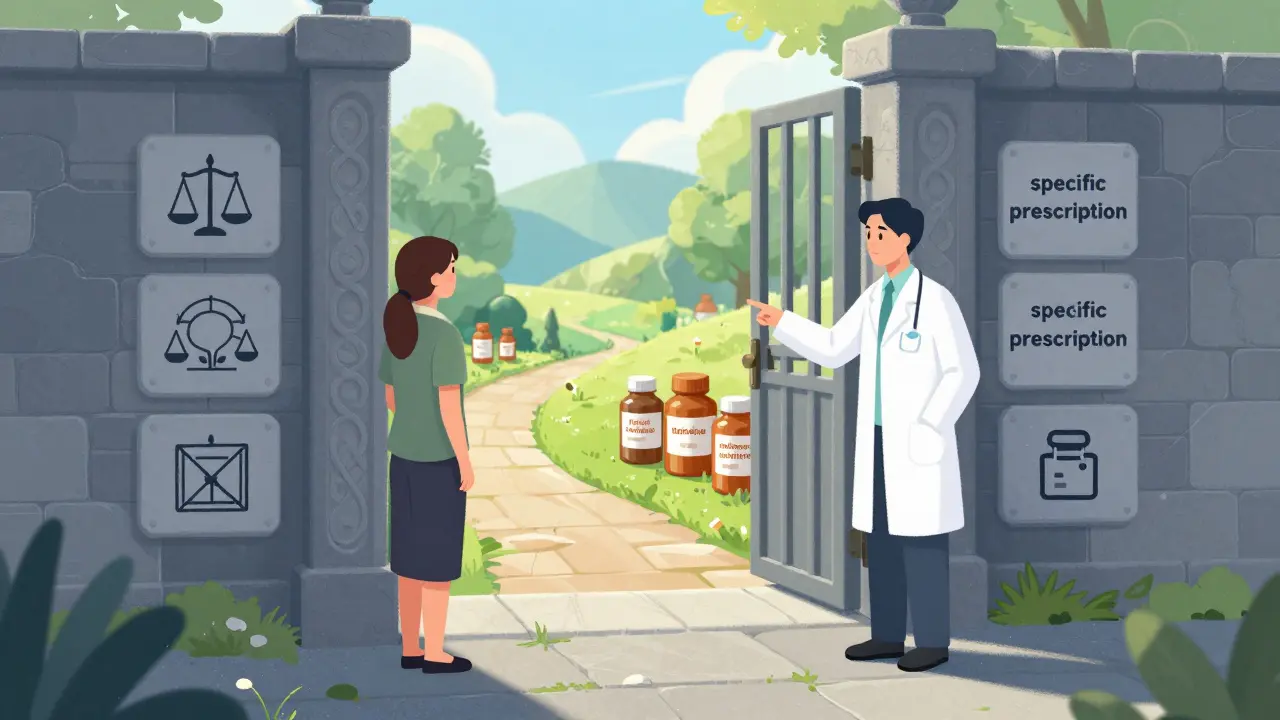
Here is the frustrating part: even if a generic combination exists, your pharmacist might not be allowed to give it to you. This is due to state substitution laws. Most of these laws were written decades ago for simple pills. They don't always account for complex combination products or those with devices.
Legal experts have pointed out that our current framework for determining "equivalence" is outdated. This creates a barrier where the drug is approved by the FDA, but state law prevents the pharmacy from automatically swapping the brand for the generic. This is a major hurdle that experts are calling for a "multi-pronged approach" to fix, involving federal and state governments working together to modernize these rules.
What This Means for Patients and Providers
From a patient's perspective, the goal is simple: better adherence. When out-of-pocket costs go down, people are more likely to finish their entire course of antibiotics, which is crucial for preventing antibiotic resistance. For providers, the challenge is staying current. The Office of Combination Products (OCP) within the FDA is constantly updating best practices to ensure that when a doctor prescribes a generic combo, the efficacy remains identical to the brand name.
If you are a healthcare provider, keep in mind that additional data is usually required if a combination product has a new indication for use or a different route of administration. You can't always assume a generic combo is a 1:1 swap if the delivery method has changed.
Will a generic antibiotic combination work as well as the brand name?
Yes. For a generic to be approved by the FDA, it must demonstrate therapeutic equivalence to the Reference Listed Drug. This means it must have the same active ingredients, produce the same clinical effect, and maintain a comparable safety profile.
Why is my pharmacist unable to substitute a generic for my combination antibiotic?
This is often due to state substitution laws. Many states have rules that allow automatic substitution for simple drugs but create barriers for complex combination products or those involving devices, even if the FDA has approved them as generic equivalents.
What is a g-DDCP?
A Generic Drug-Device Combination Product (g-DDCP) is a medical product that combines a generic drug with a delivery device, such as a prefilled syringe, an inhaler, or an injector pen, to administer the medication to the patient.
How much cheaper are generic antibiotic combinations?
While it varies by drug, research indicates that generics typically enter the market at prices 30% to 80% lower than the original brand-name versions.
Does the FDA require new clinical trials for every generic combination?
Generally, no. Through the ANDA pathway, manufacturers provide summaries of data and comparative risk assessments to prove equivalence to the existing approved drug, rather than conducting entirely new large-scale clinical trials.
Next Steps for Better Access
If you're a patient struggling with the cost of a combination antibiotic, your first move should be to ask your doctor if a generic version is available and if they can write the prescription specifically for that generic. Since substitution laws vary, a specific brand or generic name on the script can sometimes bypass the pharmacy's legal limitations.
For those in the industry, the focus is now on the FDA's evolving guidance from the Office of Combination Products. Staying aligned with the most recent updates from conferences like REdI is essential for navigating the complex submission process and getting affordable treatments to patients faster.