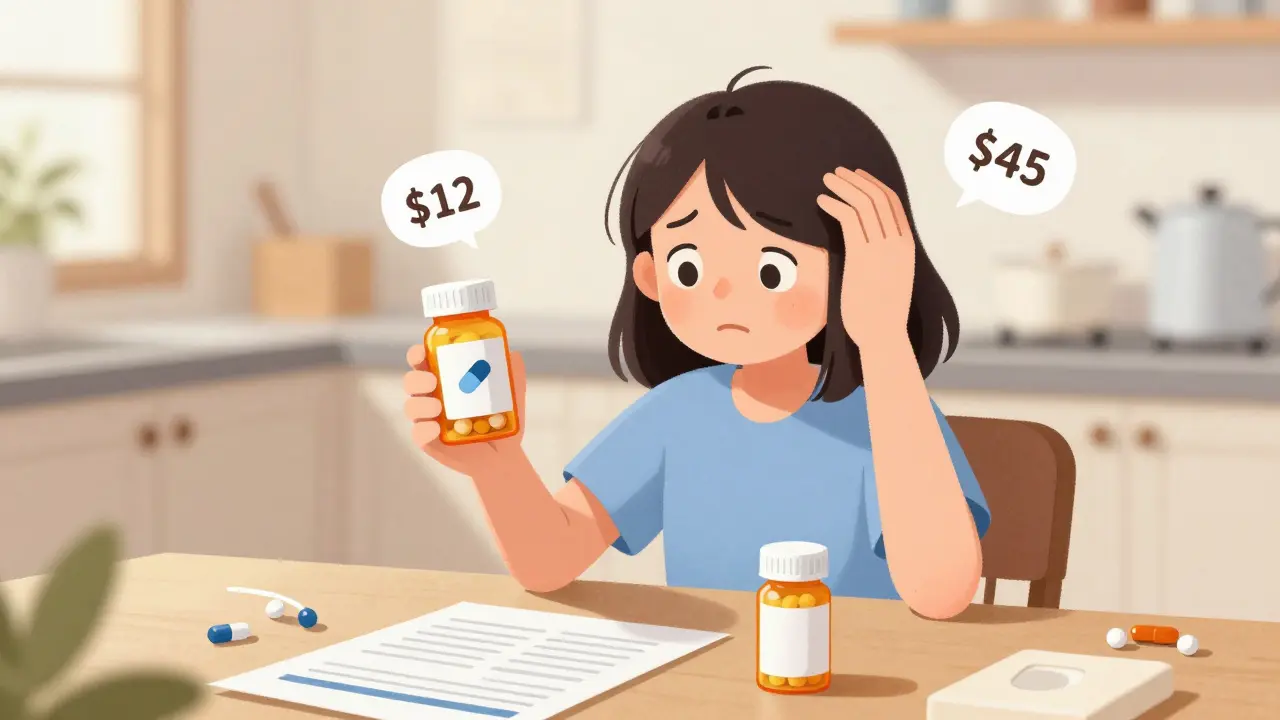
Picture this: you have high blood pressure and high cholesterol. Your doctor prescribes a single pill that handles both conditions. It’s convenient. But when you check your insurance app, that one pill costs $45. If you switch to two separate generic pills-one for each condition-the total cost drops to $12. Why does the simpler option cost more? The answer lies in how insurance coverage treats generic drug combinations versus individual generics.
This isn’t just a hypothetical scenario. Millions of patients face this trade-off every month. While generic drugs are famously cheap-often costing 80-85% less than brand-name versions (FDA, 2023)-the structure of combination products creates unique pricing puzzles. Understanding these dynamics can save you hundreds of dollars annually without compromising your health.
How Insurance Plans Structure Generic Coverage
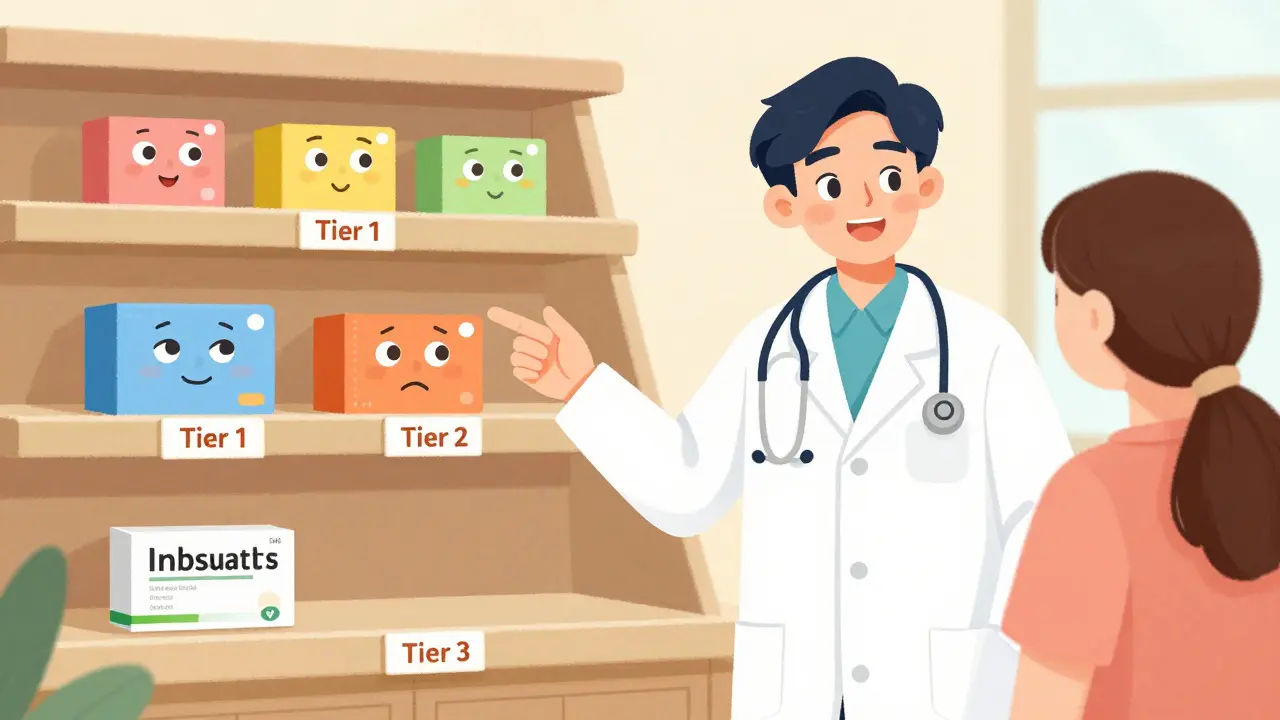
To understand why combination drugs sometimes cost more, you first need to look at how insurers organize their formularies. Most plans, including Medicare Part D and private employer plans, use a tiered system. These tiers determine your out-of-pocket costs.
- Tier 1: Preferred generic drugs. Copays are often as low as $0-$15.
- Tier 2: Preferred brand-name drugs. Medium copays ($47-$112).
- Tier 3: Non-preferred brands or specialty generics. Higher copays.
- Specialty Tier: High-cost injectables or complex therapies.
Here is the catch: not all generics are created equal in the eyes of an insurer. A 2022 analysis published in PubMed Central examined over 4 million plan-product combinations and found that while 84% of plans covered generics exclusively, the specific placement of those generics varied wildly. Some insurers place individual generic components in Tier 1 but leave the combination product in Tier 2 or even Tier 3 if it lacks sufficient competition among manufacturers.
This discrepancy arises because Pharmacy Benefit Managers (PBMs) like CVS Caremark, Express Scripts, and OptumRx negotiate rebates with drug manufacturers. If a combination generic has only one manufacturer (a "single-source generic"), that company holds more pricing power. Insurers may then decide it’s cheaper to cover the two individual ingredients separately, where multiple manufacturers compete to drive prices down.
The Cost Battle: One Pill vs. Two Pills
Let’s break down the math. Imagine you need treatment for hypertension. You have two options:
- Option A: A generic combination pill containing Lisinopril and Hydrochlorothiazide.
- Option B: Two separate generic pills: one Lisinopril and one Hydrochlorothiazide.
In many cases, Option B wins on price. According to user reports from Medicare forums, patients have seen combination generics priced at $50 per month while the sum of the individual generics was only $20. This happens because the combination product might be classified as a "non-preferred generic" due to lower market competition, whereas the individual ingredients are highly commoditized.
However, it’s not always about raw price. There is a hidden cost called adherence friction. Taking two pills twice a day increases the chance you’ll forget a dose. Studies show that simplified regimens (one pill) improve adherence by up to 30%. So, while the combination pill might cost $30 more a month, it could prevent expensive emergency room visits caused by uncontrolled blood pressure.
| Factor | Generic Combination Product | Individual Generic Components |
|---|---|---|
| Monthly Cost | Variable; often higher if single-source | Typically lower due to high competition |
| Dosing Convenience | High (one pill) | Low (multiple pills) |
| Formulary Placement | Often Tier 2 or 3 | Usually Tier 1 |
| Adherence Rates | Higher | Lower |
| Insurance Preference | Depends on rebate negotiations | Generally preferred for cost control |
Navigating Medicare Part D and Private Plans
If you are on Medicare Part D, the rules have shifted significantly. Starting January 1, 2024, the Inflation Reduction Act eliminated the deductible and capped out-of-pocket spending at $2,000 annually. This cap changes the calculus for many seniors. If you are near that $2,000 limit, paying extra for a combination pill might push you into catastrophic coverage faster, which could actually be beneficial depending on your usage patterns.
For those with private insurance, the landscape is less standardized. Only 92% of large employer plans use tiered formularies that systematically favor generics (KFF, 2023). However, the definition of "preferred generic" varies by region and plan sponsor. Dr. Karen Van Nuys from USC notes that Medicare Part D structures create incentives for plans to favor generics due to coverage gap dynamics. In private markets, however, employers often prioritize total cost containment, meaning they may deny coverage for a combination generic unless it proves clinically superior to the split-dose approach.
A critical pain point for patients is the "step therapy" protocol. Many insurers require you to try the cheaper individual generics before they will cover the combination product. This process can take weeks and requires physician involvement.
When Combination Drugs Make Sense
Despite the cost differences, there are scenarios where the combination generic is the better choice. First, consider narrow therapeutic index drugs. For medications where small variations in blood concentration matter, consistency is key. Dr. Aaron Kesselheim of Harvard Medical School warns that while generics are generally bioequivalent, switching between different manufacturers of individual components can sometimes lead to variability. A fixed-dose combination ensures you get the same ratio of drugs every time.
Second, look at convenience for chronic conditions. If you manage diabetes, hypertension, and lipid levels, taking five separate pills daily is burdensome. The U.S. generic pharmaceutical market is projected to reach $219.2 billion by 2028 (Grand View Research, 2023), driven partly by the demand for these convenient multi-drug formulations. If your insurance covers the combination in Tier 1, it is almost always worth using.
How to Fight for Better Coverage
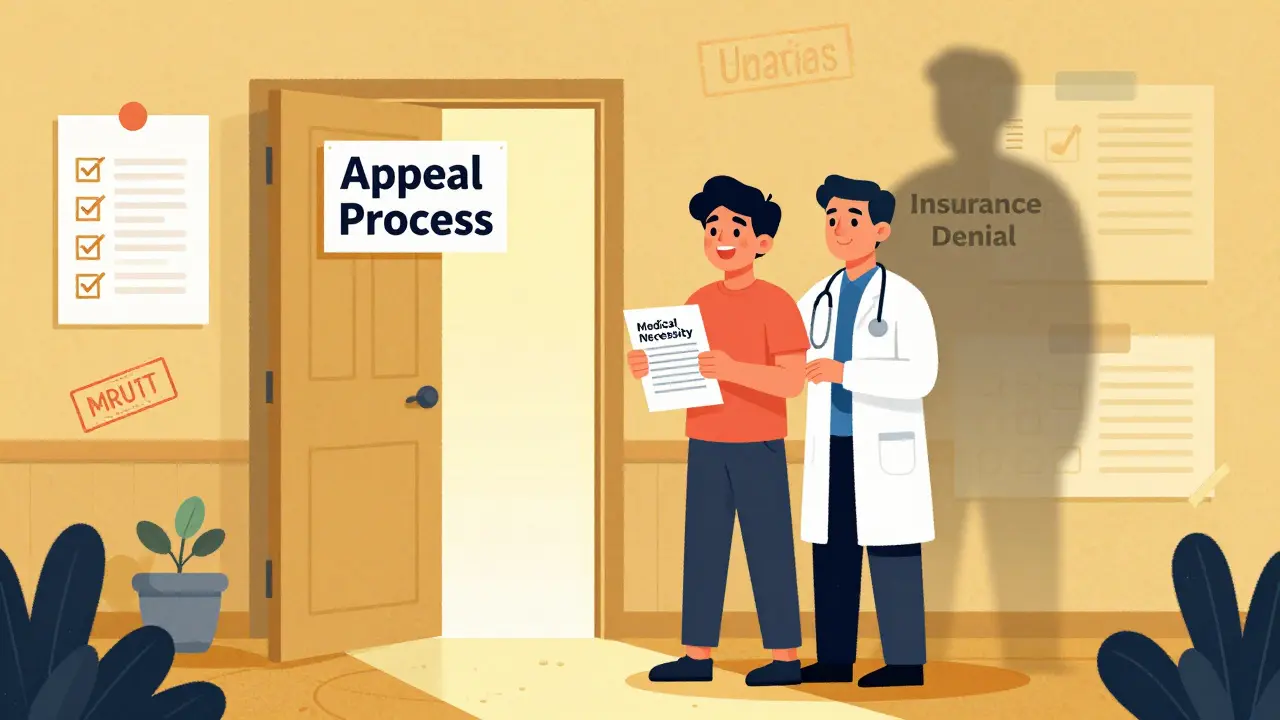
If your insurance denies coverage for a generic combination or places it in a high-cost tier, you are not powerless. Here is a step-by-step guide to appealing the decision:
- Check the Formulary: Log into your insurer’s portal. Look for the "drug finder" tool. Note the tier placement for both the combination and the individual ingredients.
- Contact Your Doctor: Ask them to submit a "coverage determination" request. This is a formal appeal stating medical necessity. For example, your doctor might argue that the combination reduces pill burden and improves adherence.
- Request Expedited Review: Standard appeals take 72 hours. If you are out of medication, request an expedited review, which must be resolved within 24 hours (Medicare.gov, 2023).
- Leverage Manufacturer Assistance: Although generics rarely have copay cards, some single-source generics do. Check if the manufacturer offers patient assistance programs.
Remember, 68% of Medicare beneficiaries require assistance understanding their coverage decisions (Medicare Rights Center, 2023). Don’t hesitate to ask for help from a patient advocate or pharmacist.
Future Trends in Generic Coverage
The landscape is evolving. With the FDA’s Generic Drug User Fee Amendments (GDUFA III) aiming to accelerate approvals through 2027, we expect more generic combination products to enter the market. Increased competition should drive down prices and move more combinations into Tier 1 status.
Additionally, the September 2023 federal court ruling against copay accumulator programs means patients can now apply manufacturer discounts toward their out-of-pocket maximums. While this primarily affects brand-name drugs, it signals a broader shift toward patient-centric cost-sharing models. As biosimilars and complex generics become more common, insurers will need to refine their algorithms for evaluating value beyond simple price tags.
Why does my insurance charge more for a generic combination pill?
Insurance companies place drugs in tiers based on negotiated rebates and competition. If a generic combination has only one manufacturer (single-source), the insurer may pay more for it. In contrast, individual generic ingredients often have multiple manufacturers competing, driving prices down. Consequently, the combination may be placed in a higher tier with a larger copay.
Is it safe to take two separate generic pills instead of one combination pill?
Yes, in most cases. The FDA ensures that generic drugs are bioequivalent to brand-name drugs. Taking two separate generics provides the same active ingredients as a combination pill. However, for narrow therapeutic index drugs, consistency in manufacturing is crucial, so consult your doctor before splitting doses.
How can I get my insurance to cover a generic combination drug?
You can file a coverage determination appeal with your doctor’s help. Your physician must document why the combination is medically necessary, such as improved adherence or reduced side effects. You can also request an expedited review if you are running out of medication.
What changed in Medicare Part D regarding generic coverage in 2024?
Starting January 1, 2024, the Inflation Reduction Act eliminated the Medicare Part D deductible and capped annual out-of-pocket spending at $2,000. This change affects how much you pay for both generic and brand-name drugs, potentially making higher-tier generics more affordable as you approach the cap.
Do Pharmacy Benefit Managers (PBMs) influence generic drug prices?
Yes. PBMs like CVS Caremark and Express Scripts negotiate rebates with drug manufacturers. They decide which generics are placed in lower tiers based on these deals. If a PBM secures a better deal for individual generics than for a combination product, they will incentivize patients to choose the separate pills.
Claire A
May 12, 2026 AT 12:06I had no idea the PBM rebate system was this rigged against patients. It makes total sense why my copay for the combo pill is so high even though it's generic. Thanks for breaking down the tiered system, it really clarifies why insurers push us toward separate pills when it's so much harder to remember two doses. I'm definitely going to ask my doctor about a coverage determination next month.
andrew iregbayen
May 13, 2026 AT 18:00This is super helpful info. I always just grabbed whatever was cheapest at the pharmacy counter without thinking about the long-term adherence issues. The point about emergency room visits from missed doses is scary but true. I guess convenience has a price tag after all.
Laura ciotoli
May 15, 2026 AT 08:44You are absolutely correct that insurance companies prioritize their bottom line over patient health outcomes. The step therapy protocols are nothing short of abusive and designed to waste your time. You need to file an appeal immediately if they deny you the combination drug. Do not let them bully you into taking three pills when one will do. Demand better care now.
Amelia Vaughan
May 16, 2026 AT 15:35People who can't handle two pills should get their act together. It's not that hard. Stop complaining about costs and take responsibility for your own health. If you're too lazy to count pills, that's on you, not the insurance company.
Jannet Suen
May 18, 2026 AT 01:31Oh, look at Amelia being such a joy again. *sigh* She clearly hasn't dealt with the cognitive load of managing multiple chronic conditions while working full-time. It's not about laziness, dear, it's about executive function and survival. And yes, the insurance greed is real. I switched to separate generics last year and saved $300, but I still miss the simplicity of one pill. We deserve better than this broken system. :/
Sarah O'Donnell
May 18, 2026 AT 14:50ugh this is so frustrating 😡 i feel like the whole healthcare system is designed to make us fail. why do we have to fight so hard for basic meds? its literally unethical how they price these things. i hope someone sues them all into oblivion 🙄💔
Kevin S
May 20, 2026 AT 02:32Hey everyone! 👋 Just wanted to say that checking the formulary online before picking up prescriptions is a game changer. I did that last week and realized my combo pill was Tier 3 but the separate ones were Tier 1. Saved me a ton of cash 💰 Keep fighting the good fight folks!
Madison Jones
May 21, 2026 AT 19:19This article is incredibly well-researched!!! I love how it explains the role of PBMs in driving up prices. Everyone needs to read this!! It’s so important to know your rights under Medicare Part D especially with the new $2,000 cap. Don’t be afraid to ask questions!!! Your pharmacist is your best friend here!!!
Sarah Grenberg
May 22, 2026 AT 19:17I find the section on narrow therapeutic index drugs particularly compelling. It highlights a critical medical nuance that is often overlooked in cost-saving discussions. While financial prudence is essential, clinical stability must remain the priority. I encourage all readers to consult their physicians regarding bioequivalence concerns before switching formulations. Your health is paramount.
Brian Lee
May 24, 2026 AT 18:10good post man. i think people forget that generic doesnt always mean cheap if there is only one maker. competition is key. glad more combos might come out soon to help lower prices. thanks for sharing this info.