What Are GLP-1 Receptor Agonists?
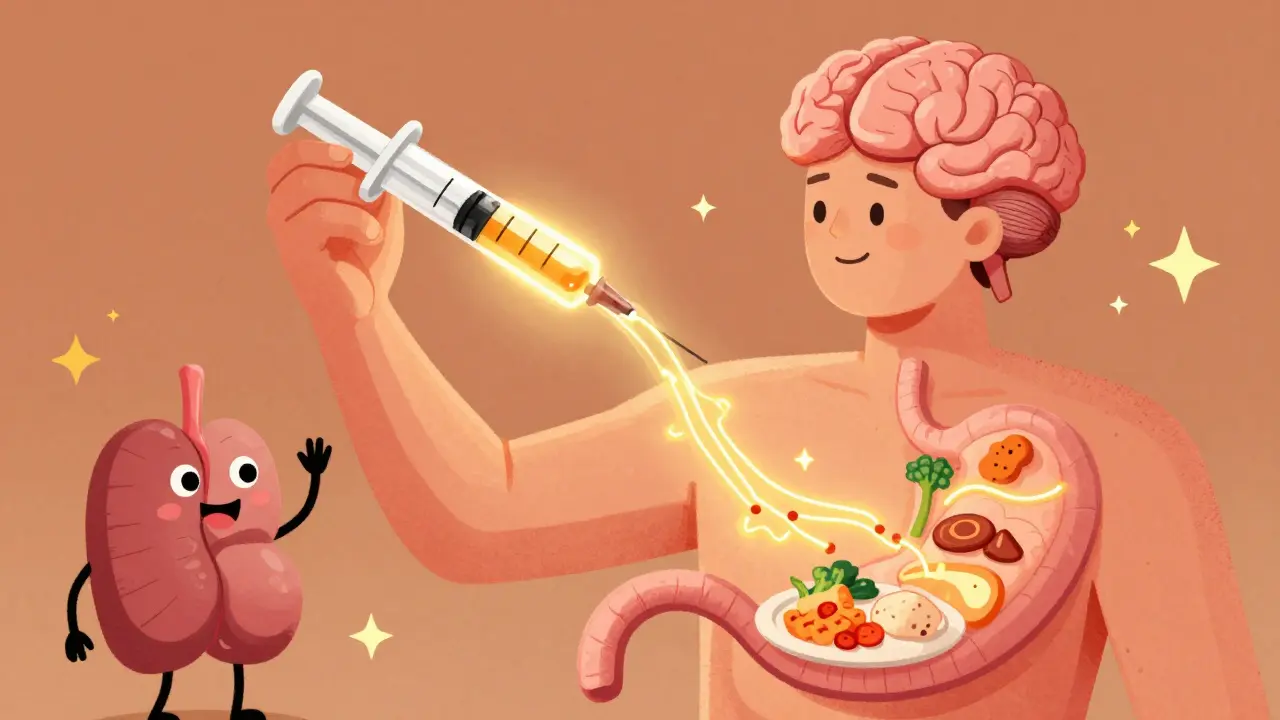
GLP-1 receptor agonists are a class of injectable medications originally designed to treat type 2 diabetes. But today, they’re better known for helping people lose significant weight. These drugs mimic a natural hormone in your body called glucagon-like peptide-1, which your intestines release after you eat. This hormone tells your pancreas to make insulin when blood sugar rises, slows down how fast food leaves your stomach, and signals your brain that you’re full.
Before these drugs, most diabetes medications either didn’t help with weight or made you gain it. Insulin, for example, often leads to 4-10 pounds of weight gain. Sulfonylureas do the same. But GLP-1 agonists do the opposite-they help you lose weight while lowering your blood sugar. That’s why they’ve become one of the most talked-about treatments in medicine today.
How Do They Lower A1C?
Your A1C measures your average blood sugar over the past 2-3 months. A normal level is below 5.7%. For people with type 2 diabetes, it’s often above 7%. GLP-1 agonists bring that number down-typically by 1.0% to 1.8%. That’s a big deal. A 1% drop in A1C reduces your risk of diabetes complications like nerve damage, kidney disease, and eye problems by about 35%.
Here’s how they work: First, they make your pancreas release insulin only when your blood sugar is high. That’s different from older drugs that force insulin out all the time, which can cause low blood sugar. Second, they shut down glucagon, a hormone that tells your liver to dump more sugar into your bloodstream. Third, they help your muscles absorb more glucose and reduce how much sugar your liver produces. Together, these actions stabilize your blood sugar all day long.
How Do They Cause Weight Loss?
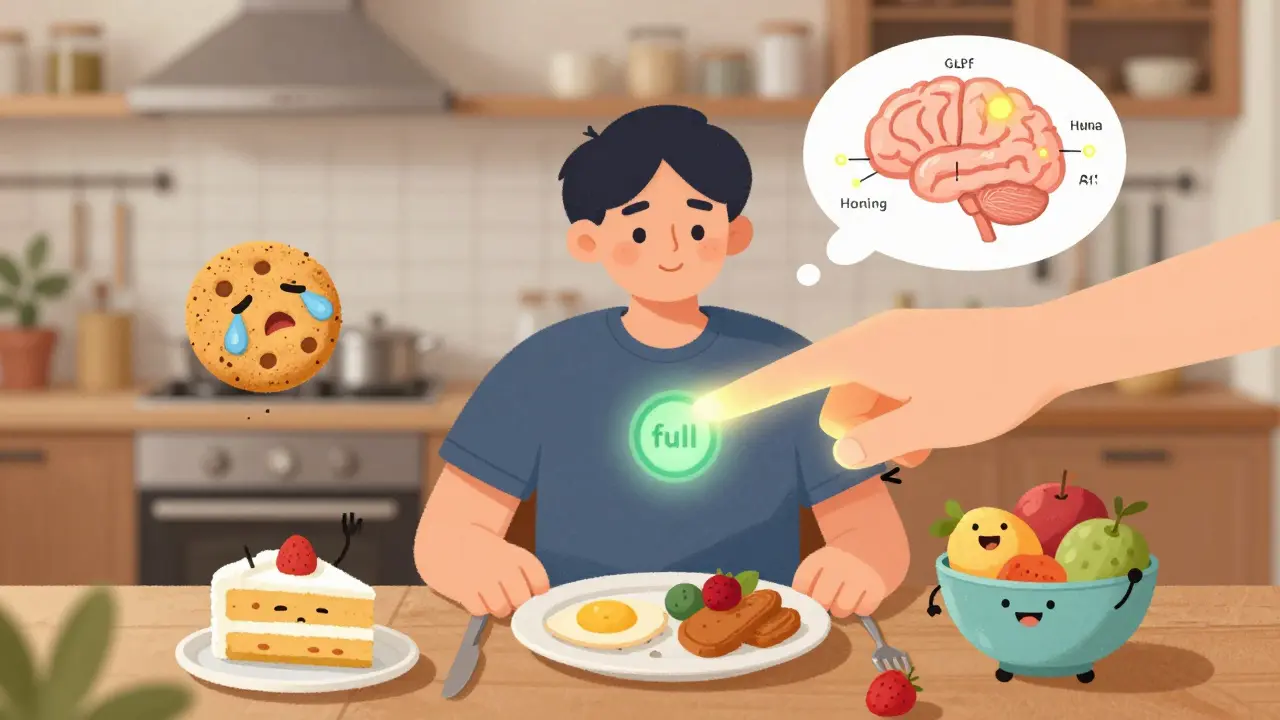
Weight loss with GLP-1 agonists isn’t just about eating less-it’s about your brain changing how it thinks about food. These drugs activate receptors in the hypothalamus, the part of your brain that controls hunger. They turn down signals that make you crave food (like NPY and AgRP neurons) and turn up signals that say you’re full (POMC/CART neurons). In clinical trials, people reported feeling less hungry, less obsessed with snacks, and less tempted by sugary foods.
They also slow down your stomach. Normally, food leaves your stomach in about 2 hours. With GLP-1 agonists, it takes 2.5 to 3 hours. That means you feel full longer. You’re less likely to snack between meals. One study found people on semaglutide ate 20% fewer calories without even trying.
The results? In the STEP 3 trial, people using Wegovy (semaglutide 2.4 mg) lost an average of 15.3 kg (over 33 pounds) in 16 months. Nearly 7 out of 10 lost at least 10% of their body weight. That’s the kind of loss you used to only see after gastric bypass surgery.
Which Drugs Are Available?
There are several GLP-1 agonists on the market, but not all are approved for weight loss. Here’s a quick breakdown:
- Exenatide (Byetta) - First one approved in 2005. Twice-daily injections. Mild weight loss (3-5%).
- Liraglutide (Victoza) - Daily injection. Approved for diabetes. Saxenda is the same drug, higher dose, approved for weight loss. Average weight loss: 6-8%.
- Dulaglutide (Trulicity) - Once-weekly. Good for A1C (1.2-1.5% drop), modest weight loss (4-6%).
- Semaglutide (Ozempic, Wegovy) - Once-weekly. Ozempic for diabetes, Wegovy for weight loss. Highest weight loss: up to 15-16%. A1C reduction: up to 1.8%.
- Tirzepatide (Mounjaro, Zepbound) - Once-weekly. A dual agonist-works on both GLP-1 and GIP receptors. Best weight loss numbers: up to 21% in trials. A1C drop: up to 2.4%.
Semaglutide and tirzepatide are the current leaders. Tirzepatide is newer and shows even better results, but it’s also more expensive and harder to get.
Side Effects: What to Expect
These drugs aren’t magic. About half of people experience side effects, especially when starting or increasing the dose. The most common ones are nausea, vomiting, diarrhea, and constipation. Nausea affects 15-20% of users. It usually gets better after a few weeks.
Here’s what helps: Start low. Go slow. Most doctors begin with a tiny dose-like 0.25 mg of semaglutide-and increase it every 4 weeks. Take the shot at night. Skip greasy meals during the first few weeks. Some people use ginger tea or over-the-counter motion sickness pills like dimenhydrinate to ease nausea.
Less common but serious risks include gallbladder disease, pancreatitis, and potential thyroid tumors (seen in animal studies, not confirmed in humans). If you have a personal or family history of medullary thyroid cancer or multiple endocrine neoplasia, you shouldn’t use these drugs.
Cost and Access
Without insurance, these drugs cost $800 to $1,200 a month in the U.S. That’s why many people can’t get them. Even with insurance, many plans require you to try and fail other weight loss methods first. Medicare covers about 62% of prescriptions, but often only for diabetes-not for weight loss alone.
Some people turn to compounding pharmacies for cheaper versions, but those aren’t FDA-approved. There’s no guarantee of safety or strength. Others buy from overseas websites-risky, and sometimes illegal.
Supply shortages are real. Since 2022, semaglutide has been on the FDA’s shortage list. Pharmacies run out. Doctors can’t always refill prescriptions. That’s why many patients feel stuck-treatment works, but they can’t get it consistently.
What Happens When You Stop?
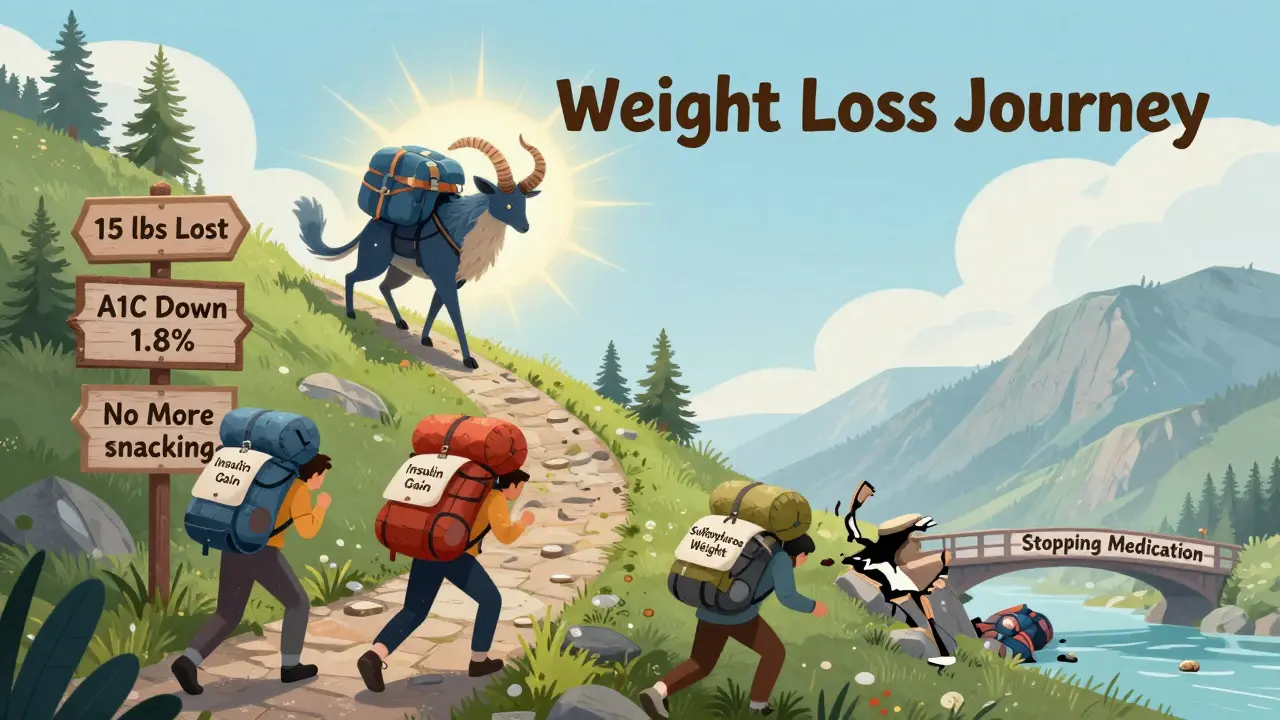
This is the big question: If you lose weight on a GLP-1 agonist, do you keep it off? The answer? Not usually. Studies show that when people stop taking the drug, they regain 50-70% of the lost weight within a year. That doesn’t mean the drug failed. It means the drug was managing a chronic condition-like high blood pressure or cholesterol. You don’t stop taking those just because your numbers improve.
For many, long-term use is necessary. That’s why experts now call GLP-1 agonists “weight management medications,” not “weight loss drugs.” They’re meant to be part of a lifelong plan, not a quick fix.
Who Should Use Them?
The FDA approved Wegovy and Zepbound for adults with:
- A BMI of 30 or higher (obesity), OR
- A BMI of 27 or higher with at least one weight-related condition (high blood pressure, type 2 diabetes, sleep apnea, etc.)
They’re also approved for type 2 diabetes regardless of weight. But they’re not for everyone. If you’re pregnant, have a history of pancreatitis, or have certain thyroid cancers, avoid them. People with a history of eating disorders should be carefully evaluated-some report reduced cravings turning into emotional detachment from food, which can be dangerous.
The Future: What’s Next?
Researchers are already working on the next generation. Oral versions of semaglutide are in trials-no more needles. Triple agonists (GLP-1 + GIP + glucagon) are showing even better results in early studies. There’s also promising data for non-alcoholic fatty liver disease, heart failure, and even Alzheimer’s prevention.
But the biggest challenge isn’t science-it’s access. Until these drugs become affordable and widely available, they’ll remain a lifeline for a few, not a solution for millions.
Coy Huffman
February 4, 2026 AT 05:41Justin Fauth
February 4, 2026 AT 23:26Meenal Khurana
February 5, 2026 AT 13:24Joy Johnston
February 6, 2026 AT 00:22Demetria Morris
February 7, 2026 AT 14:34Susheel Sharma
February 9, 2026 AT 06:55Katherine Urbahn
February 9, 2026 AT 07:06Joseph Cooksey
February 11, 2026 AT 00:28Jesse Naidoo
February 12, 2026 AT 11:27