What Are Drug Coverage Tiers and Why Do They Matter?
Every Medicare Part D plan and most private insurance plans organize medications into drug coverage tiers. These tiers determine how much you pay out of pocket for each prescription. Tier 1 usually has the lowest cost, often just a $5 or $10 copay for generics. Tier 5, on the other hand, can cost hundreds of dollars a month for specialty drugs like weight loss injections or cancer treatments.
The system exists because insurers need to manage costs. But for seniors, it’s not just about savings-it’s about survival. If your blood pressure pill jumps from Tier 1 to Tier 3, your monthly bill could go from $12 to $55 overnight. That’s not a small change. It’s the difference between taking your meds or skipping doses.
Formularies-the official lists of covered drugs-are updated every year on January 1st. But they can also change mid-year. A drug might be moved to a higher tier because a cheaper generic just came out. Or, if safety concerns arise, a brand-name drug could be pulled entirely. The problem? Most seniors don’t check until it’s too late.
How to Find Your Plan’s Formulary
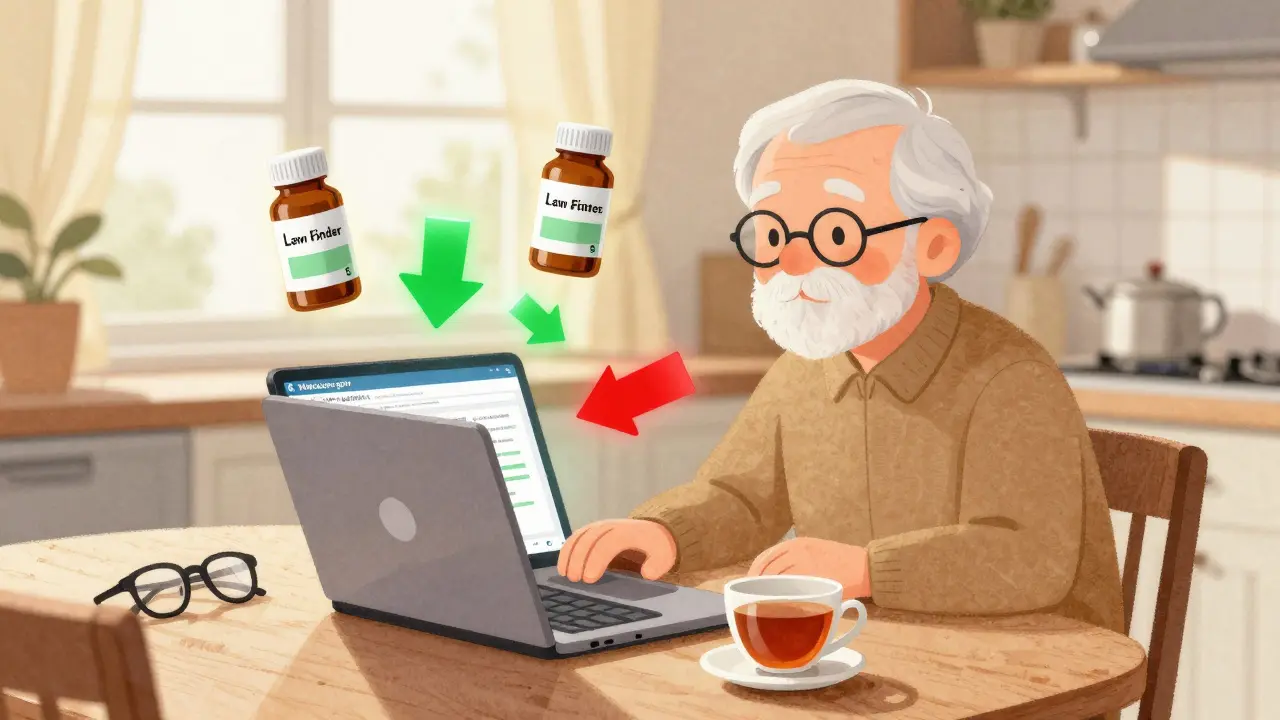
Your first step is simple: go to your plan’s website. If you’re with Medicare Part D, log in to Medicare.gov and use the Plan Finder tool. Type in your exact drug names-don’t use brand names if you’re on generics, and vice versa. The tool will show you which tier each drug is on and what your copay or coinsurance will be.
Most insurers also have their own search tools. Cigna, Humana, Excellus BCBS, and UnitedHealthcare all let you type in a drug name and instantly see its tier, prior authorization rules, and step therapy requirements. These tools update automatically when the plan changes, so they’re your most reliable source.
Don’t rely on old paperwork. Formularies printed in your enrollment packet from last December are already outdated. Even if you didn’t change plans, your drugs might have moved. A 2023 survey found that 68% of Medicare beneficiaries didn’t realize their medications had shifted tiers until they got to the pharmacy counter.
Understanding the Tier System
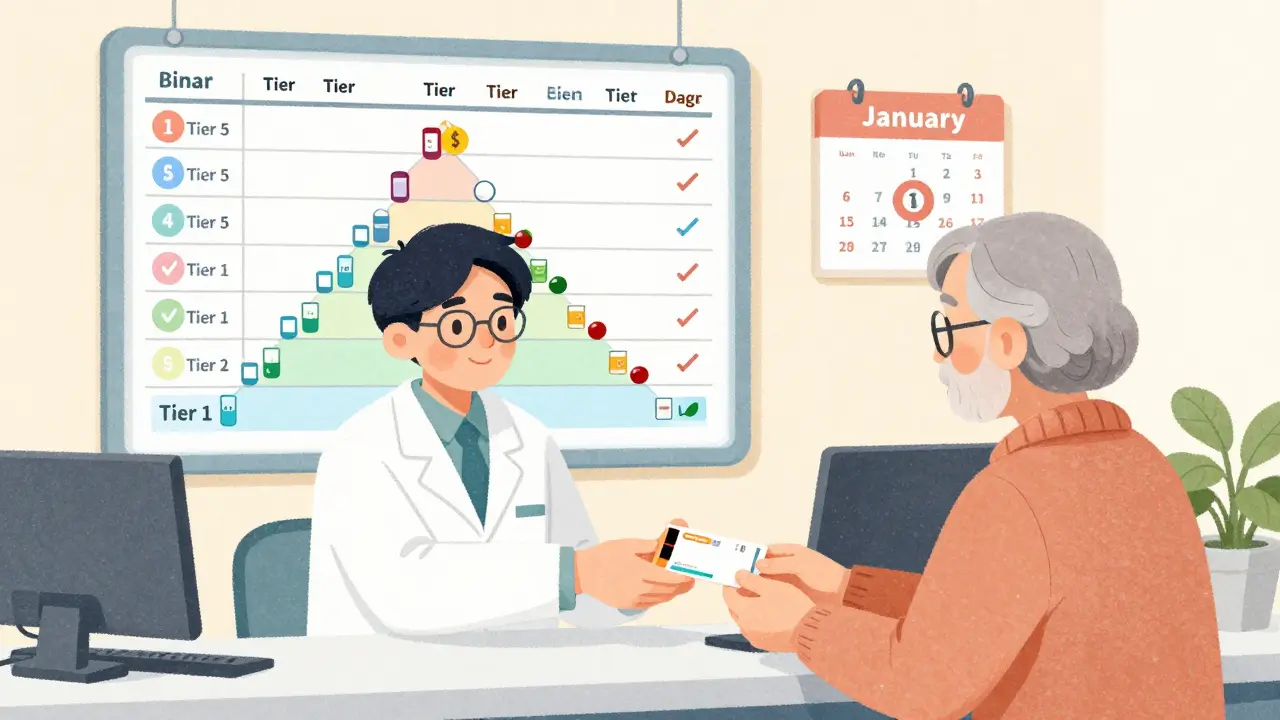
There’s no single standard for tiers, but most plans follow one of three models: 3-tier, 4-tier, or 5-tier.
- 3-tier: Tier 1 = generics (lowest cost), Tier 2 = brand-name drugs, Tier 3 = specialty drugs (highest cost)
- 4-tier: Tier 1 = preferred generics, Tier 2 = non-preferred generics and some brands, Tier 3 = high-cost brands, Tier 4 = specialty drugs
- 5-tier: Tier 1 = preferred generics, Tier 2 = non-preferred generics, Tier 3 = preferred brands, Tier 4 = non-preferred brands, Tier 5 = specialty drugs
Here’s the catch: the same drug can be in different tiers across plans. For example, metformin (a common diabetes drug) might be Tier 1 with one insurer and Tier 2 with another. That’s why comparing plans during Open Enrollment isn’t just about premiums-it’s about your specific meds.
Specialty drugs (Tier 4 or 5) often require prior authorization. That means your doctor has to prove to the insurer that you need it and that cheaper options won’t work. Without that step, the pharmacy won’t fill it. In 2023, 41% of non-preferred brand drugs required prior authorization, up from 32% in 2020.
How to Spot a Formulary Change
Insurers are required by CMS to notify you if a drug you’re taking is being moved to a higher tier, removed from the list, or has new restrictions. But the notice doesn’t always come in a way you’ll notice.
You’ll get a letter in the mail-usually 60 days before the change takes effect. But if the change is due to a safety issue, they can act faster with just 30 days’ notice. Some plans send emails or push alerts through their mobile apps. But if you don’t check your account regularly, you might miss it.
Watch for these red flags:
- Your copay suddenly increased at the pharmacy
- The pharmacist says your drug isn’t covered anymore
- You get a bill for a drug you thought was fully covered
One user on Medicare.gov forums shared how their blood pressure med jumped from $10 to $55 a month without warning. They didn’t check their formulary until they got the bill. By then, they’d already missed two weeks of pills.
What to Do When Your Drug Is Moved to a Higher Tier
If your medication gets bumped up, you’re not stuck. You have options.
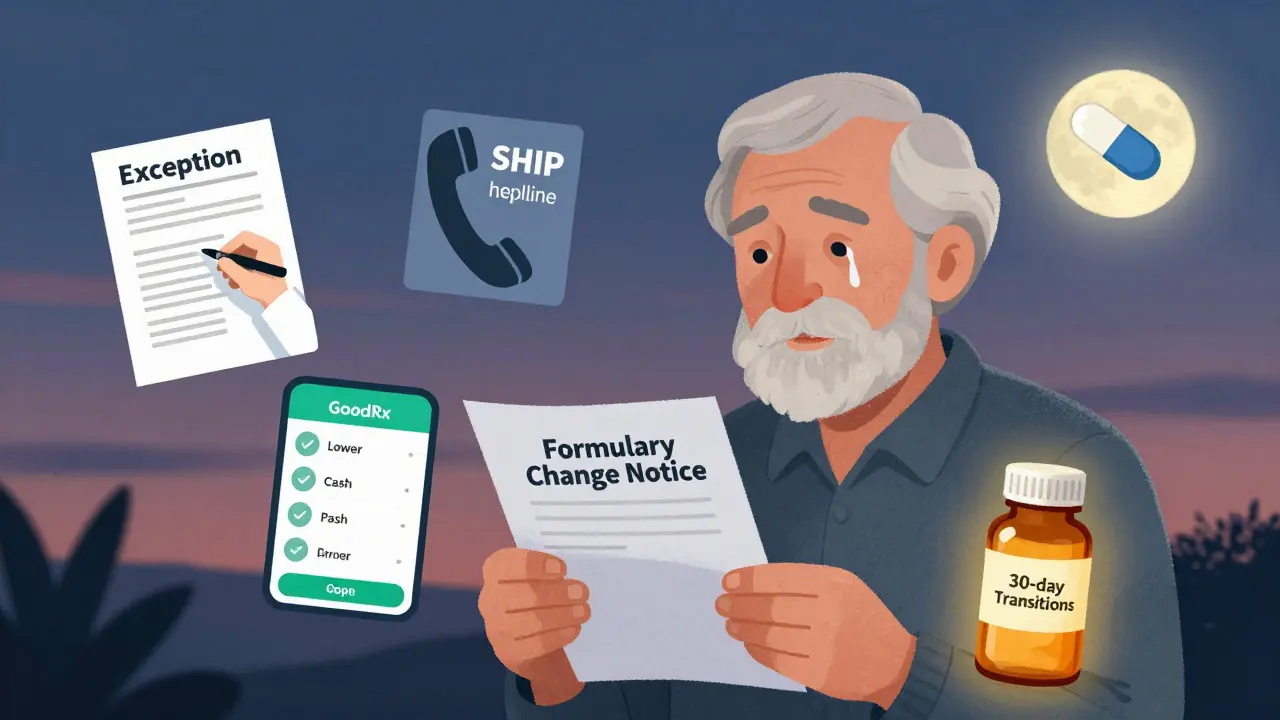
Option 1: Ask for a formulary exception. This is a formal request to your insurer to cover your drug at a lower cost. You’ll need your doctor to fill out a form explaining why you can’t switch-maybe you’ve tried alternatives and had side effects, or your condition is unstable. In 2022, over 1.2 million exceptions were filed. Approval rates ranged from 55% to 82%, depending on the plan and medical justification.
Option 2: Switch to a generic or alternative drug. Sometimes, a different brand or generic version works just as well. Talk to your pharmacist. They know what’s available in lower tiers and can suggest substitutes. For example, if your brand-name statin got moved to Tier 3, there might be a generic version in Tier 1 with the same active ingredient.
Option 3: Use a 30-day transition supply. If your plan removes a drug entirely or moves it to a higher tier, they must give you a 30-day supply at the old cost while you work on a long-term solution. This is your safety net. Don’t assume it’s automatic-ask for it when you get the notice.
How to Avoid Future Surprises
Don’t wait for a bill or a pharmacy rejection. Be proactive.
- Check your formulary every January when new plans start. Even if you didn’t switch, your drugs might have moved.
- Set a calendar reminder for October and November. That’s Open Enrollment season. Use this time to compare plans based on your actual meds, not just premiums.
- Use GoodRx or SingleCare to compare cash prices. Sometimes, paying cash for a Tier 5 drug is cheaper than your copay after insurance.
- Call your State Health Insurance Assistance Program (SHIP). They offer free, one-on-one help with formularies. In 2022, they handled 1.7 million calls.
- Ask your pharmacist to flag your prescriptions. Many pharmacies now track formulary changes and will warn you if your drug is about to get more expensive.
One senior in Ohio told her pharmacist she was worried about her new GLP-1 weight loss drug. The pharmacist checked the formulary and found it had just moved to Tier 5. They helped her file an exception and found a similar drug in Tier 2 that worked just as well. She saved $200 a month.
Common Mistakes Seniors Make
Many seniors fall into the same traps.
- Assuming your plan hasn’t changed. You didn’t switch plans? That doesn’t mean your drugs didn’t move tiers.
- Not checking until it’s too late. Waiting until you’re at the pharmacy counter means you’re already out of pocket.
- Not knowing how to ask for an exception. Most people don’t realize they can request coverage for a drug not on the formulary. It’s not a last resort-it’s a right.
- Believing all generics are the same. Some plans have preferred and non-preferred generics. The non-preferred ones cost more. Always check the tier.
- Ignoring specialty drug rules. If your drug needs prior authorization, don’t assume your doctor knows. Call your plan and ask what paperwork is needed.
What’s Changing in 2026?
Formularies are evolving fast. In 2026, expect more weight loss drugs like Wegovy and Ozempic to be pushed into specialty tiers. That’s because they’re expensive-and insurers are trying to limit use to those who truly need them for medical reasons, not just weight loss.
CMS is also testing a simpler 4-tier model for 2025 to reduce confusion. Right now, the variation between plans is overwhelming. A 5-tier system in one plan might look like a 3-tier in another. Standardization is coming.
Meanwhile, AI tools are being rolled out. By 2025, 78% of insurers plan to use AI to suggest lower-cost alternatives when a drug moves tiers. That’s good news-if you’re using their apps and portals.
Final Tips to Stay in Control
Managing your drug coverage isn’t a one-time task. It’s an ongoing habit.
- Keep a printed or digital list of all your meds, including dosages and why you take them.
- Review your formulary every January and October.
- Don’t be afraid to ask your doctor or pharmacist: "Is there a cheaper option on my plan?"
- If you get a surprise bill, call your plan immediately. You have rights.
- Use SHIP. They’re free, local, and trained to help seniors like you.
The system is complex. But you don’t have to be confused by it. The tools are there. The rights are there. You just need to use them before the cost hits your wallet.
Nilesh Khedekar
January 16, 2026 AT 07:35Haley Graves
January 17, 2026 AT 18:21Diane Hendriks
January 19, 2026 AT 04:14Sohan Jindal
January 20, 2026 AT 07:42Annie Choi
January 21, 2026 AT 02:27Arjun Seth
January 21, 2026 AT 13:44Mike Berrange
January 21, 2026 AT 18:12Dan Mack
January 23, 2026 AT 03:19Amy Vickberg
January 23, 2026 AT 23:09Ayush Pareek
January 25, 2026 AT 22:52