It happens to almost every parent. Your child comes home with an ear infection or strep throat, and the doctor prescribes a bottle of liquid medicine. You shake it up, give the first dose, and then-panic sets in. Where does this go? The fridge? The bathroom cabinet? And why does the label say "discard after 10 days" when there is still half the bottle left?
Getting this wrong isn't just about wasting money on unused medicine. It’s about whether your child actually gets better. According to a 2022 CDC study, improper storage contributes to roughly 15% of treatment failures in pediatric antibiotic therapy. That means one in seven kids might not recover fully simply because the medicine lost its potency before the course was finished.
The good news? Storing these medications correctly is straightforward once you know the rules. It boils down to three things: temperature, time, and location. Let’s break down exactly how to keep your child’s medicine safe and effective.
The Golden Rule: Check the Label First
Before you assume anything, look at the pharmacy label. This is your primary source of truth. While general guidelines exist, specific formulations can vary wildly. For example, some antibiotics need cold storage to stay stable, while others will thicken or separate if refrigerated, making them impossible for a child to swallow.
If the label says "Refrigerate," do it. If it says "Room Temperature," keep it out of the fridge. If you are unsure, call your pharmacist. Do not guess. As Dr. Jessica Smith, a pediatric pharmacist at Children's Hospital of Philadelphia, notes, continuing to use antibiotics beyond their designated discard timeframe accounts for 27% of treatment failures she observes. The clock starts ticking the moment you mix the powder with water (reconstitution), not when you pick it up from the pharmacy.
Temperature Matters More Than You Think
Not all liquid antibiotics are created equal. The most common mistake parents make is treating all liquid meds the same way. Here is how the big ones stack up:
| Medication | Storage Temp | Discard After | Key Note |
|---|---|---|---|
| Amoxicillin | Fridge (2-8°C) OR Room Temp (20-25°C) | 14 Days | Flexible; taste may improve when cold |
| Amoxicillin/Clavulanate (Augmentin) | Fridge Only (2-8°C) | 10 Days | Clavulanate degrades quickly in heat |
| Azithromycin (Zithromax) | Room Temp Only | 10 Days | Do NOT refrigerate; it thickens |
| Cefdinir | Room Temp Only | 10 Days | Keep away from moisture |
Amoxicillin is the most prescribed pediatric antibiotic, accounting for nearly a third of all prescriptions. It is relatively forgiving; it stays stable for 14 days whether it’s in the fridge or on the counter. However, Amoxicillin/Clavulanate (Augmentin) is different. The clavulanate component breaks down rapidly if exposed to room temperatures above 25°C (77°F). Research shows it loses significant potency after just five days at room temperature. So, if you have Augmentin, the fridge is non-negotiable.
On the flip side, never put Azithromycin in the fridge. Cold temperatures cause it to become viscous and gloopy. A 2023 taste study found that refrigeration reduced palatability by 37%, meaning your child is less likely to finish the dose, which can lead to resistance. Keep Azithromycin at room temperature, but ensure that "room temperature" actually means around 20-25°C (68-77°F). If your house is hot (above 27°C/80°F), consider using a cool box or asking your pharmacist for advice, as excessive heat can also degrade the drug.
The 10-to-14 Day Rule: Why You Must Throw It Out
This is where most parents slip up. You’ve been giving the medicine for three days, your child feels better, and there are two weeks’ worth of doses left. Can you save it for next time? Absolutely not.
Once you add water to the powder, bacteria can grow in the mixture, and the active ingredients begin to break down. The Infectious Diseases Society of America (IDSA) strongly recommends discarding all reconstituted antibiotics after their specified window, typically 10 to 14 days. Using medicine past this date doesn’t just mean it’s less effective; it can be unsafe. Degraded antibiotics may fail to kill the infection, allowing stronger bacteria to survive and multiply.
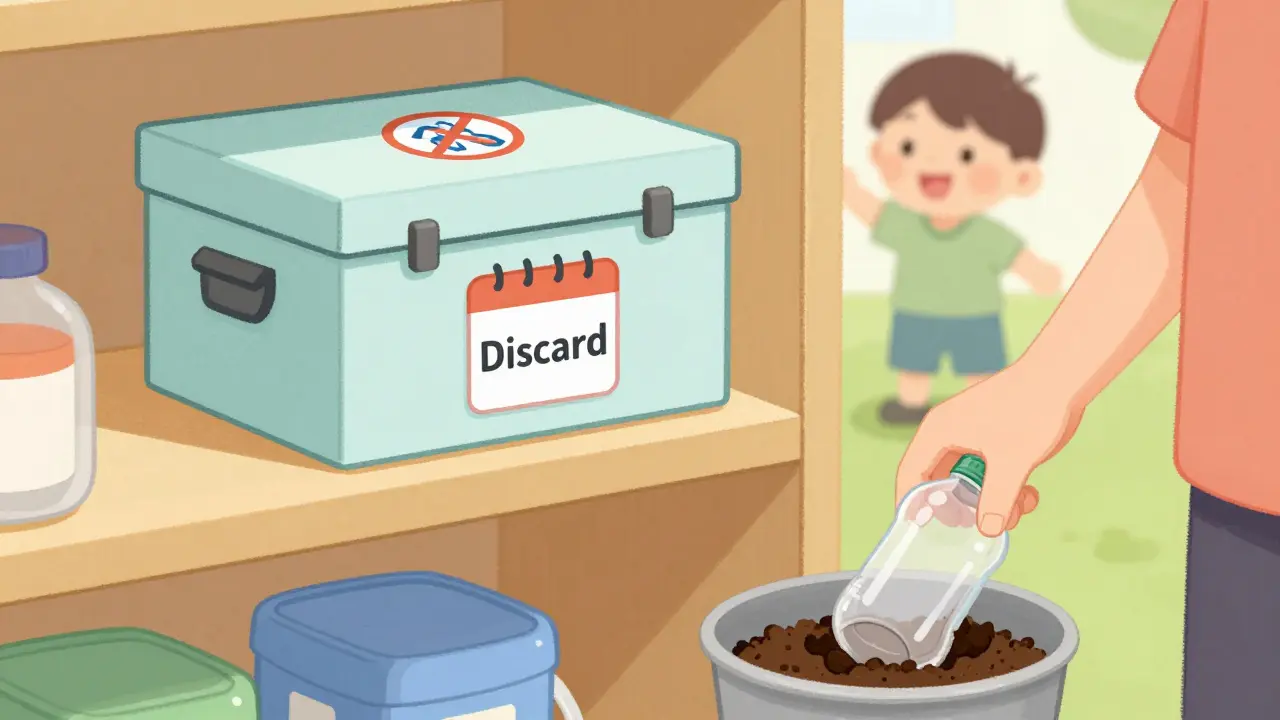
To avoid forgetting, write the discard date on the bottle with a permanent marker the day you mix it. Or better yet, ask your pharmacist to apply a sticker with the exact date. A 2023 guide from the CDC noted that using discard date stickers reduced improper usage by 42%. When that date hits, pour the remaining liquid down the sink (unless local disposal guidelines say otherwise) and recycle the plastic bottle.
Where to Store Medicine Safely
Location is everything. Many people instinctively store medicine in the bathroom cabinet. Stop doing this. Bathrooms are humid and experience frequent temperature swings from showers. This environment is terrible for medication stability.
Instead, follow these best practices:
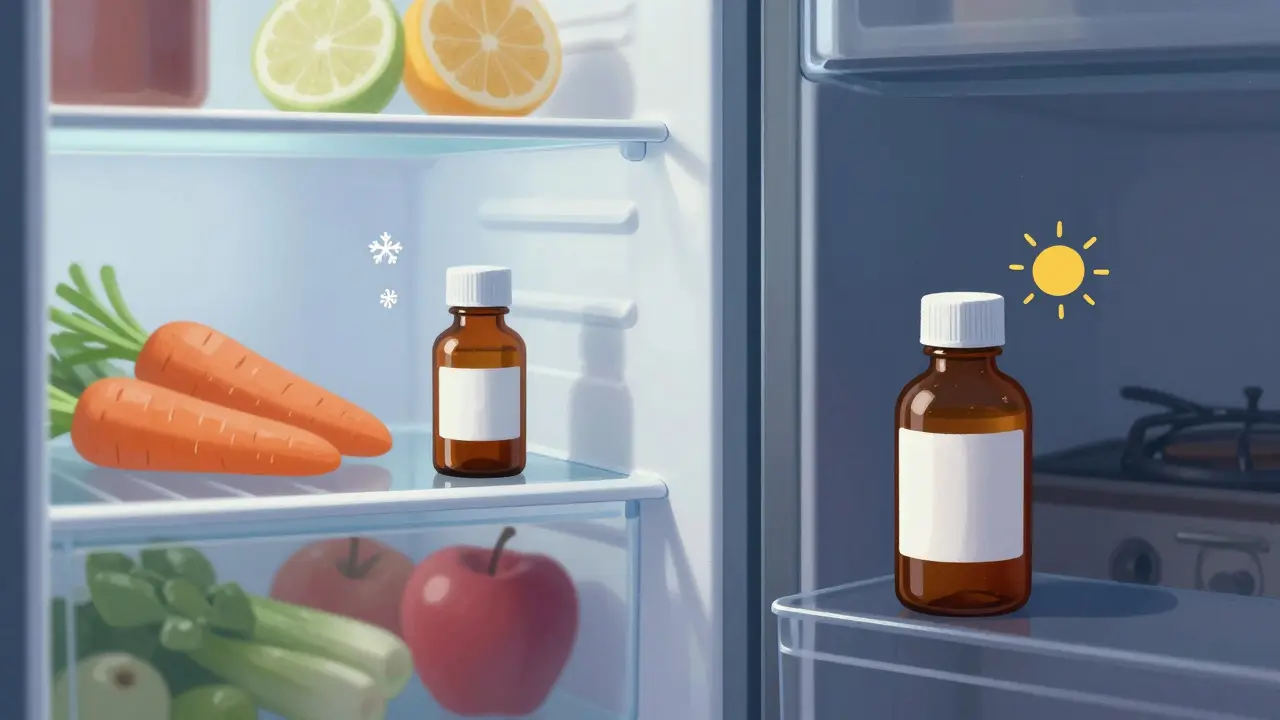
- The Fridge Shelf: If refrigeration is required, place the bottle on a middle shelf, not in the door. The door fluctuates in temperature every time it opens. Aim for a consistent 2-8°C (36-46°F).
- Kitchen Cabinets: For room-temperature meds, a dark, dry kitchen cabinet away from the stove and dishwasher is ideal. Avoid windowsills where sunlight can degrade the chemicals.
- Out of Reach: This cannot be overstated. The American Association of Poison Control Centers reports that 60,000 U.S. children under 5 are treated annually for accidental medication poisoning. Always store medicines up and away, preferably in a locked box or high cupboard.
Signs the Medicine Has Gone Bad
Sometimes, despite our best efforts, medicine spoils. Before giving a dose, take a quick look. Trust your eyes and nose. Signs that the suspension has degraded include:
- Discoloration: If the liquid looks darker or has changed color from when you first mixed it, toss it.
- Sedimentation: Some settling is normal and can be fixed by shaking. But if there are large clumps or particles that don’t dissolve after vigorous shaking, the medicine is compromised.
- Strange Odor or Taste: Antibiotics already taste bad, but a sour, fermented, or distinctly "off" smell indicates bacterial growth. If your child complains it tastes significantly different than usual, do not force it.
Dr. Venu Gopal Reddy, in his 2023 guide on medication use, notes that 41% of caregivers who noticed spoilage identified it through discoloration. When in doubt, throw it out and contact your doctor for a new prescription. It is cheaper and safer than risking a failed treatment.
Traveling with Liquid Antibiotics
Life doesn’t stop when your child is sick. If you need to travel, planning ahead is crucial. Refrigerated antibiotics like Augmentin require a cold chain. Use a small insulated cooler bag with ice packs. Ensure the ice packs do not freeze the medicine directly, as freezing can damage the suspension structure. Check the temperature periodically. If you are traveling for longer than the discard window, coordinate with a pharmacy at your destination to have the medication ready upon arrival.
For room-temperature meds, keep them in their original container to protect them from light and physical shock. Never leave medicine in a hot car. Interior car temperatures can exceed 40°C (104°F) on sunny days, destroying the efficacy of the drug in hours.
Frequently Asked Questions
Can I freeze antibiotic suspensions to extend their life?
No, never freeze antibiotic suspensions. Freezing causes the liquid to separate and the active ingredients to crystallize or break down. Once thawed, the medicine will not mix properly and will lose its effectiveness. Always store according to the label instructions, either refrigerated or at room temperature.
What if I forgot to refrigerate the Augmentin overnight?
If Amoxicillin/Clavulanate (Augmentin) is left at room temperature for a short period (less than 24 hours), it is generally considered safe to return to the fridge. However, if it has been out for more than 24 hours or if the room was very hot, the clavulanate component may have degraded. Contact your pharmacist for advice; they may recommend starting a new bottle to ensure full potency.
Why does my child refuse the cold medicine?
Cold temperatures can intensify the bitter taste of some antibiotics and change the texture. If the label allows room temperature storage (like Amoxicillin), try keeping it out of the fridge. If refrigeration is required (like Augmentin), let the bottle sit out for 10-15 minutes before dosing to take the chill off. You can also mix the dose with a small amount of juice or milk immediately before administering, but check with your pharmacist first to ensure compatibility.
Is it safe to use leftover antibiotics for a future illness?
No, it is never safe to use leftover antibiotics. First, the medication is likely expired or degraded. Second, the previous illness may have been caused by a different bacteria that requires a different type of antibiotic. Using the wrong drug can delay proper treatment and contribute to antibiotic resistance. Always consult a doctor for a new prescription.
How should I dispose of unused liquid antibiotics?
The safest method is to take unused medications to a drug take-back program at your local pharmacy or community center. If that is not available, the FDA recommends mixing the liquid with an unappealing substance like dirt, cat litter, or used coffee grounds in a sealed plastic bag before throwing it in the trash. Remove personal information from the label before discarding. Do not flush unless the label specifically instructs you to do so.