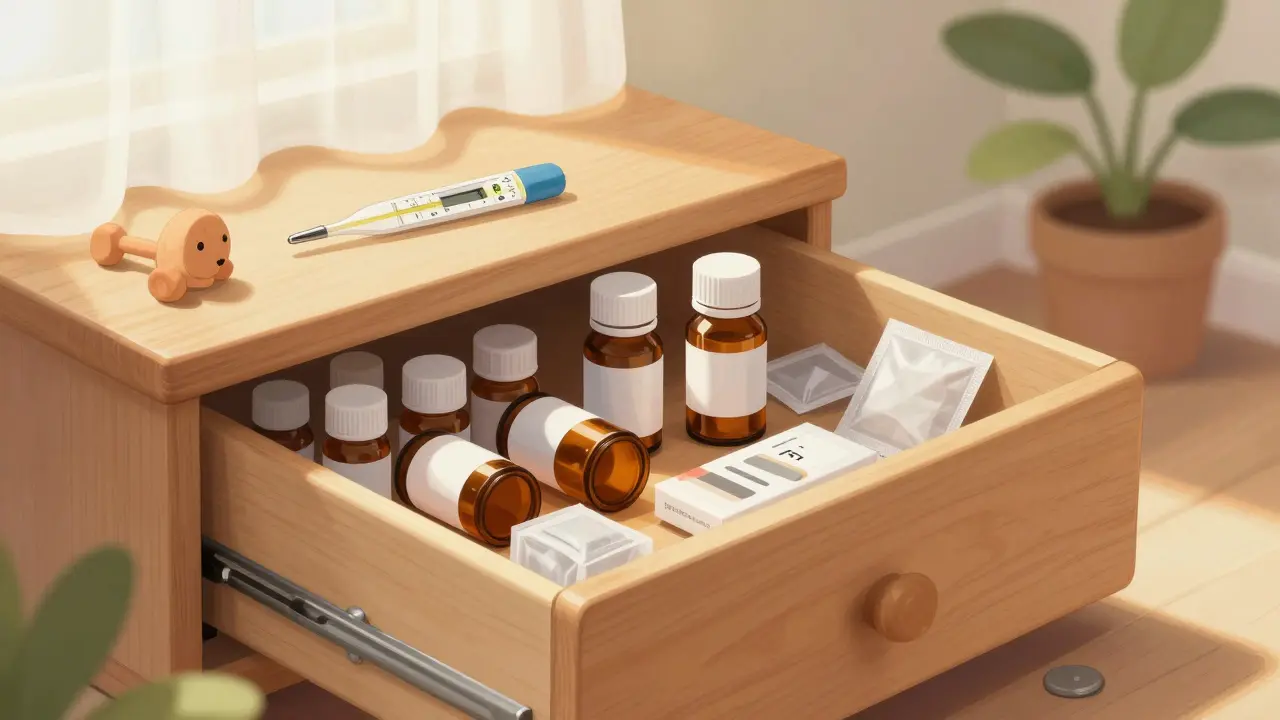
Most people don’t think about how they store their medications until they find an old bottle in the back of a cabinet and wonder if it’s still safe to take. You might have a bottle of ibuprofen from last winter, or leftover antibiotics from a past illness. The expiration date on the label makes you pause. Should you throw it out? Can you still use it? The truth is, medication storage matters far more than most realize - and doing it right can keep your pills effective for years beyond what’s printed on the bottle.
Expiration Dates Aren’t the Whole Story
The date on your medicine bottle isn’t a magic cutoff when the drug suddenly turns toxic. It’s a guarantee from the manufacturer that the medication will remain at full strength and safe to use under the conditions they tested. That’s it. The U.S. Food and Drug Administration (FDA) and the Department of Defense ran a program called the Shelf-Life Extension Program (SLEP) starting in 1986. They tested over 3,000 lots of medications - including painkillers, antibiotics, and heart drugs - and found that 88% were still safe and effective years after their labeled expiration dates. Some stayed stable for more than five years past expiration.Temperature Is the Biggest Factor
Where you store your meds makes a huge difference. Heat, moisture, and light are the three main enemies. A bathroom cabinet might seem convenient, but it’s one of the worst places. Steam from showers and fluctuating temperatures can break down active ingredients. The same goes for leaving pills in a hot car or near a window. For most solid medications - tablets and capsules - the ideal spot is a cool, dry place. Around 25°C (77°F) with humidity below 60% works best. A bedroom drawer, a kitchen cabinet away from the stove, or a closet shelf are all good options. If your medication requires refrigeration (like insulin, some antibiotics, or eye drops), keep it between 2°C and 8°C (36°F-46°F). Don’t freeze it unless the label says so. Freezing can ruin the structure of many drugs.Some Medications Can Last Much Longer
Not all drugs behave the same. The SLEP data shows certain medications hold up remarkably well. Naloxone, fentanyl, and halothane showed 100% stability even after 4-5 years past expiration. Even Tamiflu, when stored properly in government stockpiles, was approved for use up to 10 years past its original date during flu shortages. Doxycycline, used for anthrax exposure, has also received FDA extensions for stockpiled versions. But here’s the catch: these are controlled, tested scenarios. The same drugs you buy at the pharmacy aren’t always stored the same way before they reach you. That’s why you shouldn’t assume your bottle of doxycycline from 2020 is still good - unless you’ve kept it perfectly cool and dry since purchase.Liquids and Special Formulations Are Riskier
Solid pills and capsules are the most stable. Liquids, suspensions, eye drops, and reconstituted powders are far more fragile. Once you mix a powder with water or open a bottle of liquid antibiotic, the clock starts ticking fast. Most liquid antibiotics need to be used within 7-14 days after mixing. If left unrefrigerated or past their short-term expiration, they can grow bacteria or lose potency. Some drugs, like tetracycline, can break down into toxic compounds when old or improperly stored. Insulin, biologics, and vaccines are especially sensitive. Even a brief exposure to temperatures above 8°C can damage them. Moderna’s mRNA vaccines, for example, showed less than 7% stability beyond their labeled expiration - even under ultra-cold storage.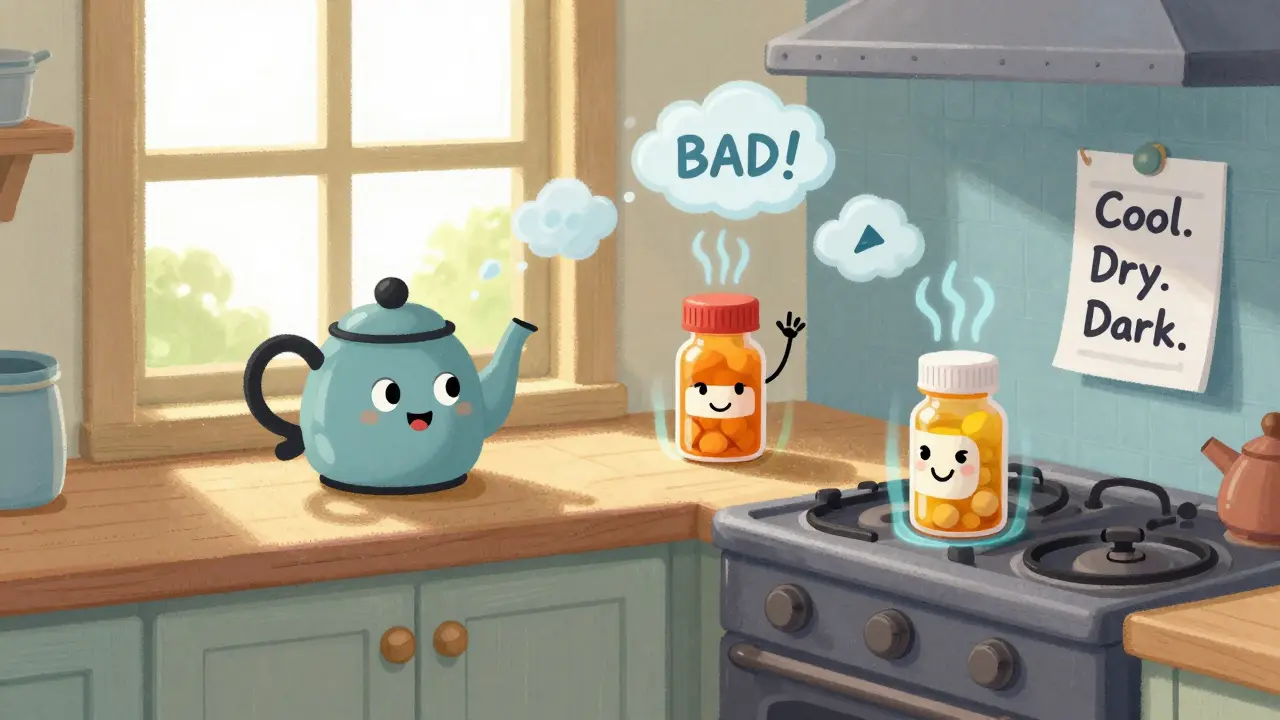
Packaging Matters More Than You Think
The bottle your pills come in isn’t just for holding them. It’s part of the protection system. Light-sensitive medications - like nitroglycerin or certain epilepsy drugs - come in amber bottles to block UV rays. If you transfer them to a clear container, you’re speeding up degradation. Blister packs (those plastic bubbles with foil backing) offer better protection than loose bottles because they seal each pill individually. Once you pop a pill out, it’s exposed to air and moisture. Don’t leave blister packs sitting open. Keep them in their original carton and store them in a dry place.What About Refrigeration?
Refrigerating medications isn’t always better. It’s only necessary for specific drugs. Putting everything in the fridge can cause condensation when you take it out, which introduces moisture - and moisture is bad for pills. If your medicine doesn’t say “refrigerate,” don’t. Keep it at room temperature instead. For items that do need cooling - like insulin pens, some eye drops, or suppositories - store them in the main part of the fridge, not the door. Door shelves swing in temperature every time you open the fridge. Use a small insulated bag with a cold pack if you’re traveling. Never let insulin freeze.How to Tell If a Medication Has Gone Bad
You don’t need a lab to spot signs of degradation. Look for:- Change in color - pills turning yellow, brown, or spotted
- Unusual odor - a strong, sour, or chemical smell
- Texture changes - tablets crumbling, capsules sticking together
- Cloudiness in liquids - if clear liquid turns cloudy or has particles
- Loss of effectiveness - if a painkiller no longer works like it used to
Don’t Trust Your Gut - Check the Label
Manufacturers know their products best. Always follow the storage instructions on the label or package insert. If it says “store below 30°C,” don’t ignore it. If it says “protect from light,” keep it in its original box. The Joint Commission requires pharmacies and clinics to follow these instructions - and you should too.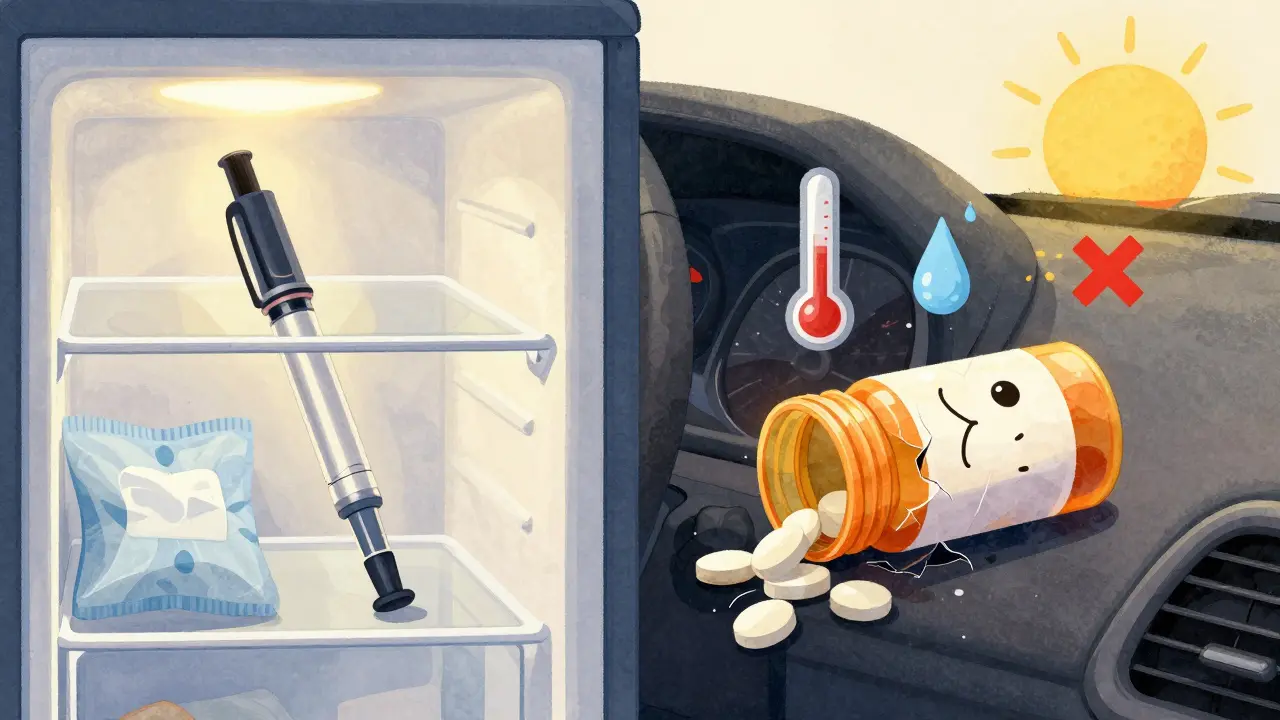
LALITA KUDIYA
January 8, 2026 AT 01:36Anthony Capunong
January 8, 2026 AT 19:44Vince Nairn
January 10, 2026 AT 08:38Actually though, I keep mine in a ziplock with silica packs. Works better than my ex's promises.
Ayodeji Williams
January 11, 2026 AT 12:52Emma Addison Thomas
January 11, 2026 AT 16:08Mina Murray
January 13, 2026 AT 01:49Christine Joy Chicano
January 13, 2026 AT 22:13Adam Gainski
January 14, 2026 AT 02:36Anastasia Novak
January 14, 2026 AT 05:23Jonathan Larson
January 15, 2026 AT 02:58Alex Danner
January 15, 2026 AT 23:35Katrina Morris
January 17, 2026 AT 13:38Andrew N
January 18, 2026 AT 21:20Poppy Newman
January 19, 2026 AT 23:11Kyle King
January 21, 2026 AT 22:23