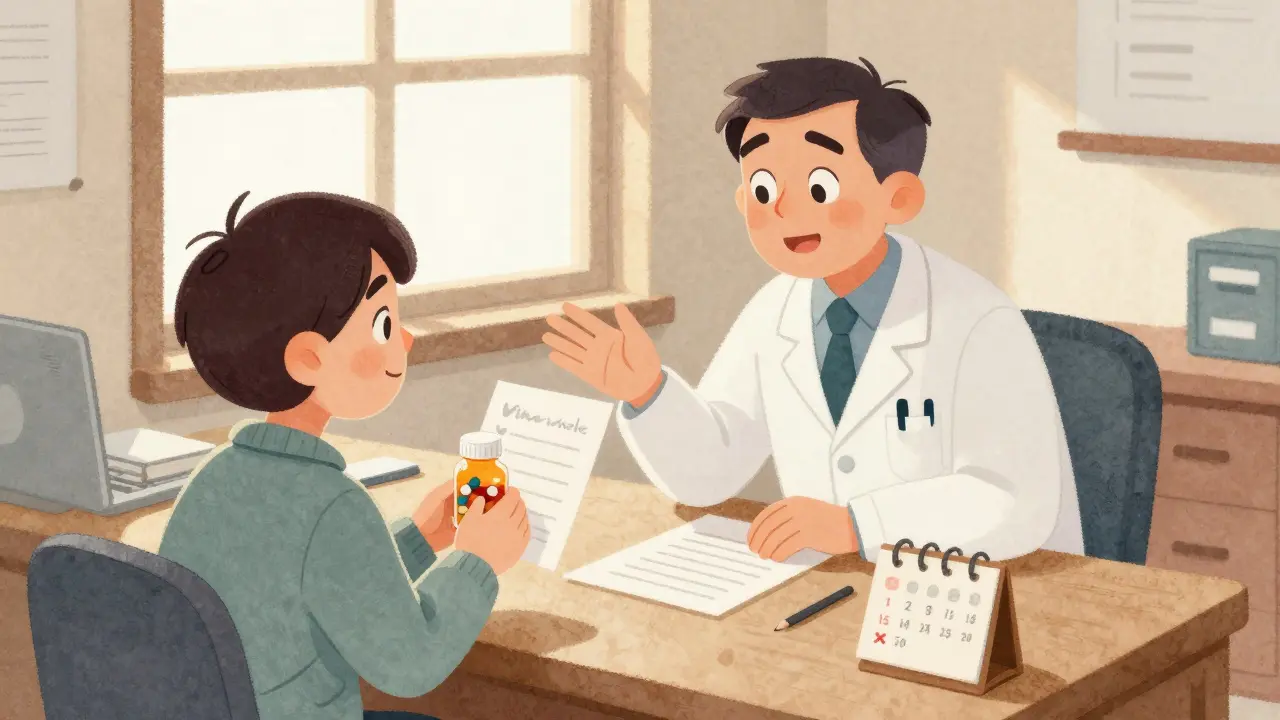
Getting the right medicine is only half the battle. The other half? Taking it the way your doctor meant you to. And that’s where talking to your doctor about medication compliance makes all the difference.
Studies show nearly half of all people with chronic conditions - like high blood pressure, diabetes, or heart disease - don’t take their meds as prescribed. Not because they’re lazy. Not because they don’t care. Usually, it’s because they don’t know how to talk about it. Or they’re afraid to. Or their doctor never asked.
Here’s the truth: your doctor isn’t judging you. But they can’t help if they don’t know what’s going on. The difference between a conversation that works and one that doesn’t? It’s not about fancy medical terms. It’s about how you ask, and how you listen.
Why This Conversation Matters More Than You Think
Missing a pill here and there might seem harmless. But over time, it adds up. In the U.S., poor medication adherence leads to 125,000 deaths every year - more than car accidents. It also causes 10% of all hospital admissions. That’s not just numbers. That’s people. People who could’ve stayed out of the hospital if someone had asked, "How’s your pill schedule going?" instead of assuming everything was fine.
And it costs the system $300 billion a year. That’s money spent on ER visits, ambulance rides, and longer hospital stays that could’ve been avoided. But beyond the cost, it’s about your health. If you’re not taking your meds right, your condition can get worse. Fast.
Here’s what the research says: when doctors communicate well about meds, patients are 1.6 times more likely to stick to their plan. That’s not a small boost. That’s the same effect as adding a new drug to your treatment.
What Stops People From Taking Their Medications
It’s not just forgetting. It’s complicated. Maybe the pills make you feel sick. Maybe you can’t afford them. Maybe you’re taking five different ones and you’re lost. Maybe you think they’re not working. Maybe you’re embarrassed.
A 2021 study found that 63% of patients didn’t tell their doctor they weren’t taking their meds because they feared being scolded. One patient stopped taking life-saving transplant drugs after being yelled at for missing one dose. She didn’t tell anyone for months. Her body started rejecting the organ. That’s how serious this gets.
Other common reasons:
- Too many pills at once
- Side effects that weren’t explained
- Cost - especially if you’re on a fixed income
- Believing you don’t need it anymore because you feel fine
- Not understanding why it matters
And if you have low health literacy - meaning you struggle to understand medical info - your chance of sticking to your meds drops to just 32%. That’s not your fault. It’s the system’s.
How to Start the Conversation
You don’t need to be an expert. You just need to be honest. And your doctor needs to create space for that honesty.
Here’s what works:
- Ask open-ended questions. Instead of, "Are you taking your pills?" try: "I know it’s hard to keep up with meds sometimes. What’s been working for you?"
- Use plain language. If your doctor says "adherence," ask: "Do you mean taking it like I’m supposed to?"
- Bring your meds. Bring your pill bottle or a list. Show them what you’re actually taking. Sometimes, patients are taking something they weren’t supposed to - or skipping doses they don’t understand.
- Speak up about side effects. If your stomach hurts, you’re dizzy, or you feel weird - say it. There might be a simpler fix. A different time of day. A cheaper brand. A smaller dose.
- Ask for help with scheduling. "Can we make this easier?" might lead to a once-daily pill. Or a blister pack. Or a reminder app. Many clinics now offer free pill organizers.
One study found that when doctors replaced "Why aren’t you taking your meds?" with "Many people have trouble taking pills on time. Is that true for you?" - patient honesty went up by 37%. That’s because it removes shame.
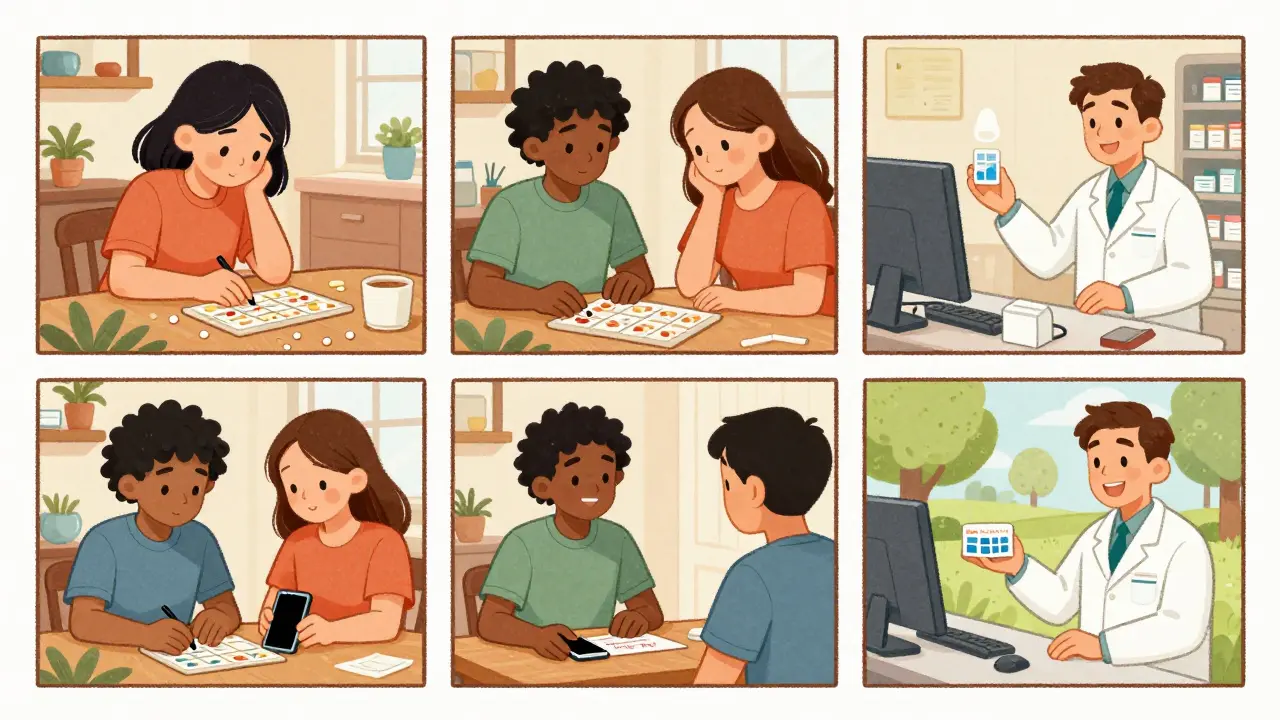
What Doctors Should Do (And Often Don’t)
Good communication isn’t magic. It’s a skill - and it can be trained. Here’s what works, based on real data:
- Use the teach-back method. Ask: "Can you tell me how you’ll take this pill?" If you can repeat it back in your own words, you’re more likely to get it right. This alone boosts adherence by 17%.
- Don’t assume. Just because you nodded doesn’t mean you understood. Just because you didn’t ask questions doesn’t mean you’re fine.
- Check your tone. If you sound frustrated, patients shut down. If you sound curious, they open up.
- Write it down. Handwritten notes on a paper list stick better than a digital prescription. Write the name, dose, time, and why you’re taking it. Keep it in your wallet.
- Ask about barriers. "Is cost a problem?" "Do you have trouble opening bottles?" "Do you need help remembering?" These questions take 10 seconds - but they change outcomes.
Doctors who use these techniques see adherence rates jump from 44% to over 70%. That’s not luck. That’s intentional communication.
What You Can Do Right Now
You don’t have to wait for your next appointment. Here’s what you can do today:
- Write down every medication you take - including vitamins and OTC pills.
- Check the labels. Do you know what each one is for?
- Ask a friend or family member to help you sort your pills into a weekly organizer.
- If cost is an issue, ask if there’s a generic version - or if your clinic has a medication assistance program.
- Set a phone alarm labeled "Take BP pill" or "Take insulin." Don’t rely on memory.
- Bring your list to your next visit. Say: "I want to make sure I’m doing this right. Can we go over it?"
And if your doctor brushes you off? Find another one. You deserve better. Your health isn’t optional.
Technology Helps - But Only If You’re Involved
There are apps, smart pillboxes, and AI chatbots now that remind you to take your meds. Some even call you. But here’s the catch: tech alone doesn’t work if you don’t trust the person behind it.
A 2023 study found that patients who had a good conversation with their doctor AND used a reminder app were 50% more likely to stay on track than those who used tech alone. The human connection is still the most powerful tool.
So if your clinic offers a digital tool - try it. But don’t let it replace talking. Use it to support the conversation.
It’s Not About Perfect. It’s About Progress
You don’t have to take every pill, every day, perfectly. That’s unrealistic. What matters is progress. If you missed three days last week, that’s okay. But if you say nothing, it becomes a pattern.
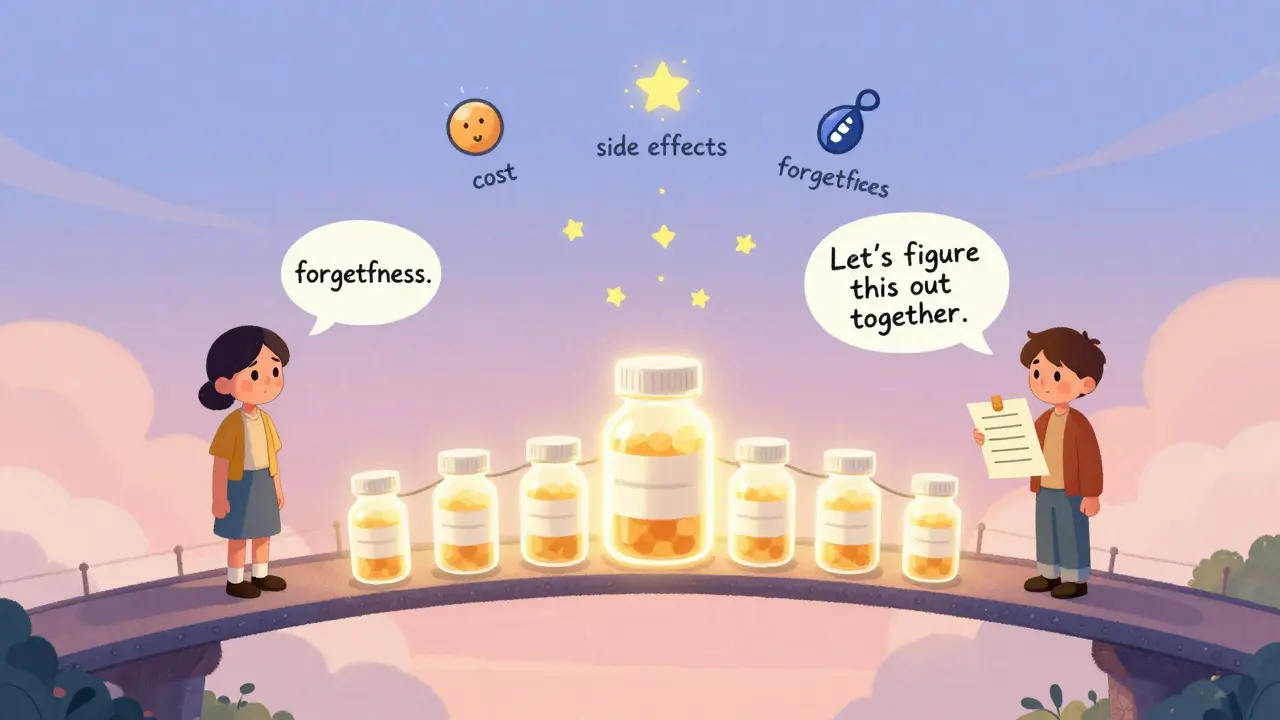
One patient in Halifax told me: "I missed my diabetes meds for two weeks. I was too ashamed to say anything. Then my doctor said, ‘Let’s figure this out together.’ That’s when things changed."
That’s the goal. Not perfection. Partnership.
What if I can’t afford my medications?
Talk to your doctor. Many clinics have medication assistance programs, free samples, or connections to nonprofit organizations that help with costs. You can also ask for a generic version - they’re often 80% cheaper. In Canada, some provinces offer drug coverage for low-income residents. Don’t skip doses because of cost - speak up.
My doctor never asks about my meds. Should I bring it up?
Yes. Absolutely. Doctors are busy, but they expect you to speak up. Say something like: "I’ve been thinking about my meds and wanted to make sure I’m doing it right." Most will appreciate the initiative. If they don’t, it’s a sign to find a provider who listens.
I feel fine. Do I really need to keep taking this pill?
Many medications - like blood pressure or cholesterol drugs - work best when you feel fine. That’s because they’re preventing problems before they start. Stopping because you feel good is one of the most common reasons people end up in the hospital. Always ask before stopping anything.
How do I know if I’m taking my meds correctly?
Use the teach-back method: explain your schedule to someone else - a friend, family member, or even your pharmacist. If you can describe it clearly, you likely understand it. Also, check the label: does the dose, timing, and purpose match what your doctor said? If not, ask again.
Can my pharmacist help me with medication compliance?
Yes. Pharmacists are trained to help with adherence. They can simplify your pill schedule, spot interactions, offer blister packs, and even call you to remind you. Many pharmacies now offer free medication reviews. Ask for one - it takes 20 minutes and could save your life.
Medication compliance isn’t about following rules. It’s about staying in control of your own health. And that starts with a conversation - honest, calm, and kind. You’re not alone in this. Millions struggle. But with the right talk, you can turn confusion into clarity - and missed doses into better days.
Virginia Kimball
February 14, 2026 AT 02:14Also, shoutout to pharmacists. They’re the real MVPs. I’ve had more honest conversations with mine than with my doctor.
Mandeep Singh
February 15, 2026 AT 18:44Josiah Demara
February 17, 2026 AT 12:17Kaye Alcaraz
February 18, 2026 AT 05:53Kapil Verma
February 18, 2026 AT 14:37Michael Page
February 19, 2026 AT 07:30Betty Kirby
February 21, 2026 AT 07:14Sarah Barrett
February 21, 2026 AT 22:08Erica Banatao Darilag
February 23, 2026 AT 02:19Charlotte Dacre
February 23, 2026 AT 19:55