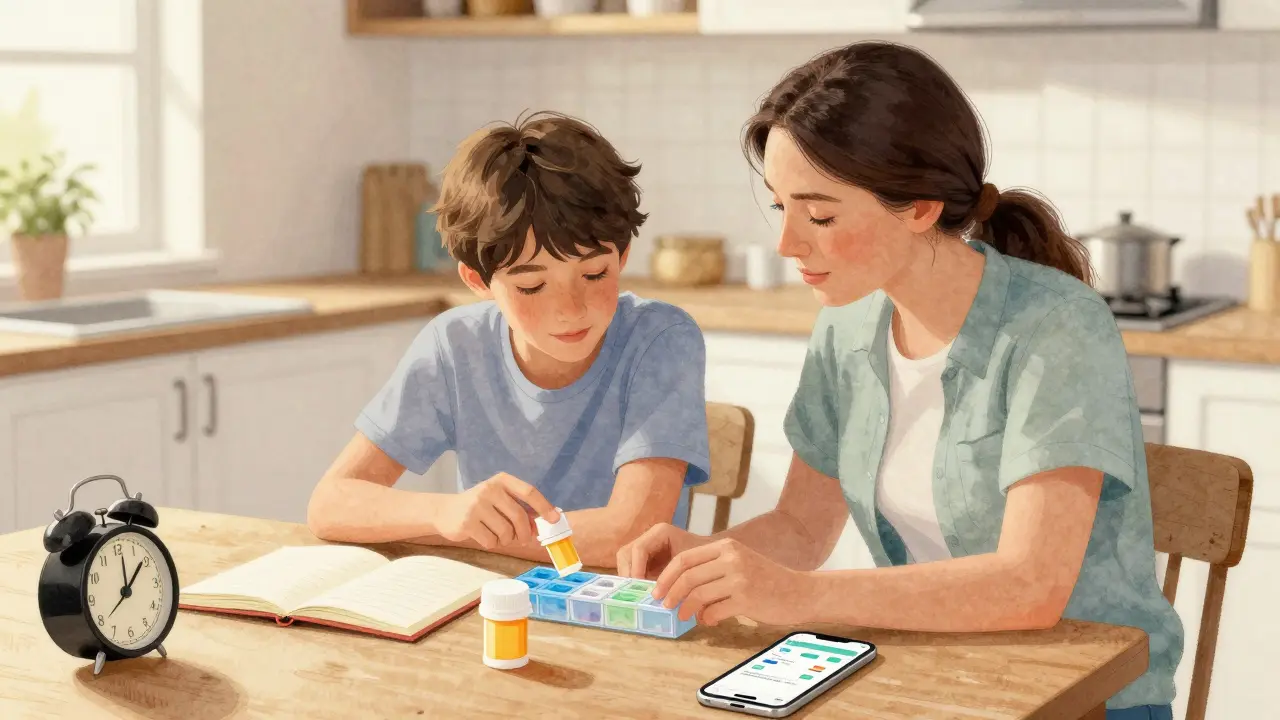
Teaching teens to handle their own prescription medications isn’t just about remembering to take pills. It’s about preparing them for adulthood - one where they’ll need to navigate doctors’ offices, pharmacies, side effects, and peer pressure without a parent hovering nearby. If your teen is on medication for ADHD, asthma, depression, epilepsy, or even chronic pain, waiting until they leave for college to hand over responsibility is too late. The window to build real skills opens in 10th grade - and it’s not about control. It’s about competence.
Start with Understanding, Not Just Instructions
Too often, teens are handed a pill bottle with a quick, “Take this twice a day.” That’s not teaching. That’s hoping. Real medication management starts with knowing why they’re taking it. Sit down with your teen and the prescription label. Read it together. What’s the drug name? What condition does it treat? What happens if they skip a dose? What are the common side effects - and which ones mean they need to call the doctor? Ask them to explain it back to you in their own words. If they can’t, go back. Use simple language. Avoid medical jargon. If they’re on Adderall, don’t say “stimulant-mediated neurotransmitter modulation.” Say, “This helps your brain focus better. If you skip it, you might feel scattered in class.” If they’re on an antidepressant, say, “This helps balance chemicals that affect your mood. It takes weeks to work, and it’s not a quick fix.” The CDC reports that nearly 60% of teens who misuse prescription drugs say they took them because they thought they were harmless. That’s not ignorance - it’s misinformation. Correct it early.Build a Routine That Sticks
Habits stick when they’re tied to something you already do. Brushing your teeth? Eating breakfast? Getting on the bus? That’s your anchor. If your teen takes medication in the morning, link it to brushing teeth. If it’s at night, tie it to turning off the lights. Research from the University of Rochester shows teens who pair medication with an existing habit are 37% more likely to take it on time than those who rely on memory alone. Use alarms - not just one, but multiple. Set a phone alarm for 8 a.m. and another for 8:15 a.m. Label the alarm: “Take ADHD med.” Use different tones for different meds. Teens respond to repetition and cues. A vibrating alert on their watch, a sticky note on the bathroom mirror, a notification on their smart speaker - all help. Don’t just set the alarm. Test it. Ask them to show you how they’ll respond when it goes off. Do they pause their game? Do they grab the bottle right away? Practice the action, not just the reminder.Use Tools That Actually Work
Pill organizers aren’t just for seniors. A simple 7-day compartment box with morning/afternoon/evening slots cuts down confusion. Buy one with a lock if they’re on opioids, benzodiazepines, or stimulants. Store it in a locked drawer or box - not on their nightstand. Apps like Medisafe and MyMeds are used by 39% of teens now, up from 18% in 2019. They send reminders, track doses, and let parents see if the teen took their meds (with permission). But not all apps are equal. The Mayo Clinic found only 22% of teen medication apps have been clinically tested. Stick to ones backed by hospitals or health systems. Avoid flashy, ad-filled apps. Look for ones that let you generate reports to share with the doctor. For teens who hate tech, a simple printed log works. A small notebook with checkboxes for each dose, signed by the teen each day. Review it weekly. No scolding. Just curiosity: “You missed Wednesday. What happened?”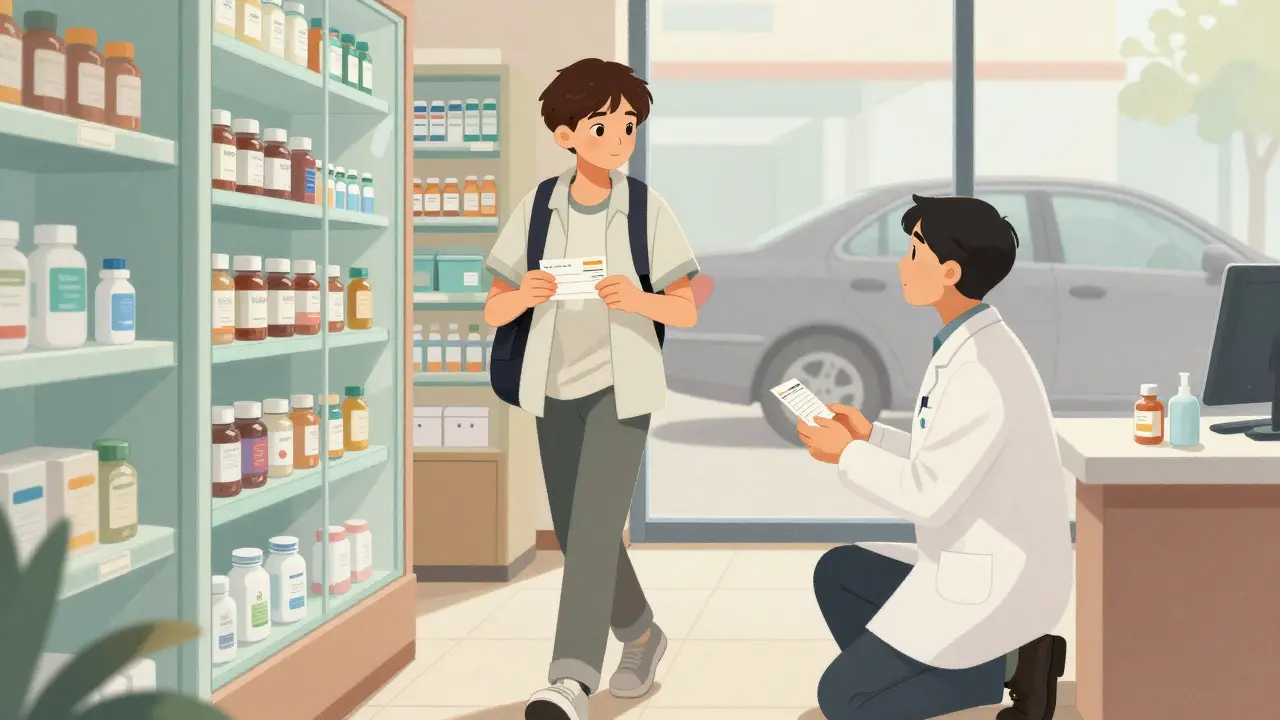
Teach Them to Speak Up - to Doctors and Pharmacies
Many teens never ask questions. They’re afraid they’ll sound dumb. Or they think the doctor won’t listen. Teach them to ask three things before leaving the clinic:- “What’s this for?”
- “What should I do if I feel worse?”
- “What happens if I forget to take it?”
Controlled Substances Need Extra Layers
Painkillers, ADHD meds, anxiety drugs - these are the most commonly misused. The DEA says they’re the second most abused drugs among teens after marijuana. And many teens think they’re safer than street drugs because they’re “prescribed.” That’s dangerously wrong. The American Academy of Pediatrics says parents should never let teens manage controlled substances alone - even if they’re responsible. Store them in a locked box. Count pills monthly. If you notice missing pills, don’t accuse. Say: “I noticed the count is off. Can we talk about it?” Dispose of unused pills properly. Don’t flush them. Don’t toss them in the trash. Take them to a pharmacy with a take-back program. There are over 14,000 locations in the U.S. and Canada. Ask your pharmacist where the nearest one is.Let Them Practice - Slowly
This isn’t a switch you flip on their 18th birthday. It’s a ladder. In 10th grade: They identify their meds. You fill the organizer. You set the alarms. In 11th grade: They fill the organizer. You verify it. You set the alarms. They remind you if they forget. In 12th grade: They fill the organizer. They set the alarms. They request refills. They call the pharmacy. You check in once a week. After they leave for college: You check in once a month. They text you a photo of their pill box once a week. No pressure. Just connection. The goal isn’t to catch them failing. It’s to catch them succeeding.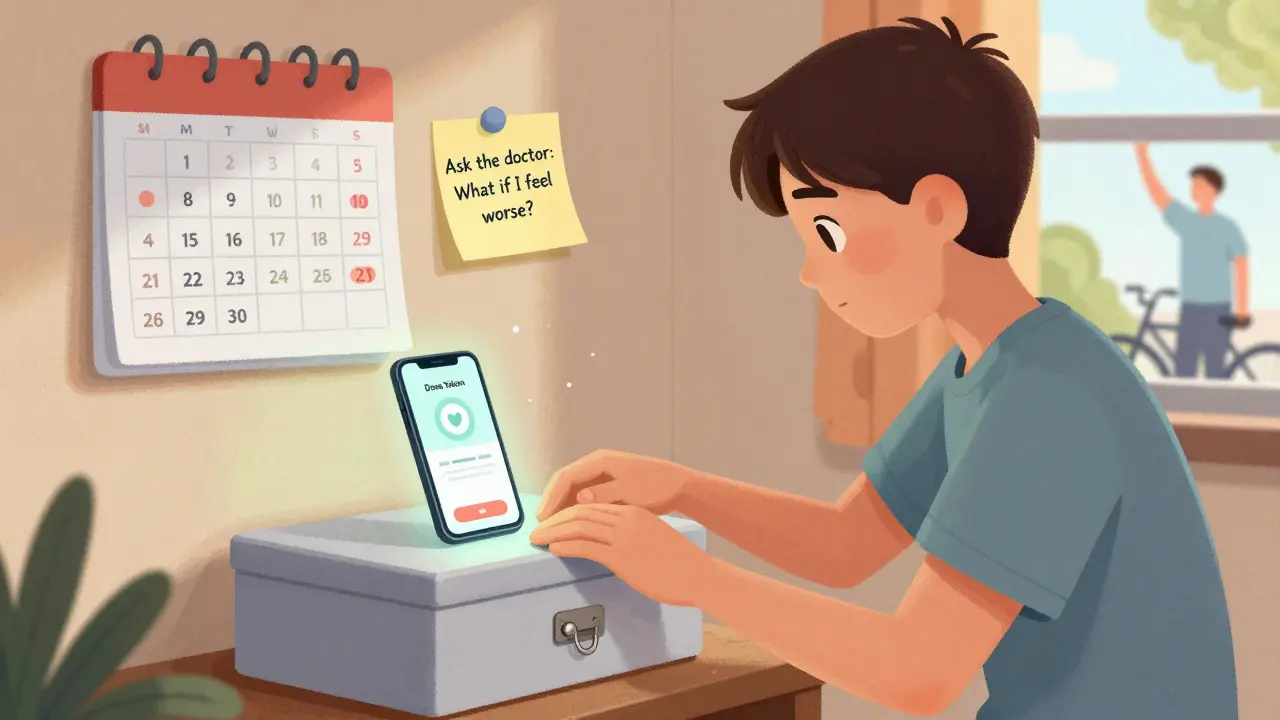
Involve Their World
Teens listen to peers more than parents. That’s biology. So find their allies. Encourage them to find one trusted friend who also takes meds. They can remind each other. Share tips. Normalize it. A 2021 study in the Journal of Adolescent Health found teens with a medication buddy had 22% higher adherence. Schools are stepping up, too. Programs like Generation Rx’s “My Generation Rx” teach teens how to say no to peer pressure around meds. Schools that use it report 33% fewer cases of misuse. Ask if your teen’s school offers it. If not, suggest it.What If They Mess Up?
They will. Everyone does. Missing a dose isn’t failure. It’s feedback. When they forget, don’t yell. Don’t take away privileges. Ask: “What got in the way?” Was it busy? Embarrassed? Forgot the bottle? Then solve the problem together. If they’re skipping meds because they hate the side effects - talk to the doctor. There are often alternatives. If they’re taking extra pills to feel better - that’s a red flag. Don’t panic. Get help. Talk to their provider. Or call the SAMHSA helpline: 1-800-662-HELP.It’s Not About Trust. It’s About Training.
You’re not handing over control because you trust them. You’re handing it over because you’ve trained them. Like teaching them to drive. You don’t just give them the keys. You teach them how to check mirrors, read signs, and handle emergencies. Medication management is the same. It’s a life skill. One that’s overlooked. One that can save their life. The data is clear: Teens who learn to manage their meds before leaving home are less likely to misuse them, more likely to stick with treatment, and better prepared for adult health decisions. That’s not a bonus. It’s essential. Start now. Not tomorrow. Not when they’re 18. Now. While you’re still here to guide them - not to watch from afar.At what age should I start teaching my teen to manage their meds?
Start in 10th grade - around age 15 or 16. That’s when teens develop the cognitive skills to understand cause-and-effect, remember routines, and handle responsibility. Waiting until college is too late. The American Academy of Pediatrics recommends beginning the transition during junior year of high school to build habits before independence.
What if my teen refuses to take their medication?
Don’t force it. Ask why. Is it side effects? Embarrassment? They think it’s not working? Talk to their doctor. There may be another option. Sometimes switching from a twice-daily pill to a once-daily extended-release version helps. Other times, counseling or peer support makes a difference. Never shame them. Focus on understanding the reason, then solve it together.
Are medication apps safe for teens to use?
Some are, some aren’t. Only 22% of teen medication apps have been clinically validated. Stick to ones from trusted health systems like Mayo Clinic, Medisafe, or MyMeds. Avoid apps with ads, pop-ups, or no clear developer. Always check if the app lets you set up parental alerts - with your teen’s permission. The goal is support, not surveillance.
How do I know if my teen is misusing their prescription meds?
Watch for signs: missing pills, mood swings, secrecy, declining grades, or changes in friends. If they’re taking more than prescribed, taking someone else’s meds, or using them to get high - that’s misuse. The DEA says opioids, ADHD meds, and anxiety drugs are the most common. If you suspect misuse, don’t confront with anger. Say, “I’m worried about you. Let’s talk to your doctor.” Call SAMHSA’s helpline at 1-800-662-HELP for guidance.
Can my teen get access to their own medical records?
Yes. Under the 2020 CURES Act, teens as young as 13 can access their electronic health records through patient portals. This includes their medication history, prescriptions, and lab results. Encourage them to check it. It builds ownership and helps them spot errors. You can still view it too - but let them lead the conversation with their doctor.
What should I do with leftover pills after my teen no longer needs them?
Never flush them or throw them in the trash. Take them to a pharmacy with a drug take-back program. There are over 14,000 locations in the U.S. and Canada. Some police stations and community centers also offer drop-off bins. This prevents accidental use by younger siblings, theft, or environmental harm. Ask your pharmacist where the nearest one is.
MARILYN ONEILL
January 20, 2026 AT 17:50Ugh, another parent blog pretending they're a doctor. Teens don't need 'training'-they need space. My cousin took her Adderall every day at 15 without a single alarm or pillbox. She's now a neuroscientist. You're not raising kids, you're raising robots with medication schedules.
And why are we still using 2010s apps? My 16-year-old uses a sticky note on her laptop. It works better than your 'clinically validated' nonsense.
Also, lock the meds? Like she's going to sell them? Please. Most teens are too busy TikTok dancing to care.
Stop overcomplicating. Let them fail. They'll learn.
Also, the CDC statistic? Totally misquoted. You're scaring parents for clicks.
Coral Bosley
January 20, 2026 AT 23:32I read this and cried. Not because I’m a bad mom-but because I realized I’ve been treating my daughter’s anxiety meds like a chore instead of a lifeline.
She’s 15. She hides the bottle under her bed. I found it last week. I didn’t yell. I just sat on her floor and said, ‘I don’t know how to help you, but I’m not leaving.’
She cried. I cried. We made a chart together. No alarms. Just us. And now, every night, she puts the pill on her nightstand and whispers, ‘I’m trying.’
This isn’t about control. It’s about showing up when they’re too tired to show up for themselves.
Melanie Pearson
January 22, 2026 AT 11:51It is both regrettable and alarming that the author of this piece continues to propagate the notion that adolescent autonomy should be granted incrementally through behavioral conditioning. Such an approach fundamentally misunderstands the developmental neurobiology of late-stage puberty.
The premise that teens require structured, externally enforced routines to manage pharmacological regimens is not only outdated, but it actively undermines the intrinsic motivation required for long-term adherence.
Furthermore, the endorsement of digital tracking applications-many of which are proprietary, data-harvesting platforms-is ethically indefensible in the context of adolescent privacy rights.
One must ask: Are we cultivating responsible adults, or merely training compliant subjects for a surveillance-based healthcare infrastructure?
michelle Brownsea
January 24, 2026 AT 03:19Let’s be crystal-clear: this isn’t about ‘teaching teens’-it’s about parents finally accepting that their job isn’t to control, but to equip.
And yet, so many of us are still stuck in the ‘I’ll-do-it-for-you’ mode-until the moment they leave for college, and then we’re shocked they can’t manage their own prescriptions.
It’s not negligence-it’s neglect wrapped in love.
And let’s not pretend apps are the solution. They’re digital Band-Aids on a systemic problem: we don’t teach kids how to be responsible-we teach them how to obey.
There’s a difference.
And if you think locking up ADHD meds is ‘protective,’ you’re not protecting them-you’re teaching them that their medication is something to be feared, hidden, stolen.
That’s not safety. That’s shame.
And shame doesn’t build competence. It builds resentment.
And resentment? That’s what leads to misuse.
So please-stop treating your teen like a prisoner with a prescription.
Start treating them like a person who’s learning how to survive in a world that doesn’t care if they remember to take their pills.
They’re not broken.
You’re just scared to let them fly.
Glenda Marínez Granados
January 24, 2026 AT 13:10Oh sweet summer child.
You think teens need a 7-day pill organizer and a vibrating alarm to take their antidepressants?
Meanwhile, my 16-year-old takes her meds every morning while scrolling through TikTok and says, ‘I don’t need a reminder, I just need to not feel like crying all day.’
So yeah. Let’s just pretend the real issue is ‘routine’ and not that we’ve turned mental health into a to-do list.
Also, ‘My Generation Rx’? Cute. My kid’s school had a PowerPoint on it. Then the counselor said, ‘Just don’t share your meds.’
That’s the entire curriculum.
Meanwhile, the DEA’s stats? Totally cherry-picked.
And why is no one talking about how expensive these meds are? Or how hard it is to get refills without a parent?
But sure. Let’s blame the teens for not using the right app.
😂
Yuri Hyuga
January 25, 2026 AT 13:02Beautifully written. This is the kind of guidance that doesn’t just save lives-it rebuilds trust.
As a father of two teens on medication, I can say this: the moment I stopped micromanaging and started coaching, everything changed.
My son started asking questions at the pharmacy. My daughter started checking her own lab results online.
They didn’t need more rules.
They needed to feel capable.
And you know what? They are.
Stop treating them like they’re broken.
Start treating them like they’re becoming who they’re meant to be.
💪❤️
Also-yes, use apps. But only if they’re built by doctors, not marketers. And always-ALWAYS-ask permission before tracking.
Trust is earned. Not monitored.
Steve Hesketh
January 25, 2026 AT 19:33Bro, I’m from Nigeria, and I’ve seen teens here manage insulin, epilepsy meds, even HIV treatment-with no alarms, no apps, no locked boxes.
They learn because their lives depend on it.
Here’s the truth: American teens aren’t lazy. They’re overwhelmed.
They’re juggling school, social media, part-time jobs, family drama, and now you want them to remember a pill schedule?
It’s not about discipline.
It’s about reducing the load.
Let them use a pill box. Let them use their phone. Let them have a friend who reminds them.
But don’t make it another thing they fail at.
They’re not failing.
You’re asking too much, too fast.
Start small.
One pill. One day.
Then build up.
And for God’s sake-don’t turn this into a performance review.
They’re learning to live. Not to pass a test.
shubham rathee
January 26, 2026 AT 02:22MAHENDRA MEGHWAL
January 26, 2026 AT 03:17The framework presented herein is methodologically sound and aligns with contemporary developmental psychology literature regarding adolescent autonomy and executive function maturation.
However, the implicit assumption that parental oversight must be gradually relinquished presupposes a stable, resource-rich domestic environment-an assumption that does not hold true for a significant proportion of adolescent populations, particularly those in socioeconomic marginalization.
Further, the recommendation to utilize digital tracking platforms without addressing data privacy legislation or digital literacy disparities among low-income households constitutes a form of technological determinism that may exacerbate existing inequities.
While the intent is commendable, the implementation strategy risks privileging middle-class norms as universal standards.
Recommendation: Expand the model to include community health worker support and non-digital alternatives for underserved populations.
Kevin Narvaes
January 26, 2026 AT 09:57