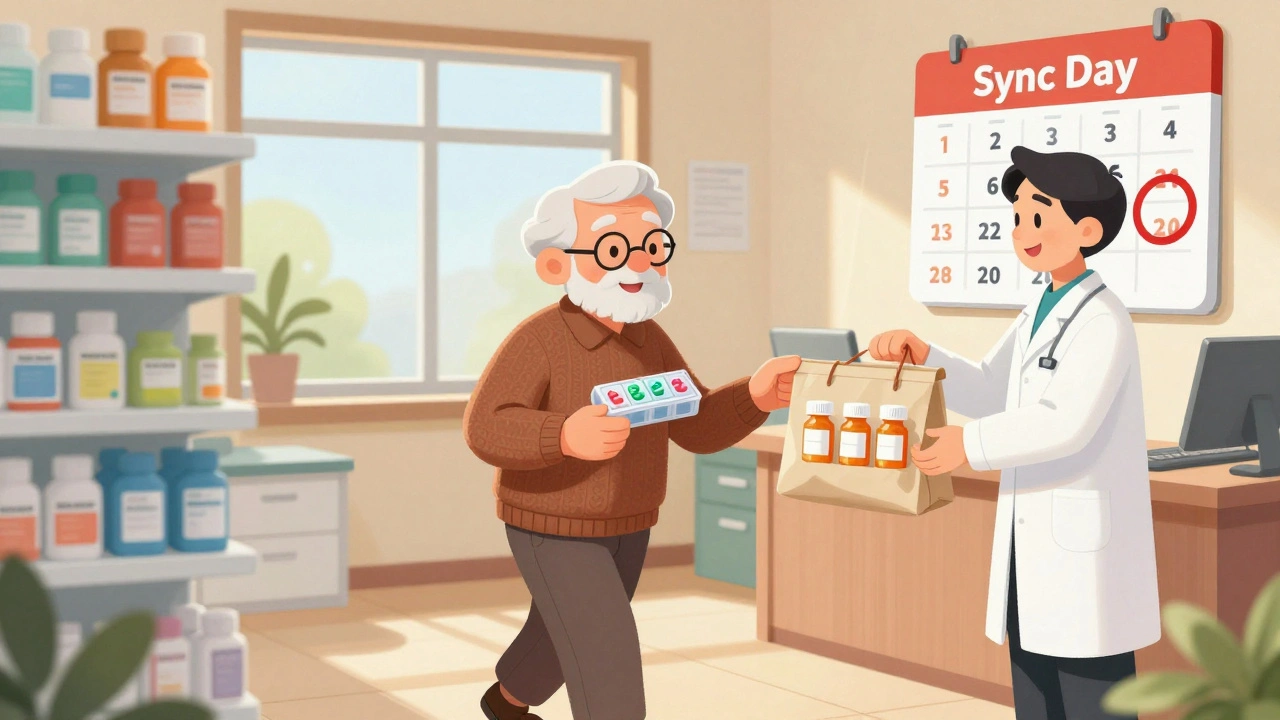
Managing multiple medications can feel like juggling five balls while riding a bike-except the balls are pills, and if you drop one, your health could crash. For people with chronic conditions like diabetes, high blood pressure, or high cholesterol, taking the right dose at the right time isn’t optional. Yet, about half of all patients miss doses or stop taking their meds altogether. One of the biggest reasons? Too many different refill dates. That’s where refill synchronization comes in.
What Is Refill Synchronization?
Refill synchronization, often called med sync, is a pharmacy service that lines up all your regular medications to be refilled on the same day each month. Instead of showing up at the pharmacy three times a week for different prescriptions, you walk in once-maybe even get them delivered-and leave with everything you need for the next 30 days. It sounds simple, but it’s backed by solid data. A 2017 study in Health Affairs tracked nearly 23,000 Medicare patients and found those enrolled in med sync had a 3 percentage point higher Proportion of Days Covered (PDC)-a key measure of adherence-than those who didn’t. That might not sound like much, but in real terms, it means fewer hospital visits, fewer ER trips, and less risk of complications from uncontrolled conditions.How It Works: The Four-Step Process
Getting started isn’t complicated, but it does take a little planning. Here’s how it actually works in a pharmacy:- Initial Consultation: Your pharmacist sits down with you (or calls you) to review every medication you’re taking-prescription, over-the-counter, even supplements. They check what you’re supposed to take, how often, and when your current refills are due.
- Synchronization Plan: The pharmacist figures out the best single refill date for all your meds. If one pill is due in 10 days and another in 25, they might give you a little extra of the soon-to-expire one so everything lines up on, say, the 15th. This is called a bridge supply-and yes, your insurance has to allow it.
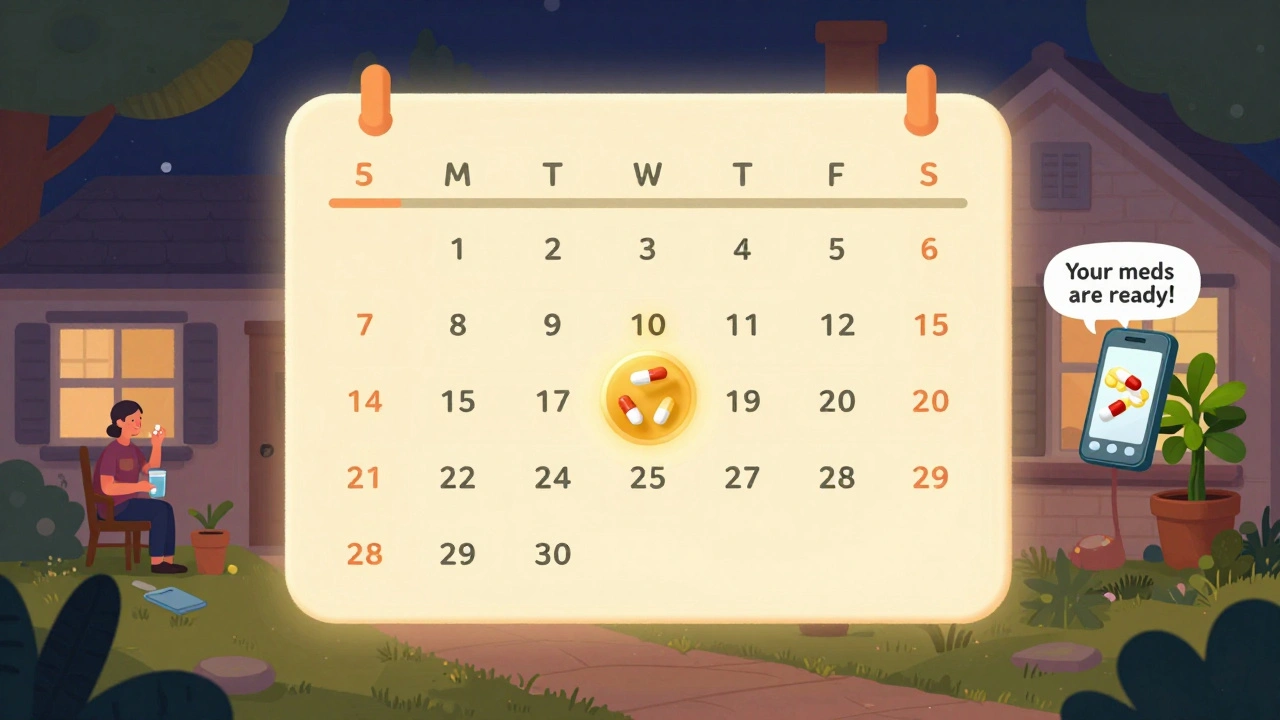
- Monthly Refill: On your sync date, you get a call or text: “Your meds are ready.” You pick them up, or they’re mailed to you. No reminders needed. No scrambling. No running out.
- Monthly Check-In: Every month, your pharmacist reviews your list. Did your doctor change a dose? Did you start a new med? Did you stop one? They adjust your sync plan so it stays accurate.
Who Benefits the Most?
Not everyone needs med sync-but if you’re taking three or more maintenance medications for chronic conditions, you’re a perfect candidate. Think about it:- You take lisinopril for blood pressure, metformin for diabetes, atorvastatin for cholesterol, and a daily aspirin.
- Your refills are due on the 3rd, 12th, 20th, and 28th.
- You forget one. Then another. Then you run out of metformin over a weekend.
- Take only retail pharmacy prescriptions (not mail-order)
- Have low baseline adherence (under 70% PDC)
- Have multiple chronic conditions
Why It Works Better Than Mail-Order
You might think, “Why not just use mail-order for everything?” It’s cheaper, right? Not always. A 2017 study in the American Journal of Managed Care found that while med sync boosted adherence by 8-11 percentage points for patients using retail pharmacies, the gain for mail-order users was barely 1-3 points. Why? Because mail-order doesn’t come with a pharmacist checking in. No one asks, “Did you feel dizzy after your new pill?” or “Are you still taking that old blood thinner?” Med sync isn’t just about dates-it’s about contact. It’s the pharmacist noticing you haven’t picked up your new antidepressant and calling to ask why. That human touch makes all the difference.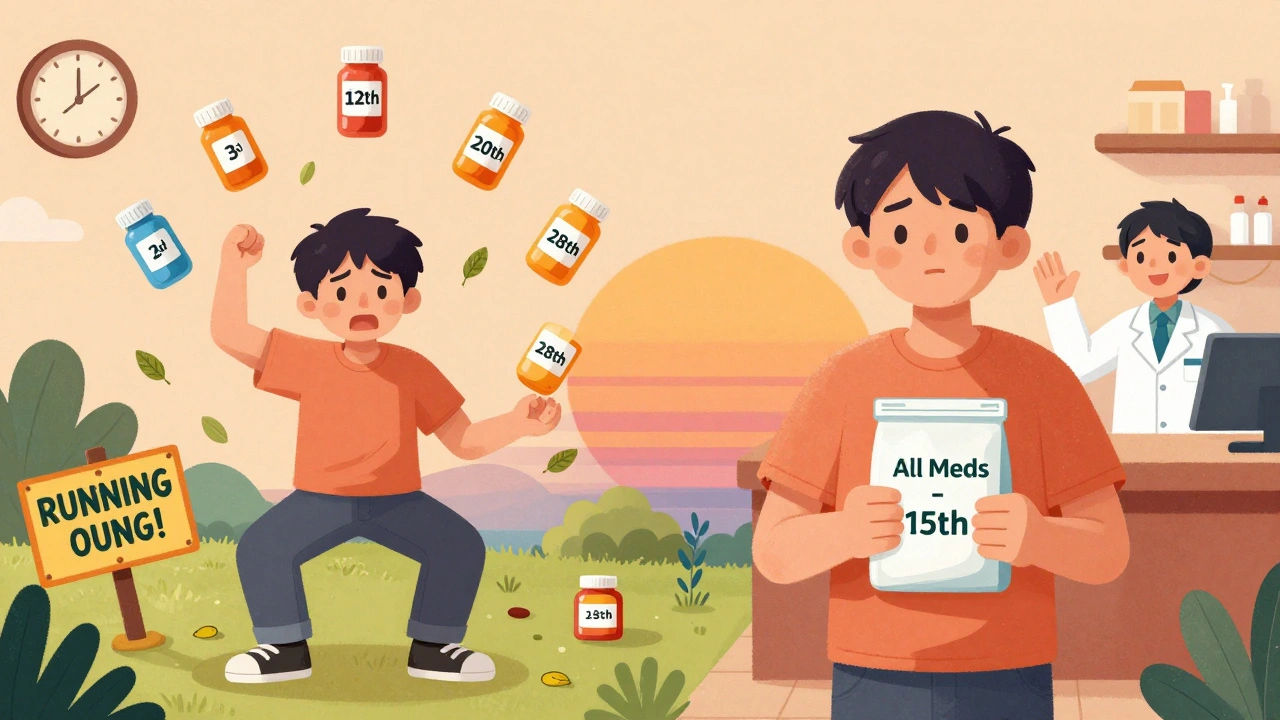
Common Barriers-and How to Beat Them
It’s not all smooth sailing. Many patients and pharmacists hit roadblocks. Insurance won’t let me refill early. This is the #1 complaint. If your insurance doesn’t allow early refills, your pharmacist can’t sync. The fix? Ask your doctor to write a prescription with a “dispense as written” note and request an early refill authorization. Most insurers will approve it if it’s for a chronic condition and the pharmacist explains the adherence benefit. I’m scared my meds will change. Some patients think syncing means they’ll get different pills. They don’t. You’re still taking the same drugs, same doses. You’re just getting them on the same day. Pharmacists often use simple handouts or videos to explain this. One pharmacy in Ohio uses a 90-second animated video shown on tablets in the waiting room. Patient confusion dropped by 60%. It takes too long. The first appointment can take 20-30 minutes. But after that, it’s 5-10 minutes a month. Think of it like a monthly tune-up for your health. You wouldn’t skip your car’s oil change because it takes 45 minutes-this is the same.What Pharmacies Are Doing Now
The program isn’t standing still. In 2022, CVS integrated med sync with their digital app, sending automated text reminders and letting patients track their adherence score. Walgreens launched “Sync & Save” in January 2023, combining synchronization with copay discounts on select meds. Kroger Health is testing virtual visits tied to sync days-patients get a 10-minute Zoom chat with a pharmacist when they pick up their meds. The goal? Make it effortless. No more phone calls. No more waiting. Just a notification: “Your meds are ready. Pick up today.”Is It Worth It?
Let’s put numbers to it. The Health Affairs study estimated that a 1 percentage point rise in adherence for heart medications saves Medicare $206 million a year. For a single patient, better adherence means:- 30% lower risk of hospitalization
- 50% fewer ER visits
- Longer life expectancy
How to Get Started
If you’re taking three or more chronic meds, here’s what to do:- Call your pharmacy and ask: “Do you offer medication synchronization?”
- If yes, schedule a time to meet with the pharmacist. Bring your list of meds (or your pill bottles).
- Ask: “Can you help me get all my refills on one day?”
- If they say no, ask why. It might be insurance. Ask them to call your doctor to request an early refill authorization.
- Once enrolled, mark your calendar. Don’t miss your sync date.
What If My Pharmacy Doesn’t Offer It?
If your local pharmacy doesn’t have a sync program, ask them to start one. Many independent pharmacies can use free toolkits from the National Community Pharmacists Association. Chain pharmacies like CVS and Walgreens already have it built in-so if you’re not getting it, you’re not asking. You can also switch pharmacies. Most insurers let you choose any in-network pharmacy. If your current one won’t sync, find one that will. It’s your health. You deserve a system that works for you.Can I sync all my medications?
No-not all medications can be synced. Only maintenance drugs taken regularly (like for blood pressure, diabetes, or cholesterol) are eligible. Acute medications (like antibiotics or pain pills) or those with complex dosing (like insulin or warfarin) usually aren’t included. Your pharmacist will review your list and tell you what’s eligible.
Will my insurance cover early refills for sync?
Most Medicare Part D and many commercial plans allow early refills for synchronization if it’s medically necessary. Your pharmacist will request authorization from your insurer. If denied, they can ask your doctor to write a note explaining the adherence benefit. About 23% of patients face this issue, but it’s often solvable with a quick call.
How long does it take to get synced?
The first appointment takes 20-30 minutes. After that, you’ll be synced within one to two weeks, depending on your current refill dates and insurance rules. Some patients get synced in a single visit if their meds are close to aligning. Others need a few weeks to bridge gaps.
Do I have to pick up my meds in person?
No. Many pharmacies offer free delivery for synchronized prescriptions. Some send them via mail. Others use local courier services. Ask your pharmacy what options they offer. The goal is convenience-not forcing you to come in if you can’t.
What if I miss my sync date?
Don’t panic. Call your pharmacy right away. They’ll usually give you a bridge supply to cover the gap and reset your sync date. Missing one month doesn’t break the system-it just means you need to reset. Most pharmacists will proactively call you if you haven’t picked up your meds by your sync day.
Jim Schultz
December 2, 2025 AT 13:46Look, I get it-syncing refills sounds like a cute little hack, but let’s be real: this is just pharmacy paternalism dressed up as innovation. You’re not empowering patients; you’re automating compliance. And don’t get me started on the ‘human touch’ nonsense-pharmacists aren’t therapists, and no, your 10-minute ‘check-in’ isn’t going to fix systemic healthcare neglect. Also, why is this only available at retail pharmacies? Mail-order is cheaper, faster, and less invasive. You’re romanticizing inconvenience.
Kidar Saleh
December 2, 2025 AT 20:25This is one of the most important public health innovations I’ve seen in a decade. In the UK, we’ve had similar schemes under the NHS for years-pharmacists are the unsung heroes of chronic disease management. The moment you remove the friction of multiple refill dates, you remove the excuse. People aren’t lazy-they’re overwhelmed. This isn’t about discipline. It’s about design. And frankly, if your pharmacy isn’t offering this, they’re failing you.
Chloe Madison
December 4, 2025 AT 02:09As someone who manages five chronic medications and has been on med sync for three years-I cannot emphasize enough how transformative this is. Before sync, I was missing doses because I’d forget which pill was due when. Now? One day a month. One trip. One text. I’ve gone from 68% PDC to 94%. My A1C dropped. My BP stabilized. My anxiety about meds? Gone. If you’re taking three or more meds-DO THIS. It’s not a luxury. It’s a lifeline. And yes, your pharmacist will help you navigate insurance hurdles. Just ask.
Makenzie Keely
December 4, 2025 AT 03:11Refill synchronization is not merely a logistical convenience-it is a behavioral intervention grounded in cognitive load theory, behavioral economics, and clinical pharmacy best practices. The reduction in pill fragmentation directly correlates with decreased decision fatigue, which in turn enhances medication adherence through habit formation and environmental cueing. Moreover, the monthly pharmacist review functions as a proactive, non-punitive feedback loop that mitigates polypharmacy risks. The 3% PDC increase cited in Health Affairs is statistically significant and clinically meaningful-especially when extrapolated across 23,000 Medicare beneficiaries. This is precision medicine at the community level.
Francine Phillips
December 5, 2025 AT 23:37Yeah, okay. So you get all your pills on one day. Cool. I still forget to take them.
Katherine Gianelli
December 6, 2025 AT 16:36I used to be the person who’d run out of metformin on a Saturday and panic. I’d stare at the pill organizer like it was a foreign language. Then my pharmacist sat me down, showed me how sync works, and even printed out a little calendar with my meds on it. I cried. Not because I was sad-because I finally felt like someone saw me. You don’t need a fancy app or a doctor’s order. Just walk in. Say, ‘I need help.’ They’ve got your back.
Joykrishna Banerjee
December 6, 2025 AT 23:55Let’s be honest: this is just another corporate wellness theater. Big Pharma loves med sync because it locks patients into retail chains, ensures consistent revenue streams, and masks the fact that insulin still costs $300 a vial. And don’t even get me started on the ‘pharmacist check-in’-most pharmacists are overworked robots paid by volume, not outcomes. This is a Band-Aid on a gunshot wound. If you want real adherence, fix drug pricing. Not refill dates.
Myson Jones
December 8, 2025 AT 09:56I’ve been using med sync for two years now. Honestly? It’s the only reason I haven’t ended up in the hospital. My pharmacist remembers my name. She asks how my dog is doing. She noticed I hadn’t picked up my new blood pressure med and called me. That’s not a service-that’s care. And yeah, the first appointment took 25 minutes. But now? I get a text every month. I don’t think about it. I just take it. And I’m alive because of it.
parth pandya
December 9, 2025 AT 10:22great post! i never knew this was a thing. i have 4 meds and was always mixing up dates. i called my local walgreens and they synced me in 10 mins. now i get a text every 15th. life changed. thanks for sharing
James Kerr
December 11, 2025 AT 03:49My dad’s on med sync. He used to forget everything. Now he just says, ‘Oh, it’s the 15th-time for my pills.’ No stress. No chaos. Just… life. Seriously, if you’re taking more than three meds, just ask. It’s free. It’s easy. And it might save your life.
Vincent Soldja
December 12, 2025 AT 06:50The data is inconclusive. The 3% PDC increase is statistically significant but clinically marginal. Moreover, selection bias is likely: patients enrolled in med sync are more motivated to begin with. Without a randomized controlled trial controlling for baseline adherence, this remains an observational correlation, not causation.
Albert Essel
December 13, 2025 AT 02:19I’m a pharmacist in rural Oregon. We started med sync last year. We’ve had patients who hadn’t filled a prescription in six months come back because they finally got everything on one day. One woman told me, ‘I didn’t realize I was so far behind until I saw all my pills together.’ We’re not just filling prescriptions-we’re rebuilding trust. This isn’t about efficiency. It’s about dignity.
Charles Moore
December 13, 2025 AT 08:06My sister in Dublin just got synced through her community pharmacy-same system, same results. This isn’t an American thing. It’s a human thing. When you remove the barriers to care, people take care of themselves. Simple as that. If your pharmacy doesn’t offer this, ask them why. And if they can’t, find one that can. Your health isn’t a convenience-it’s your priority.