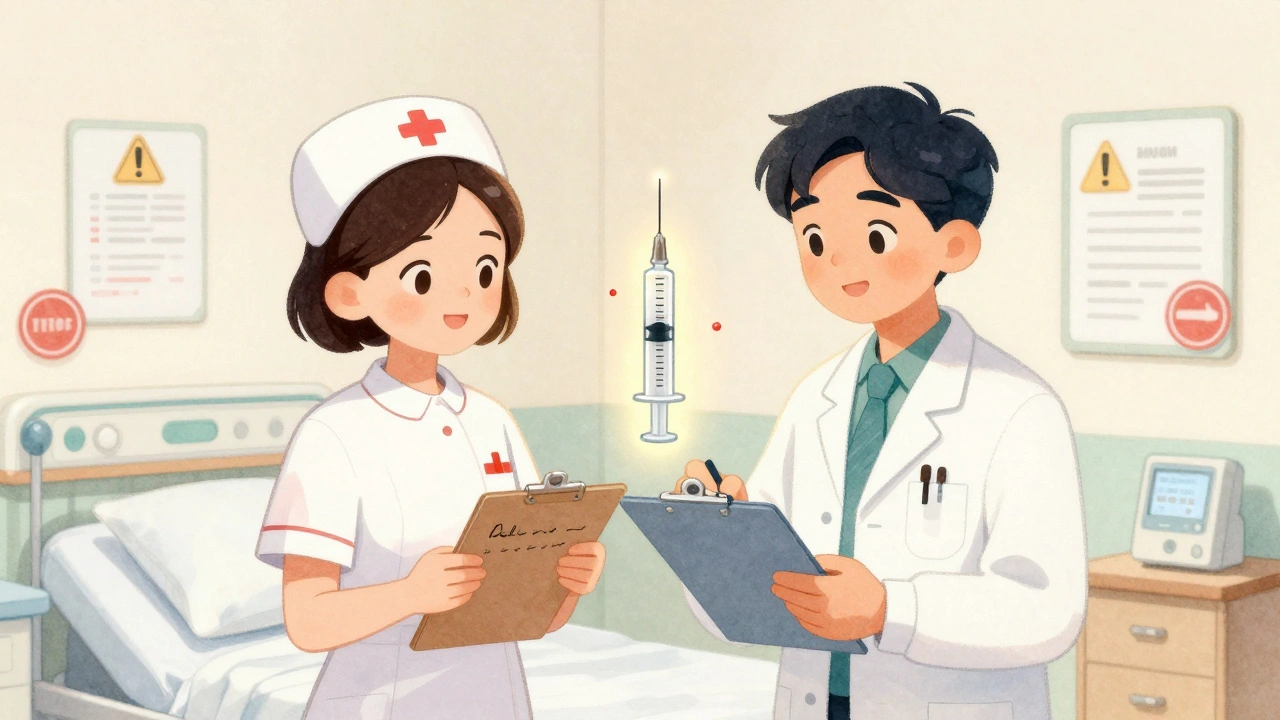
Medication errors kill more people in the U.S. each year than car accidents. And a huge chunk of those errors? They happen when someone changes a dose - and no one catches it.
It’s not always a typo on a chart. Sometimes it’s a rushed handoff at shift change. Other times, it’s a nurse trusting a screen that didn’t flag a 10-fold overdose because the concentration was entered right, but the dose was wrong. One wrong decimal. One missed double check. One unverified patient weight. And a life can change forever.
You don’t need to be a pharmacist or a doctor to understand this: dose verification isn’t paperwork. It’s a lifeline.
Why Dose Changes Are the Most Dangerous Moments
Not all medication errors are the same. Some happen because a drug was mixed up. Others happen because the route was wrong. But the biggest killer? Dose changes - especially with high-alert medications like insulin, heparin, morphine, and warfarin.
These drugs don’t play nice. A little too much insulin? Hypoglycemia. A little too much heparin? Internal bleeding. A little too much morphine? Respiratory arrest.
According to the Institute for Safe Medication Practices (ISMP), 19 medications are classified as high-alert because even small mistakes can cause serious harm. And the Joint Commission says miscommunication during dose changes is the root cause in 65% of all medication-related sentinel events - the kind that result in death or permanent harm.
It’s not just about the number on the screen. It’s about context. Is the patient’s kidney function declining? Are they on multiple interacting drugs? Did they just come from the ER with a new diagnosis? If you’re not checking all of that, you’re not verifying - you’re guessing.
The Two Pillars of Verification: People and Technology
There’s no single fix. You need both human judgment and smart tools working together. One without the other leaves dangerous gaps.
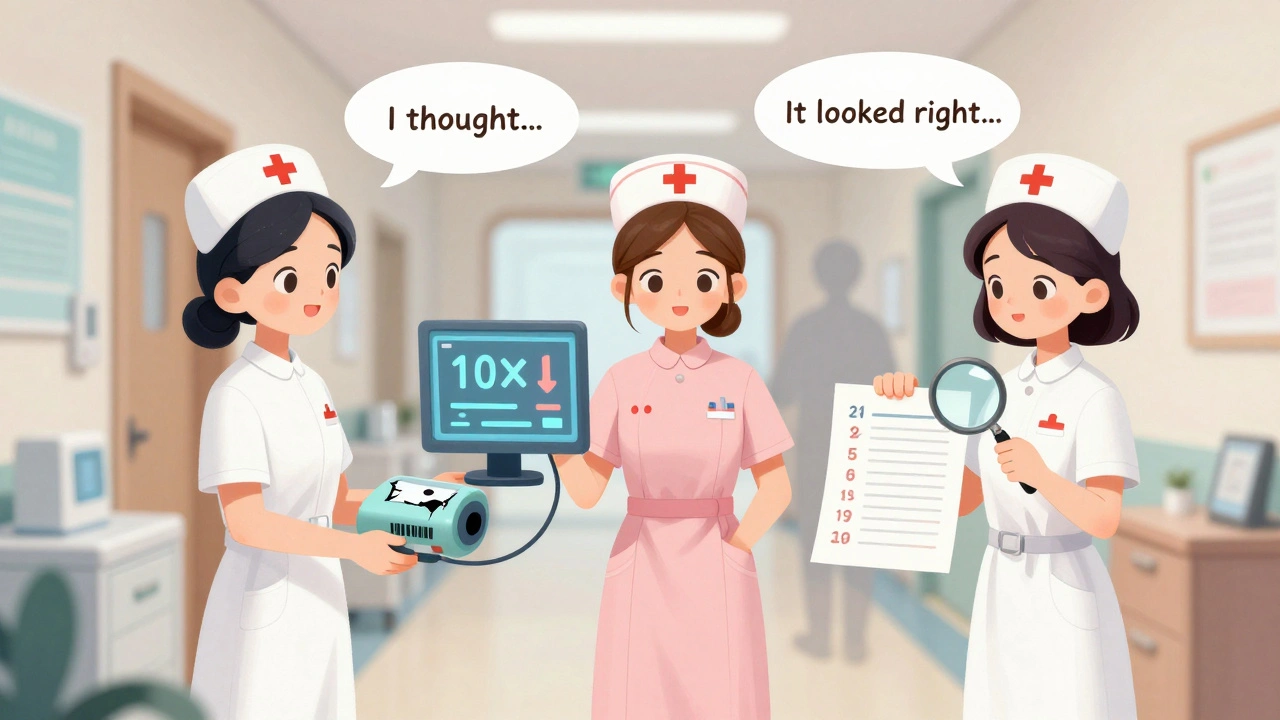
Barcode medication administration (BCMA) systems scan the patient’s wristband, the drug, and the dose. They’re great at catching the wrong drug or the wrong patient. In fact, they stop 86% of those kinds of errors. But here’s the catch: they can’t catch a dose that’s wrong by a factor of 10 if the concentration is entered correctly. That’s not a barcode failure - that’s a human error that slipped through.
That’s where independent double checks come in. Two trained staff members verify the five rights - right patient, right drug, right dose, right route, right time - without talking to each other until they’re done. One reads the order. The other reads the label. One calculates the weight-based dose. The other recalculates it. No shortcuts. No looking at each other’s work.
Studies show double checks catch 33% of dosing errors and up to 100% of wrong-vial errors. But here’s the problem: only 63% of hospitals actually follow through. Why? Because it takes time. And time is in short supply.
A 2012 study found nurses spend 15-20% more time on double checks. During peak hours, adherence drops to 45%. That’s not laziness. That’s burnout. When you’re managing six patients, a code blue, and a family member screaming for pain meds, a checklist feels like another burden - not a safety net.
Smart Tools Don’t Replace Thinking - They Support It
Smart infusion pumps with dose-error reduction software are another layer. They can stop an overdose before it happens. One 2017 study showed they reduce overdose errors by 85%. But they’re blind to wrong-patient errors. They can’t tell if the patient in Bed 3 is actually supposed to get that dose. Only a person can.
And then there’s AI. New systems like Epic’s DoseRange Advisor analyze a patient’s history, lab values, and current meds to flag unusual doses before they’re even ordered. In a 12-hospital trial, it cut inappropriate dose changes by 52%. That’s huge. But AI doesn’t replace verification - it makes it smarter.
Think of it like this: BCMA is your seatbelt. Double checks are your airbag. AI is the car’s warning system that says, “Hey, you’re about to hit a wall.” You need all three. Relying on just one? That’s how accidents happen.
The 3-Step Verification Process That Works
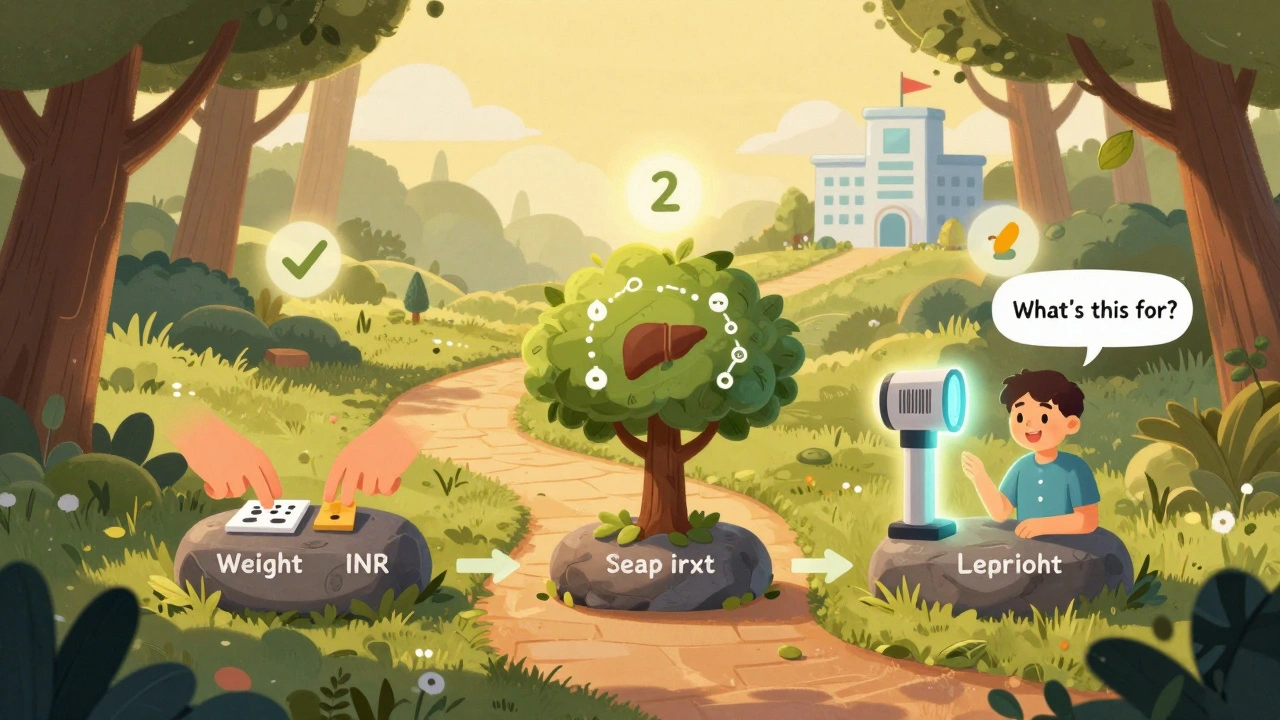
It’s not about doing more. It’s about doing it right. The ISMP recommends a simple, repeatable 3-step process for dose changes:
- Independent calculation - Two people calculate the dose separately. For pediatric patients, that means weight-based dosing to the nearest 0.1 mg/kg. For warfarin, it means checking the INR trend from the last 24 hours. No sharing numbers. No “I think it’s right.” Write it down. Do it again.
- Context check - Does this dose make sense for this patient? Check renal function. Check liver enzymes. Check recent labs. Check allergies. Check if they’re on a drug that interacts with it. If the patient’s creatinine clearance is 30 mL/min, a standard dose of metformin could be deadly. Don’t skip this step.
- Bedside verification - Scan the barcode. Confirm the patient’s identity. Read the label aloud. Ask the patient, “Do you know what this is for?” If they say, “I think it’s for my blood pressure,” but it’s insulin? That’s your signal to stop.
This whole process takes 5-7 minutes. It’s not fast. But it’s faster than a code blue.
Communication Is the Missing Link
Most dose errors happen during transitions. Shift changes. Transfers from ER to floor. Discharges. That’s when information gets dropped.
That’s where SBAR - Situation, Background, Assessment, Recommendation - comes in. It’s not just a fancy acronym. It’s a structure that forces clarity.
Instead of saying, “The patient’s insulin was changed,” you say:
- Situation: “Mr. Jones, 72, admitted for pneumonia, had his sliding scale insulin increased from 4 units to 10 units at 8 a.m.”
- Background: “He’s had fasting glucose between 180-220 for the last two days. His creatinine is 1.4.”
- Assessment: “His glucose dropped to 78 this morning after the change. I’m concerned about hypoglycemia risk with his renal impairment.”
- Recommendation: “I recommend holding the 10-unit dose and restarting at 6 units with close glucose checks every 2 hours.”
A 2020 study showed SBAR reduced miscommunication-related errors by 41%. That’s not a small win. That’s life-saving.
What Happens When You Skip Steps
Real stories from the front lines tell you everything you need to know.
A nurse on Reddit shared: “I almost gave 10 units of insulin instead of 1 unit because the doctor wrote ‘10U’ - meant ‘1.0U.’ The double check caught it.”
A pharmacist on Pharmacy Times said: “Our barcode system didn’t flag a 10-fold error. The concentration was right. The dose was wrong. Human eyes caught it.”
And then there’s the flip side: a 2022 American Nurses Association survey found 73% of nurses skipped verification steps because they were rushed. The result? A 22% spike in medication errors during 12-hour shifts.
One nurse wrote: “We’re so busy, we just scan and move on. We know it’s wrong. But what are we supposed to do?”
The answer? You’re supposed to stop. Even if it’s inconvenient. Even if the unit is loud. Even if the charge nurse is yelling.
How to Make Verification Stick
Technology alone won’t fix this. Culture will.
Johns Hopkins Hospital started something called Targeted Medication Verification. Instead of double-checking everything, they focused only on high-risk situations: insulin, heparin, opioids, pediatric doses, and patients with renal failure. Result? A 22% drop in errors - and nurses reported 18% less workload.
They also built in “safety time” - 15-20 minutes per shift where no other tasks are allowed. Just verification. Just communication. Just slowing down.
Training matters too. A 2021 study found 89% of staff followed protocols correctly after simulation training. Not lectures. Not handouts. Real-life scenarios with mannequins, fake orders, and timed pressure.
And documentation? It’s not busywork. If you don’t write down who verified it, when, and what they checked, you can’t learn from mistakes. AHRQ found 29% of verification failures happened because documentation was incomplete.
What’s Changing in 2025
The Joint Commission updated its standards effective January 1, 2024. Now, hospitals must have “reliable processes” for verifying high-risk dose changes - or face penalties.
CMS is now fining hospitals with more than 0.5% dose verification error rates. That’s not a typo. That’s a hard line.
AI tools are getting better. Voice recognition systems are cutting documentation time by 65%. Blockchain is being tested to create tamper-proof logs of every dose change. But none of it matters if the person at the bedside doesn’t trust the system - or doesn’t have the time to use it.
The future isn’t about more tech. It’s about better design. Systems that fit into workflow, not against it. Verification that feels like part of care - not a hurdle.
And that starts with one thing: respecting the human factor. Nurses aren’t machines. They’re tired. They’re overwhelmed. But they’re also the last line of defense.
So if you’re in charge - give them time. Train them well. Support them when they speak up. And never, ever treat verification as optional.
Because in healthcare, the difference between 1.0 and 10? It’s not a typo.
It’s a death sentence.
Pooja Surnar
December 4, 2025 AT 09:13Sandridge Nelia
December 5, 2025 AT 18:15Mark Gallagher
December 7, 2025 AT 06:43Storz Vonderheide
December 8, 2025 AT 01:41Colin Mitchell
December 8, 2025 AT 22:31Stacy Natanielle
December 9, 2025 AT 01:36kelly mckeown
December 9, 2025 AT 09:15Susan Haboustak
December 11, 2025 AT 02:41Chad Kennedy
December 11, 2025 AT 20:22Siddharth Notani
December 12, 2025 AT 21:23Palanivelu Sivanathan
December 12, 2025 AT 21:27