
Immunosuppression Infection Risk Calculator
When your immune system is turned down-whether by steroids, chemotherapy, or transplant drugs-your body loses its ability to fight off even the tiniest threats. What’s dangerous for most people becomes life-threatening for someone on immunosuppressants. Infections don’t just happen faster; they show up in ways doctors don’t always recognize. A simple cough might be Pneumocystis jirovecii pneumonia. A skin rash could be hidden histoplasmosis. And sometimes, there’s no fever at all.
Why Normal Infections Become Unusual
Most of us get sick and recover because our immune system spots invaders quickly and attacks them. But if you’re on long-term steroids or have had an organ transplant, that system is muted. You’re not just more likely to get sick-you’re vulnerable to organisms that rarely, if ever, cause trouble in healthy people. Take Pneumocystis jirovecii. It’s a fungus found in the air around us. In healthy people, it does nothing. But in someone with low T-cell counts-like after a bone marrow transplant-it can cause severe pneumonia. In one study of children before transplant, it was found in 22% of respiratory samples. That’s more than half of all infections in that group. And here’s the kicker: 23% of those kids showed no symptoms at all. No cough. No fever. Just a silent, deadly infection hiding in the lungs.Who’s at Risk for What?
Not all immunosuppressed patients face the same threats. The type of immune defect determines which bugs can slip through.- Humoral defects (low antibodies): These patients are especially prone to Giardia intestinalis, a parasite that lives in contaminated water. In healthy people, it causes a few days of diarrhea. In someone with X-linked agammaglobulinemia, it can become chronic-leading to weight loss, bloating, and fatigue. Studies show 87% of affected children develop these symptoms.
- T-cell deficiencies: These are the most dangerous. Without T-cells, viruses reactivate like clockwork. CMV (cytomegalovirus) can cause lung, liver, and gut damage. Adenovirus and HHV-6 can lead to multi-organ failure. In transplant patients without preventive treatment, CMV infection rates hit 40%.
- Phagocyte defects (like chronic granulomatous disease): These patients can’t kill bacteria properly. They get repeated skin and bone infections from Staphylococcus aureus (45% of cases), Pseudomonas, and Klebsiella. Even weird bugs like Flexispira have been found in their systems.
- Combined defects (like SCID): These patients face everything-fungi, bacteria, viruses. Mycobacterium avium and even the BCG vaccine strain (meant to protect against TB) can turn deadly.
How Infections Lie: The Silent Signs
One of the biggest dangers isn’t the bug-it’s how it hides. In healthy people, infection means fever, redness, swelling, pus. In immunosuppressed patients? None of that. A 1967 study documented a patient with histoplasmosis, a fungal infection usually seen in the lungs as small nodules. But in this patient, it showed up as a red, inflamed rash across the skin-like erysipelas. No one recognized it for what it was. The patient died. Another patient had a herpes infection that spread across the face and neck, eating away tissue. Standard antivirals didn’t work because the body couldn’t help clear the virus. Today, doctors know better. But it still happens. A transplant patient with a slight cough gets a chest X-ray. Nothing shows up. Then they get a bronchoalveolar lavage (BAL)-a procedure that washes out lung fluid-and find Pneumocystis in the sample. No symptoms. Just a test that saved their life.
Testing That Saves Lives
You can’t wait for symptoms. That’s why surveillance matters.- For respiratory issues: BAL testing finds Pneumocystis in 92% of cases-far better than sputum tests (65%).
- For gut problems: Stool samples checked with immunofluorescent antibodies catch Giardia in 98% of cases.
- For viral infections: Blood tests for CMV DNA, adenovirus, and EBV are routine in transplant centers.
- For skin lesions: Biopsies aren’t just for cancer-they’re for hidden fungi and bacteria too.
What Treatments Actually Work
Standard treatments often fail in immunosuppressed patients. For Giardia, metronidazole is the go-to drug. But in someone with low antibodies, it doesn’t work as well. Up to 40% of immunosuppressed patients need a second drug-like tinidazole or nitazoxanide. In healthy people? Only 5-10% need a backup. For Pneumocystis, trimethoprim-sulfamethoxazole is first-line. But if someone is allergic or can’t tolerate it, alternatives like pentamidine or atovaquone are used. Still, mortality stays high. For Aspergillus-a mold that grows in damp places-treatment is brutal. Even with strong antifungals, over 50% of neutropenic patients die. Compare that to 15% in healthy people. Early detection is the only real advantage. And then there’s CMV. For years, we just gave antivirals like ganciclovir. Now, we use preemptive therapy: test weekly, treat at the first sign of virus in the blood-even before symptoms appear. That’s cut death rates by nearly half.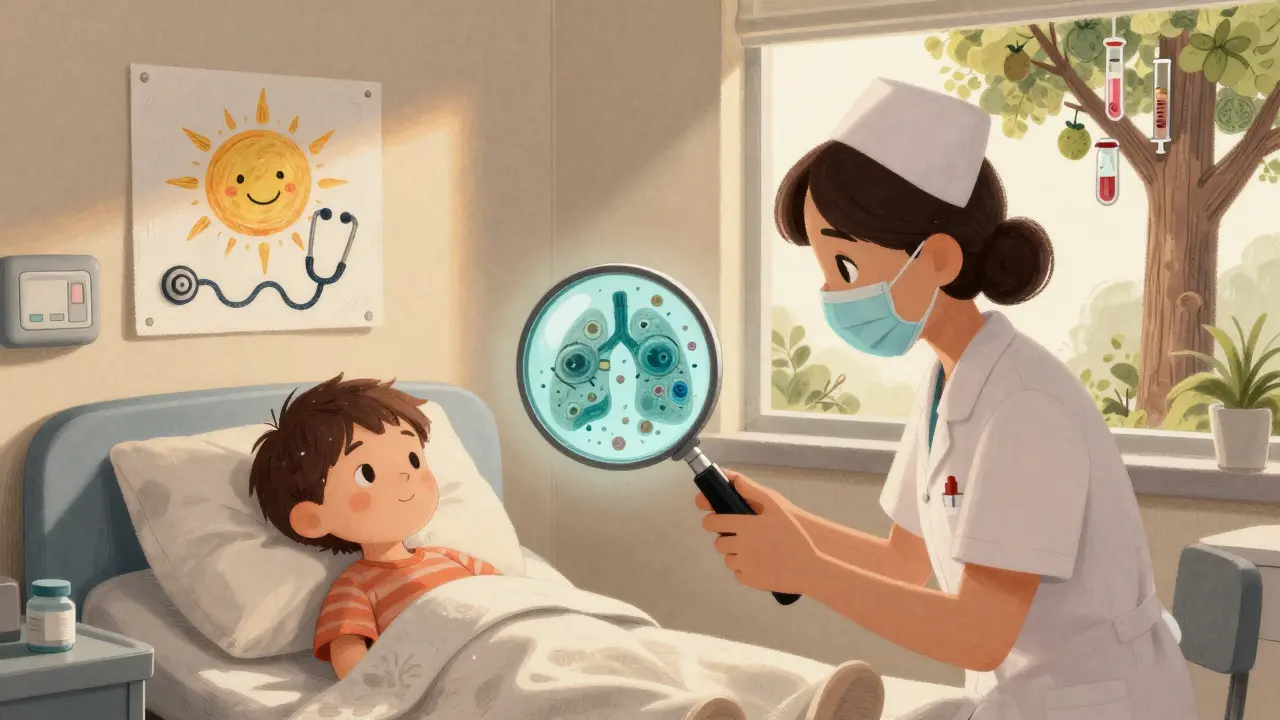
Emerging Threats and New Hope
The pandemic changed everything. SARS-CoV-2 didn’t just cause pneumonia-it stuck around. Some immunosuppressed patients shed the virus for over 120 days. That’s nearly four months of being contagious, with no immune system to clear it. New coronaviruses-NL63 and HKU1-are now on the radar. In 2022-2023, they made up 8.5% of respiratory infections in leukemia patients. They’re usually mild, but in the immunosuppressed? They can be deadly. The good news? Science is catching up. New treatments are in trials. T-cell therapies-where doctors take immune cells from a donor, train them to fight specific viruses, and give them back to the patient-have shown a 70% success rate against stubborn CMV and adenovirus infections. Metagenomic sequencing is another breakthrough. Instead of waiting for a bug to grow in a lab (which can take weeks), this test reads all the DNA in a sample. It can find unknown fungi, rare bacteria, or hidden viruses in days.The Hard Truth: Mortality Isn’t Going Down
Despite all the advances, infection still kills. In allogeneic stem cell transplant patients, 25-30% still die from infections. That hasn’t changed much in 10 years. Why? Because we can’t fully rebuild immunity without risking graft-versus-host disease. We can’t turn the immune system back on fully. So we walk a tightrope: suppress enough to prevent rejection, but not so much that you can’t fight off a cold. That’s why prevention matters more than ever. Vaccines (when safe), avoiding crowds, wearing masks, and strict hand hygiene aren’t just suggestions-they’re survival tools.What You Need to Do
If you or someone you care for is on immunosuppressants:- Don’t wait for fever. If you feel off-even a little-get checked.
- Know your risks. Ask your doctor: what bugs am I vulnerable to?
- Follow testing schedules. Blood tests, stool checks, and lung scans aren’t optional.
- Report skin changes immediately. A rash isn’t just a rash-it could be a fungus.
- Stay up to date on vaccines. Flu, pneumococcal, and COVID shots can be lifesaving.
What are the most common unusual infections in immunosuppressed patients?
The most common unusual infections include Pneumocystis jirovecii pneumonia (PCP), Giardia intestinalis, cytomegalovirus (CMV), Aspergillus, and Mycobacterium avium complex. These organisms rarely cause disease in healthy people but can be life-threatening in those with weakened immune systems, especially after transplants or long-term steroid use.
Why don’t immunosuppressed patients show typical signs of infection like fever?
Their immune systems can’t mount the normal inflammatory response. Fever, swelling, and pus are signs the body is fighting back-but if the immune system is suppressed, those signals don’t happen. That’s why infections can be silent until they’re advanced. A cough or mild fatigue might be the only warning.
How are infections diagnosed in immunosuppressed patients?
Diagnosis often requires aggressive testing. Bronchoalveolar lavage (BAL) is used for lung infections, with 92% sensitivity for PCP. Stool tests with immunofluorescence detect Giardia in 98% of cases. Blood PCR tests find viruses like CMV and adenovirus early. Biopsies of skin or organ lesions are also common when standard tests are negative.
Are standard antibiotic and antiviral treatments effective for immunosuppressed patients?
Not always. Many treatments that work for healthy people fail in immunosuppressed patients. For example, metronidazole for Giardia has a 30-40% failure rate in this group compared to 5-10% in healthy people. Combination therapy, higher doses, or longer courses are often needed. Antivirals for CMV may require preemptive treatment-starting before symptoms appear.
Can immunosuppressed patients get vaccinated?
Yes, but with caution. Inactivated vaccines like flu, pneumococcal, and COVID-19 shots are generally safe and recommended. Live vaccines (like MMR or varicella) are avoided because they can cause infection. Timing matters-vaccines are most effective before starting immunosuppression or during periods of lower drug levels. Always consult your specialist before getting any shot.
What new treatments are emerging for infections in immunosuppressed patients?
T-cell therapies are showing promise, especially for stubborn viral infections like CMV and adenovirus. These involve taking immune cells from a donor, training them to target the virus, and infusing them back into the patient-success rates are around 70%. Metagenomic sequencing is also becoming standard to detect unknown pathogens in culture-negative cases. Research is ongoing into drugs that can boost specific immune responses without triggering graft-versus-host disease.
Caitlin Foster
December 26, 2025 AT 13:53Kylie Robson
December 28, 2025 AT 08:57Satyakki Bhattacharjee
December 29, 2025 AT 06:22Todd Scott
December 30, 2025 AT 18:26Nicola George
January 1, 2026 AT 00:52Gerald Tardif
January 1, 2026 AT 10:14Liz Tanner
January 2, 2026 AT 18:51Babe Addict
January 3, 2026 AT 03:31Raushan Richardson
January 4, 2026 AT 23:30Monika Naumann
January 6, 2026 AT 16:55Chris Garcia
January 8, 2026 AT 15:25John Barron
January 8, 2026 AT 16:01Kishor Raibole
January 9, 2026 AT 23:04Robyn Hays
January 11, 2026 AT 12:03James Bowers
January 13, 2026 AT 08:36