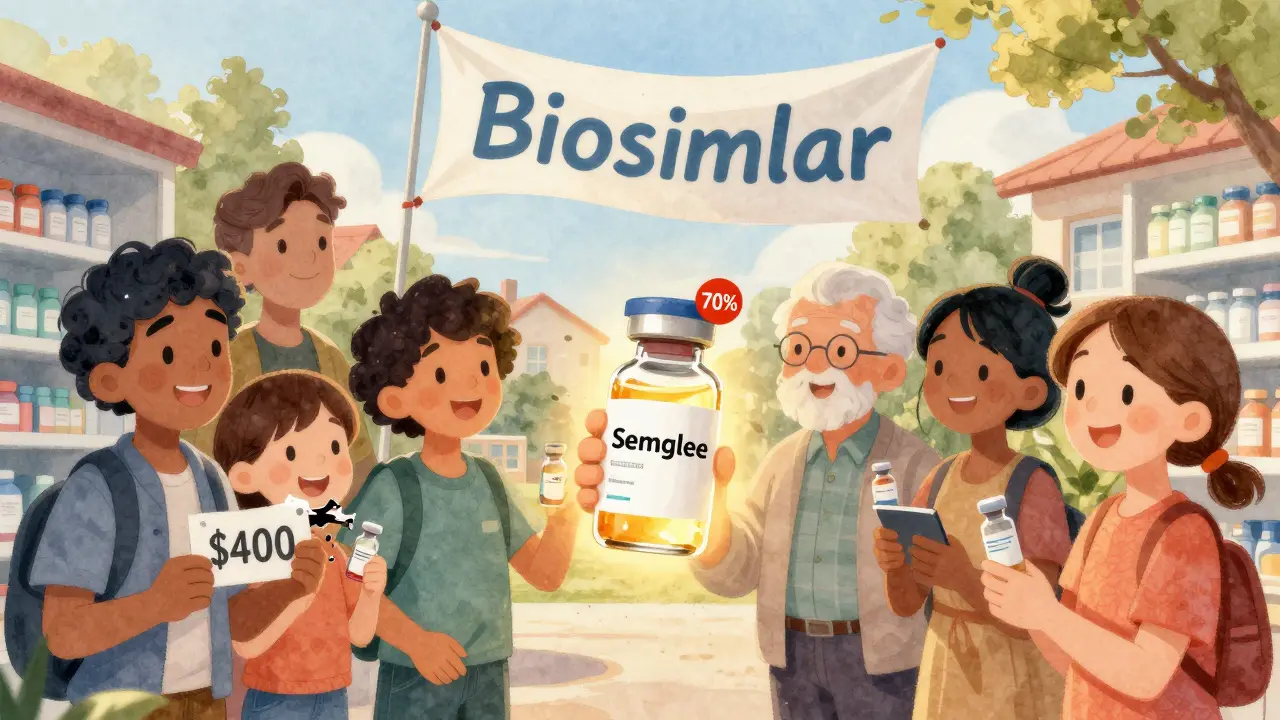
Diabetes affects over 500 million people worldwide, and insulin is one of the most critical treatments. But for many, the cost of branded insulin-sometimes over $400 a vial-makes it unaffordable. That’s where insulin biosimilars come in. These aren’t generics. They’re not exact copies. They’re highly similar versions of brand-name insulin products, made from living cells, and rigorously tested to prove they work just as safely and effectively. The difference? A price drop of 15% to 70%, depending on where you live.
What Makes Insulin Biosimilars Different From Generics?
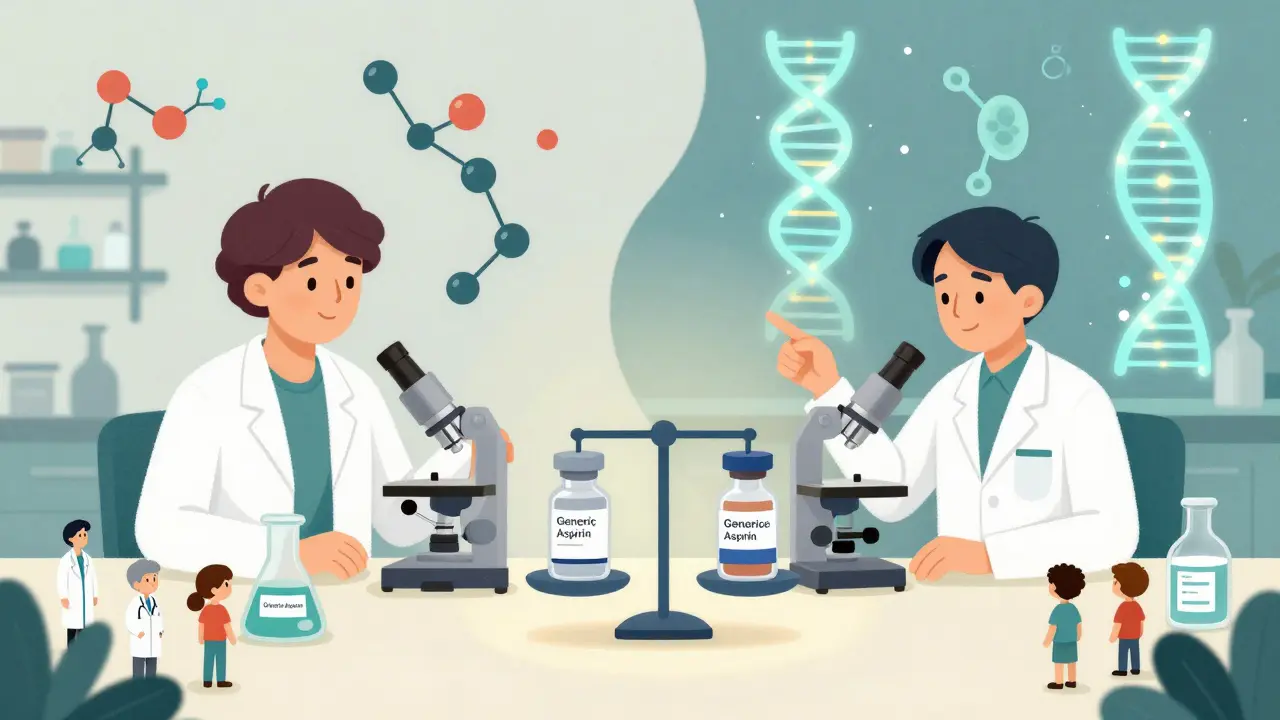
Think of a generic drug like aspirin. It’s a simple chemical. Any lab can recreate it exactly. Insulin? It’s a complex protein made by living cells-like a biological machine. Even tiny changes in how it’s made can affect how it works in your body. That’s why insulin biosimilars can’t just be copied. They must go through years of testing: chemical analysis, animal studies, and clinical trials in people with diabetes. The goal isn’t to be identical-it’s to be similar enough that there’s no meaningful difference in safety or effectiveness.
The U.S. FDA and the European Medicines Agency (EMA) both approve these products, but they handle them differently. In Europe, once a biosimilar is approved, doctors can substitute it for the original without extra permission. In the U.S., only products labeled as “interchangeable” can be swapped by pharmacists without the doctor’s input. As of early 2025, only a handful of insulin biosimilars have that designation.
Market Examples: Who’s Making Them and Where Are They Used?
Several companies now make insulin biosimilars. Biocon and Viatris teamed up to launch Semglee, a biosimilar to Lantus (insulin glargine), which became the first interchangeable insulin in the U.S. in 2021. Basaglar, made by Eli Lilly, is another widely used biosimilar to Lantus. Sanofi, the maker of Lantus, responded by offering a lower-cost version of its own product-essentially competing with its own biosimilar.
In India, biosimilars have changed the game. Companies like Biocon and BGP Pharma produce insulin at a fraction of the cost. In Mumbai, endocrinologist Dr. Arjun Patel says 45% of his patients now use biosimilar insulins because they’re 60-70% cheaper than branded versions. In China, with over 140 million people living with diabetes, the government is pushing biosimilar adoption hard. The market there is expected to hit $261 million in 2025.
The U.S. still leads in market value, holding nearly 30% of the global insulin biosimilar market-valued at $3.2 billion in 2025. But growth is fastest in Asia. India’s market is projected to grow at a 6.8% annual rate through 2035. Germany and other European countries are also seeing strong uptake, with some regions reporting over 40% biosimilar use for long-acting insulins.
Why Adoption Is Slower Than Expected
Despite the savings and proven safety, insulin biosimilars haven’t taken over the market like oncology biosimilars did. Why? Three big reasons: fear, policy, and inertia.
Many doctors and patients are used to the same brand they’ve used for years. Switching-even to something proven safe-feels risky. One Reddit user reported more frequent low blood sugar after switching to a biosimilar and had to go back to the original. Another user in the American Diabetes Association forum saw their A1C drop from 7.8 to 7.2 and their monthly cost fall from $450 to $90. These are real experiences. The difference? One was a sudden switch without support. The other was guided by a care team.
Regulations vary wildly. In the U.S., only 17 states let pharmacists automatically substitute insulin biosimilars. In others, the prescriber must write “dispense as written” or the patient must consent. That slows things down. Meanwhile, in Europe, substitution is easier and more common.
And then there’s the originator companies. Sanofi’s dual pricing strategy-selling both branded Lantus and a cheaper unbranded version-keeps their market share high. It’s a smart move: they’re not fighting the biosimilars. They’re becoming one.
Cost, Savings, and Insurance Impact
The average price of all biosimilar products in early 2025 was $1,840 per unit, but insulin biosimilars are often priced 15-30% lower than their reference products. For patients on Medicare, the Centers for Medicare & Medicaid Services (CMS) now reimburses providers at the biosimilar’s average selling price (ASP) plus 8% of the originator’s ASP-through 2027. That gives doctors a financial incentive to prescribe them.
For people without insurance, the difference is life-changing. A vial of Lantus can cost $300-$400. A vial of Basaglar or Semglee? Around $100-$150. That’s not just a savings-it’s access. In countries like Brazil, South Africa, and India, biosimilars are the only way many patients get insulin at all.
Global projections show the insulin biosimilar market growing from $3.2 billion in 2025 to $5.8 billion by 2035. That’s a 6.2% compound annual growth rate. But the insulin segment alone is expected to grow at 18%-nearly triple the rate of other biosimilars. Why? Because insulin patents are expiring, and diabetes rates are rising.
Switching Safely: What Patients and Providers Need to Know
Switching from a branded insulin to a biosimilar isn’t always seamless. Most endocrinologists recommend a 3-6 month transition period with close blood sugar monitoring. Some patients need small dose adjustments-usually under 10%-because of slight differences in how the insulin is absorbed.
The American Association of Clinical Endocrinologists advises:
- Never switch without patient consent and education
- Document the switch clearly in medical records
- Monitor glucose levels closely for the first 4-8 weeks
- Be ready to switch back if hypoglycemia or poor control occurs
Patients should be told: “This is not a different drug. It’s a different brand of the same kind of insulin. Your body should respond the same way.”
A 2025 survey by Research and Markets found that 68% of patients switching to biosimilars saw no change in effectiveness or side effects. Another 22% needed minor dose tweaks. Only 10% had to switch back. That’s strong evidence-but perception still lags behind data.
What’s Next for Insulin Biosimilars?
The next wave is coming. Biosimilars for Toujeo and Tresiba-two long-acting insulins with no biosimilar competition yet-are expected to launch in 2026. That will open up even more savings.
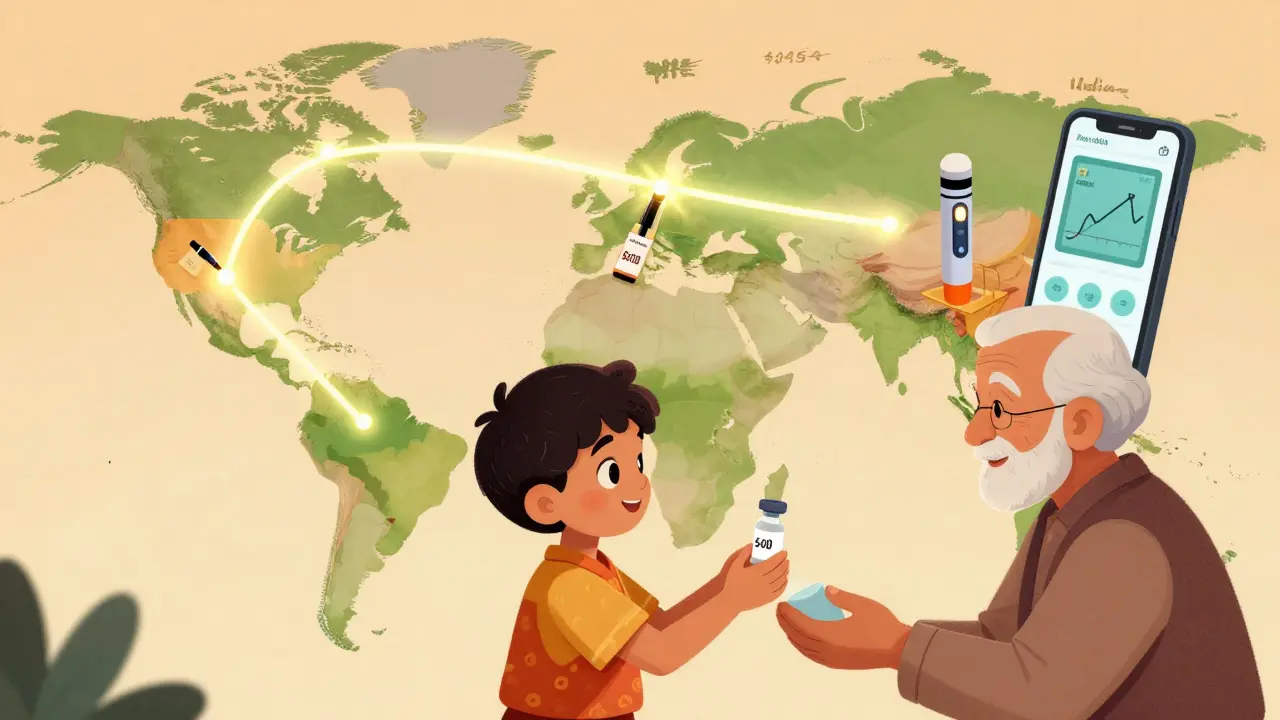
Manufacturers are also investing in better delivery systems. Nearly 80% of companies are developing pens and pumps designed specifically for biosimilar insulins. Imagine a smart pen that tracks your dose and syncs with your phone-made affordable because it uses a biosimilar insulin.
Regulators are working to harmonize standards. The FDA and EMA are aligning their approval processes, which could cut development time by over a year. That means more biosimilars faster.
By 2030, experts predict insulin biosimilars will make up 35-40% of the market in wealthy countries and 60-65% in developing ones. That’s not just a business shift-it’s a public health win.
Final Thoughts: It’s Not About the Science. It’s About the System.
The science is settled. Biosimilar insulins work. They’re safe. They’re cheaper. The question isn’t whether they’re good enough-it’s whether our healthcare systems are ready to use them.
Patients need education. Providers need clear guidelines. Pharmacies need consistent rules. Payers need to stop treating biosimilars as second-tier. The tools are here. The data is clear. What’s missing is the will to make them accessible to everyone who needs them.
Are insulin biosimilars safe?
Yes. Insulin biosimilars undergo the same rigorous testing as the original products-analytical studies, animal trials, and clinical trials in people with diabetes. Studies show no meaningful differences in safety or effectiveness. The FDA and EMA only approve them after proving they work just as well. Side effects are the same as the reference insulin. The biggest risk isn’t the drug-it’s switching without proper monitoring or support.
Can I switch from Lantus to a biosimilar on my own?
No. Even if your pharmacy can legally substitute a biosimilar, you should always talk to your doctor first. Switching insulin types-even to a biosimilar-can affect your blood sugar control. Your provider should guide the switch, monitor your glucose levels for several weeks, and adjust your dose if needed. Never switch without medical supervision.
Why are insulin biosimilars cheaper than the originals?
They’re cheaper because the manufacturer doesn’t have to repeat the original clinical trials. They use the existing data on safety and effectiveness from the reference product. That cuts development costs by 50-70%. They still need to prove similarity, but they avoid the massive expense of launching a brand-new biologic from scratch. The savings get passed on to patients and insurers.
Do biosimilar insulins cause more side effects?
No. Large studies and real-world data show the side effect profile is nearly identical to the original insulin. Common side effects like low blood sugar, injection site reactions, or weight gain occur at the same rates. A small number of patients may need a slight dose adjustment during the transition, but that’s due to individual variation-not the biosimilar itself.
What’s the difference between biosimilar and interchangeable insulin?
All interchangeable insulins are biosimilars, but not all biosimilars are interchangeable. An interchangeable product has extra data proving it can be switched back and forth with the original insulin without increasing risk. In the U.S., only products with this designation can be swapped by a pharmacist without the doctor’s permission. In Europe, all approved biosimilars are considered interchangeable by default. In the U.S., Semglee is the only insulin with interchangeable status as of early 2025.
Nishant Desae
December 16, 2025 AT 23:46man i just saw a friend in mumbai switch from lantus to a biosimilar and his bills dropped from 20k rupees to 6k a month like that snap fingers he cried saying he could finally afford to check his sugars every day not just when he felt dizzy i mean we talk about pharma profits but real people here are choosing between food and insulin and this is the first time in years someone actually made it cheaper without making it worse
Jody Patrick
December 17, 2025 AT 07:58usa still leads. europe and india are just free riders.
Philippa Skiadopoulou
December 18, 2025 AT 00:32The regulatory divergence between the US and EU is a significant barrier to equitable access. The interchangeable designation imposes unnecessary administrative burden and delays adoption despite equivalent clinical outcomes. Harmonization would accelerate patient access and reduce systemic inefficiencies.
Jonathan Morris
December 19, 2025 AT 02:01Did you know the FDA approved Semglee because Sanofi paid for the ‘study’? Biosimilars are a scam. They’re just rebranded generics with a fancy label. The real reason insulin prices haven’t dropped is because Big Pharma owns the regulators. You think this is about savings? It’s about control.
Anna Giakoumakatou
December 21, 2025 AT 01:31Oh wow. A biosimilar. How revolutionary. So we’re now celebrating that the same corporate giants who priced insulin at $400 are now selling it for $150? How noble. The real tragedy isn’t the cost-it’s that we’re impressed when they stop gouging us for half as long.
Martin Spedding
December 22, 2025 AT 02:24my bro switched and got hypoglycemic 3x in a week. biosimilars are a death trap. they’re not the same. why would you risk it?
Donna Packard
December 22, 2025 AT 21:40I’m so glad more people can access this. It’s not perfect, but it’s a step. Hope more doctors feel comfortable recommending it.
Patrick A. Ck. Trip
December 22, 2025 AT 21:43While the scientific and regulatory frameworks supporting insulin biosimilars are robust, the socio-economic implications demand a more deliberate, patient-centered rollout. Many individuals lack access to consistent medical oversight, and without structured transition protocols, even minor pharmacokinetic differences may lead to adverse outcomes. The imperative is not merely affordability, but equitable, supervised implementation.
Sam Clark
December 24, 2025 AT 20:31Thank you for this comprehensive overview. The data clearly supports biosimilars as safe and effective. The real challenge lies in aligning incentives across payers, providers, and patients. Education and transparent communication are essential to overcoming fear and inertia.
Chris Van Horn
December 26, 2025 AT 05:17Let me be blunt. The entire biosimilar movement is a distraction. The FDA and EMA are in bed with Big Pharma. They’re not lowering prices-they’re creating a new monopoly under a different name. Semglee? It’s still Lilly and Biocon. The only real solution is public manufacturing. Everything else is theater.
Virginia Seitz
December 27, 2025 AT 00:36India is doing it right 💪 insulin for $30? Yes please 🙌
Steven Lavoie
December 27, 2025 AT 15:28My cousin in Texas switched to Basaglar last year. Her A1C dropped from 8.1 to 7.0. She’s been stable for 14 months. The cost? $110 a month instead of $420. She’s not some lab rat. She’s a teacher. She just needed to live. This isn’t science fiction. It’s common sense.
Michael Whitaker
December 29, 2025 AT 00:47It’s fascinating how the medical establishment still treats biosimilars as experimental, despite overwhelming evidence. The hesitation isn’t clinical-it’s institutional. Providers are trained to trust brand names, not data. The real barrier isn’t the drug. It’s the hierarchy of trust we’ve built around corporate logos.