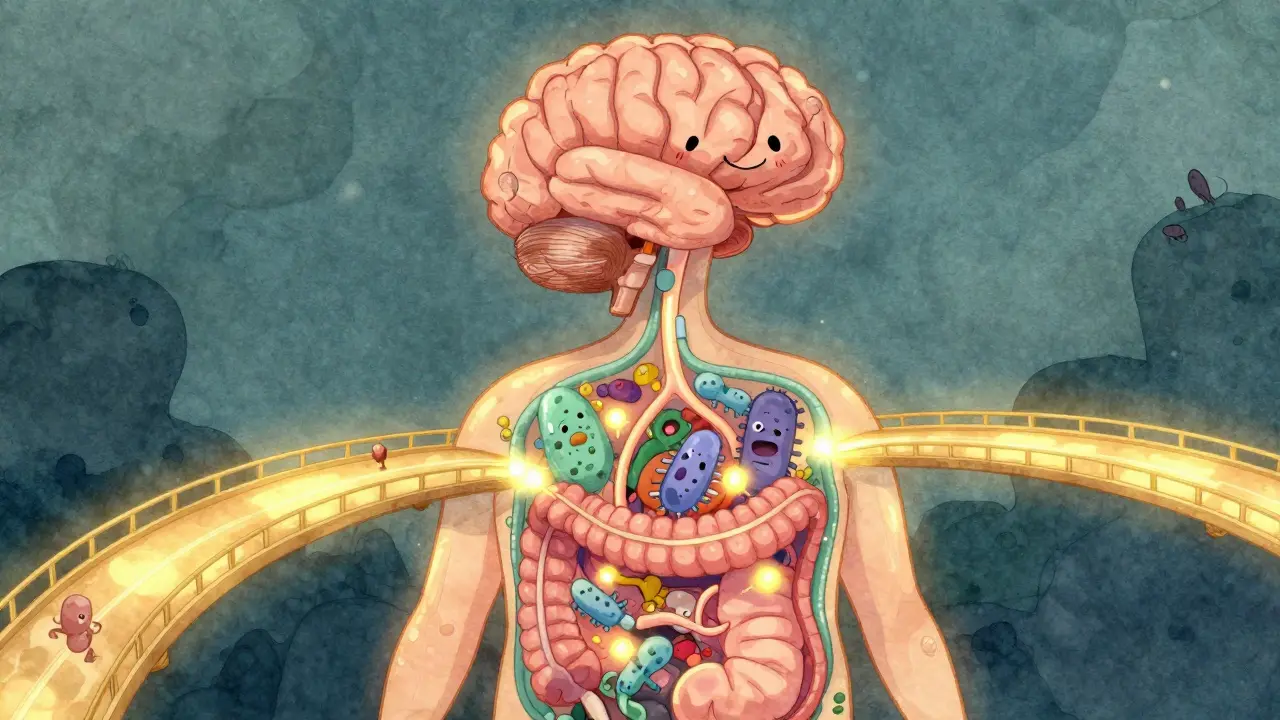
For millions of people around the world, stomach pain, bloating, and unpredictable bowel habits aren’t just inconvenient-they’re life-limiting. Irritable Bowel Syndrome affects between 5% and 10% of the global population, yet many still believe it’s just a "sensitive stomach" or stress-induced overreaction. The truth is far more complex. IBS isn’t just a gut problem. It’s a breakdown in communication between your gut and your brain. And understanding that connection is the first step toward real, lasting relief.
What IBS Really Is (And Isn’t)
For decades, doctors treated IBS like a simple digestive glitch. If you had cramps, diarrhea, or constipation, you were told to avoid spicy food, take an antispasmodic, or manage your stress. But that approach rarely worked long-term. The modern understanding of IBS, shaped by research since the 2016 Rome IV criteria, defines it as recurrent abdominal pain at least once a week over three months, tied to bowel movements or changes in stool frequency or form. But here’s the catch: 76% of people with IBS report non-painful discomfort, like pressure or fullness, and 60-70% also struggle with anxiety or depression. This isn’t coincidence. It’s a signal.
The old model-IBS = bad gut-has been replaced by a new one: IBS = disrupted gut-brain axis. This isn’t just jargon. It’s the biological highway connecting your intestines to your brain. It includes the vagus nerve, your stress response system (the HPA axis), immune signals, and the trillions of microbes living in your gut. When this system misfires, your brain misreads signals from your gut. A normal amount of gas? Feels like a knife. A slight change in bowel speed? Feels like an emergency. Your body isn’t broken. It’s confused.
The Gut-Brain Axis in Action
Your gut has its own nervous system-the enteric nervous system-often called the "second brain." It controls digestion independently, but it’s constantly talking to your central nervous system. In IBS, that conversation gets distorted. Neuroimaging studies show clear differences in IBS patients’ brains. Those with diarrhea-predominant IBS (IBS-D) have thicker areas in regions that process bodily sensations. Those with constipation-predominant IBS (IBS-C) show thinning in areas linked to emotional regulation. These aren’t random changes. They’re measurable, repeatable, and directly tied to symptoms.
Then there’s serotonin. Ninety-five percent of your body’s serotonin-a key mood and gut regulator-is made in your intestines, not your brain. In IBS-D, levels of serotonin in the gut lining are nearly 60% higher than in healthy people. This overstimulates the bowel, speeding things up. In IBS-C, serotonin is too low, slowing things down. It’s not just about mood. It’s about movement.
Immune cells in the gut also play a role. Studies show IBS patients have lower levels of β-endorphin, a natural painkiller produced by immune cells. Less of it means more pain sensitivity. And gut bacteria? The balance between Firmicutes and Bacteroidetes is often off. Certain microbial signatures correlate with brain activity patterns seen in IBS. Your gut microbes aren’t just bystanders-they’re active players in how your brain interprets gut signals.
Why Diet Matters More Than You Think
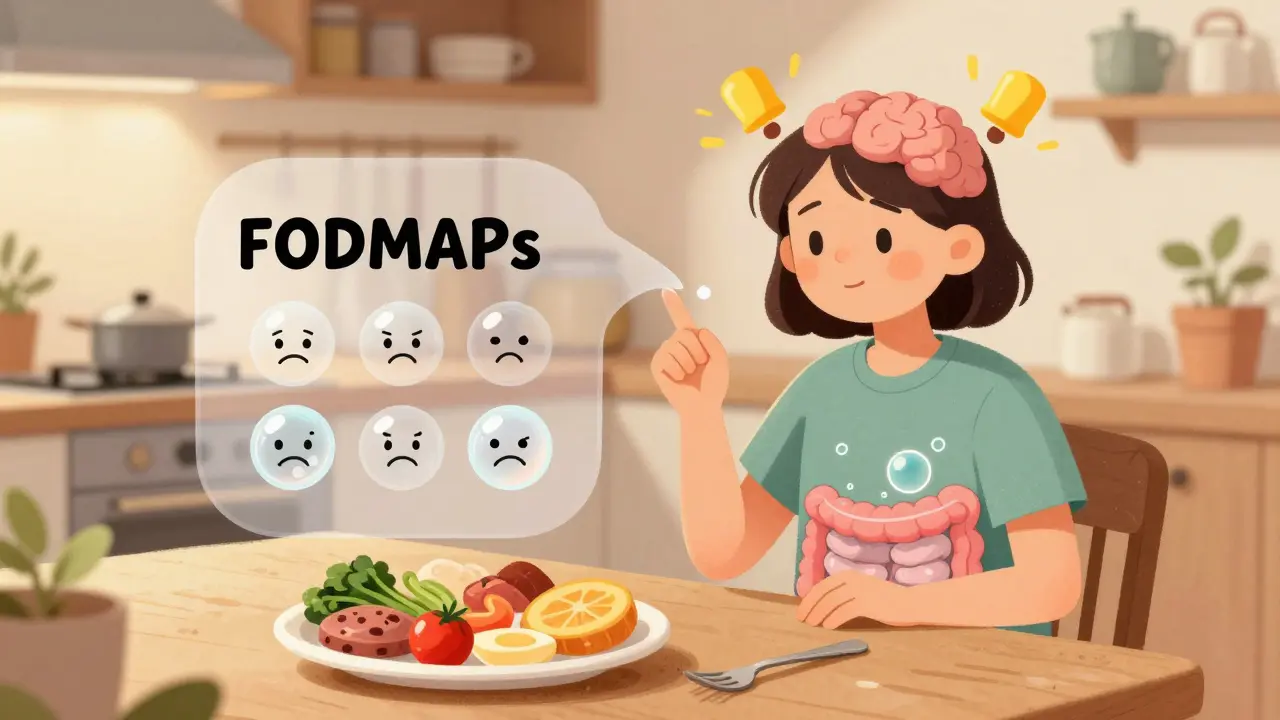
The low-FODMAP diet isn’t a fad. It’s one of the most evidence-backed interventions for IBS. Multiple randomized trials show it improves symptoms in 50-76% of people. But why? FODMAPs are short-chain carbohydrates that ferment rapidly in the gut. In a healthy person, this is fine. In someone with IBS, the gut is hypersensitive. The gas and fluid buildup from fermentation stretches the intestinal wall, triggering pain signals the brain interprets as severe discomfort.
It’s not about cutting out healthy foods forever. The diet has three phases: elimination, reintroduction, and personalization. You remove high-FODMAP foods like onions, garlic, wheat, apples, and beans for 4-6 weeks. Then you slowly add them back one at a time to find your triggers. It’s tedious. 65% of people find the elimination phase hard to stick to. But for many, it’s the first time they’ve had real control over their symptoms.
And it’s not just about food. Certain probiotics have shown real results. Bifidobacterium infantis 35624, taken daily at 1 billion CFUs, improved global IBS symptoms in 30-40% of patients-double the placebo rate. It doesn’t cure IBS, but it helps recalibrate the gut environment and calm immune responses.
Treatments That Target the Brain-Gut Connection
Medications that target serotonin receptors are now FDA-approved for specific IBS subtypes. Alosetron, a 5-HT3 antagonist, reduces urgency and diarrhea in women with IBS-D-but comes with serious risks like ischemic colitis, so it’s only used when other options fail. Prucalopride, a 5-HT4 agonist, helps IBS-C by boosting gut motility. Both work because they directly alter how the gut-brain axis communicates.
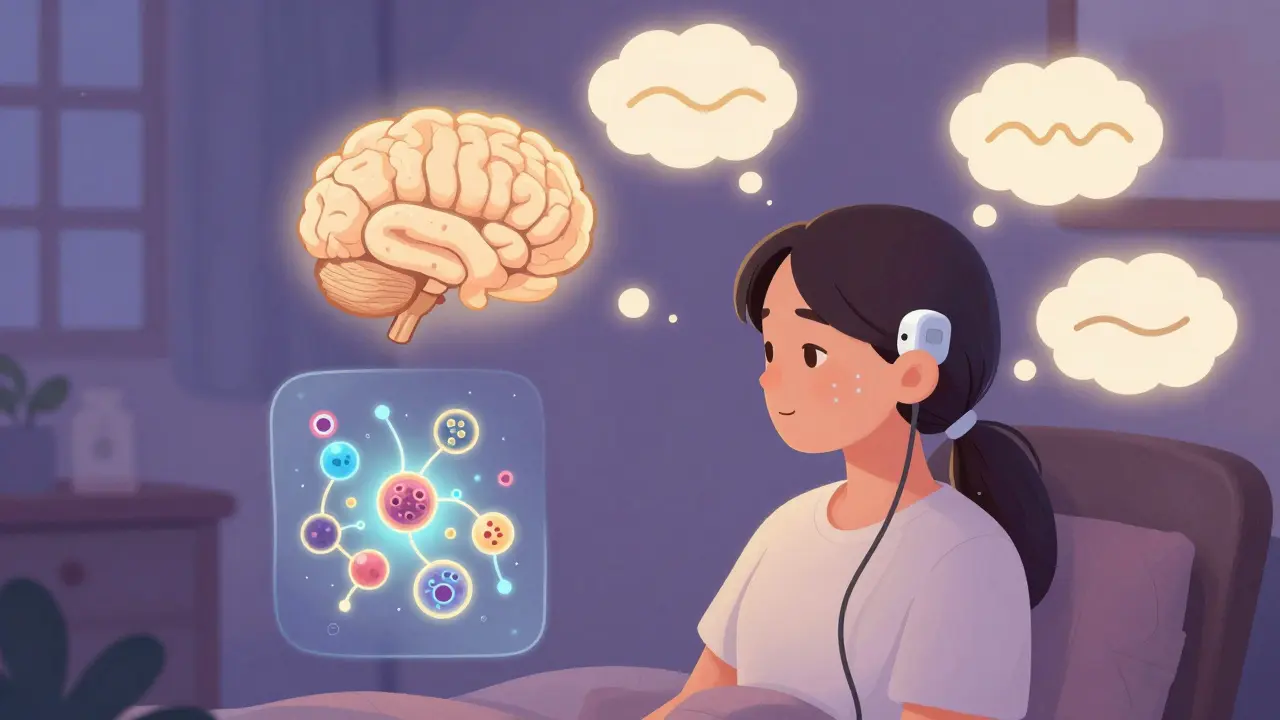
But the most powerful tool isn’t a pill. It’s gut-directed hypnotherapy. In randomized trials, 70-80% of people who completed 7-12 sessions saw major symptom improvement. That’s compared to 35-40% with standard care. How? Hypnotherapy retrains the brain to interpret gut signals differently. It doesn’t change the gut. It changes how the brain reacts to it. And the effects last. Studies show benefits still present at six-month follow-ups.
Another emerging option is transcutaneous vagus nerve stimulation (tVNS). A small device placed on the ear delivers mild electrical pulses to stimulate the vagus nerve. Pilot studies show 45-55% reduction in abdominal pain. It’s non-invasive, low-risk, and gaining traction. Larger trials are underway.
What Doesn’t Work (And Why)
Traditional IBS meds like loperamide (Imodium) or antispasmodics (dicyclomine) offer short-term relief but often cause side effects-drowsiness, dry mouth, constipation. A survey of 45,000 IBS patients found 63% stopped these drugs within three months because of side effects. They treat symptoms, not the root cause.
And while fecal microbiota transplantation (FMT) sounds promising-transferring healthy gut bacteria from a donor-results are mixed. Response rates vary from 20% to 60%, depending on donor selection and delivery method. It’s not yet a reliable or standardized treatment.
Also, don’t fall for miracle cures. Probiotic blends with 10+ strains? No evidence they’re better than single-strain options. Colon cleanses? They disrupt your microbiome further. The goal isn’t to "detox" your gut. It’s to restore balance.
The Path Forward: A Step-by-Step Approach
Experts now recommend a stepped-care model:
- Education: Spend 15-20 minutes learning how the gut-brain axis works. Understanding your symptoms reduces fear and improves outcomes. Patients who understand the mechanism report 30% higher treatment adherence.
- Diet: Work with a registered dietitian to try the low-FODMAP diet. Don’t do it alone. The reintroduction phase is critical.
- Neuromodulation: If diet isn’t enough, try gut-directed hypnotherapy. Look for certified practitioners through the American Society of Clinical Hypnosis.
- Pharmacology: For severe cases, consider serotonin-targeted meds-but only after other options are tried.
The biggest barrier? Access. There’s roughly one certified hypnotherapist for every 500,000 people in rural areas. And hypnotherapy costs $1,200-$2,500 out-of-pocket. Insurance rarely covers it. That’s why education and diet are the most accessible starting points.
What’s Next for IBS Treatment
In 2023, the first gut-brain axis biomarker panel, VisceralSense™, launched. It measures 12 microbial metabolites and neurotransmitter ratios to predict which treatment will work best for you-with 85% accuracy. Imagine a blood or stool test that tells you whether hypnotherapy or a specific probiotic is right for your body. That’s not science fiction anymore.
The NIH’s $15 million Microbiome-Gut-Brain Consortium, launched in January 2024, is building personalized treatment algorithms based on individual gut-brain profiles. The European Gut-Brain Atlas Project is mapping every known signaling pathway between gut and brain by 2027. We’re moving from treating symptoms to fixing the communication system.
By 2030, experts predict gut-brain axis-targeted therapies will make up half of the IBS market. The old model-pills for pain-is fading. The future is personalized, neuroscience-backed, and holistic.
You don’t have to live with constant pain. IBS isn’t your fault. It’s not "all in your head." It’s a real, measurable disruption in your body’s communication network. The good news? We now have tools to fix it.
Is IBS just stress or anxiety?
No. While anxiety and depression are common in people with IBS, they don’t cause it. The gut-brain axis disruption comes first. Stress can worsen symptoms, but IBS has clear biological roots-altered gut motility, serotonin imbalance, immune activation, and microbiome changes. Treating mental health helps, but it’s not enough on its own.
Can the low-FODMAP diet cure IBS?
No, but it can put symptoms into remission for many. About 32% of people who follow the diet correctly report near-complete symptom relief. The goal isn’t lifelong restriction-it’s identifying your personal triggers so you can eat more freely over time. Most people can reintroduce at least half of the eliminated foods without problems.
Why do some IBS treatments work for others but not me?
Because IBS isn’t one condition. It’s a collection of subtypes with different underlying causes. One person’s IBS-D might be driven by high serotonin and a specific microbiome imbalance. Another’s IBS-C might stem from low motility and immune activation. That’s why a one-size-fits-all approach fails. Personalized treatment based on your biology is the future.
Are probiotics helpful for IBS?
Only specific strains, and only for some people. Bifidobacterium infantis 35624 has the strongest evidence, improving symptoms in 30-40% of users. Most over-the-counter probiotics with 10+ strains show no benefit. Look for products with clearly labeled strains and CFU counts. Don’t guess-choose based on research.
How long does gut-directed hypnotherapy take to work?
Most people start noticing changes after 4-6 sessions. Full benefit usually takes 7-12 weekly sessions. The effects are lasting-studies show symptom improvement persists for at least six months after treatment ends. It’s not a quick fix, but it’s one of the most durable treatments available.
peter vencken
March 23, 2026 AT 21:46Pro tip: get a dietitian who actually knows FODMAPs. Most don't.
Aaron Sims
March 24, 2026 AT 01:05They've been trying to sell this "neuroscience" nonsense since the 90s. All you need is less carbs, more fiber, and stop Googling symptoms at 2am.
Also, hypnotherapy? That's just expensive meditation with a fancy label. I'm not paying $2k to be told to "imagine a calm sea" while my gut screams.
Katie Putbrese
March 25, 2026 AT 20:48Back in my day, people just ate real food, didn't stress about gluten, and didn't need a $200 stool test to know if they should avoid onions.
Now we have people crying over FODMAPs like it's a life-or-death diet. You're not a lab rat. Just stop eating junk and get some sleep.
Rama Rish
March 26, 2026 AT 20:59Low-FODMAP? Try simple things first: no dairy after 6pm, no spicy curry at night.
And probiotics? Try yogurt. Real yogurt. Not the sugar-loaded nonsense in the store.
Kevin Siewe
March 28, 2026 AT 01:36Start small. Pick ONE thing: maybe it's cutting out onions for two weeks. Not the whole diet. Just one.
And if hypnotherapy feels weird? Try a free guided meditation on YouTube. Same principle. Your brain can learn to listen differently. It's not woo-woo. It's neuroplasticity.
Chris Farley
March 28, 2026 AT 18:41My grandpa ate beans, onions, and whiskey every day and lived to 92.
This whole "gut-brain axis" is just another way to make you feel broken so you'll buy more stuff.
Stop listening to labs. Listen to your body. If it hurts, stop eating it. Simple.
Darlene Gomez
March 30, 2026 AT 07:54IBS isn't a disease to be cured. It's a signal. Like a car's check engine light.
Maybe your gut is saying "I'm tired of being ignored."
And guess what? Your brain hears it. That's why stress makes it worse. Not because you're weak. Because your body is trying to tell you something.
Be kind to it. Not because it's science. Because you're human.
Danielle Arnold
April 1, 2026 AT 03:37Marissa Staples
April 2, 2026 AT 17:20We're constantly bombarded - with information, stress, food additives, social media, noise. Maybe the gut isn't malfunctioning. Maybe it's just screaming because it's been asked to handle too much.
Maybe the real cure is less digital noise. More silence. Less "optimizing." More resting.
Kevin Y.
April 4, 2026 AT 00:56It's worth noting that while access is limited, telehealth platforms now offer certified sessions at a fraction of the cost. Also, some insurance providers are beginning to cover it under behavioral health benefits.
Education + behavioral intervention remains the most underutilized, yet effective, pathway.
winnipeg whitegloves
April 5, 2026 AT 12:06Low-FODMAP? Sure. But also - stop eating at 11pm. Stop scrolling before bed. Stop pretending you're "fine" when you're not.
My IBS vanished when I stopped trying to be productive 24/7. Turns out, your colon needs nap time too.
Jacob Hessler
April 6, 2026 AT 00:52Raphael Schwartz
April 7, 2026 AT 08:41Now I take Bifidobacterium infantis every day. No hype. Just facts. It works.
Also, stop drinking kombucha. It's sugar water with bacteria that don't help.
Amber Gray
April 7, 2026 AT 11:40Don't knock it till you try it. It's not magic. It's just… quiet.
Linda Foster
April 7, 2026 AT 18:48Furthermore, socioeconomic disparities in access to specialized interventions, including gut-directed hypnotherapy and registered dietitian services, must be addressed to ensure equitable patient outcomes.
peter vencken
April 9, 2026 AT 18:13It rewires the fear response. Not placebo. Neuroscience.
And yes - I did it online for $400 total. Worth every penny.