🩺 Isoniazid Hepatotoxicity Risk Assessor
Based on CDC guidelines and pharmacogenomic research. Select the factors that apply to you to estimate your relative risk profile.
Patient Profile Factors
Risk Assessment
Select options on the left to calculate your risk profile.
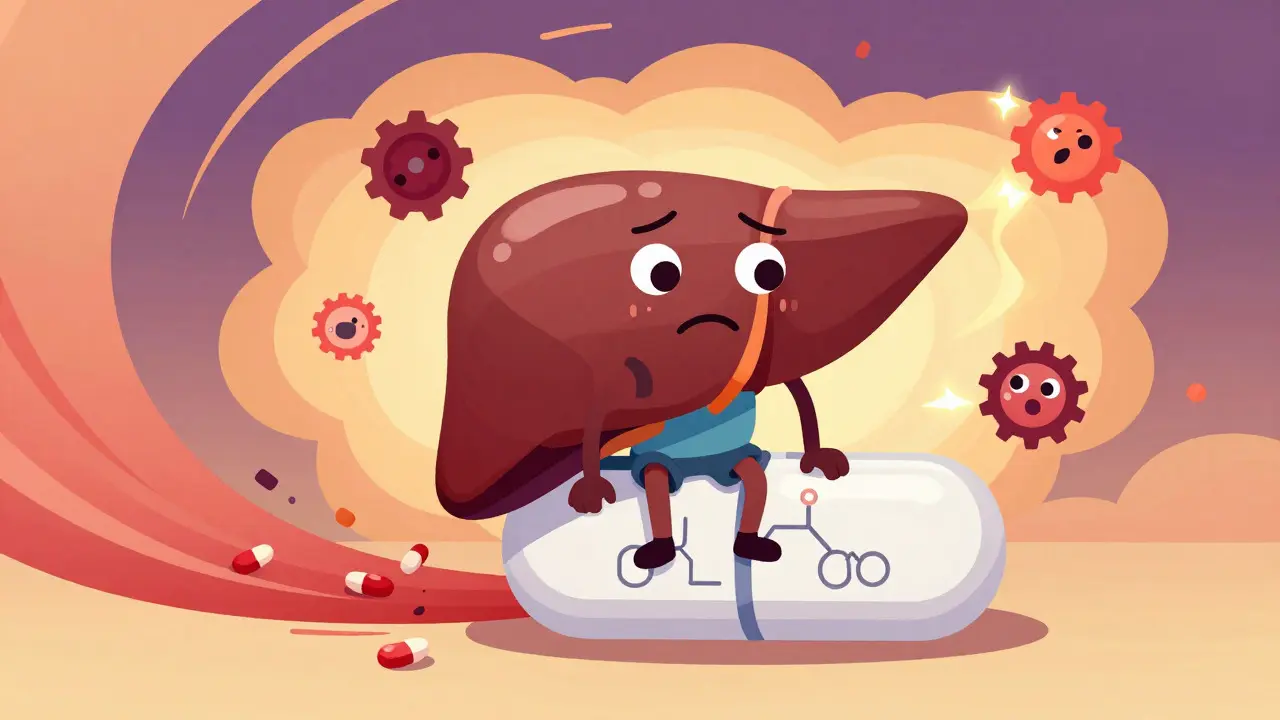
Starting Isoniazid is a standard move for treating tuberculosis (TB), but it comes with a hidden risk that many patients overlook. While the drug effectively kills Mycobacterium tuberculosis, its interaction with your body’s enzymes can turn it into a toxin for your liver. Understanding these dynamics isn't just academic; it determines whether you finish your treatment safely or face severe complications like jaundice or liver failure.
You might wonder why a medication developed in 1952 still carries such specific risks today. The answer lies in how your genetics process the drug. For most people, Isoniazid acts as a prodrug that inhibits mycolic acid synthesis in bacteria. However, in certain metabolic profiles, it accumulates and triggers oxidative stress in hepatic cells. This article breaks down exactly how hepatotoxicity develops, which other drugs make things worse, and what you should watch for to keep your treatment on track.
Why Your Genetics Matter: The Acetylator Factor
The primary driver of Isoniazid-related liver damage is not the dose you take, but how fast your body breaks it down. This process is controlled by an enzyme called N-acetyltransferase 2 (NAT2). People are genetically classified as either "slow acetylators" or "fast acetylators." If you are a slow acetylator, Isoniazid stays in your bloodstream longer, leading to higher exposure levels that stress the liver.
Research from a 2016 study published in the Journal of Antimicrobial Chemotherapy followed 85 adult TB patients and found that slow acetylators accounted for 96% of hepatotoxicity cases. In this group, the average plasma exposure (AUC) was significantly higher at 28.5 mg·h/L compared to 19.8 mg·h/L in those who did not develop liver issues. If you belong to the 40-70% of Europeans and North Americans who are slow acetylators, your risk profile is inherently different from someone with rapid metabolism.
- Slow Acetylators: Higher risk of liver injury due to prolonged drug presence.
- Fast Acetylators: Lower risk, but still require monitoring if taking combination therapy.
- Key Indicator: Persistent fatigue or nausea early in treatment may signal high metabolite levels.
The Liver Damage Mechanism: From Metabolites to Injury
When Isoniazid is metabolized, it forms intermediate compounds like acetylhydrazine. In healthy individuals, these are quickly cleared. But when accumulation occurs, these metabolites bind to liver proteins, causing mitochondrial dysfunction. This process mimics viral hepatitis, often resulting in bridging necrosis and cholestasis upon biopsy.
The role of Cytochrome P450 2E1 (CYP2E1) is critical here. This enzyme mediates the oxidative conversion of Isoniazid into reactive species. If CYP2E1 activity is high-or induced by other factors-the production of toxic byproducts increases. A 2022 review in Frontiers in Pharmacology highlighted that this oxidative stress is the direct cause of cellular death in the liver. It’s not just about inflammation; it’s a chemical attack on the cell structure itself.
Critical Drug Interactions That Amplify Risk
Isoniazid rarely travels alone. Standard TB regimens include Rifampin, Pyrazinamide, and Ethambutol. Each of these interacts with Isoniazid in ways that can either protect or harm the liver.
| Interacting Drug | Mechanism of Interaction | Impact on Hepatotoxicity Risk |
|---|---|---|
| Rifampin | Induces CYP3A4 and CYP2E1 via PXR activation | Increases risk by accelerating formation of toxic Isoniazid metabolites |
| Pyrazinamide | Intrinsic hepatotoxicity combined with Isoniazid load | Additive risk; HRZE regimen shows 10-20% incidence vs 5-10% for HR |
| Ethambutol | Minimal direct liver interaction | Low impact on liver, but increases risk of optic neuritis when combined |
| Phenytoin | Isoniazid inhibits CYP2C9/2C19 | Raises Phenytoin levels by 55-57%, increasing neurotoxicity risk |
Rifampin presents a paradox. On one hand, it speeds up the breakdown of Isoniazid, which should lower toxicity. On the other, it induces the very enzymes (CYP2E1) that create the harmful metabolites. Studies suggest that while Rifampin lowers the total amount of Isoniazid in the blood, it increases the proportion of toxic byproducts. This makes the first two months of treatment, when all four drugs are typically used, the highest risk period for liver injury.

Beyond the Liver: Neurological and Other Effects
While liver damage gets the headlines, peripheral neuropathy is equally common. Isoniazid interferes with Vitamin B6 (pyridoxine) metabolism, leading to nerve damage. Symptoms include tingling, numbness, or burning sensations in the hands and feet. This affects 10-20% of patients generally, but rates jump to 50% in slow acetylators, alcohol users, and those with diabetes.
Optic neuritis, though rarer (1-2%), is a serious concern when Isoniazid is paired with Ethambutol. Patients may experience blurred vision or loss of color perception. Because both conditions are treatable if caught early, reporting sensory changes immediately is crucial. Don’t wait for the next scheduled appointment if you notice new neurological symptoms.
Monitoring Protocols and Safety Thresholds
How do doctors know when to stop? The Centers for Disease Control and Prevention (CDC) guidelines provide clear thresholds. Baseline liver function tests (LFTs) are mandatory before starting therapy. For asymptomatic patients, monthly monitoring is recommended. However, the real trigger for action is symptom onset.
- Baseline: Check ALT, AST, and Bilirubin before Day 1.
- Asymptomatic Elevation: Discontinue if ALT exceeds 5x the upper limit of normal (ULN).
- Symptomatic Elevation: Discontinue if ALT exceeds 5x ULN and patient has symptoms (nausea, vomiting, abdominal pain).
- Severe Case: Immediate discontinuation if ALT exceeds 8x ULN regardless of symptoms.
Recovery is usually complete within 4-8 weeks after stopping the drug. In a 2016 cohort, 95% of patients with mild-to-moderate elevation recovered fully. Only 5% required long-term intervention. This high recovery rate underscores the importance of early detection rather than fear-based avoidance of the medication.

Practical Strategies for High-Risk Patients
If you have pre-existing liver disease, consume more than 14 drinks per week (men) or 7 (women), or are a known slow acetylator, your strategy needs adjustment. First-line defense is Pyridoxine supplementation at 25-50 mg daily to prevent neuropathy. Second, consider alternative regimens. The WHO introduced a 4-month rifapentine-moxifloxacin regimen in 2022, which reduces Isoniazid exposure duration and potentially lowers hepatotoxicity risk by 30-40%.
For those who must continue standard therapy, therapeutic drug monitoring is emerging as a tool. Some experts propose keeping Isoniazid AUC below 22 mg·h/L to mitigate risk. While not yet standard practice globally, genetic testing for NAT2 polymorphisms is mandated by the European Medicines Agency (EMA) in high-risk populations. If available, asking your provider about this test could personalize your safety plan.
Frequently Asked Questions
Can I drink alcohol while taking Isoniazid?
Moderate alcohol use increases the risk of hepatotoxicity because alcohol also induces CYP2E1, the same enzyme involved in Isoniazid metabolism. Heavy drinking (>14 drinks/week for men, >7 for women) is a significant risk factor. It is generally advised to minimize or avoid alcohol during the intensive phase of TB treatment.
What are the early signs of Isoniazid-induced liver damage?
Early signs are often subtle and non-specific. They include unexplained fatigue, loss of appetite, nausea, and right upper quadrant abdominal discomfort. Overt jaundice (yellowing of skin/eyes) and dark urine are late signs indicating severe injury. Reporting any persistent gastrointestinal upset is key to early detection.
Does Isoniazid interact with birth control pills?
Isoniazid itself has minimal direct interaction with estrogen/progesterone levels. However, if you are also taking Rifampin (common in TB combos), Rifampin significantly induces CYP3A4, which can lower the effectiveness of hormonal contraceptives. Use a backup method like condoms if Rifampin is part of your regimen.
How long does it take for liver enzymes to normalize after stopping Isoniazid?
In most cases of mild to moderate hepatotoxicity, liver enzymes (ALT/AST) return to normal within 4 to 8 weeks after discontinuation. Severe cases may take longer. Regular follow-up LFTs are essential to confirm full recovery before considering re-challenge with the drug if necessary.
Is genetic testing for NAT2 status widely available?
Availability varies by region. The EMA mandates it in high-risk populations in Europe, but it is not yet standard in the US or Canada. However, pharmacogenomic panels that include NAT2 are increasingly offered by private labs. Ask your healthcare provider if a targeted panel is appropriate given your risk profile.