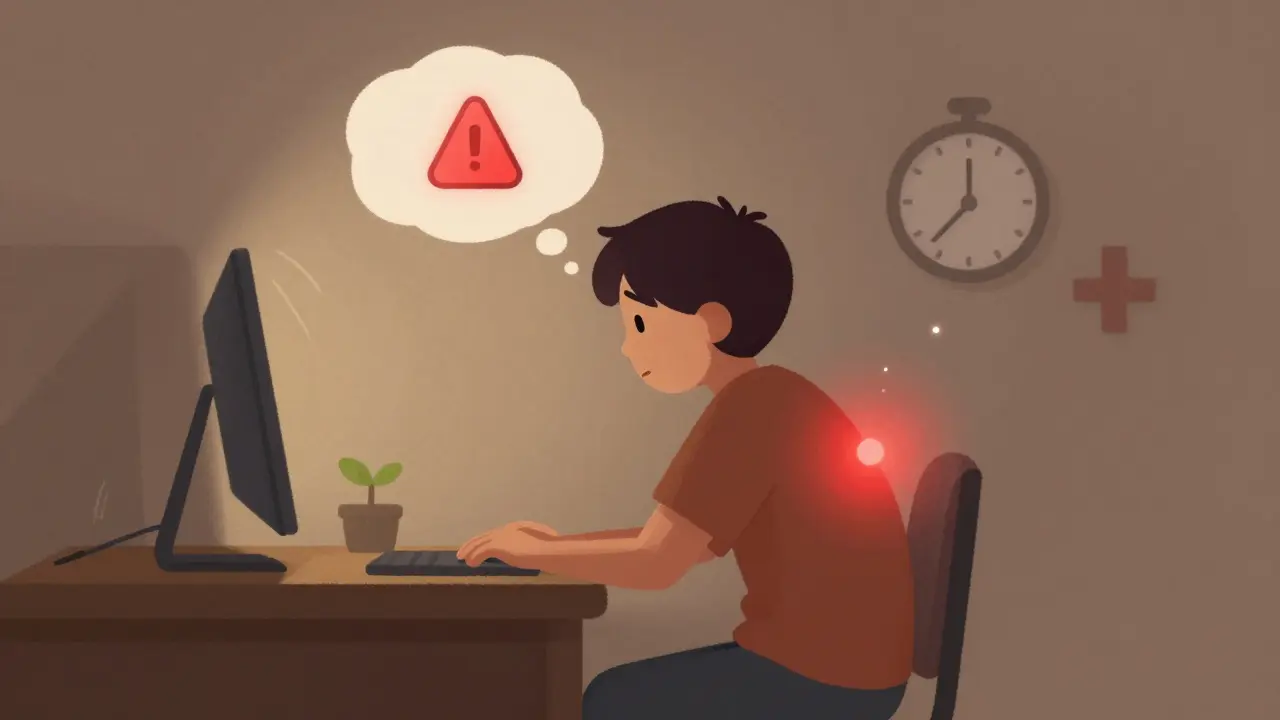
Most people will deal with low back pain at some point in their life. It’s not rare-it’s normal. But not all back pain is the same. Some cases are just stiff muscles from sitting too long or lifting wrong. Others? They’re warning signs of something serious. The problem is, most people don’t know the difference. And doctors, even well-meaning ones, often order scans too soon or miss the real red flags. This isn’t about fear. It’s about knowing when to act-and when to move, not freeze.
What Are Red Flags, Really?
Red flags aren’t scary words from a movie. They’re clinical clues that point to something more than a pulled muscle. Think of them as emergency lights on your body’s dashboard. They don’t mean you have cancer or a broken spine. But they mean you need to check, fast. The big four red flag categories are: cancer, fracture, cauda equina syndrome, and infection. Together, they make up less than 2% of all low back pain cases. But missing one can change your life. For cancer, the clearest warning signs are: a history of cancer (especially breast, lung, or prostate), or unexplained weight loss-like dropping 10 pounds in a month without trying. Pain that wakes you up at night, especially if it’s worse when lying down, is often flagged too. But here’s the catch: many people with night pain have no cancer. It’s a weak signal on its own. Combine it with weight loss? That’s when you call your doctor. Fractures? They usually come from trauma-like a fall from height or a car crash. But not always. If you’re on long-term steroids (for asthma, arthritis, or autoimmune disease) or have osteoporosis, even a minor bump can crack a vertebra. That’s why doctors ask about your meds, not just your pain. Cauda equina syndrome is the one you can’t afford to ignore. It’s rare, but it’s an emergency. Symptoms include: losing control of your bladder or bowels, numbness in your saddle area (the part that touches a bike seat), or weakness in both legs. If you have urinary retention-meaning you can’t pee even though you feel the urge-and your post-void residual is over 200cc, your chance of having this is 92%. That’s not a guess. That’s science. If you’re experiencing this, go to the ER. Not tomorrow. Now. Surgery within 48 hours makes a huge difference in recovery. Infection? Fever, IV drug use, or pain that gets worse when you tap on your lower spine (percussion tenderness) are clues. Blood tests like ESR and CRP can help confirm it. But don’t wait for labs if you’re feverish and your back hurts like fire.When Do You Actually Need an X-Ray or MRI?
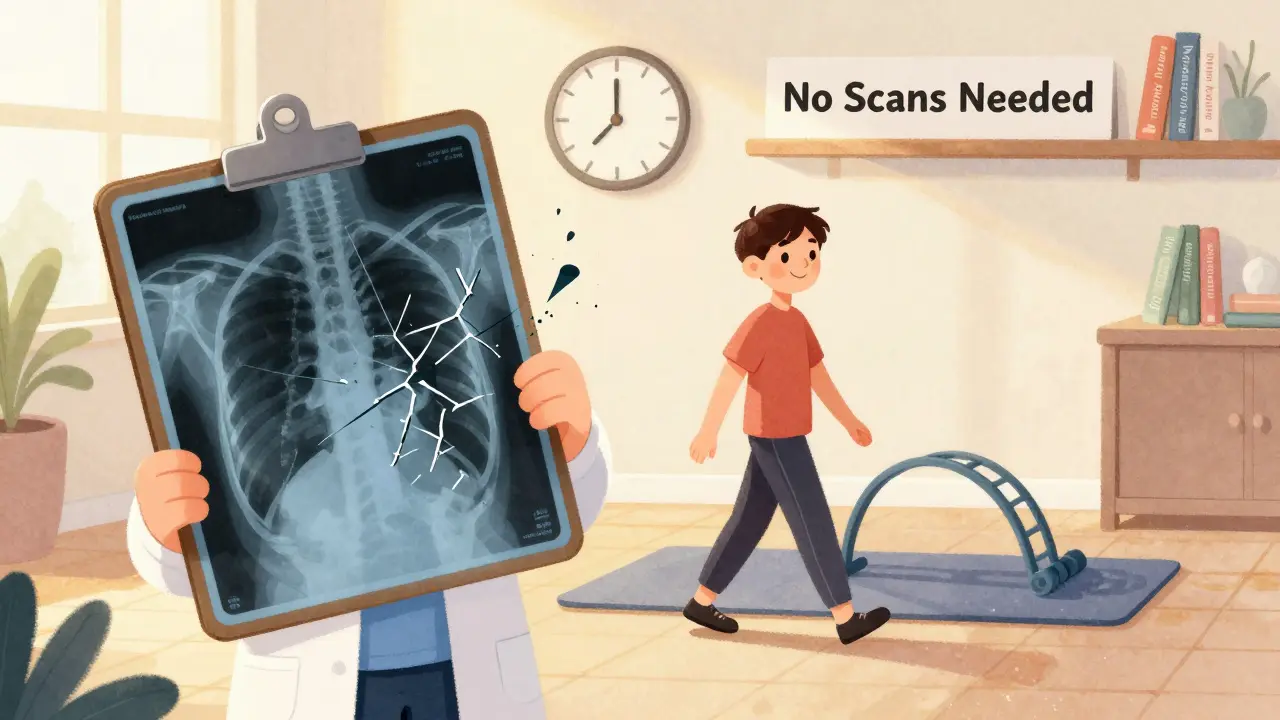
Here’s the truth: 97% of low back pain is mechanical. It’s not broken. It’s not cancer. It’s just… stuck. And scans won’t fix it. In fact, they often make things worse. The American College of Radiology and Canadian guidelines agree: if you have low back pain for less than four weeks and no red flags, do not get imaging. Not an X-ray. Not an MRI. Just let it heal. Why? Because scans show things that aren’t causing pain-like bulging discs, arthritis, or degeneration. These are normal in people over 40, even if they feel fine. Finding them leads to unnecessary worry, more tests, and sometimes even surgery that doesn’t help. If red flags are present? Then imaging changes. For suspected cauda equina or nerve damage, MRI without contrast is the gold standard. For possible infection, a bone scan with SPECT/CT or a contrast CT is better. For cancer, MRI again. X-rays? They’re almost useless for finding serious causes unless there’s been major trauma. The Canadian Family Physicians Association says it plainly: “X-rays in chronic back pain are very poor indicators of serious pathology.” Yet, a 2022 survey found that 43% of primary care doctors still order X-rays for acute back pain without red flags. Why? Time pressure. Most visits last under 13 minutes. Screening for red flags properly takes 18 to 22. When you’re rushed, it’s easier to order a scan than ask the right questions.Exercise Therapy: The Only Treatment That Lasts
If you’ve been told to rest, stop. Resting for more than a day or two makes back pain worse. Movement isn’t optional. It’s medicine. A 2020 Cochrane Review looked at 97 studies with nearly 20,000 people. The result? Exercise reduced pain and improved function more than no treatment at all. The effect? Not tiny. Not placebo. Real. People moved better and hurt less-even six months later. Not all exercises are equal. The strongest evidence supports three types:- Motor control exercises-these teach your deep core muscles to fire in the right order. Think pelvic tilts, abdominal bracing, and slow bridges. They’re not flashy, but they work.
- Graded activity-this means slowly increasing how much you do, even if it hurts a little. Walking 10 minutes a day, then 15, then 20. It’s about rebuilding confidence in your body.
- Combined programs-mixing strength, aerobic work, and flexibility. Like walking plus bodyweight squats plus light resistance bands.
The Big Mistake Everyone Makes
Age isn’t a red flag. Neither is being “over 50” or “over 55.” Yet, 68% of doctors still think it is. That’s wrong. A 65-year-old with back pain and no other symptoms is far more likely to have muscle strain than cancer. Age alone has almost no predictive value. The same goes for “degenerative changes” on an MRI. These are normal aging signs. They don’t equal pain. But they’re often used to justify unnecessary treatments-steroid shots, nerve ablations, even surgery. The truth? Most of those don’t work better than exercise. The real problem? We’ve turned back pain into a medical mystery instead of a movement problem. We scan too much. We rest too long. We fear movement. But your spine isn’t fragile. It’s strong. It’s built to move.What to Do Right Now
If you have back pain:- Check for red flags: cancer history, unexplained weight loss, night pain, bladder/bowel issues, numbness in the groin, fever, or major trauma.
- If any of those are present-see a doctor immediately. Don’t wait.
- If no red flags, don’t get an X-ray or MRI. Skip the scan.
- Start moving. Walk daily. Do 10 gentle bridges. Try 5 squats with support. Don’t wait for pain to disappear. Move through it.
- Find a physical therapist who focuses on movement, not just massage or machines.
- Stick with it for at least 8 weeks. Results take time.
Why This Matters
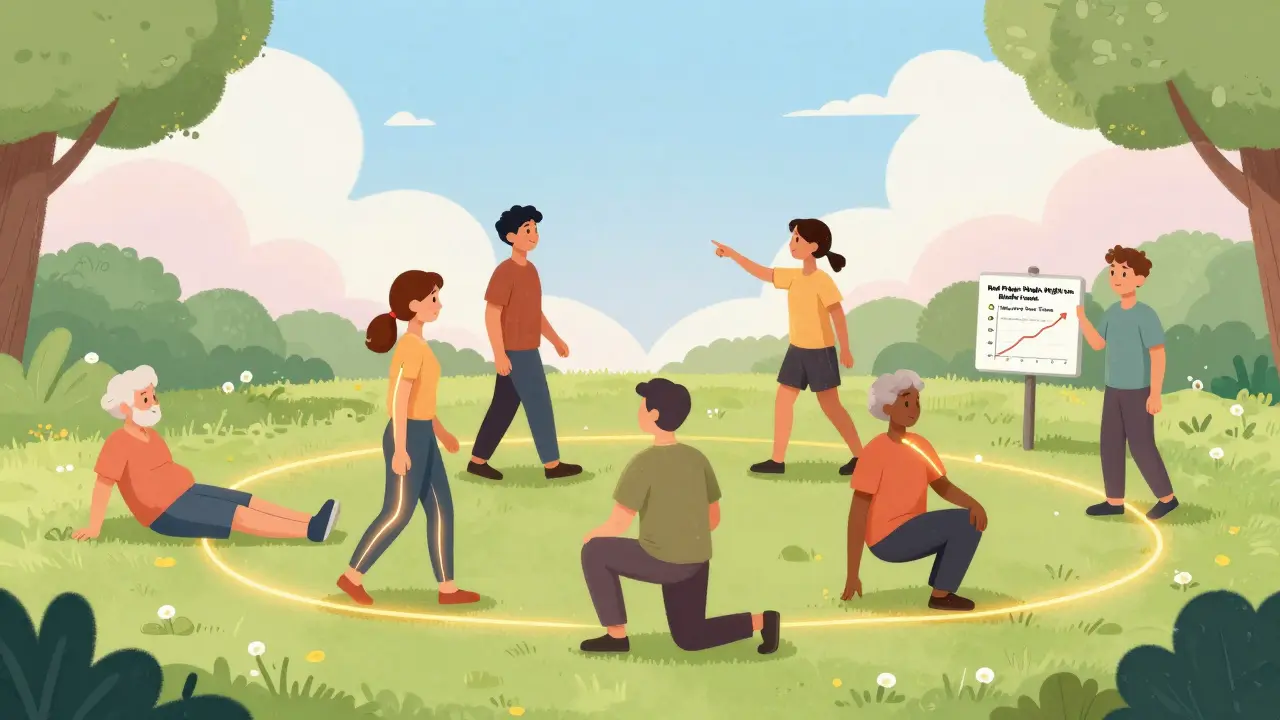
In the U.S., unnecessary imaging for back pain costs $3 billion a year. That’s not just money. It’s anxiety, unnecessary procedures, and lost time. Meanwhile, people who get the right care-exercise, education, patience-get better faster and stay better longer. The system is broken. But you don’t have to be part of it. You don’t need a scan to know your back is okay. You don’t need to be told to rest. You need to move. You need to trust your body. And you need to know when to ask for help.Frequently Asked Questions
Is low back pain usually serious?
No. About 97% of low back pain cases are caused by simple mechanical issues like muscle strain, poor posture, or overuse. Only 1-2% involve serious conditions like cancer, infection, or spinal fracture. Most cases improve with time and movement, not scans or surgery.
Should I get an MRI if my back hurts?
Only if you have red flags-like loss of bladder control, unexplained weight loss, fever, or a history of cancer. For routine low back pain without these signs, MRI won’t help and can lead to unnecessary worry or treatment. Guidelines from the American College of Radiology and Canadian Family Physicians Association strongly advise against imaging in the first four weeks unless red flags are present.
Can exercise make back pain worse?
Not if you start slowly and stay consistent. Avoid sudden, high-impact movements. But gentle movement-walking, bridging, pelvic tilts-helps reduce pain and stiffness. Studies show that people who begin exercise within a few days of pain onset recover faster than those who rest. Pain during exercise doesn’t mean damage. It often means muscle fatigue or stiffness. Pushing through mild discomfort is safe and effective.
What’s the best type of exercise for low back pain?
Motor control exercises, graded activity, and combined programs have the strongest evidence. Motor control focuses on retraining deep core muscles. Graded activity means slowly increasing daily movement. Combined programs include strength training, aerobic activity (like walking or cycling), and flexibility. A physical therapist can help you choose the right mix based on your condition and fitness level.
Is age a reason to worry about back pain?
No. Being over 50 or 55 is not a red flag on its own. Studies show age alone doesn’t increase the risk of serious spinal problems. Many older adults have degenerative changes on scans but feel no pain. Focusing on symptoms-not age-is what matters. The UK’s NICE guidelines removed age over 55 as a red flag in 2023 because evidence showed it didn’t improve diagnosis.
How long should I do exercise therapy?
At least 8 to 12 weeks. Benefits build over time. Most people see improvement in 4-6 weeks, but lasting results require consistency. Aim for 2-3 sessions per week initially, then transition to a home program. Adherence is key-people who stick with exercise for 3 months or longer have much better long-term outcomes than those who quit early.
Rulich Pretorius
December 16, 2025 AT 08:26Most people don’t realize how much of back pain is psychological, not structural. The fear of movement becomes the real injury. Your spine isn’t glass-it’s steel reinforced with connective tissue that adapts to load. If you’ve been told to rest for weeks, that’s the medical system failing you. Movement isn’t optional; it’s the only thing that reprograms your nervous system to stop screaming pain signals when there’s no damage.
Studies show that people who return to activity within 48 hours recover 60% faster than those who wait. It’s not about pushing through sharp pain, but tolerating the dull, achy discomfort that comes with re-engaging muscles that have gone dormant. That’s not injury-that’s adaptation.
And yes, degenerative changes on MRI? Normal. I’ve seen 70-year-olds with ‘severe disc degeneration’ who run marathons, and 35-year-olds with ‘perfect spines’ who can’t tie their shoes. The image doesn’t tell the story. The function does.
Stop treating back pain like a broken bone. Treat it like a muscle you haven’t used in months. You wouldn’t tell someone with a weak bicep to stop lifting. So why do it with your core?
Edward Stevens
December 16, 2025 AT 09:47So let me get this straight-doctors are idiots for ordering scans, but you’re not an idiot for reading a blog post and suddenly thinking you’re a spine specialist?
Also, ‘don’t get an MRI’-right, because the guy who just fell off a ladder and now can’t feel his toes totally doesn’t need one. Classic ‘I read one study’ logic. I bet you also think vaccines cause autism because ‘the science is mixed.’
Alexis Wright
December 17, 2025 AT 10:44You think this is about medicine? No. This is about capitalism. The spine industry is a $100 billion machine built on fear, scans, and surgical profit. Insurance companies incentivize imaging because it’s billable. Hospitals profit from MRIs. Surgeons get paid for fusions. Physical therapists? They’re paid by the hour to move your hips, not to fix your belief that your spine is broken.
The real red flag? That you’d rather pay $3,000 for a scan than $50 for a PT session that actually works.
We’ve turned the body into a machine to be fixed, not a living system to be understood. Your spine isn’t a car part. It’s an organ of movement, shaped by gravity, emotion, stress, sleep, and yes-your belief that you’re fragile.
Wake up. The system doesn’t want you healthy. It wants you compliant.
And if you’re still reading this and not doing bridges right now? You’re part of the problem.
Thomas Anderson
December 18, 2025 AT 09:36I had back pain for 3 months. Went to three doctors. Two told me to rest. One told me to get an MRI. I ignored them all. Started walking 15 minutes a day. Did 5 bridges before bed. After two weeks, I could bend over to tie my shoes without wincing. No scans. No shots. Just movement. If you’re scared, start small. But move.
Dwayne hiers
December 19, 2025 AT 12:24From a biomechanical standpoint, the literature consistently supports the notion that non-specific low back pain (NSLBP) is best managed through a biopsychosocial framework, not purely biomedical intervention. The overutilization of neuroimaging in the absence of red flags represents a significant deviation from evidence-based guidelines, resulting in iatrogenic harm via catastrophization and unnecessary procedural cascades.
Motor control training, grounded in neuromuscular re-education, demonstrates moderate to large effect sizes in reducing pain intensity and improving functional capacity, particularly when delivered in a progressive, task-oriented manner. The key variable isn’t the exercise modality per se, but adherence and dose-response optimization.
Furthermore, the persistence of imaging referrals correlates inversely with clinician time allocation and training in pain neuroscience education. This is not a failure of patient compliance-it’s a systemic failure of care delivery. Primary care providers are being asked to perform complex differential diagnosis under time constraints that make guideline adherence statistically improbable.
Additionally, the notion that age >55 is a red flag has been empirically invalidated in multiple cohort studies, including the 2023 NICE update, which removed it due to negligible predictive value (OR: 1.07, 95% CI: 0.89–1.29).
Exercise prescription must be individualized, but the universal principle remains: movement is the most potent analgesic and neuroplastic agent we have for NSLBP. The challenge isn’t knowing what to do-it’s overcoming the cultural narrative that pain equals damage.
Daniel Wevik
December 21, 2025 AT 11:33Let me be clear: this isn’t about being ‘right’-it’s about being responsible. If you have back pain and you’re over 50, you’re not ‘just old.’ You’re at higher risk for osteoporosis, steroid-induced fragility, and metabolic bone disease. Dismissing age as irrelevant is dangerous. Yes, most cases are mechanical. But the 2% that aren’t? They don’t wait for your next yoga class.
And exercise? It’s not magic. It’s medicine. But you need the right dose. Doing 5 bridges isn’t enough if you’ve got a herniated disc. You need progression, not just repetition.
Find a physical therapist who doesn’t just hand you a PDF. Find one who tests your movement patterns, adjusts your load, and challenges your fear. That’s what actually works.
And if you’re reading this and thinking ‘I’ll just walk more’-good. But don’t stop there. Movement without awareness is just motion. And motion without control? That’s how injuries happen.
Jonny Moran
December 21, 2025 AT 19:41I’ve seen too many people paralyzed by fear-afraid to bend, afraid to lift, afraid to move because someone told them their spine was ‘worn out.’ But here’s the truth: your spine is the strongest part of your body. It’s built for load. Built for movement. Built for life.
Start with walking. Just walk. Don’t wait for the pain to disappear. Walk through it. Your nervous system will learn it’s safe.
And if you’re scared to start? Find someone who’s been there. A friend. A PT. A coach. Don’t do it alone. You don’t need a scan. You need a guide.
Sinéad Griffin
December 22, 2025 AT 09:18AMERICA NEEDS TO STOP PAYING FOR SCANS AND START PAYING FOR PHYSICAL THERAPY 🇺🇸💪
THIS IS WHY OUR HEALTHCARE IS BROKEN. WE FIX SYMPTOMS, NOT ROOT CAUSES. 🤦♀️
MY DAD GOT A SPINAL FUSION FOR ‘DEGENERATIVE DISC’-HE COULDN’T EVEN WALK AFTER. THEN HE FOUND A PT WHO TAUGHT HIM TO MOVE AGAIN. NOW HE HIKES. NO SURGERY. NO DRUGS. JUST MOVEMENT.
STOP SCANNING. START MOVING. 🙏
Rich Robertson
December 22, 2025 AT 15:48In South Africa, we don’t have MRIs lying around like vending machines. Back pain? You either move or you don’t. If you can’t afford a scan, you learn to live with it-and you learn to move through it. There’s a wisdom in that.
People think pain means damage. But pain is a signal. Sometimes it’s a warning. Sometimes it’s just noise. The trick isn’t to silence it-it’s to understand it.
I’ve worked with farmers who’ve bent over for 50 years and never had a problem. And I’ve worked with office workers who got an MRI after lifting a grocery bag and now think their spine is crumbling.
It’s not the spine that’s broken. It’s the story we tell ourselves about it.
Move. Breathe. Trust your body. It’s older than your fear.