Sexual side effects from SSRIs aren't rare - they're common. Up to 70% of people taking these antidepressants experience some form of sexual dysfunction, from low desire to trouble reaching orgasm. For many, it's not just an inconvenience; it's a dealbreaker. Studies show that 12-18% of patients quit their medication because of it. And here's the catch: about 35-50% of people with depression already had sexual issues before starting treatment. So how do you tell if the problem is the depression, the drug, or both? And more importantly - what can you actually do about it?
Understanding What’s Happening
SSRIs work by increasing serotonin in the brain, which helps lift mood. But serotonin also plays a big role in sexual response. Too much of it can shut down desire, delay orgasm, reduce arousal, and even cause erectile problems. These effects usually show up within the first 2-4 weeks of starting the medication. They don't always get better over time. In fact, for many, they stick around as long as the drug is taken.The most common complaints? Reduced libido (affecting 40-50% of users), delayed or absent orgasm (60-70%), and trouble with arousal or lubrication (40-50%). Men report erectile issues (20-30%), while women often describe dryness or lack of response. It's not just physical - the emotional toll is real. People feel frustrated, disconnected from partners, or even ashamed. And if no one talks about it, they suffer in silence.
Option 1: Lower the Dose
Before switching meds or adding something new, try cutting the dose. For mild to moderate depression, reducing the SSRI by 25-50% often improves sexual function without losing antidepressant benefits. A study in Consultant360 found that 40-60% of patients saw improvement with this approach.This works best if your depression isn't severe. If you're on 40mg of sertraline, try 20mg. If you're on 20mg of fluoxetine, go to 10mg. Monitor your mood closely. If your depression starts to creep back, this isn't the right path. But if your mood stays stable and your sex life improves? That’s a win.
Option 2: Try a Drug Holiday
A drug holiday means stopping your SSRI for 48-72 hours before planned sexual activity. It sounds simple, but it only works for SSRIs with short half-lives - like sertraline, citalopram, or escitalopram. Fluoxetine? Forget it. Its half-life is over 14 days, so it lingers in your system no matter what.One small study showed that 60-70% of people with anorgasmia improved after a 2-day break. But there’s a catch: 15-20% of users get withdrawal symptoms - dizziness, nausea, anxiety. It’s not for everyone. And if you’re on a high dose or have a history of withdrawal reactions, this could backfire.
Some people try a modified version: take half your dose for two days a week (usually before the weekend), then resume full dose. Evidence is thin here, but anecdotal reports suggest it helps some. Still, don’t try this without talking to your doctor.
Option 3: Switch Antidepressants
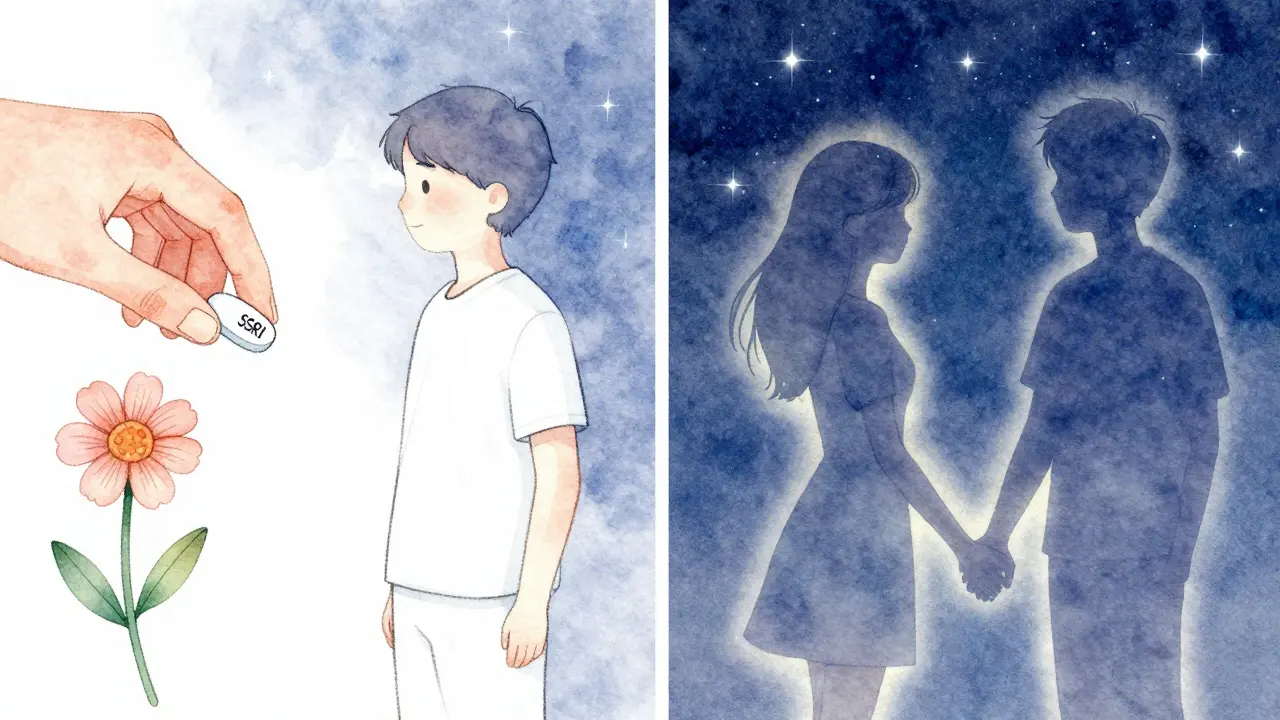
Not all SSRIs are created equal when it comes to sexual side effects. Paroxetine is the worst offender - high rates of orgasm delay and low desire. Sertraline and fluoxetine? Better. But the real game-changer is switching to a non-SSRI.Bupropion (Wellbutrin) is the top choice. It doesn’t boost serotonin - it boosts dopamine and norepinephrine. In studies, 60-70% of people who switched from an SSRI to bupropion saw major improvements in sexual function. But there’s a risk: if you have severe depression, switching might increase your chance of relapse to 25-30% (compared to 10-15% if you stayed on the SSRI).
Other options include mirtazapine and nefazodone. Both block 5-HT2A receptors, which helps sexual function. About 50-60% of users report improvement. But they come with trade-offs - sedation in 30-40% of cases. Not ideal if you’re already tired from depression.
Option 4: Add an Adjunct (The Most Evidence-Backed Move)
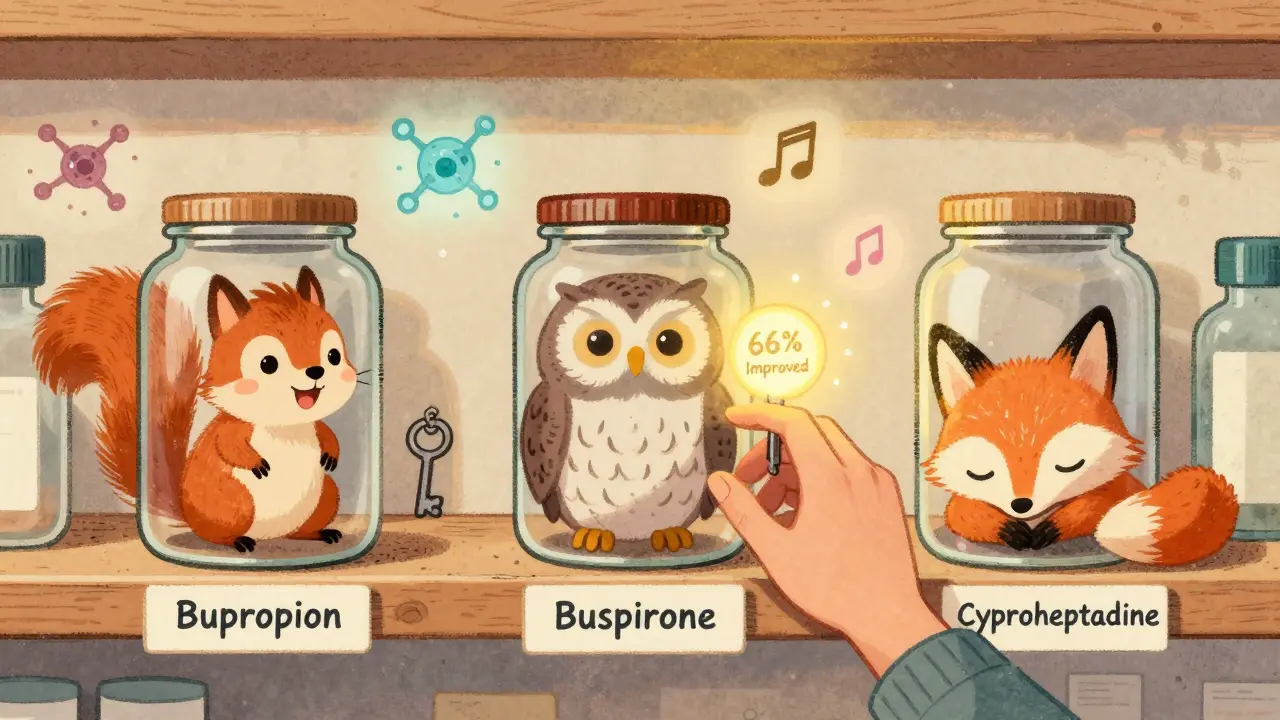
Instead of ditching your SSRI, add something on top. This is where the strongest data lives.Bupropion (as an add-on) is the gold standard. In a double-blind trial of 55 people on SSRIs, daily 150mg twice a day of bupropion improved sexual desire and frequency with statistical significance. 66% of users saw improvement. Even as-needed use - 75mg taken 1-2 hours before sex - helped 38%. But watch out: combining bupropion with fluoxetine can trigger anxiety or panic attacks in 20-25% of cases.
Dopaminergic agents like ropinirole (0.25-1mg daily) or amantadine (100mg daily) can help too. They work fast - sometimes in 48-72 hours. But they can cause tremors, anxiety, or insomnia. Especially risky if you’re on fluoxetine.
Buspirone (5-15mg daily) is a 5-HT1A partial agonist. It improves sexual function in 45-55% of users. It’s safer than bupropion - only 5-10% quit due to side effects. But it takes 2-3 weeks to kick in.
Cyproheptadine (2-4mg as needed) is a 5-HT2 antagonist. It helps about 50% of people. But it’s sedating - 35-40% feel too sleepy to use it regularly.
What the Experts Say
Dr. Montejo recommends a three-step approach: prevent in high-risk patients (young, sexually active), monitor with tools like the Arizona Sexual Experience Scale, and only intervene when it’s causing real distress or treatment dropout. Don’t assume every sexual problem is the drug.Dr. Levine points out that most people under 60 aren’t fully anorgasmic - they just feel like their orgasm is “dampened.” He suggests behavioral tricks: explore new sexual activities, increase stimulation, use toys or erotic material. Sometimes, rewiring arousal patterns can override the drug’s effect.
Dr. Petok talks about “stacking the deck” - optimizing your environment. Lighting, music, touch, scent - all of it matters. If your brain’s serotonin levels are dampening response, you need stronger sensory cues to compensate.
What Patients Are Saying
Reddit’s r/antidepressants has over 147 users sharing experiences. 62% found bupropion augmentation helpful. One user wrote: “75mg bupropion XL 4 hours before sex fixed my paroxetine-induced anorgasmia after 3 months.”But 28% had bad reactions. Another said: “Bupropion with fluoxetine gave me panic attacks within 48 hours.”
On PatientsLikeMe, drug holidays worked for 45% of sertraline users but only 15% of citalopram users - again, because of half-life differences.
And then there’s the silent issue: persistent sexual dysfunction after stopping SSRIs. The TGA warned in June 2023 about cases lasting weeks, months, even years. A 2022 survey found 37% of respondents reported symptoms lasting over 6 months. But Tarchi’s 2023 review says we still can’t prove causation - the data is messy. Still, it’s enough to make doctors pause.
What You Should Do
Start with a simple conversation: “I’m having sexual side effects. What can we do?” Most doctors don’t bring it up. A 2023 Harvard Health poll found 73% of patients were never asked about it.Use a screening tool like the Antidepressant Sexual Dysfunction Inventory at your 2-4 week follow-up. Track changes. Don’t wait until you quit.
Here’s a practical sequence:
- Try dose reduction first - cut by 25-50% if depression is mild.
- If that doesn’t work, try a drug holiday - but only if you’re not on fluoxetine.
- If still stuck, add bupropion 75mg daily. Increase to 75mg twice daily after 3 days. Wait 4 weeks to see full effect.
- If anxiety spikes, switch to buspirone 5-10mg daily.
- If none of these work, consider switching to bupropion, mirtazapine, or a newer antidepressant like vortioxetine.
Remember: 68% of psychiatrists now screen for sexual side effects at the start of treatment - up from 32% in 2018. You’re not alone. And you’re not broken. This is a known, manageable side effect - not a personal failure.
What’s Coming Next
New drugs are on the horizon. MK-0941, a 5-HT2C antagonist, showed 70% improvement in sexual function without hurting mood in a recent phase II trial. Vilazodone and vortioxetine already have lower sexual side effect rates - 25-30% less than traditional SSRIs. But they cost $450/month vs. $10/month for generic sertraline. Access is still a barrier.The FDA is reviewing whether to add stronger warnings to all SSRI labels. The message is clear: sexual dysfunction is real, common, and worth addressing - not ignored.
Bottom line: You don’t have to choose between feeling better mentally and feeling better sexually. There are options. You just need to ask - and know what to ask for.
Allison Priole
March 22, 2026 AT 13:41ive been on sertraline for 2 years and honestly the sex stuff was the worst part. not even the depression, just... feeling like a robot in bed. tried cutting my dose in half and holy crap it helped so much. mood stayed fine, libido came back, and i could actually enjoy sex again. no joke, it felt like rediscovering myself. if you’re scared to talk to your doc, just start with ‘hey, can we try lowering this?’ they’ve heard it a million times. you’re not weird for caring about this stuff.
Casey Tenney
March 24, 2026 AT 10:12stop making excuses. if you can’t handle side effects, don’t take the med. depression is worse than no orgasm.
Bryan Woody
March 25, 2026 AT 06:24lol so we’re back to the classic ‘just switch to bupropion’ solution like its magic fairy dust. sure it works for some. but try telling that to the guy who went from ‘meh sex life’ to ‘panic attacks every time he looked at his partner’ after adding wellbutrin. or the woman who got tremors from ropinirole and now can’t hold a coffee cup. this isn’t a menu. its a minefield. and doctors act like we’re all just one pill away from a rom-com. nah. its trial error with side effects that make you question if you’re still human. also - yes, the 37% with long-term dysfunction? that’s real. and no one talks about it until you’re 2 years off meds and still can’t feel anything. so yeah. be careful.
Chris Dwyer
March 25, 2026 AT 20:22you’re not broken. seriously. this stuff is so common and yet we act like it’s some secret shame. the fact that 73% of patients were never asked about it? that’s on the system. not you. if dose reduction helped you, great. if a drug holiday gave you back your sex life? awesome. if adding bupropion made you feel like yourself again? win. but if none of it worked? that doesn’t mean you failed. it means your brain works differently. and that’s okay. keep trying. keep talking. and if your doctor doesn’t get it? find someone who does. you deserve to feel good - mentally AND physically.
Timothy Olcott
March 26, 2026 AT 05:07usa only lol. why are we even talking about this? just get off the meds. real men don’t need antidepressants. 🇺🇸💪
Johny Prayogi
March 27, 2026 AT 11:53just want to say that the buspirone suggestion is lowkey genius. took me 3 weeks to notice but now i’m actually having orgasms again without the anxiety spike from bupropion. also the ‘stacking the deck’ thing? lighting candles and playing music actually helped. sounds silly but my brain needed more sensory input to override the serotonin overload. weirdly romantic? maybe. effective? 100%. if you’re stuck, try the small stuff before the big switches.
Nishan Basnet
March 28, 2026 AT 11:12as someone from india where mental health is still taboo, i can’t tell you how refreshing this post is. we rarely discuss sexual side effects here - it’s either ‘take the pill’ or ‘pray harder’. the data you’ve presented is clear, compassionate, and clinically grounded. i especially appreciate the emphasis on behavioral adjustments - they’re often overlooked. in my practice, i’ve seen patients improve not by changing meds, but by rediscovering intimacy through touch, rhythm, and presence. the body remembers pleasure even when the brain is chemically muted. thank you for normalizing this conversation.
Sandy Wells
March 28, 2026 AT 15:36This is why people shouldn't take antidepressants. They're not real solutions. Just stop.
Desiree LaPointe
March 29, 2026 AT 17:57Oh please. You’re all acting like this is some groundbreaking revelation. Bupropion? Buspirone? Drug holidays? Newsflash: we’ve known this for 15 years. The fact that people are still surprised by sexual dysfunction from SSRIs is less about the meds and more about how poorly medical education is structured. If your doctor didn’t warn you, they’re lazy. If you didn’t research it, you were complacent. And don’t get me started on ‘stacking the deck’ - that’s not therapy, that’s a Pinterest board. But hey, at least now we have 147 Reddit stories to validate our trauma. Congrats.