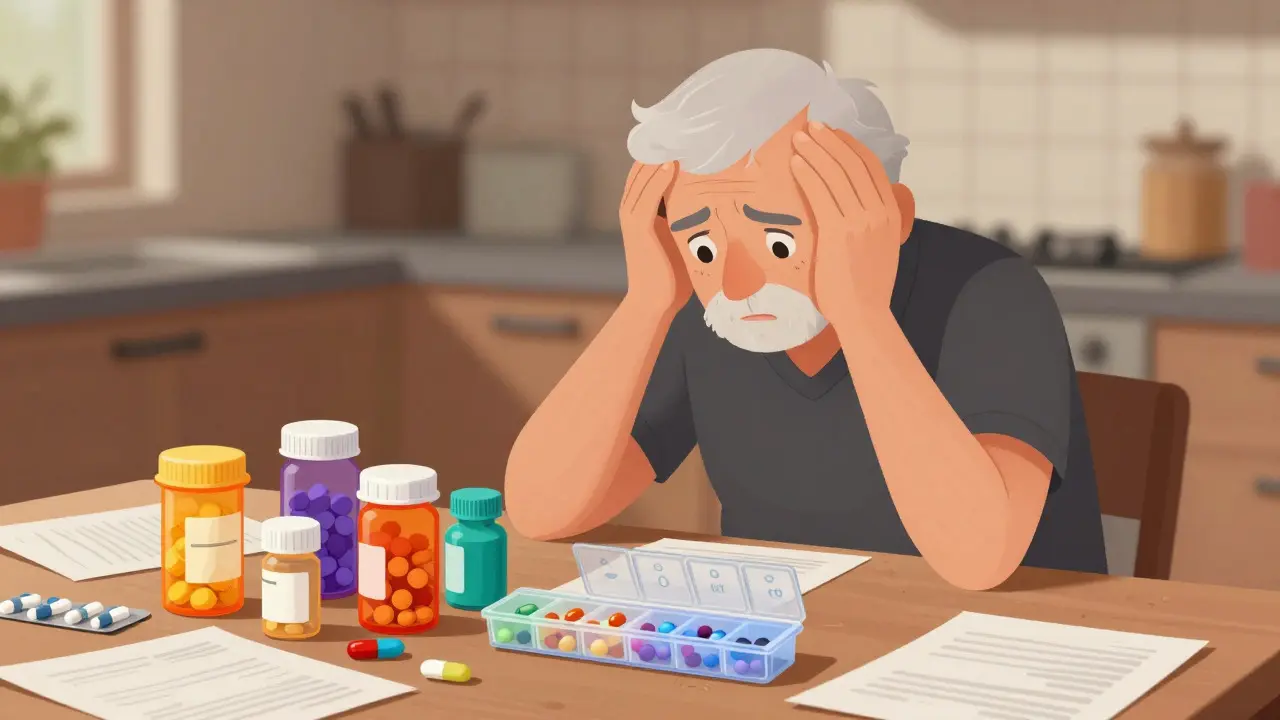
Most of us think that more medicine means better health. We’ve been taught to treat every symptom and prevent every potential problem. But for older adults, this approach often backfires. Taking five, ten, or even fifteen different pills a day isn’t just a chore-it can be dangerous. This is where deprescribing comes in. It’s the careful process of stopping or lowering doses of medicines that no longer do more good than harm.
If you’re caring for an aging parent, or if you are navigating your own golden years with a growing pillbox, you might wonder when it’s safe to stop. The answer isn’t “never.” In fact, keeping certain drugs going long after they’re needed can cause falls, confusion, and hospital visits. Let’s look at how to know when less is actually more.
What Is Deprescribing and Why Does It Matter?
Deprescribing is the systematic withdrawal or dose reduction of a medication that is considered inappropriate because its harms outweigh its benefits or it doesn't align with the patient's care goals. The term was coined in 2003 by Australian clinician Michael Woodward, but it has become a major focus in geriatric care since then. By 2015, experts formally defined it as evaluating whether the risks of a drug outweigh the benefits, considering the patient’s function, life expectancy, and preferences.
The scale of the problem is huge. In the United States, the number of older adults taking five or more medications tripled from 13.8% in 1994 to over 42% in 2014. Similar spikes happened in Australia and Scotland. This condition is called polypharmacy, which refers to the use of multiple medications simultaneously, often leading to increased risk of adverse events. It costs the U.S. healthcare system about $30 billion a year due to adverse drug events alone. Most of these seniors live at home, managing their own meds without direct supervision, making errors or side effects easy to miss until they become emergencies.
Signs It’s Time to Review Medications
You don’t need a medical degree to spot red flags. Experts agree there are four main scenarios where deprescribing should be prioritized:
- New symptoms appear: If a senior starts feeling dizzy, confused, or nauseous after starting a new drug-or even continuing old ones-it could be an adverse reaction.
- Advanced illness or frailty: When someone has severe dementia, terminal illness, or extreme frailty, preventive drugs (like statins for cholesterol) may no longer make sense. The goal shifts from longevity to comfort and quality of life.
- High-risk combinations: Some drugs interact badly together. For example, mixing blood thinners with certain painkillers can increase bleeding risk significantly.
- No short-term benefit: Preventive medications often take years to show results. If a person has limited life expectancy, those long-term gains aren’t worth the daily side effects.
The American Geriatrics Society notes that regular medication reviews help simplify regimens and minimize risks. Think of each refill not as a routine task, but as a decision point: “Is this still helping?”

Which Medications Are Common Candidates for Deprescribing?
Not all drugs are equal when it comes to stopping them. Some classes have clear guidelines for when they should be reconsidered. Here are common examples:
| Medication Class | Original Purpose | Why Reconsider? | Risks of Continuing |
|---|---|---|---|
| Proton Pump Inhibitors (PPIs) | Treat acid reflux/GERD | Often prescribed indefinitely without re-evaluation | Bone fractures, kidney issues, nutrient deficiencies |
| Benzodiazepines | Anxiety, insomnia | High risk of dependence and falls | Falls, cognitive decline, withdrawal symptoms |
| Anticholinergics | Allergies, overactive bladder, depression | Accumulate burden on brain function | Confusion, dry mouth, constipation, memory loss |
| Statins | Lower cholesterol, prevent heart disease | Long-term benefit unclear in very old/frail patients | Muscle pain, liver enzyme changes, fatigue |
| Metformin | Type 2 diabetes management | Hypoglycemia risk if diet/lifestyle changes | Vitamin B12 deficiency, GI upset |
Tools like the Beers Criteria and the STOPP criteria (Screening Tool of Older Persons' Potentially Inappropriate Prescriptions) help doctors identify these risky meds. These lists are updated regularly and used by clinicians worldwide to flag potentially inappropriate prescriptions.
How to Safely Start the Deprescribing Process
Stopping a medication isn’t as simple as tossing it out. Done wrong, it can cause withdrawal or return of symptoms. Here’s how professionals do it safely:
- Pick one drug at a time: Changing everything at once makes it impossible to tell what’s causing any new symptoms. Focus on the highest-risk or least-beneficial med first.
- Talk to the prescriber: Never stop prescription meds without talking to a doctor or pharmacist. They’ll create a tapering schedule if needed.
- Set clear goals: Ask: “What are we trying to achieve?” If the goal is comfort, aggressive prevention meds may no longer fit.
- Monitor closely: Keep a log of mood, energy, sleep, and physical symptoms for two to four weeks after stopping. Report anything unusual immediately.
- Involve the whole team: Pharmacists, nurses, and family caregivers play key roles. A clinical pharmacist review can cut inappropriate med use significantly, according to studies published in JAMA Network Open.
Remember, deprescribing is treated like starting a new therapy-it requires planning, consent, and follow-up. As the American Academy of Family Physicians puts it, view each refill as a trial, not a permanent commitment.

Challenges and What’s Next
Despite strong evidence, deprescribing remains underused. One big reason? Guidelines rarely say *when* to stop-they mostly say *how* to start. Hospital stays are also too short to see the full effect of stopping a drug; some benefits or withdrawals take weeks to emerge.
But things are improving. Electronic health records now include clinical decision support systems that alert doctors to high-risk combinations or outdated prescriptions. Platforms like Deprescribing.org offer step-by-step guides, patient pamphlets, and even mobile apps for Android and iOS to help teams implement changes at the bedside.
Looking ahead, AI-driven algorithms are being tested at universities like Toronto and Sydney to personalize deprescribing plans based on individual health data. The World Health Organization has named deprescribing a priority in its Global Patient Safety Action Plan 2021-2030, signaling global recognition of its importance.
Studies show that proper deprescribing reduces adverse drug events by 17-30%, cuts hospital readmissions by 12-25%, and improves quality of life-all without worsening underlying conditions. That’s a win worth fighting for.
Frequently Asked Questions
Can I stop my senior’s medication without telling the doctor?
No. Stopping prescription medications abruptly can cause dangerous withdrawal symptoms or rebound effects. Always consult the prescribing physician or a pharmacist before making changes. They will guide you through a safe tapering plan if needed.
How do I know if a medication is no longer beneficial?
Ask yourself: Is this drug treating a current symptom or preventing a future problem? If the patient has limited life expectancy or severe frailty, preventive drugs (like statins or PPIs) may no longer provide meaningful benefit. Tools like the Beers Criteria can help identify such cases.
What happens if we stop too many medications at once?
Stopping multiple drugs simultaneously makes it hard to track which change caused any new symptoms. It increases the risk of confusion, falls, or withdrawal. Best practice is to stop one medication at a time and monitor for 2-4 weeks before adjusting another.
Are there tools to help decide which meds to deprescribe?
Yes. Clinicians use evidence-based tools like the Beers Criteria and STOPP criteria to flag potentially inappropriate medications. Resources like Deprescribing.org also offer guidelines, decision algorithms, and patient-friendly materials for specific drug classes.
Does deprescribing improve quality of life?
Absolutely. Studies show that appropriate deprescribing reduces adverse drug events by up to 30%, lowers hospital readmissions, and enhances daily functioning and well-being. It allows seniors to focus on living rather than managing pills.
Who should lead the deprescribing conversation?
It’s a team effort. The primary care provider leads, but input from pharmacists, specialists, and family caregivers is vital. Patients themselves should express their values and goals-especially regarding comfort vs. longevity.
Is deprescribing only for very old or terminally ill patients?
No. While it’s especially important for those with advanced illness or frailty, anyone taking five or more medications should have a periodic review. Even healthy seniors can accumulate unnecessary drugs over decades of care transitions.
What role does technology play in deprescribing?
Electronic health records now include alerts for high-risk combinations. Mobile apps and digital platforms provide clinicians with real-time access to deprescribing guidelines. Future AI tools may personalize recommendations based on individual patient data.
Can over-the-counter supplements be part of the problem?
Yes. Many seniors take herbal supplements, vitamins, or OTC pain relievers alongside prescriptions. These can interact dangerously or add to the overall medication burden. Bring all products-including non-prescription ones-to your next medication review.
How often should seniors have a medication review?
At least annually, or whenever there’s a change in health status, hospitalization, or addition of a new chronic condition. More frequent reviews are wise for those on complex regimens or with declining functional ability.