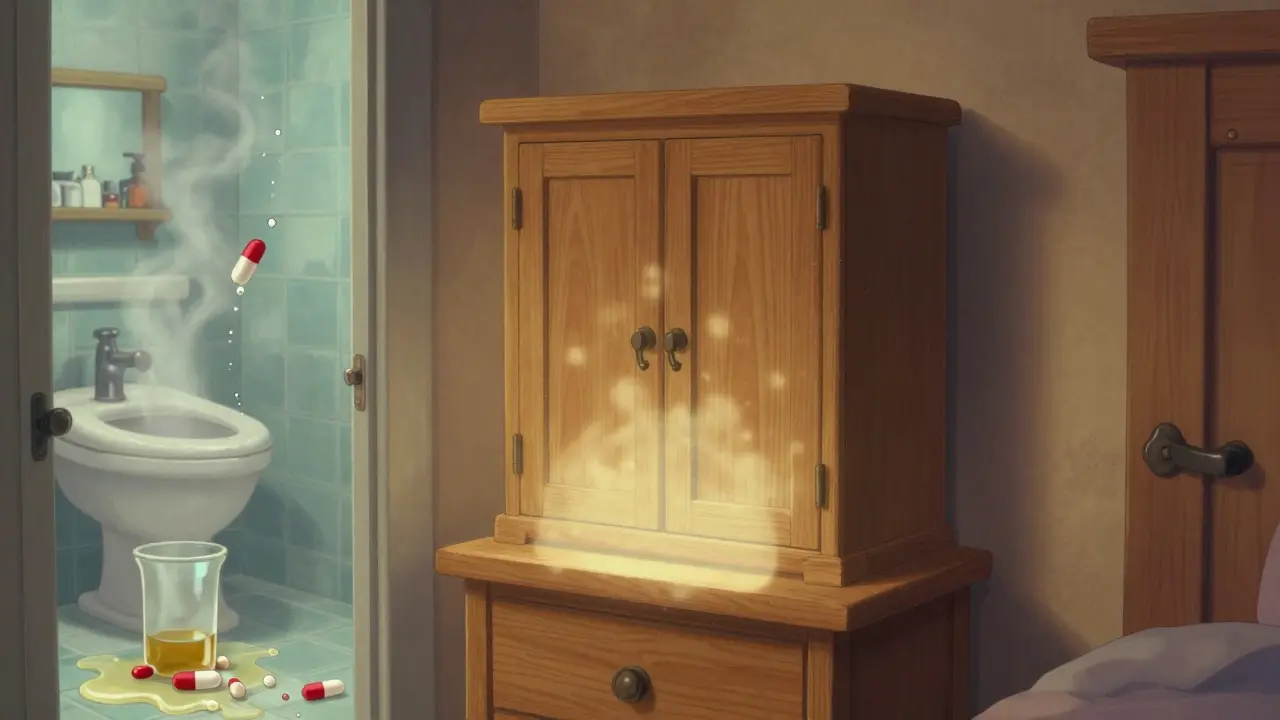
Imagine reaching for your daily prescription, only to wonder if the pill in your hand is real or a dangerous fake. Or worse, imagine your toddler finding that same bottle on the counter. These aren't just hypothetical nightmares; they are daily risks for millions of households. In fact, 99.8% of American households keep prescription or over-the-counter medications at home, creating a perfect storm for accidental poisonings and exposure to counterfeit drugs. With children under five accounting for 60% of accidental medication poisonings in emergency rooms, how you store your meds isn't just about organization-it’s about survival.
The Hidden Danger of Bathroom Cabinets
We’ve all been taught to keep our medicines in the bathroom cabinet because it’s convenient. But here’s the truth: bathrooms are terrible places for drugs. When you take a hot shower, humidity spikes can exceed 80%. This moisture is the enemy of stability. According to data from Pfizer's Medicine Safety Tips At Home, aspirin exposed to this level of humidity degrades into vinegar and salicylic acid within just 14 days. That means the pain relief you’re counting on might be turning into a stomach irritant without you even knowing it.
It’s not just aspirin. Medications like ampicillin lose 30% of their potency within seven days at 75% humidity. If you’re storing antibiotics, blood pressure meds, or heart medications in the bathroom, you might be taking a weaker dose than prescribed. The ideal environment for most medications is cool and dry, specifically between 68-77°F (20-25°C) with humidity below 60%. A bedroom dresser drawer or a dedicated closet shelf is far superior to that steamy bathroom cupboard.
Locked Storage: The Gold Standard for Safety
Keeping meds away from kids requires more than just putting them on a high shelf. Children are surprisingly resourceful. The National Association for Children of Alcoholics (NACoA) reports that 70% of adolescent prescription medication misuse starts right in the home medicine cabinet. To combat this, health authorities including the FDA and CDC recommend locked storage as the primary prevention method.
Child-resistant caps help, but they aren’t foolproof. Studies show that while child-resistant packaging reduces poisoning risk by 45%, combining it with a locked cabinet boosts that protection to 92%. You don’t need an expensive vault. Simple solutions work wonders:
- Dedicated Medication Safes: Small lockboxes designed specifically for pills. They meet ASTM F2090-19 standards for child resistance.
- Gun Safes or Fireproof Boxes: If you already have one, use it. Just ensure it’s out of sight and reach.
- Wall-Mounted Lockboxes: Install these at least 5 feet (1.5 meters) off the ground, well above a child’s line of sight.
For families with elderly members who have arthritis or limited dexterity, combination locks with large dials offer a great balance. They maintain security while being easier to open than tiny keyholes. The goal is to create a barrier that takes more than 10 minutes for a curious child to bypass, according to safety standards.
Spotting Counterfeit Drugs: What to Look For
While storage protects against accidents, authenticity protects against intentional harm. Counterfeit drugs are a growing global threat, often sold through online pharmacies or unofficial channels. These fakes may contain incorrect doses, wrong ingredients, or toxic substances like rat poison or industrial chemicals.
How can you tell if your medication is genuine? Start with the source. Always buy from licensed pharmacies. If you order online, look for verification seals like VIPPS (Verified Internet Pharmacy Practice Sites). Once the medication is in your hands, inspect it closely:
- Packaging Quality: Check for spelling errors, blurry printing, or damaged seals. Legitimate pharmaceutical companies invest heavily in secure packaging.
- Pill Appearance: Compare the color, shape, and imprint of your current pills to previous bottles. Any variation should raise a red flag.
- Taste and Texture: If a tablet crumbles easily or tastes unusually bitter or sweet, stop taking it and consult your pharmacist.
In 2024, the FDA expanded its Digital Health Innovation Report to include blockchain-based verification systems. While this technology is still rolling out, some major pharmacy chains now allow you to scan a QR code on the box to verify the drug’s journey from manufacturer to shelf. Until this becomes universal, your best defense is vigilance and buying from trusted sources.
Temperature-Sensitive Medications Need Special Care
Not all medications can live in a drawer. Insulin, certain antibiotics, and biologics require refrigeration between 36-46°F (2-8°C). However, simply tossing them in the fridge alongside leftovers is risky. First, never store them in the door, where temperature fluctuates every time you open it. Instead, place them in the main body of the refrigerator, ideally in a lockable container to prevent kids from grabbing them.
Dr. Janet Woodcock from the FDA notes that improper storage causes 23% of medication efficacy failures. Insulin, for example, degrades 15% per hour if left at room temperature for too long. If you travel, use insulated coolers with ice packs, but ensure the medication doesn’t freeze. Frozen insulin loses its effectiveness permanently. Always check the label or ask your pharmacist for specific storage instructions before buying temperature-sensitive drugs.
Disposal: Don’t Flush It
When medications expire or are no longer needed, the temptation to flush them down the toilet is strong. But this practice contaminates water supplies and harms aquatic life. The EPA strongly advises against flushing unless the drug label explicitly says so (which is rare).
Instead, use take-back programs. As of 2024, there are over 14,000 permanent collection sites nationwide, including many police stations and pharmacies. The DEA’s National Prescription Drug Take Back Day events provide safe disposal options twice a year. If no take-back site is available, mix the pills with an unappealing substance like used coffee grounds or cat litter, seal them in a plastic bag, and throw them in the trash. This makes them less likely to be retrieved and misused.
Creating a Household Medication Routine
Safety isn’t a one-time fix; it’s a habit. Implementing a routine helps ensure consistency. Here’s a simple four-step protocol recommended by the Up & Away campaign:
- Audit Your Home: Spend 15 minutes searching for all medications. Check nightstands, purses, cars, and junk drawers. Consolidate everything into one or two secure locations.
- Select Secure Storage: Choose locks or safes based on your household needs. If you have young kids, prioritize height and tamper-resistance.
- Establish Administration Habits: Never leave meds on countertops after giving them. Put them back immediately. This simple step prevents 68% of accidental pediatric ingestions.
- Quarterly Checks: Every three months, review your supply. Dispose of expired items and note what needs refilling.
It takes about 21 to 28 days to form these habits, according to Seattle Children’s Hospital. Yes, it feels inconvenient at first. But knowing your family is protected from both accidental overdose and counterfeit threats is worth the extra seconds it takes to unlock a cabinet.
Where is the safest place to store medication at home?
The safest place is a locked cabinet or safe stored in a cool, dry area like a bedroom or closet. Avoid bathrooms due to humidity and kitchens due to heat fluctuations. Ensure the storage location is at least 5 feet high and out of sight from children.
How can I tell if my medication is counterfeit?
Check for packaging errors, such as misspellings or poor print quality. Compare the pill’s color, shape, and imprint to previous bottles. If the texture or taste seems off, stop using it and consult your pharmacist. Always purchase from licensed pharmacies.
Should I store insulin in the refrigerator door?
No. The refrigerator door experiences frequent temperature changes when opened. Store insulin in the main body of the fridge, preferably in a lockable container, to maintain a consistent temperature between 36-46°F (2-8°C).
Is it safe to flush unused medications?
Generally, no. Flushing medications contaminates water supplies. Use local take-back programs or dispose of them in the trash mixed with unappealing substances like coffee grounds, sealed in a bag, unless the label explicitly instructs otherwise.
Do child-resistant caps eliminate the need for locked storage?
No. Child-resistant caps reduce risk by 45%, but combining them with locked storage increases protection to 92%. Caps can be opened by determined older children or teens, making locks essential for comprehensive safety.