
When you're pregnant, even a simple headache or runny nose can feel overwhelming. You don’t want to risk your baby’s health, but you also don’t want to suffer. The good news? Many common medications are safe during pregnancy - if you know which ones and how to use them correctly. The bad news? A lot of conflicting advice exists online, and even some doctors give outdated recommendations. This list is based on the latest guidelines from the American College of Obstetricians and Gynecologists (ACOG), the CDC, and major hospital systems like University of Michigan Medicine and Cleveland Clinic - updated through 2024.
What’s Really Safe? The Evidence-Based List
Not all over-the-counter (OTC) meds are created equal. Some brands hide dangerous ingredients under fancy packaging. The key is knowing the active ingredient, not the brand name. For example, Claritin is safe, but Claritin-D is not - because it contains pseudoephedrine. Same goes for Tylenol versus Tylenol PM.
Acetaminophen (Tylenol) is the only pain reliever and fever reducer consistently recommended throughout pregnancy. It’s used by millions of pregnant people every year. But here’s the catch: you must stick to the limit. Do not exceed 3,000 mg per day. That’s six 500 mg tablets. Tylenol PM contains diphenhydramine (an antihistamine), so don’t take more than six caplets in 24 hours. Long-term, high-dose use has been linked in some studies to possible neurodevelopmental effects - but only when taken daily for weeks or months. Occasional use for a headache or fever is fine.
Allergy meds are one of the most commonly used categories during pregnancy. Cetirizine (Zyrtec), loratadine (Claritin), and fexofenadine (Allegra) are all considered safe at standard doses. Zyrtec and Claritin are non-drowsy and effective for runny nose, sneezing, and itchy eyes. Fexofenadine is also safe but less commonly used because it’s pricier. Avoid diphenhydramine (Benadryl) for regular use - while it’s technically safe, newer data suggests it may affect fetal brain development if used long-term. Use it only for occasional sleep aid or allergic reactions.
Cold, Cough, and Congestion: What You Can and Can’t Take
Most cold remedies are a minefield. Multi-symptom formulas often combine acetaminophen, antihistamines, decongestants, and cough suppressants - which means you’re accidentally overdosing on something safe. Stick to single-ingredient products.
Guaifenesin (Mucinex) is safe for chest congestion. Just make sure it’s the plain version - no “Plus,” “Max,” or “Severe.” Avoid products with phenylephrine or pseudoephedrine unless your provider says otherwise. Dextromethorphan (Robitussin DM) is okay for cough, but don’t go over 120 mg in 24 hours. That’s about four teaspoons of liquid or six capsules.
Steroid nasal sprays like fluticasone (Flonase) and budesonide (Rhinocort) are safe for nasal congestion. They don’t enter your bloodstream in significant amounts. Saline nasal sprays are completely risk-free and often just as effective. Avoid decongestant sprays like Afrin - they’re fine for up to three days, but longer use causes rebound congestion that’s worse than the original stuff.
Pseudoephedrine (Sudafed) is tricky. Some providers say it’s okay after the first trimester. Others say no. The truth? It can raise blood pressure and reduce blood flow to the placenta. If you have high blood pressure, diabetes, or thyroid issues - skip it. Even if you’re healthy, many pharmacies now require ID and limit sales because of legal restrictions. If you’re desperate, ask your provider about phenylephrine as a possible alternative - though evidence for its effectiveness is weak.
Heartburn, Nausea, and Constipation: The Daily Struggles
Heartburn? You’re not alone. Nearly 80% of pregnant people deal with it, especially in the third trimester. Calcium carbonate (Tums) is the top pick - it’s safe, fast-acting, and gives you extra calcium. But don’t go over 1,500 mg of elemental calcium per day. That’s about six regular Tums tablets. Too much can cause constipation or kidney stones.
Famotidine (Pepcid) is another solid option. It reduces acid production, not just coats it. Take 20 mg twice daily, max. It’s been used safely for decades. Ranitidine (Zantac) was pulled from the market in 2020 due to contamination - so don’t use it, even if you have old bottles lying around.
Constipation is another common issue. Polyethylene glycol (Miralax) is the gold standard. It’s not absorbed into your system - it just pulls water into your bowels. Take 17 grams (one capful) daily. It’s safe for long-term use. Avoid stimulant laxatives like senna or bisacodyl unless prescribed. They can cause cramping and aren’t necessary.
Nausea and vomiting - the classic morning sickness - can be managed without drugs. Ginger tea, acupressure bands, and small frequent meals help. But if you’re vomiting more than a few times a day, you need medication. The most effective combo? Vitamin B6 (25 mg) + doxylamine succinate (Unisom SleepTabs). Take B6 three times a day and Unisom at night. You can take Unisom up to three times daily if needed. This is the exact formula in Diclegis, the only FDA-approved prescription drug for nausea in pregnancy. It works for 70-80% of people. Don’t be embarrassed to ask for it - it’s a game-changer.
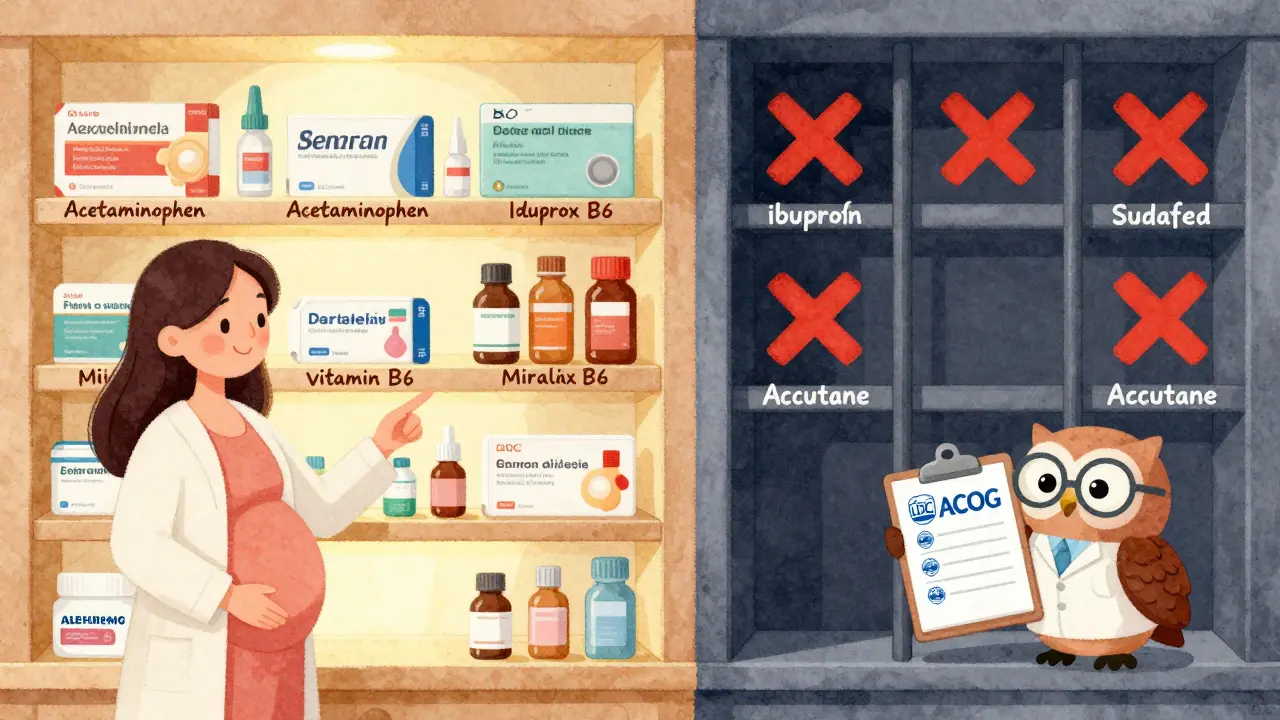
What to Avoid at All Costs
Some medications are outright dangerous during pregnancy. Never take:
- NSAIDs like ibuprofen (Advil), naproxen (Aleve), or aspirin after 20 weeks. These can cause kidney problems in the fetus, low amniotic fluid, and premature closure of a fetal blood vessel. Even occasional use after 20 weeks carries risk.
- Isotretinoin (Accutane) - used for acne. Causes severe birth defects. Even one pill can be harmful.
- ACE inhibitors like lisinopril or enalapril - used for high blood pressure. Can cause kidney damage and fetal death.
- Warfarin - a blood thinner. Increases risk of miscarriage and fetal bleeding.
- Herbal supplements like black cohosh, goldenseal, or dong quai. No safety data. Many are toxic to the fetus.
- Codeine and oxycodone - unless absolutely necessary and closely monitored. Risk of neonatal withdrawal and breathing problems.
Also avoid “natural” remedies that sound harmless. Echinacea, chamomile tea in large amounts, and essential oils like peppermint or rosemary can trigger contractions or affect fetal development. Just because something is “natural” doesn’t mean it’s safe.
Antidepressants and Chronic Conditions
If you’re on medication for depression, anxiety, epilepsy, asthma, or high blood pressure - don’t stop cold turkey. Stopping can be more dangerous than continuing. For example, untreated depression increases the risk of preterm birth, low birth weight, and postpartum depression.
Sertraline (Zoloft) and fluoxetine (Prozac) are the most studied and safest SSRIs during pregnancy. ACOG recommends continuing them if they’re working. New data from October 2023 shows a small increased risk of neonatal adaptation syndrome (jitteriness, feeding issues) in babies exposed to sertraline late in pregnancy - but the benefits usually outweigh the risks.
For asthma, inhaled corticosteroids like budesonide are safe and preferred. For high blood pressure, labetalol and nifedipine are first-line. For seizures, lamotrigine has the best safety profile. Always work with your OB and your specialist - don’t adjust doses on your own.
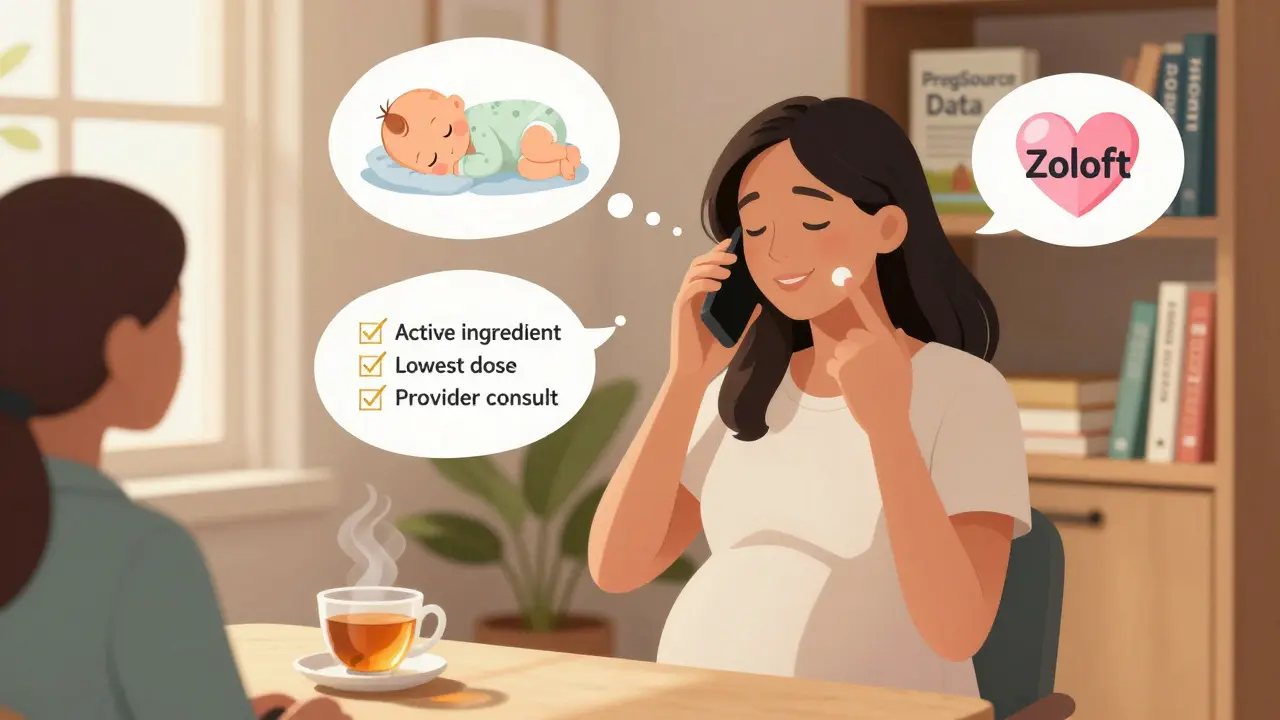
What to Do Before You Take Anything
Even if a drug is on this list, there are exceptions. Your age, weight, other medications, allergies, and health conditions matter. Here’s what to do:
- Check the active ingredient - not the brand name.
- Read the label for warnings - especially if you’re in your first trimester.
- Use the lowest effective dose for the shortest time.
- When in doubt, call your provider or a pregnancy info line like MotherToBaby (1-800-733-4727). They answer questions for free, 24/7.
- Keep a list of everything you take - including vitamins, herbs, and supplements - and bring it to every appointment.
Many women stop taking necessary meds out of fear. One study found that 41% of pregnant people discontinued antidepressants or blood pressure drugs because they were scared - even when their doctor said it was safe. That’s dangerous. Your health matters too. A healthy mom means a healthy baby.
Where the Guidelines Fall Short
Here’s the hard truth: we don’t know everything. The FDA reports that 61% of new drugs approved since 2015 have no reliable pregnancy safety data. Why? Because pregnant women are rarely included in clinical trials. Less than 12% of drug studies include pregnant participants.
That’s why guidelines change. What was considered safe last year might be questioned this year. The NIH’s PregSource project, which collects real-world data from 18,700 pregnant people, is helping fill those gaps. But until we include pregnant people in research, we’ll keep guessing.
So while this list is as current as it gets - based on 2023-2024 guidelines - always confirm with your provider. What’s safe for one person might not be safe for another.
Final Thoughts
Pregnancy isn’t the time to play it too safe by avoiding all meds - or to play it too loose by taking whatever’s handy. It’s about making smart, informed choices. You don’t have to suffer through headaches, allergies, or nausea. There are safe, effective options. But you need to know which ones, how to use them, and when to ask for help.
If you’re unsure about any medication - even something as simple as a cold tablet - reach out. Your provider, pharmacist, or a pregnancy exposure specialist can help. You’re not alone. And you’re not being paranoid - you’re being responsible.
Is Tylenol safe during pregnancy?
Yes, acetaminophen (Tylenol) is the safest pain reliever and fever reducer during pregnancy. Use no more than 3,000 mg per day - that’s six 500 mg tablets. Avoid Tylenol PM unless you need the sleep aid, and never exceed six caplets in 24 hours. Long-term daily use may carry risks, but occasional use is fine.
Can I take Zyrtec or Claritin while pregnant?
Yes, both cetirizine (Zyrtec) and loratadine (Claritin) are considered safe at standard doses (10 mg daily). They’re non-drowsy and effective for allergies. Avoid Claritin-D or Zyrtec-D - they contain pseudoephedrine, which isn’t recommended in early pregnancy. Stick to the plain versions.
Is Sudafed safe during pregnancy?
Pseudoephedrine (Sudafed) is controversial. Some providers say it’s okay after the first trimester if you have no high blood pressure. Others advise against it entirely. It can reduce blood flow to the placenta and raise your blood pressure. Many pharmacies restrict sales due to legal limits. Saline sprays or nasal steroids are safer alternatives for congestion.
What’s the best remedy for morning sickness?
The most effective combination is vitamin B6 (25 mg) taken three times daily plus doxylamine succinate (Unisom SleepTabs) at night. You can take Unisom up to three times daily if needed. This is the exact formula in Diclegis, the only FDA-approved medication for nausea in pregnancy. Many women report a dramatic reduction in vomiting - from 10+ times a day to just 1-2.
Can I take ibuprofen if I’m pregnant?
No - avoid ibuprofen (Advil), naproxen (Aleve), and other NSAIDs after 20 weeks. They can cause serious problems in the baby, including kidney damage and low amniotic fluid. Even occasional use after 20 weeks carries risk. Use acetaminophen instead. If you took ibuprofen before you knew you were pregnant, don’t panic - one or two doses are unlikely to cause harm.
Are herbal supplements safe during pregnancy?
No - most herbal supplements lack safety data in pregnancy. Things like ginger tea in small amounts are generally fine, but others like black cohosh, goldenseal, dong quai, or high-dose chamomile can trigger contractions or affect fetal development. Never assume something is safe because it’s “natural.” Always check with your provider before using any herb or supplement.
Should I stop my antidepressants if I get pregnant?
Don’t stop without talking to your doctor. Untreated depression increases risks like preterm birth and low birth weight. Sertraline (Zoloft) and fluoxetine (Prozac) are the most studied and safest SSRIs during pregnancy. The benefits of continuing your medication usually outweigh the small risks. Work with your OB and psychiatrist to make a plan.
What should I do if I took a risky medication before knowing I was pregnant?
Most medications taken in the first two weeks after conception either cause no effect or result in a miscarriage - if the embryo is affected, it usually doesn’t survive. If you took something risky after that, don’t panic. Call MotherToBaby (1-800-733-4727) or your provider. They’ll help you assess the risk based on timing, dosage, and medication type. Most exposures don’t lead to birth defects.
Cecelia Alta
January 13, 2026 AT 11:18Okay but let’s be real - who even reads the label anymore? I took Advil for three days before I realized I was pregnant and now I’m convinced my kid’s gonna be a robot. Also why is everything ‘safe’ until it’s not? Like, yesterday it was fine, today it’s ‘possible neurodevelopmental effects’? I just want to sleep through this pregnancy without feeling like I’m doing a science experiment on myself.
Rebekah Cobbson
January 14, 2026 AT 19:41You’re not alone in feeling overwhelmed. I was terrified to take anything until my OB said acetaminophen is basically the gold standard - and honestly, it’s been a game changer. I used to feel guilty for taking a Tylenol, but now I know it’s okay to care for myself too. Healthy mom = healthy baby, and that includes mental peace. You deserve to feel better without shame.
Sonal Guha
January 16, 2026 AT 17:42TiM Vince
January 17, 2026 AT 14:46As someone from a culture where herbal remedies are the norm, I was shocked to see how many ‘natural’ things are actually risky. My mom swore by ginger tea for nausea - turns out it’s fine in small doses, but not if you’re chugging it like it’s water. I’m glad this list separates myth from medicine. Thanks for the clarity.
gary ysturiz
January 19, 2026 AT 10:40This is the kind of post that saves lives. Seriously. I used to think all OTC meds were evil during pregnancy. Now I know I can take Tylenol, Zyrtec, and Miralax without fear. And the part about not stopping antidepressants? That hit home. I was ready to quit my meds until I read this. Thank you for being clear, calm, and kind.
Jessica Bnouzalim
January 20, 2026 AT 11:44OMG YES to the Diclegis thing!! I was vomiting every 20 minutes - I thought I was dying - then my doctor gave me the B6 + Unisom combo and I cried because I could finally eat something without throwing it up again. It’s not magic, it’s science, and it works. If you’re suffering, ASK FOR IT. No one will judge you. You’re not weak - you’re human.
laura manning
January 20, 2026 AT 17:40While the information presented is largely aligned with current clinical guidelines, it is critically important to note that the phrase 'occasional use is fine' lacks quantitative precision. The term 'occasional' is semantically ambiguous and may be interpreted by laypersons as biweekly or monthly usage, which, in the context of teratogenic risk, may not be statistically negligible. Furthermore, the omission of pharmacokinetic data regarding placental transfer thresholds undermines the evidence-based rigor of this document.
Bryan Wolfe
January 22, 2026 AT 08:23Can we just take a second to celebrate how far we’ve come? Ten years ago, doctors told us to ‘just deal with it’ during pregnancy. Now we have real data, real options, and real support. Whether you’re taking Zoloft, Miralax, or just a simple Tylenol - you’re doing the right thing by educating yourself. Keep going. You’re not just surviving pregnancy - you’re mastering it.
Sumit Sharma
January 24, 2026 AT 06:08This list is misleading. ACOG guidelines are influenced by U.S. pharmaceutical lobbying. In India, we use aspirin for mild fever in pregnancy without issue. The FDA’s caution is not based on biology - it is based on litigation risk. You are being manipulated into fear. Trust your body, not corporate guidelines.
Jay Powers
January 25, 2026 AT 00:29I wish someone had given me this list when I was pregnant. I avoided everything - even ginger tea - because I was scared. Turns out, I made myself sicker by not taking what was safe. Don’t let fear silence your needs. You’re not being reckless if you use the right meds. You’re being responsible.
Christina Widodo
January 25, 2026 AT 17:06Wait - so Dextromethorphan is okay up to 120mg? But isn’t that like 8 teaspoons of liquid? I thought that was way too much. Can someone confirm if that’s really the max? I’m asking because I’m in my third trimester and my cough is killing me. I don’t want to overdo it but I also don’t want to lose sleep for another week.
Katherine Carlock
January 26, 2026 AT 05:15My OB gave me a printout of this exact list. I printed it and taped it to my fridge. I show it to every nurse, pharmacist, and random person who says ‘oh just take a little Advil’ - and now I can say ‘nope, here’s the science.’ This isn’t just info - it’s armor. Thank you for writing this.
Konika Choudhury
January 26, 2026 AT 09:58Darryl Perry
January 26, 2026 AT 11:22