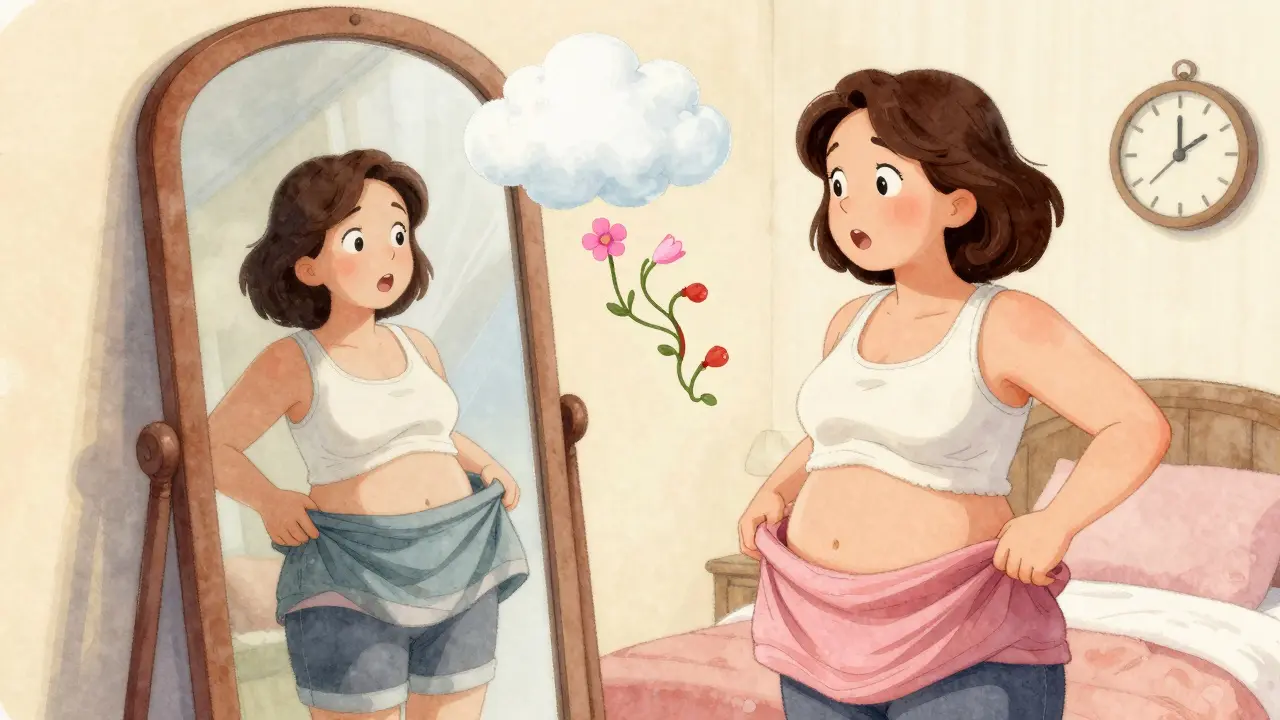
Women in their 40s and 50s often wake up one day and realize their clothes don’t fit like they used to-even though they haven’t changed what they eat or how much they move. It’s not laziness. It’s not lack of willpower. It’s biology. Menopause weight gain isn’t just about eating too much; it’s about your hormones shifting, your muscles shrinking, and your metabolism slowing down-all at once. And if you’re trying to use the same weight loss tactics that worked in your 20s or 30s, you’re fighting an uphill battle with the wrong tools.
Why Your Body Changes During Menopause
Before menopause, your body stores fat mostly in your hips, thighs, and butt. That’s estrogen at work. It tells your fat cells to hang out in those areas. But when estrogen levels drop-by 60 to 70% during the menopausal transition-your body doesn’t know what to do with fat anymore. So it starts storing it around your belly. This isn’t just cosmetic. Visceral fat-the kind that wraps around your organs-is dangerous. It’s active. It releases inflammatory chemicals that raise your risk for heart disease, type 2 diabetes, and high blood pressure. Postmenopausal women are nearly five times more likely to develop abdominal obesity than women who haven’t gone through menopause. And here’s the kicker: you can gain weight even if you eat the same amount you always have. Your resting metabolic rate drops by 2 to 3% every decade after 30. Menopause speeds that up. Why? Because you’re losing muscle. Women lose 3 to 8% of lean muscle mass per decade after 30. During menopause, that rate jumps by another 1 to 2% per year. Less muscle means fewer calories burned at rest. You’re not eating more-you’re just burning less.The Hormone Rollercoaster
Estrogen isn’t the only player. When it drops, testosterone becomes relatively higher. That doesn’t mean you grow a beard-it means your body starts behaving more like a male metabolism. Fat moves to your waist. Your appetite changes, too. Leptin, the hormone that tells you you’re full, drops by 20 to 30%. At the same time, ghrelin, the hunger hormone, spikes-especially if you’re not sleeping well. Hot flashes and night sweats disrupt sleep in 75% of perimenopausal women. Poor sleep = more ghrelin = more cravings for carbs and sugar. It’s a cycle: bad sleep → more hunger → more calories → more belly fat → worse sleep. And here’s what most people miss: your insulin sensitivity drops. Your body becomes less efficient at using sugar for energy. That means sugar turns into fat more easily. Even if you’re not eating junk food, your body is storing more of what you eat as fat.Why Diets Don’t Work Like They Used To
You used to lose weight by cutting calories and doing cardio. Now, that’s not enough. In fact, it can make things worse. When you cut calories too much, your body holds onto fat and breaks down muscle for energy. That’s the last thing you want. A 2023 survey from Mayo Clinic Connect found that 78% of women reported gaining weight despite keeping their diet and exercise routine the same. Reddit’s r/menopause community is full of posts like this one: “I’ve eaten the same way for 20 years. I run 3 miles, 4 times a week. Then menopause hit. I gained 25 pounds in three years. My jeans won’t zip.” The problem isn’t your effort. It’s your strategy. Your body isn’t responding to the same stimuli anymore. You need a new plan-one that targets muscle, not just fat.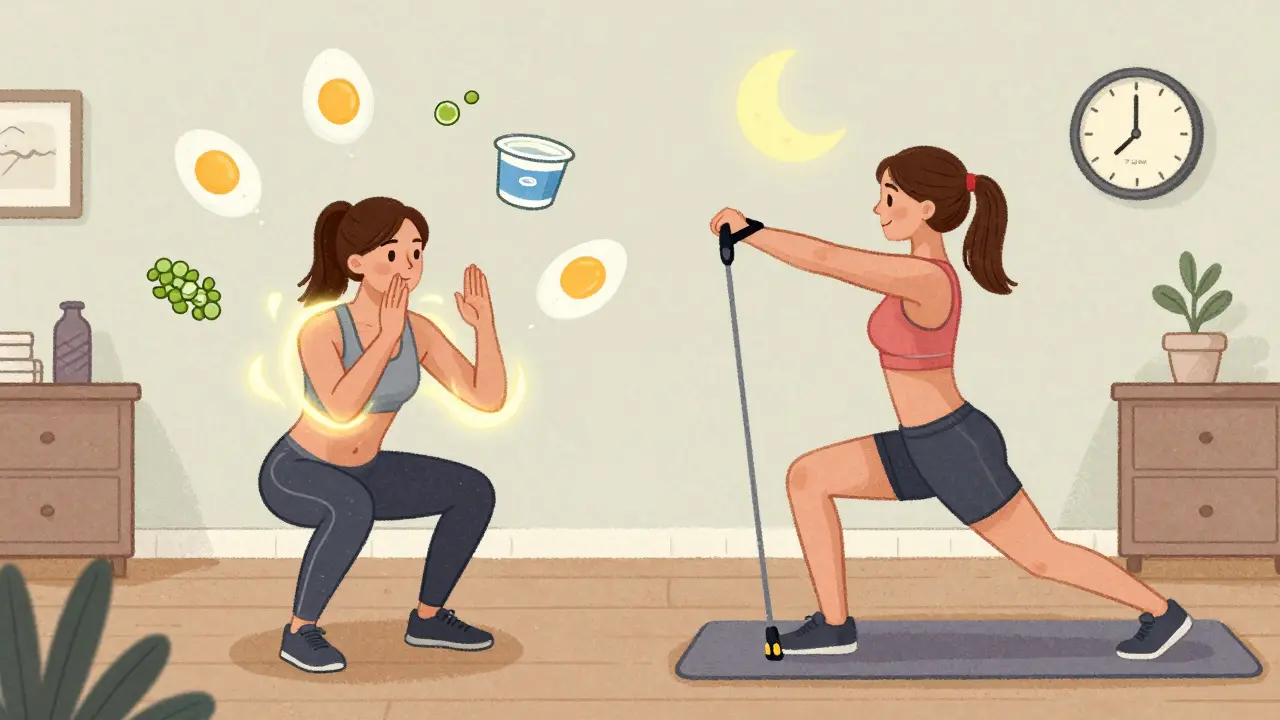
The Only Strategy That Actually Works
The most effective way to fight menopause weight gain is simple: build muscle and eat enough protein. Not more cardio. Not another detox. Not another low-fat diet. Strength training is non-negotiable. Research shows that doing resistance training 2 to 3 times a week, combined with 1 to 2 sessions of high-intensity interval training (HIIT), can increase muscle mass by 1.8 to 2.3 kg and reduce abdominal fat by 8 to 12% in just six months. That’s not a guess. That’s from a randomized controlled trial published in Menopause: The Journal of The North American Menopause Society. You don’t need to lift heavy weights or join a gym. Bodyweight squats, lunges, push-ups, and resistance bands work. Do 3 sets of 10 to 12 reps, 3 times a week. Focus on compound movements that work multiple muscle groups. Your legs, back, chest, and core matter more than your biceps.Protein: The Missing Ingredient
After menopause, your body becomes resistant to building muscle from protein. This is called anabolic resistance. To fight it, you need more protein-and you need to spread it out. The British Menopause Society recommends 1.2 to 1.6 grams of protein per kilogram of body weight daily. That’s about 25 to 30 grams of protein per meal. If you weigh 70 kg (154 lbs), aim for 85 to 110 grams of protein a day. Breakfast is usually the weakest meal. Instead of toast and jam, try eggs, Greek yogurt, cottage cheese, or a protein shake. Lunch and dinner should include lean meat, fish, tofu, lentils, or beans. Snacks? Nuts, hard-boiled eggs, or a small portion of cheese. Don’t wait until dinner to get your protein. Your body can only use about 30 grams at a time. Spreading it out keeps your muscles fueled all day.Sleep Is Not Optional
You can’t out-exercise poor sleep. If you’re not sleeping 7 to 8 hours a night, your body is stuck in stress mode. Cortisol stays high. Ghrelin stays high. Leptin stays low. Fat storage stays high. Try these simple fixes: keep your bedroom cool (hot flashes are worse in warm rooms), avoid caffeine after 2 p.m., and get 15 minutes of morning sunlight to reset your circadian rhythm. If hot flashes are keeping you up, talk to your doctor about non-hormonal options like low-dose SSRIs or gabapentin-both have been shown to reduce night sweats in clinical trials.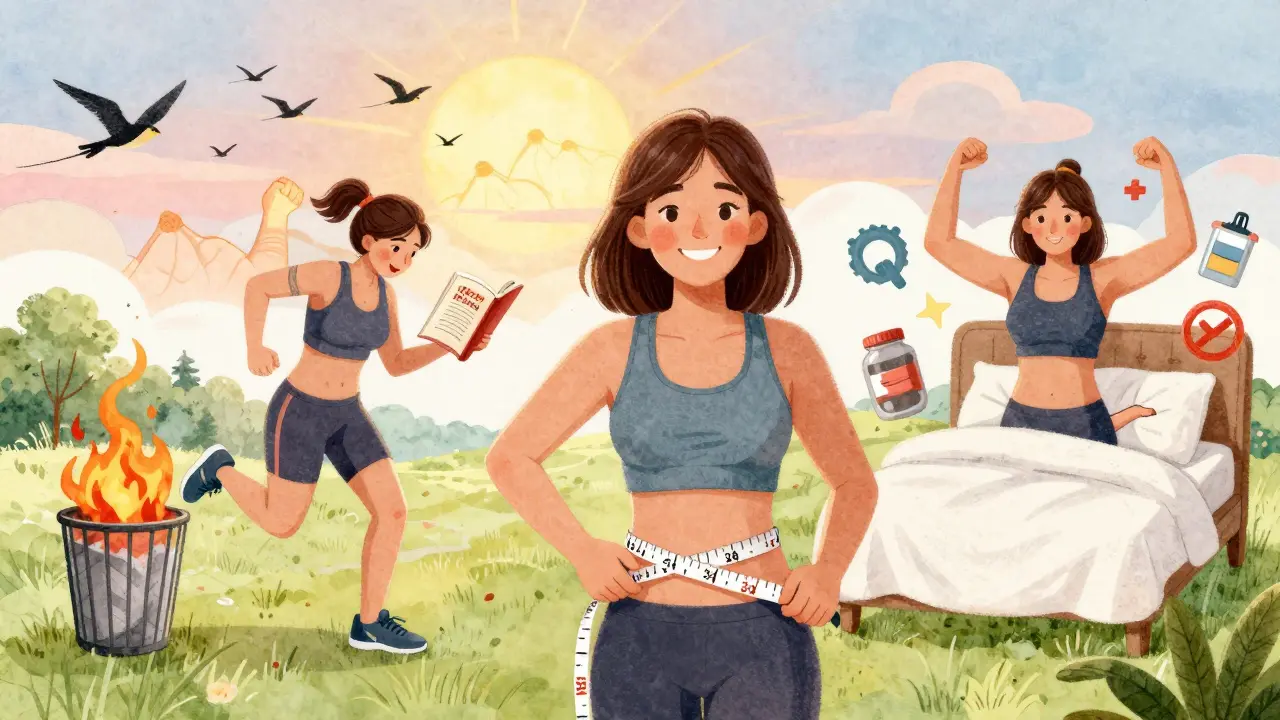
What Doesn’t Work (And Why)
- Low-fat diets: They often replace fat with sugar. Sugar turns to belly fat faster in a low-estrogen environment. - Extreme calorie cutting: This accelerates muscle loss. You lose strength, energy, and metabolism. - Only cardio: Running won’t rebuild muscle. You’ll burn calories during the run-but your resting metabolism stays low. - Supplements marketed for “menopause weight loss”: Most have no clinical backing. Some interfere with hormones. Stick to food and movement.When to See a Doctor
Menopause weight gain isn’t something you have to suffer through alone. The North American Menopause Society now recommends that all women in perimenopause get their waist circumference measured. If it’s over 88 cm (35 inches), you’re at higher risk for metabolic disease. Ask your doctor for a metabolic panel: fasting glucose, insulin, triglycerides, HDL, and blood pressure. These numbers tell you more than the scale. If your numbers are off, you might benefit from a personalized plan. Mayo Clinic started offering a menopause-specific metabolic test in January 2023 that checks 17 hormonal and metabolic markers to tailor advice. Hormone therapy isn’t for everyone, but for some women, early estrogen therapy can help prevent the shift toward abdominal fat. The NIH is currently running a major study called EMPOWER to see if starting hormone therapy early can stop the metabolic changes before they take hold.What’s Coming Next
Science is catching up. In September 2023, the FDA approved bimagrumab for Phase 3 trials-a drug that increases muscle mass by 5 to 7% and reduces fat by 8 to 10% in 24 weeks. It’s not a magic pill, but it’s proof that researchers are finally treating menopause weight gain as a medical issue, not just a lifestyle problem. The goal isn’t to look like you did at 25. It’s to stay strong, healthy, and free from chronic disease. That means muscle. That means sleep. That means protein. That means consistency-not perfection. You’re not broken. Your body is adapting. And with the right strategy, you can not only manage this change-you can thrive through it.Why am I gaining weight around my belly even though I eat the same as before?
Your estrogen levels have dropped significantly during menopause, which shifts fat storage from your hips and thighs to your abdomen. At the same time, your muscle mass is decreasing, which slows your metabolism. Even if your calorie intake hasn’t changed, your body is now storing more fat and burning fewer calories at rest. This is a biological shift, not a failure of discipline.
Can I lose menopause weight with just diet and cardio?
Diet and cardio alone won’t reverse menopause-related weight gain. Cardio burns calories during the activity, but it doesn’t rebuild muscle. Without muscle, your resting metabolism stays low. You need strength training to rebuild muscle mass and raise your baseline calorie burn. Pair that with enough protein, and you’ll start seeing real changes.
How much protein do I need daily after menopause?
Aim for 1.2 to 1.6 grams of protein per kilogram of body weight each day. For example, if you weigh 70 kg (154 lbs), that’s 85 to 110 grams of protein daily. Spread it across meals-25 to 30 grams per meal-to fight anabolic resistance. Good sources include eggs, Greek yogurt, chicken, fish, tofu, lentils, and cottage cheese.
Is strength training safe for women over 50?
Yes, and it’s one of the most important things you can do. Strength training improves bone density, balance, metabolism, and insulin sensitivity. Start with bodyweight exercises like squats, wall push-ups, and seated rows. Use resistance bands or light dumbbells. If you’re unsure, work with a trainer who understands menopause. The goal isn’t to lift heavy-it’s to build and maintain muscle.
Will hormone therapy help me lose weight?
Hormone therapy isn’t a weight-loss treatment, but for some women, it can help prevent the shift to abdominal fat by replacing lost estrogen. Studies suggest early hormone therapy may reduce visceral fat accumulation. However, it’s not right for everyone-especially those with a history of breast cancer, blood clots, or heart disease. Talk to your doctor about your risks and benefits.
How long does it take to see results from a new menopause weight strategy?
Most women see noticeable changes in body composition-like looser clothes or better strength-within 3 to 6 months. Fat loss is slower than before menopause, so don’t expect the scale to drop quickly. Focus on measurements, how your clothes fit, and how you feel. Muscle gain and fat loss happen gradually, but they’re lasting.
Why do I feel hungrier and more tired during menopause?
Lower estrogen reduces leptin (your fullness hormone) and increases ghrelin (your hunger hormone). Poor sleep from hot flashes makes this worse. Fatigue comes from disrupted sleep, muscle loss, and lower energy production in your cells. Fixing sleep and eating enough protein can help restore your energy and curb cravings.
Are there any medications for menopause weight gain?
No FDA-approved drugs are currently marketed specifically for menopause weight gain. However, bimagrumab-a muscle-building drug-is in Phase 3 trials and has shown promise in reducing fat and increasing muscle. Other medications like GLP-1 agonists (e.g., semaglutide) are being studied for this use, but they’re not standard yet. Lifestyle changes remain the first-line, safest, and most effective approach.
Brittany Wallace
January 3, 2026 AT 19:20Wow. This is the first time I’ve read something that actually explained why my jeans are betraying me 😅
It’s not me being lazy-it’s my hormones throwing a rave in my belly while my muscles take a nap. Thank you for saying this out loud.
Michael Burgess
January 4, 2026 AT 00:55As a guy who’s watched his mom go through this, I finally get it.
She was doing yoga daily and eating ‘clean’-but still gaining weight. Now I know it’s not about willpower. It’s about muscle loss and insulin resistance. I told her to start lifting. She’s now doing bodyweight squats with her grandkids. Win-win.
Palesa Makuru
January 5, 2026 AT 00:27Ugh. I’ve been saying this for years and everyone just says ‘eat less’ like I’m a toddler who stole cookies.
Did you even read the part about anabolic resistance? Or are you still stuck in the 2008 CrossFit meme era? My protein intake is 1.5g/kg and I still get told I’m ‘being dramatic.’
Joy F
January 6, 2026 AT 00:08They don’t want you to know this, but this is all a pharmaceutical scam.
Big Pharma wants you to think you need protein shakes and resistance bands so you’ll keep buying supplements and gym memberships. The real solution? Stop eating wheat. And don’t trust any doctor who says ‘hormone therapy might help.’ They’re all on the payroll.
Shruti Badhwar
January 6, 2026 AT 10:19As someone from India where menopause is rarely discussed, this article is revolutionary.
My mother gained 20kg after 50 and was told it was ‘just aging.’ We never connected it to hormones or muscle loss. This needs to be translated into Hindi, Tamil, Bengali-every language. Knowledge is power, and right now, women are left in the dark.
Kerry Howarth
January 6, 2026 AT 16:30Protein at every meal. 30g minimum. 3x/week strength training. Sleep 7+ hours. That’s it.
No magic. No toxins. Just consistency. You don’t need a PhD to do this. Just show up.
Hank Pannell
January 8, 2026 AT 00:20Biologically, this is a perfect example of homeostatic dysregulation in aging females.
The estrogen-testosterone axis shift triggers a catabolic cascade mediated by cortisol upregulation and mTOR suppression. Combine that with declining IGF-1 and you get anabolic resistance. The solution? Protein pacing + mechanical loading. It’s not new science-it’s just been ignored by mainstream nutrition for decades.
Angela Goree
January 8, 2026 AT 01:01THIS IS WHY AMERICA IS FALLING APART! Women are being told to just ‘accept it’ instead of fighting back! We used to be strong! Now we’re told to eat protein shakes and do squats like it’s yoga class?! No! We need REAL solutions! NOT THIS WIMPY ‘LIFETIME FITNESS’ NARRATIVE! WHERE’S THE WAR ON MENOPAUSE?!?!?!?!?!?
Tiffany Channell
January 8, 2026 AT 11:32You’re all missing the point. This isn’t about muscle or protein. It’s about your soul.
You’re not gaining weight-you’re grieving. Grieving your youth, your fertility, your identity. The fat is just a symptom. Until you heal the emotional wound, no amount of resistance bands will help. Therapy first. Then protein.
Haley Parizo
January 9, 2026 AT 14:55They’re lying about bimagrumab.
It’s not just a drug-it’s a gateway. They’re testing gene-editing in Phase 4. You think they care about your waistline? They care about controlling your biology. This article is a Trojan horse. Don’t trust the ‘North American Menopause Society.’ They’re funded by Big Pharma and the WHO. Wake up.
Ian Detrick
January 10, 2026 AT 18:11You’re not broken. You’re evolving.
Menopause isn’t the end of your strength-it’s the beginning of a smarter kind. The body that carried children, held families together, worked double shifts, and still showed up? It doesn’t need to look like it did at 25. It needs to feel powerful. And it can. Start with one squat today. That’s your revolution.
Neela Sharma
January 12, 2026 AT 01:27I lost 30 pounds after 48-not by dieting, but by lifting heavy and eating like my grandma cooked: dal, eggs, spinach, ghee, and chai with no sugar.
My joints don’t ache. My mood is stable. I sleep like a baby. No supplements. No shakes. Just food, movement, and patience. This isn’t rocket science. It’s wisdom.
Stop overcomplicating it. Your body remembers how to be strong. You just have to ask it nicely.
Angela Fisher
January 13, 2026 AT 08:04Okay but what if you’re not white? What if you’re Black? Or Latina? Or Indigenous? Did you know that in some cultures, menopause is celebrated, not pathologized? And now you’re telling us to drink protein shakes like we’re in a Silicon Valley biohacker cult?
Also, did you know that estrogen drops because we’re exposed to plastic bottles and pesticides? It’s not just biology-it’s capitalism poisoning our hormones. And nobody talks about that. Because the solution isn’t a gym membership-it’s systemic change.
And also, I’ve had 17 hot flashes in the last hour and I’m crying in my yoga pants while eating ice cream. So yeah. I’m not perfect. But I’m real.
Liam Tanner
January 14, 2026 AT 09:40My wife started doing resistance bands while watching TV. Three months later, she fit into her wedding dress again-not because she lost weight, but because she gained muscle.
She’s happier. Stronger. Less tired.
You don’t need to be perfect. Just consistent. Even 10 minutes a day changes everything.