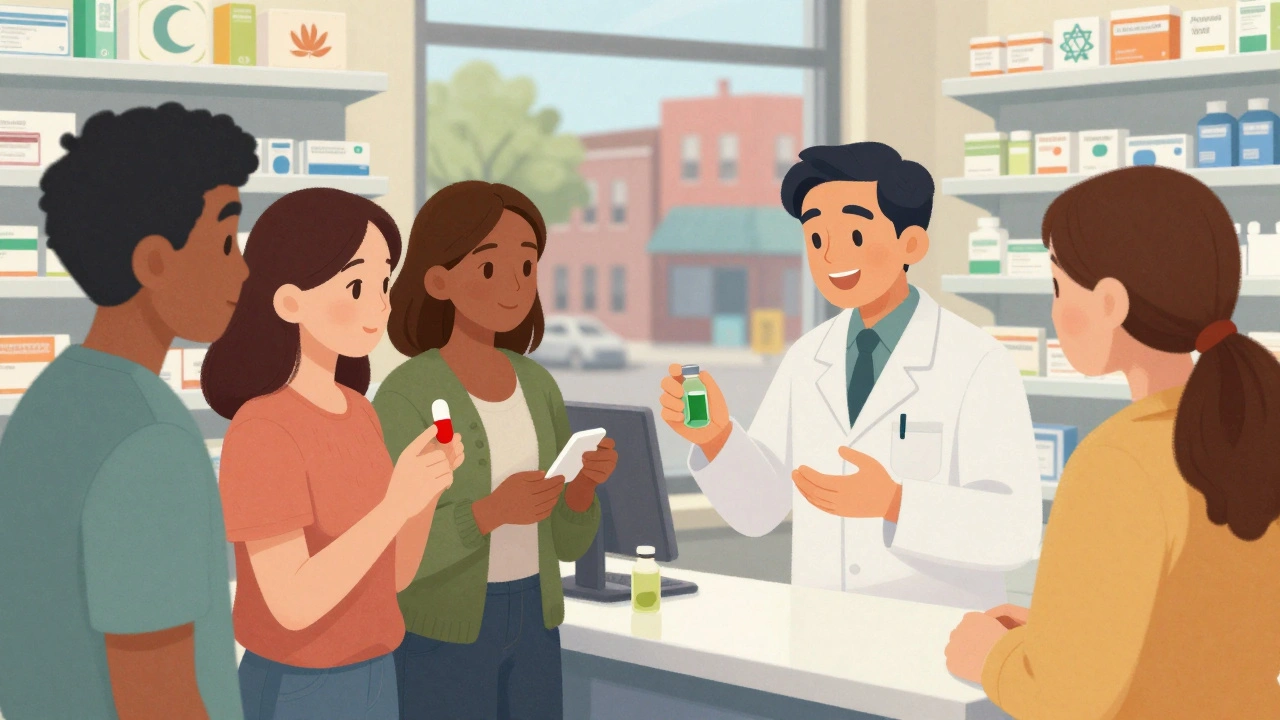
When a patient picks up a generic pill, they don’t just see a cheaper version of their brand-name drug. They see a color, a shape, a size - and sometimes, a hidden ingredient that conflicts with their beliefs. For many people around the world, the difference between a branded pill and its generic copy isn’t just about cost. It’s about trust, identity, and deeply held cultural or religious values. And when those values aren’t respected, patients stop taking their medicine - even when it’s life-saving.
Why Generic Pills Feel Different - And Why That Matters
Generic medications contain the same active ingredient as their brand-name counterparts. But the rest? The fillers, the coatings, the gelatin shells - those can be completely different. That’s not a flaw. It’s how the system works. But for patients from certain cultural or religious backgrounds, those differences aren’t just technical details. They’re deal-breakers. For example, a Muslim patient might refuse a capsule because it contains gelatin made from pork. A Jewish patient might avoid a medication that isn’t certified kosher. In some African and Caribbean communities, white pills are associated with poison or death, while red or yellow ones are seen as healing. In parts of Asia, large, brightly colored pills are trusted more than small, plain ones - even if they contain the exact same drug. A 2022 FDA survey found that 28% of African American patients believed generic drugs were less effective than brand-name ones. Among non-Hispanic White patients, that number was just 15%. Why the gap? It’s not about science. It’s about experience. Many patients have been let down by a healthcare system that didn’t listen to them. When a pill looks different from what they’re used to, and no one explains why, it’s easy to assume the worst.The Hidden Ingredients That Break Trust
The real issue isn’t the active drug. It’s the excipients - the inactive ingredients that hold the pill together, help it dissolve, or make it easier to swallow. These are rarely listed in plain language on packaging. In the U.S., only 37% of generic medication inserts provide clear details about excipients. In the EU, it’s 68%. That gap matters. Pharmacists in cities like Toronto, Chicago, and London report that patients from Muslim, Jewish, Hindu, and Buddhist communities ask about ingredients at least once a week. One pharmacist in Halifax told a story about a Somali patient who refused a generic asthma inhaler because the capsule shell contained gelatin from pigs. The pharmacist spent two hours calling manufacturers and pharmacies across the province until they found a liquid form that was halal-certified. That’s not standard practice. It’s heroic. Hindu patients may avoid medications containing cow-derived ingredients, even if they’re not obvious. Some Buddhist communities avoid medications with animal byproducts altogether. These aren’t fringe concerns. They’re common. And yet, most pharmacies don’t have systems to track which generics meet which cultural requirements.Cultural Competence Isn’t Optional - It’s Clinical
Treating a patient isn’t just about prescribing the right drug. It’s about making sure they’ll take it. And adherence to medication is one of the biggest challenges in chronic disease management. For hypertension and diabetes - conditions that hit Black, Hispanic, and South Asian communities harder - non-adherence due to cultural distrust costs the U.S. healthcare system an estimated $12.4 billion every year. A 2023 study in the Journal of Community Pharmacy found that patients who felt their cultural beliefs were respected were 4.3 times more likely to stick with their medication regimen. That’s not a small number. That’s a game-changer. It’s not enough to say, “We offer generics.” You have to ask: “Which ones work for you?”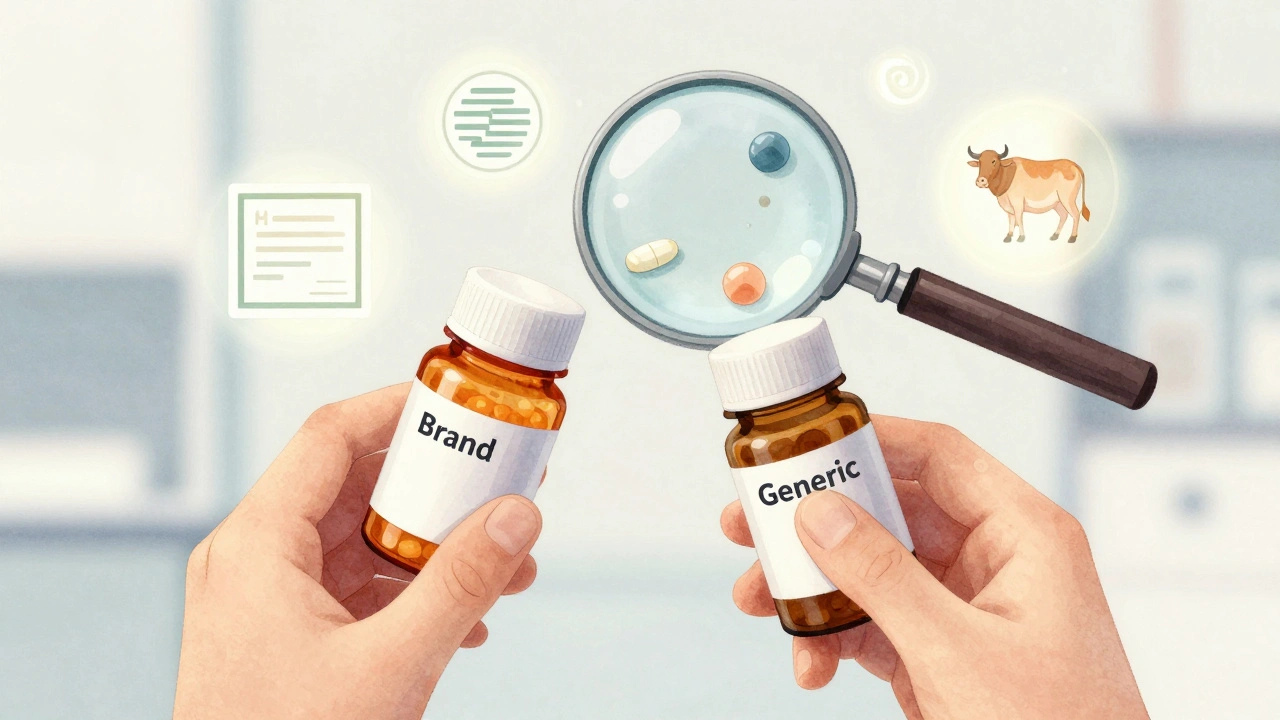
What Works: Real Solutions in Practice
Some pharmacies are catching on. In 2023, Teva Pharmaceutical launched a Cultural Formulation Initiative to document the source of every excipient in its 150+ generic products. Sandoz, the spin-off from Novartis, is building a Global Cultural Competence Framework to standardize this across markets. These aren’t PR moves. They’re survival strategies. In Canada, a chain of community pharmacies in Ontario created a simple database: a color-coded spreadsheet listing which generics are halal, kosher, vegan, or free from animal-derived ingredients. Staff get 10 hours of training each year on cultural beliefs around medicine. They don’t need to be experts in every religion. They just need to know how to ask - and where to look. One pharmacy in Toronto now offers a “Cultural Preference Card” - a small slip patients can fill out when they pick up a prescription. It asks: “Do you have any religious, cultural, or personal reasons why you can’t take certain ingredients?” The pharmacist then flags the prescription and checks the database. It takes 30 seconds. But it saves weeks of missed doses.The System Is Still Broken - But It Can Change
Right now, the burden falls on the pharmacist. They’re expected to know every ingredient in every generic version, track global certifications, and translate complex medical information across languages and belief systems - all while juggling 50 other patients. Manufacturers don’t help. Most generic drug companies don’t publish excipient details in a consistent, searchable format. Regulatory agencies still treat “inactive ingredients” as irrelevant. But that’s changing. The Food and Drug Omnibus Reform Act (FDORA) of 2022 pushed for more inclusive clinical trials and better attention to social determinants of health. That’s a start. The next step? Require generic drug labels to clearly list excipient sources - in plain language. Make halal, kosher, and vegan certifications visible on packaging. Train every pharmacy technician to ask about cultural preferences. Build a national database of culturally appropriate generics.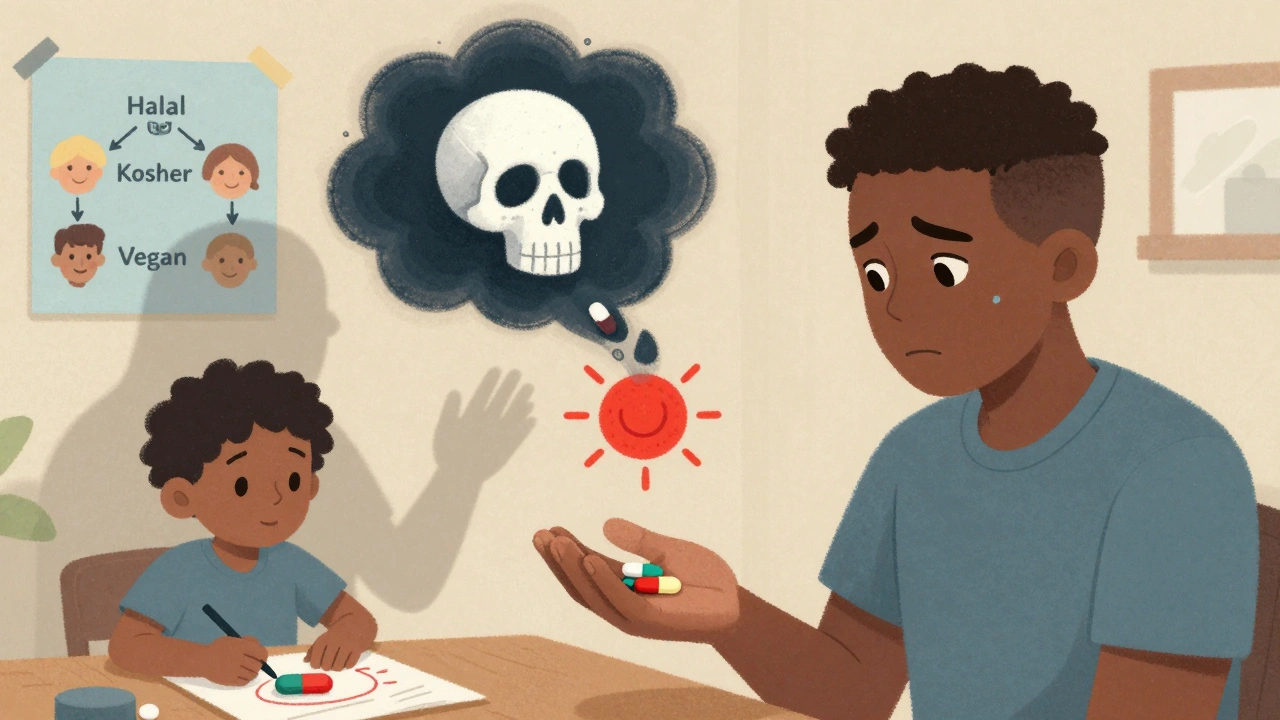
What Patients Can Do
If you’re taking a generic medication and you’re unsure about the ingredients, ask. Say: “Is this pill made with gelatin? Is it from pork? Is it certified kosher or halal?” Don’t assume the pharmacist knows. Bring a list of your concerns. If you’re from a faith community with dietary rules, ask your religious leader to help you identify acceptable medications. You have the right to know what’s in your medicine. And you have the right to refuse something that goes against your beliefs - even if it’s cheaper.What Providers and Pharmacies Can Do
Start small. Train your team. Create a simple checklist:- Do we know which generics contain gelatin, lactose, or animal-derived ingredients?
- Do we have a way to find alternatives quickly?
- Do we ask patients about cultural or religious preferences - not just once, but every time a new generic is prescribed?
- Are our patient education materials available in multiple languages and culturally relevant formats?
The Bigger Picture
Generic drugs are one of the most powerful tools we have to make healthcare affordable. But affordability means nothing if people don’t take the pills. Culture isn’t a side note in medicine. It’s the foundation of trust. And without trust, even the best drug is useless. The future of generics isn’t just about price. It’s about respect. It’s about listening. It’s about recognizing that a pill isn’t just chemistry - it’s culture.Why do some patients refuse generic medications even when they’re cheaper?
Many patients refuse generics because the pills look, feel, or taste different from what they’re used to. In some cultures, pill color or shape is linked to beliefs about healing or danger. Others avoid medications with ingredients like pork gelatin or alcohol, which may be in the capsule shell but aren’t listed clearly on the label. When patients don’t understand why the pill changed, they assume it’s weaker or unsafe - even if it’s scientifically identical.
What are excipients, and why do they matter in generic drugs?
Excipients are the inactive ingredients in a pill - things like gelatin, lactose, dyes, and preservatives. They help the drug stay stable, dissolve properly, or be easier to swallow. In generics, these ingredients often differ from the brand-name version. For some patients, those differences conflict with religious, cultural, or dietary beliefs. For example, gelatin from pigs is forbidden in Islam and Judaism, yet it’s commonly used in capsules. Without clear labeling, patients can’t know what they’re taking.
Are there generic medications that are halal or kosher certified?
Yes - but they’re hard to find. Some manufacturers, especially in Europe and Canada, produce halal- or kosher-certified versions of common generics. These are often liquid suspensions, tablets without gelatin shells, or capsules made from plant-based materials. However, this information isn’t always listed on packaging or in databases. Patients and pharmacists often need to contact manufacturers directly or use specialized resources to identify them.
How can pharmacists better support patients from diverse cultural backgrounds?
Pharmacists can start by asking simple, respectful questions: “Do you have any religious or cultural reasons you can’t take certain ingredients?” They should keep a local list of generics that are halal, kosher, vegan, or free from common allergens. Training staff for 8-12 hours a year on cultural beliefs around medicine can reduce errors and build trust. Some pharmacies now use digital tools or printed cards that patients can fill out to flag preferences - making it easier to match the right medication.
Is this issue only about religion?
No. While religion plays a big role, cultural beliefs about medicine go deeper. Some communities believe large, colorful pills are stronger. Others avoid pills entirely and prefer liquids. Historical trauma, like medical discrimination or unethical experiments, can make people distrust any new medication - especially if it looks different. It’s not just about ingredients. It’s about power, history, and feeling heard.
What’s being done to fix this problem?
Some major generic drugmakers like Teva and Sandoz are now tracking excipient sources and creating cultural compatibility guides. Regulatory bodies are pushing for clearer labeling. In the EU, rules require more detailed ingredient lists. In the U.S., the 2022 FDORA law encourages attention to social determinants of health - including cultural factors. But progress is slow. Most pharmacies still don’t have the tools or training to handle this consistently. Change is happening - but it needs to speed up.
Doris Lee
December 9, 2025 AT 20:46This hit home for me. My grandma refused her blood pressure med because it was white and she swore white pills were poison. Took her daughter and a pharmacist 3 weeks to find a red generic. She’s been stable ever since.
Michaux Hyatt
December 10, 2025 AT 01:11As a pharmacist in Chicago, I’ve seen this firsthand. We started a simple checklist last year. Just three questions: gelatin? alcohol? animal-derived? Now we catch 90% of issues before the patient walks out. Small changes, huge impact.
Raj Rsvpraj
December 11, 2025 AT 14:21Of course, Western medicine is failing because it ignores the divine order of Ayurveda and Vedic science! In India, we’ve known for millennia that pills must align with prakriti and dosha - not some FDA-approved chemical mimicry. Why are you letting Western corporations dictate your spirituality?!
Jack Appleby
December 12, 2025 AT 08:52Let’s be precise: the issue isn’t merely cultural perception - it’s epistemological hegemony. The biomedical model’s reductionist paradigm pathologizes embodied cultural epistemologies as ‘superstition’ while simultaneously commodifying them as niche market segments. The excipient disclosure gap isn’t logistical - it’s ontological erasure.
Moreover, the FDORA’s semantic vagueness regarding ‘social determinants’ fails to address the structural violence of pharmaceutical standardization. Until we decolonize pharmacopeia nomenclature, we’re just rearranging deck chairs on the Titanic.
Frank Nouwens
December 13, 2025 AT 19:11Interesting perspective. I’ve worked in public health for over 20 years, and I’ve seen how minor adjustments in communication can yield major improvements in adherence. It’s not about changing the drug - it’s about changing the conversation.
Kaitlynn nail
December 14, 2025 AT 21:51So… we’re just gonna let religion run the pharmacy now? Cool. Next they’ll want their insulin blessed.
Aileen Ferris
December 15, 2025 AT 22:07wait… so you’re saying people actually have beliefs? like… real ones? not just woke marketing? i thought this was all just a big pharma ploy to sell more expensive pills
Rebecca Dong
December 16, 2025 AT 02:46THIS IS A BIG PHARMA COVER-UP!!! They change the pill color so you don’t realize the government is replacing your meds with microchips!! The gelatin? It’s laced with 5G nanobots!! I saw a video on TikTok of a man in Pakistan who turned into a robot after taking a white pill!!
They don’t want you to know that the FDA is controlled by Big Pork!!
Michelle Edwards
December 16, 2025 AT 18:23I work with diabetic elders in rural Georgia. One woman cried because she couldn’t take her new generic - the capsule looked like the ones her husband took before he passed. She said it felt like he was dying all over again. We found her a liquid version. She’s been taking it every day since. Sometimes, it’s not about the science. It’s about the story.
Sarah Clifford
December 17, 2025 AT 10:43so like… if i’m vegan and my pill has gelatin… am i just supposed to eat it anyway? that’s not a pill, that’s a betrayal
Regan Mears
December 19, 2025 AT 07:00Let me be clear: this isn’t about convenience. It’s about dignity. When someone refuses a medication because it violates their deeply held beliefs, that’s not irrational - it’s human. And if we’re going to call ourselves healers, we owe them more than a shrug and a ‘it’s the same active ingredient.’
We need systems. We need training. We need to stop treating culture like an afterthought - and start treating it like the core of care.
Ben Greening
December 19, 2025 AT 23:48While the anecdotal evidence presented is compelling, the generalizability of these findings remains questionable without a larger, statistically significant dataset. The reliance on localized case studies may introduce selection bias.
Nikki Smellie
December 20, 2025 AT 07:48Did you know that the gelatin in pills is secretly harvested from cloned fetuses? The FDA has been hiding this since 2018. The color changes? They’re tracking your biometrics through your saliva. I’ve filed 14 FOIA requests. No one will answer. They’re scared. 😡
Neelam Kumari
December 21, 2025 AT 01:34How quaint. You think a color-coded spreadsheet fixes centuries of colonial medical abuse? You’re treating symptoms while ignoring the disease: Western arrogance. Your ‘halal-certified’ pill is still a product of capitalist extraction. Your ‘cultural preference card’ is just a Band-Aid on a gunshot wound.