Drug Interaction Risk Simulator
Select Your Scenario
St. John's Wort + Birth Control/Blood Thinners
High RiskGarlic/Ginger Supplements + Aspirin/Warfarin
Severe RiskVitamin K + Warfarin (Coumadin)
Critical RiskKava Root + Liver Medications/Alcohol
Organ DamageGinkgo Biloba + Blood Thinners
Bleeding RiskInteraction Analysis
How It Works
Click on a scenario to see how natural products can interfere with pharmaceutical mechanisms.
Regulatory Context:
Unlike pharmaceuticals, these supplements do not require FDA pre-market approval for safety or efficacy, meaning interaction warnings are often missing from labels.
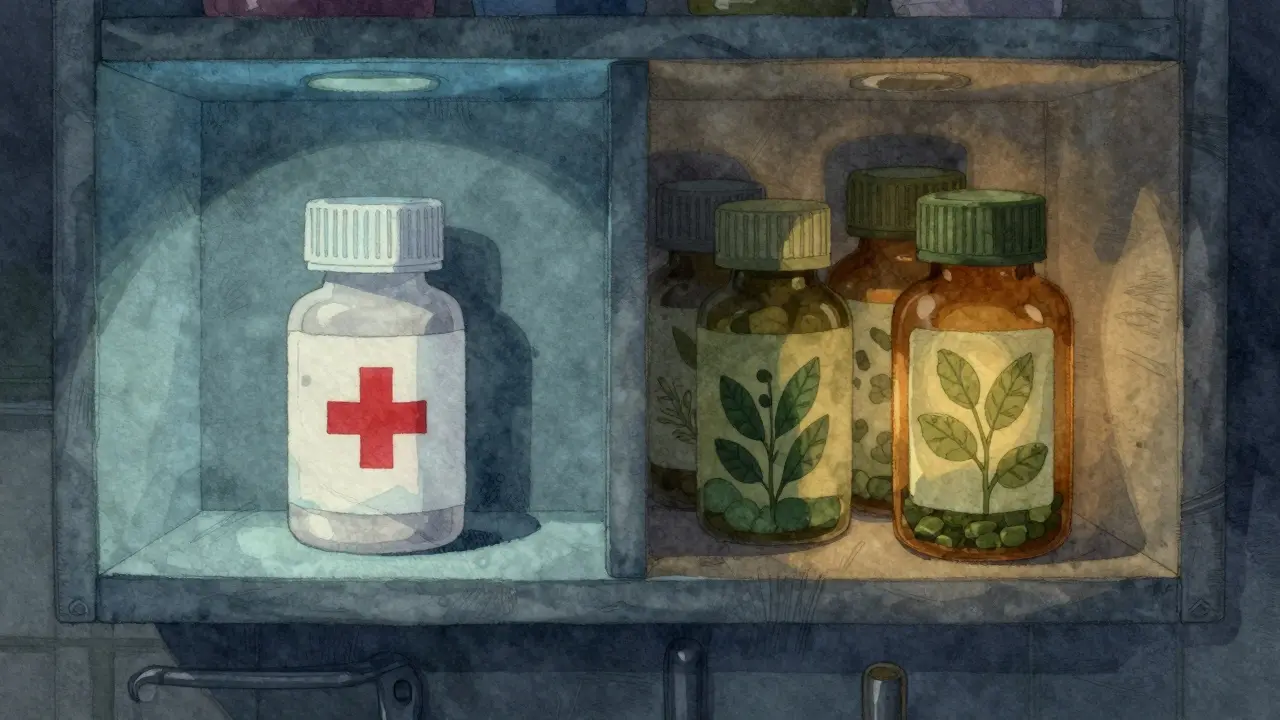
There is a quiet danger hiding in many bathroom cabinets across the country. It sits next to your prescription blood pressure medication or antidepressants, often wrapped in earthy green packaging with images of leaves and roots. You might assume it is harmless because it is natural. But that assumption could be costing you your health-or worse.
We have been sold a myth for decades: that if something comes from nature, it is safe, pure, and superior to anything made in a lab. This belief is so deeply rooted that most people do not think twice about mixing their daily multivitamins, herbal teas, or supplement pills with their prescribed medications. They assume the worst-case scenario for natural products is an upset stomach. The reality is far more complex and potentially lethal.
The Myth of "Natural" Safety
Why do we trust nature more than science? Psychologists point to a cognitive bias where we view "nature" as inherently good and "synthetic" as artificial or corrupted. The National Center for Complementary and Integrative Health (NCCIH) notes that this perception drives millions of health decisions every year. People believe that because a plant grows in the ground, it cannot contain toxins.
But nature does not care about your liver. Many of the most potent poisons on Earth are entirely natural. Foxglove, for example, contains digitalis, a compound used to make heart medicine. Eating the plant itself can be deadly. Similarly, kava, a root used traditionally for anxiety, has been linked to severe liver damage in numerous cases. If these plants were introduced today as new drugs, they would likely never pass initial safety screenings.
The problem is not that natural products are always dangerous. It is that they are unregulated in ways that synthetic drugs are not. When you buy a bottle of St. John’s wort or echinacea, you are buying a product that did not have to prove its safety before hitting the shelf. This creates a blind spot for consumers who equate "available at the store" with "approved by experts."
Regulatory Gaps: Why Supplements Are Different
To understand the risk, you have to look at how these products reach you. In the United States, the Dietary Supplement Health and Education Act (DSHEA) of 1994 changed the game. It classified herbal supplements as food, not drugs. This distinction is massive.
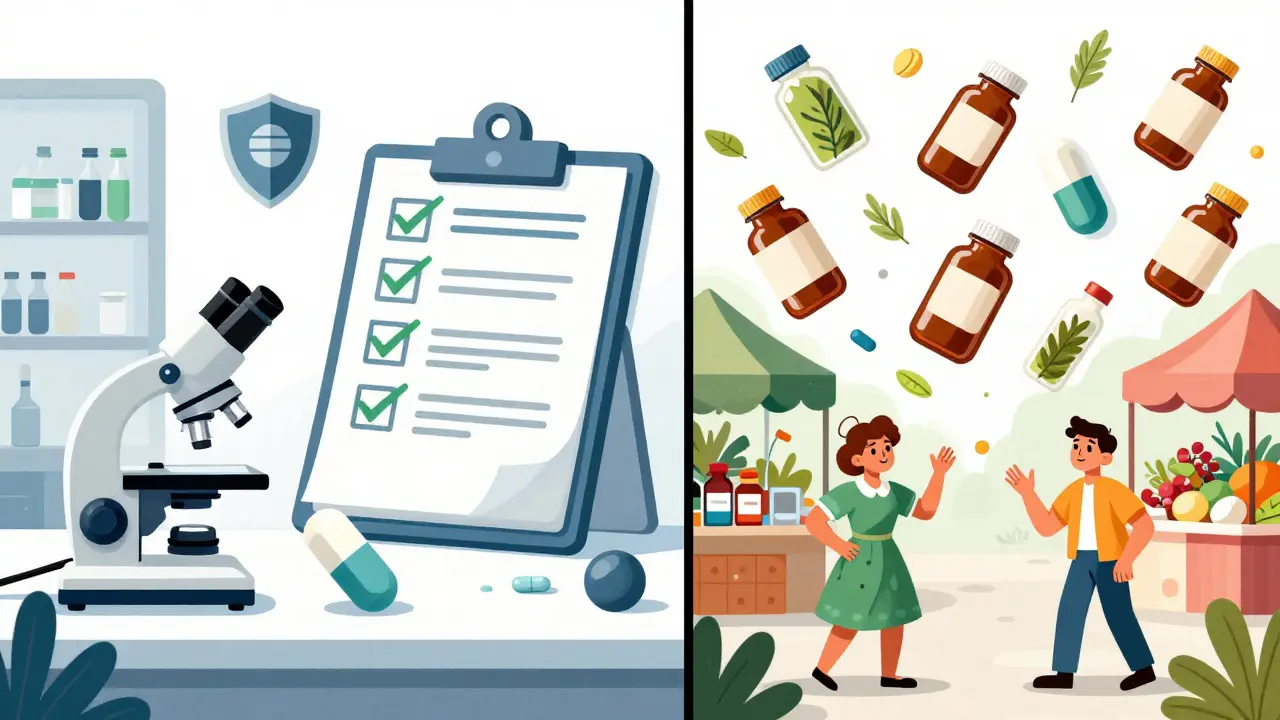
Pharmaceuticals are medicines that undergo rigorous FDA approval processes, including extensive clinical trials to prove safety and efficacy before they can be sold to the public. A new drug can take over a decade and cost billions of dollars to develop. Every batch is tested for consistency, purity, and potency. Manufacturers must disclose every ingredient and potential side effect.
In contrast, Dietary Supplements are products regulated under DSHEA that do not require pre-market approval for safety or efficacy, allowing them to enter the market with minimal verification. Companies only need to ensure basic sanitation and label accuracy. They do not need to prove the supplement works or that it is safe when combined with other substances. The FDA can only act against a supplement after it has already caused harm and evidence mounts-a reactive approach rather than a preventive one.
This regulatory gap means that while pharmaceuticals have detailed interaction warnings printed on their labels, many natural products lack comprehensive data on how they interact with other medicines. You are essentially playing Russian roulette with your metabolism, hoping the manufacturer tested what you are taking.
| Feature | Pharmaceuticals | Natural Products / Supplements |
|---|---|---|
| Pre-Market Approval | Required (FDA) | Not Required |
| Clinical Trials | Mandatory for safety & efficacy | Voluntary / Rare |
| Manufacturing Oversight | Strict Good Manufacturing Practices (GMP) | Basic CGMP (sanitation/batch consistency) |
| Interaction Warnings | Comprehensive labeling required | Often missing or vague |
| Adverse Event Reporting | Mandatory for manufacturers | Voluntary / Low reporting rates |
The Interaction Reality: When Natural Meets Synthetic
The biggest danger isn’t usually the natural product alone; it is what happens when it meets your prescription medication. Your liver uses enzymes to break down drugs. Some natural products interfere with these enzymes, either speeding up the process (making your drug ineffective) or slowing it down (causing toxic buildup).
Consider St. John’s wort, a popular herb for mild depression. It induces liver enzymes that rapidly break down many common medications. If you take birth control pills, blood thinners like warfarin, or HIV protease inhibitors alongside St. John’s wort, those drugs may stop working entirely. Users have reported unexpected pregnancies or dangerous blood clots without realizing the supplement was the culprit.
Then there is garlic and ginger. In moderate amounts in food, they are fine. But in concentrated supplement form, they can thin your blood. If you are already taking aspirin or anticoagulants, adding high-dose garlic supplements can increase your risk of bleeding significantly. This is not a rare edge case; it is a documented medical risk.
Even vitamins are not innocent. Vitamin K can counteract warfarin. High doses of vitamin E can also increase bleeding risk. These are "natural" compounds, yet they pose serious threats when mixed incorrectly. The Mayo Clinic emphasizes that "natural doesn't always mean safe," specifically warning that combining remedies without professional guidance can lead to more harm than good.
Who Is Really at Risk?
If you are healthy, young, and take no other medications, your risk from a standard multivitamin or occasional herbal tea is low. However, the danger spikes dramatically for specific groups:
- Elderly patients: Older adults often take multiple prescriptions (polypharmacy). Adding supplements increases the complexity of drug interactions exponentially. A study found that ginkgo biloba, marketed for memory, was ineffective for preventing dementia and posed bleeding risks when mixed with blood thinners.
- Pregnant women: Hormonal changes alter how the body processes substances. Many herbs, including black cohosh and dong quai, can stimulate uterine contractions or affect hormone levels unpredictably.
- People with chronic conditions: Those with liver or kidney disease may struggle to filter out toxins from poorly regulated supplements, leading to accumulation and organ damage.
The silence surrounding these risks is part of the problem. A 2022 study in JAMA Internal Medicine revealed that 70% of patients do not tell their doctors about the supplements they take. Why? Because they don’t consider them "real" medicine. They hide behind the misconception that if it’s natural, the doctor won’t care. But doctors need to know everything entering your system to keep you safe.
How to Navigate the Market Safely
You don’t have to choose between trusting all pharmaceuticals or rejecting all natural products. The goal is informed caution. Here is how to protect yourself:
- Treat supplements like drugs. Do not assume they are benign. Research them with the same scrutiny you apply to a new prescription.
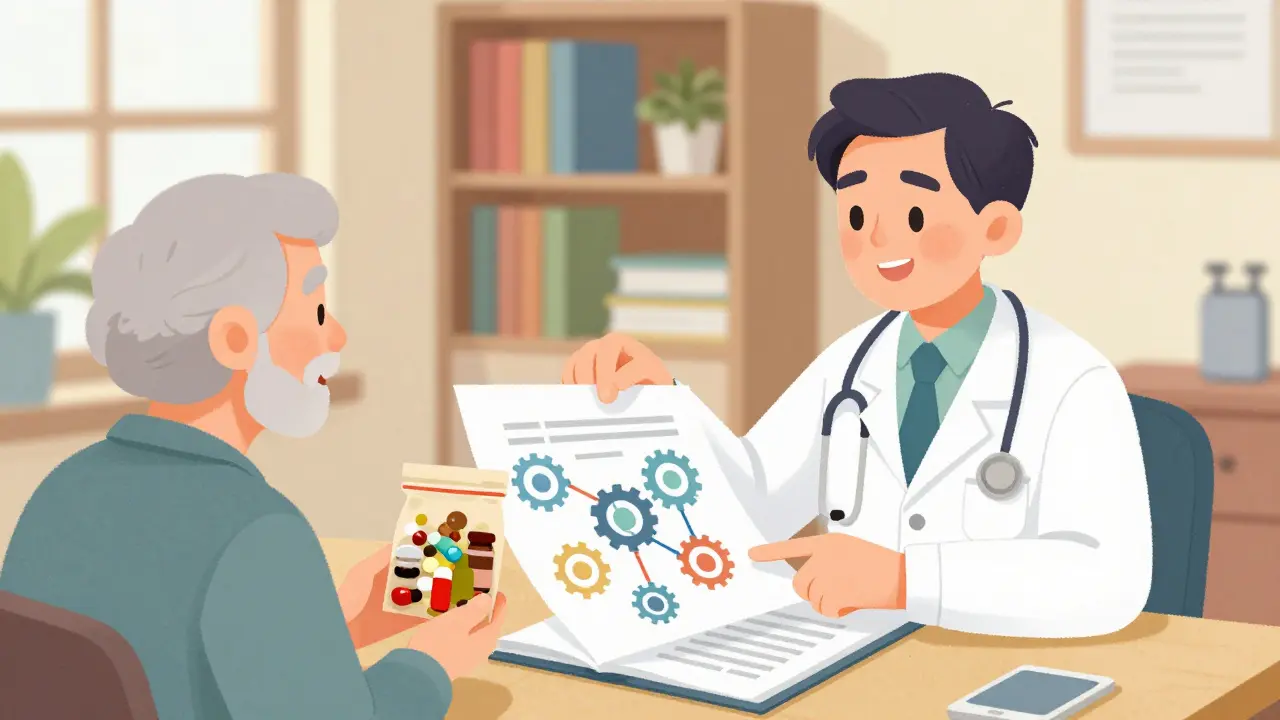
- Disclose everything to your provider. Bring your bottles to your next appointment. Ask specifically: "Does this interact with my current medications?"
- Look for third-party verification. Since the FDA does not pre-approve supplements, look for seals from independent organizations like USP (United States Pharmacopeia), NSF International, or ConsumerLab.com. These groups test for purity, potency, and contaminants. Currently, only about 15% of major brands carry these verifications.
- Beware of "miracle" claims. If a product claims to cure cancer, reverse diabetes, or replace your prescription meds, it is a scam. Legitimate health improvements take time and lifestyle changes, not just a pill.
- Check reliable sources. Use databases like the NIH Office of Dietary Supplements or WebMD’s interaction checker. Avoid relying solely on Amazon reviews or influencer testimonials, which often ignore scientific context.
The Bottom Line
The idea that natural products are safer than pharmaceuticals is a comforting lie. Both categories carry risks. Pharmaceuticals are heavily regulated, meaning their risks are known, documented, and monitored. Natural products are largely unregulated, meaning their risks are hidden, variable, and often discovered only after someone gets hurt.
Safety does not come from the source of the molecule-whether it was synthesized in a lab or extracted from a leaf. Safety comes from understanding dosage, quality control, and how substances interact within your unique biology. Until you treat your herbal supplements with the same respect and caution as your prescription drugs, you remain vulnerable to the silent dangers of the "natural" myth.
Are natural supplements regulated by the FDA?
No, not in the same way as drugs. Under the DSHEA law, dietary supplements are regulated as food, not drugs. The FDA does not approve them for safety or effectiveness before they are sold. The FDA can only take action against a supplement after it has been proven harmful in the marketplace.
Can herbal supplements cause serious side effects?
Yes. Herbs like kava have been linked to severe liver damage, and ephedra was banned due to heart problems and deaths. Even common herbs like St. John's wort can cause dangerous interactions with prescription medications, reducing their effectiveness or causing toxic buildup.
Why do so few people report adverse reactions to supplements?
Reporting is voluntary for supplements, unlike mandatory reporting for some drug issues. Additionally, many consumers believe natural products are harmless and do not realize their symptoms are related to the supplement. This leads to significant underreporting, making it hard to track true safety profiles.
Is it safe to take vitamins with prescription medication?
It depends on the specific vitamin and medication. For example, Vitamin K can interfere with blood thinners like warfarin. Always consult your doctor or pharmacist before adding any new supplement to your routine, especially if you take daily prescriptions.
How can I verify if a supplement is safe and pure?
Look for third-party testing seals from organizations like USP (United States Pharmacopeia), NSF International, or ConsumerLab.com. These independent groups test products for contaminants, accurate labeling, and potency, providing a layer of safety that the FDA does not currently mandate.