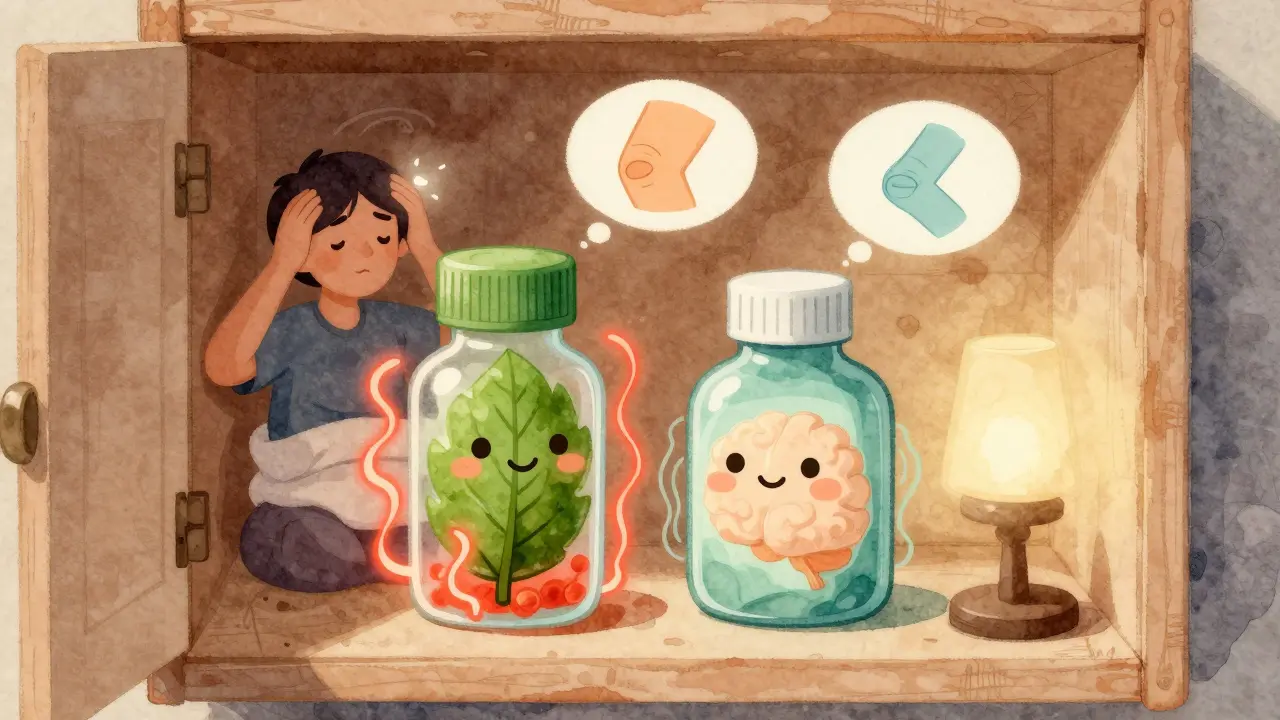
When you’ve got a throbbing headache, a stiff neck, or sore knees after a long walk, you reach for the medicine cabinet. But which bottle do you grab? Ibuprofen? Tylenol? Or something else? It’s not just about what’s on sale-it’s about what actually works for your pain and what’s safest for your body.
How NSAIDs and Acetaminophen Work Differently
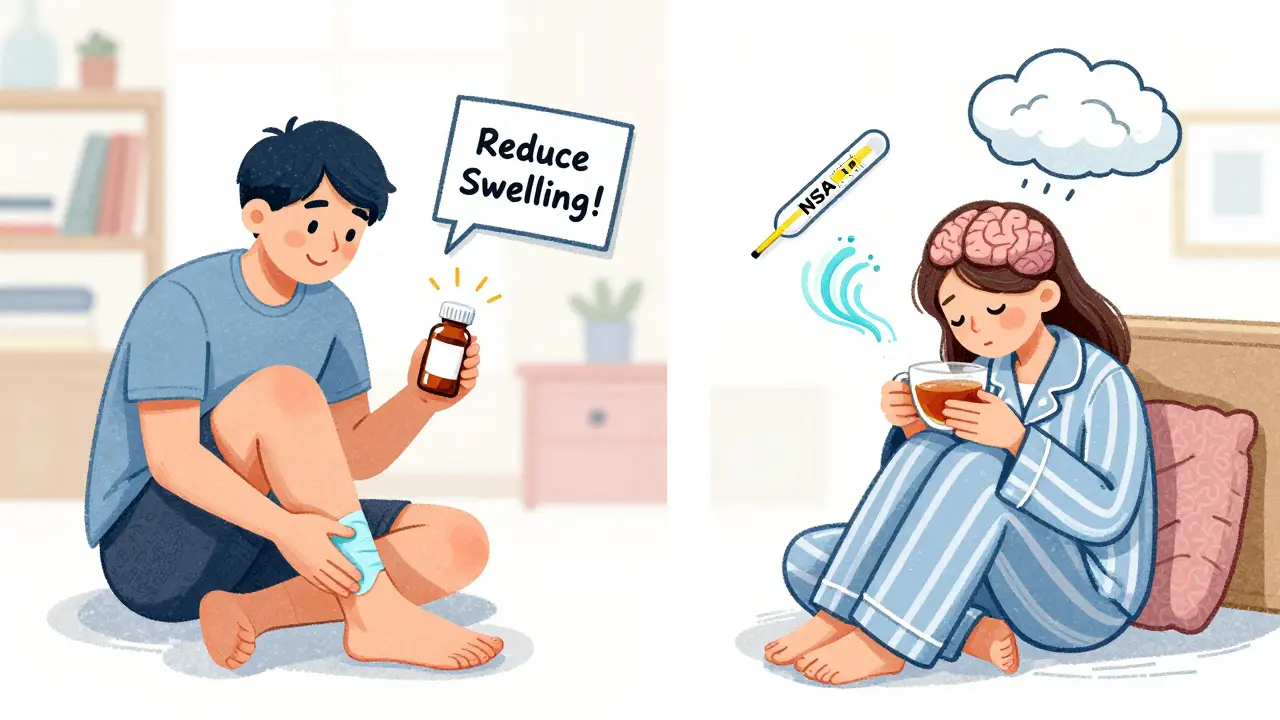
NSAIDs like ibuprofen (Advil, Motrin IB) and naproxen (Aleve) reduce pain by blocking enzymes called COX-1 and COX-2. These enzymes produce prostaglandins-chemicals that cause inflammation, swelling, and pain at the site of injury. That’s why NSAIDs work so well for arthritis, sprains, or back pain: they target the root cause-the inflammation.
Acetaminophen (Tylenol) is different. It doesn’t reduce swelling. It works mostly in the brain and spinal cord, interrupting pain signals before they reach your awareness. Scientists still don’t fully understand how it does this. What we do know is that it’s great for headaches, fevers, or general aches-but it won’t touch the redness or puffiness in a swollen joint.
This difference matters. If your shoulder hurts because of an inflamed tendon, NSAIDs will likely help more. If your head pounds from stress or a cold, acetaminophen is often enough-and easier on your stomach.
Which One Is Safer for Your Body?
Safety isn’t one-size-fits-all. Acetaminophen is gentle on your stomach. About 10-20% of regular NSAID users develop stomach irritation, ulcers, or bleeding. That’s why people with a history of ulcers or GERD are often told to avoid NSAIDs.
But acetaminophen has its own danger: your liver. Taking more than 4,000 milligrams in 24 hours can cause serious liver damage. The FDA says over 56,000 emergency room visits each year are due to acetaminophen overdose. Many of these happen because people don’t realize they’re doubling up-cold medicine, allergy pills, and sleep aids often contain acetaminophen too. One extra-strength Tylenol tablet is 500 mg. Eight of them hit the max. But experts now recommend capping it at 3,000 mg daily to stay safe.
NSAIDs carry other risks. Long-term or high-dose use raises your chance of heart attack or stroke. The FDA added black box warnings for this back in 2005. They can also harm your kidneys, especially if you’re dehydrated or already have kidney issues. If you’re on blood thinners, NSAIDs like ibuprofen can interfere with their effect. Aspirin is an exception-it’s used for heart protection, but even then, taking ibuprofen at the same time can cancel that benefit.
When to Choose NSAIDs
Go with NSAIDs when swelling is part of the problem. That includes:
- Arthritis (knee, hip, hand pain)
- Muscle strains or sprains
- Back or neck pain from inflammation
- Menstrual cramps
- Tendonitis or bursitis
Studies show NSAIDs are more effective than acetaminophen for osteoarthritis pain. A 2023 review from the Hospital for Special Surgery found that patients with hip or knee arthritis reported significantly better relief with ibuprofen or naproxen than with Tylenol alone.
For acute injuries-like twisting your ankle or pulling a muscle-NSAIDs can speed up recovery by reducing swelling. That’s why athletes and physical therapists often recommend them in the first 48 hours after injury.
When to Choose Acetaminophen
Acetaminophen shines when there’s no inflammation. Use it for:
- Headaches and migraines
- Fever from colds or flu
- Toothaches without swelling
- Mild back pain without injury
- Pain if you have stomach issues, high blood pressure, or heart disease
It’s also the go-to for people on blood thinners like warfarin. Unlike NSAIDs, acetaminophen doesn’t affect platelets, so it won’t increase bleeding risk. It’s often the first choice for older adults or those with multiple health conditions.
Many patients prefer it because it doesn’t cause stomach upset. If you’ve ever felt that burning sensation after taking ibuprofen on an empty stomach, you know why.
Can You Take Them Together?
Yes-and sometimes, you should.
Research from the Mayo Clinic and Hospital for Special Surgery shows that combining acetaminophen and an NSAID can give you better pain control than either alone. This lets you use lower doses of both, reducing side effects.
For example: take 650 mg of acetaminophen at 8 a.m. and 8 p.m., and 400 mg of ibuprofen at 2 p.m. and 10 p.m. This staggered schedule keeps pain under control around the clock without overloading your liver or stomach.
Doctors at UnityPoint Health say this approach works well for chronic pain like osteoarthritis. It’s also common after surgery, where managing pain without opioids is a priority.
Just be careful. Don’t mix multiple products that contain the same drug. Read labels. If you’re taking a cold medicine, check if it has acetaminophen already. If it does, skip the Tylenol.
Dosage Basics You Need to Know
Over-the-counter dosing is simple-but easy to mess up.
Acetaminophen: 325-650 mg every 4-6 hours. Max 3,000-4,000 mg per day. Stick to 3,000 mg if you drink alcohol, have liver issues, or are over 65.
Ibuprofen: 200-400 mg every 6-8 hours. Max 1,200 mg per day for OTC use. Don’t take it for more than 10 days without seeing a doctor.
Naproxen: 220 mg every 8-12 hours. Max 660 mg per day. Takes longer to kick in than ibuprofen but lasts longer.
Always take NSAIDs with food or milk to protect your stomach. Don’t lie down for at least 10 minutes after taking either drug.

What Experts Say
Doctors don’t give one-size-fits-all advice. The American Academy of Family Physicians says these guidelines are for healthy adults who use pain relievers occasionally. If you’re on other medications, have kidney or liver disease, or take pain relievers daily, talk to your doctor.
Many pain specialists now recommend starting with acetaminophen for general pain and switching to NSAIDs only if inflammation is suspected. For chronic conditions like arthritis, they often combine both.
And while the FDA says all three major OTC pain relievers-acetaminophen, ibuprofen, and aspirin-are equally effective for minor aches, they’re not equally safe. That’s the real takeaway.
Real-Life Scenarios
Case 1: You strained your lower back lifting groceries. Swelling? Yes. NSAIDs are your best bet. Take ibuprofen with food, and give it 24-48 hours. If no improvement, see a provider.
Case 2: You’ve had a migraine for 12 hours. No swelling. Just pounding pain. Acetaminophen might be enough. If not, try a combination product with caffeine-it helps some people.
Case 3: You’re 70, have high blood pressure, and take a daily aspirin for heart health. Your knees ache. Skip ibuprofen. Use acetaminophen. It won’t interfere with your aspirin or raise your blood pressure.
Case 4: You’re taking a cold medicine that has acetaminophen. You feel a headache coming on. Don’t add Tylenol. You could hit the liver limit without realizing it.
Bottom Line
There’s no “better” pain reliever. Only the right one for your body and your pain.
Use NSAIDs for pain with swelling-arthritis, sprains, muscle injuries.
Use acetaminophen for pain without swelling-headaches, fevers, general aches.
And if you’re unsure? Try alternating them. It’s safer, often more effective, and lets you avoid the worst side effects of either.
But always read labels. Always check for hidden acetaminophen. And if your pain lasts more than a few days-or gets worse-don’t just keep popping pills. See a doctor. Pain is a signal. Don’t ignore it.
Brian Anaz
January 5, 2026 AT 07:33NSAIDs are for weak people who can't handle real pain. I lift weights, run marathons, and take zero meds. If your knee hurts, you're probably sitting too much. Stop medicating your laziness.
Venkataramanan Viswanathan
January 7, 2026 AT 00:40It is imperative to note that the pharmacological mechanisms of nonsteroidal anti-inflammatory drugs and acetaminophen differ fundamentally in their mode of action. While the former inhibits cyclooxygenase enzymes, the latter modulates central nervous system pathways. This distinction is clinically significant.
Vinayak Naik
January 7, 2026 AT 18:04Bro, I used to chug ibuprofen like candy till my stomach started screaming like a banshee. Then I switched to Tylenol for headaches and holy crap-no more burning. But then I took a cold med with acetaminophen and almost ended up in the ER. Never again. Read the damn labels, people. Your liver ain’t a backup battery.
Ryan Barr
January 9, 2026 AT 03:19Obvious.
Mukesh Pareek
January 10, 2026 AT 10:52Given the COX-1/COX-2 inhibition profile of NSAIDs, the resultant prostaglandin suppression directly correlates with gastrointestinal mucosal compromise. Meanwhile, acetaminophen's hepatic metabolism via CYP450 pathways introduces a significant risk of glutathione depletion at supratherapeutic doses. Clinical guidelines recommend stratification based on comorbidities.
Harshit Kansal
January 11, 2026 AT 11:26I had a migraine last week and took Tylenol. Felt like a god. Then I took Advil for my back and felt like a new man. Then I took both and felt like I’d won the lottery. Then I Googled ‘can you mix them’ and panicked for 20 minutes. We’re all just guessing here, aren’t we?
Matt Beck
January 12, 2026 AT 07:18So… pain is just your body screaming for you to slow down… and we just numb it with chemicals… like we do with everything else… work… relationships… trauma… 😔💊
Maybe the real question isn’t which pill… but why we’re in so much pain to begin with… 🌿
Molly McLane
January 12, 2026 AT 22:42Big shoutout to everyone who reads labels. Seriously. I used to take Tylenol on top of NyQuil and didn’t even realize it. One day I felt dizzy and nauseous and thought I was dying-turned out I’d hit 5,000 mg in 12 hours. I’m alive because I learned. You can too. Don’t be like me.
Katie Schoen
January 14, 2026 AT 09:52So NSAIDs for swelling, Tylenol for ‘my head feels like a drum’… and if you’re over 65 and on aspirin? Just take Tylenol and pray. Classic American healthcare: ‘Here’s a pill, now go figure out which one won’t kill you.’ 😅
Beth Templeton
January 15, 2026 AT 01:30Read the label. That’s it.
Cam Jane
January 16, 2026 AT 19:57Hey everyone, I just want to say-this is such a helpful breakdown. I’m a nurse and I see so many patients mixing meds without knowing. The combo of acetaminophen + NSAID is actually brilliant if you space it right. I tell my older patients: take Tylenol at 8am, ibuprofen at 2pm, Tylenol at 8pm, ibuprofen at 2am. Keeps pain down without maxing out either. And always take with food. Your stomach will thank you. You got this 💪
Indra Triawan
January 17, 2026 AT 14:48Everyone’s so obsessed with pills… but no one asks why we’re always in pain. Is it the food? The stress? The fact we sit all day? Or are we just addicted to feeling something-even if it’s agony? I took Tylenol yesterday… and cried. Not from pain. From emptiness.
Lily Lilyy
January 17, 2026 AT 23:46Thank you for this clear, thoughtful guide. It’s so important to understand what we’re putting in our bodies. I’ve shared this with my elderly parents-they’ve been taking ibuprofen daily for years. Now they’re switching to acetaminophen and seeing their doctor. Small steps, big impact. You made a difference today ❤️