MAOI & Opioid Interaction Checker
Select an opioid below to see its interaction risk with Monoamine Oxidase Inhibitors (MAOIs). Click on the cards for detailed information.
Meperidine (Demerol)
Releases serotonin directly. Absolutely contraindicated.
Tramadol
Inhibits serotonin reuptake. Commonly overlooked danger.
Dextromethorphan
Found in cough syrups. Serotonin reuptake inhibitor.
Methadone
NMDA antagonism & serotonin reuptake inhibition.
Tapentadol
Norepinephrine reuptake inhibition. Requires monitoring.
Morphine / Oxycodone
Indirect effects. Generally safer but use caution.
Select a medication above to view interaction risks and safety guidelines.
Washout Period Guide
How long must you wait after stopping an MAOI before taking high-risk opioids?
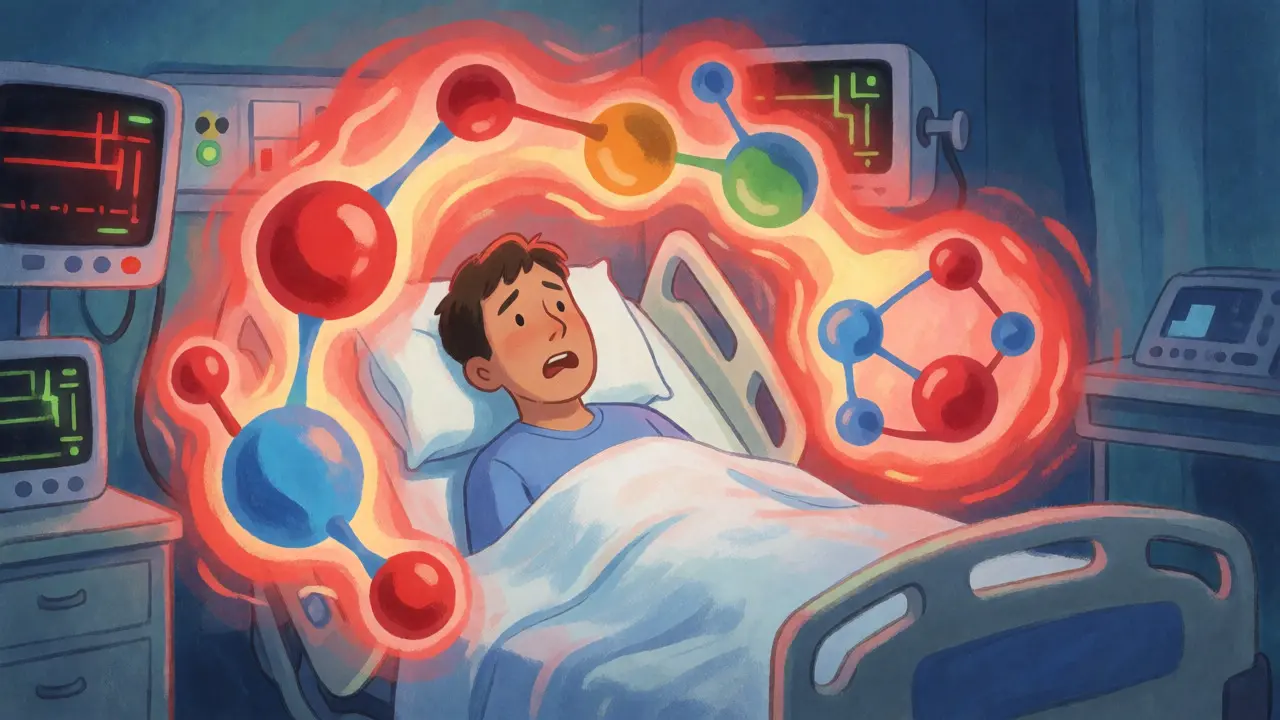
Imagine waking up in an intensive care unit because a dentist prescribed you a common painkiller for a toothache. That’s exactly what happened to one patient who was taking phenelzine, an older antidepressant, and received tramadol for dental pain. Their body temperature spiked to 107.1°F, their muscles locked up so tightly they couldn’t breathe, and they suffered seizures. This wasn’t bad luck; it was a predictable chemical collision between monoamine oxidase inhibitors (MAOIs) and specific opioids.
If you or someone you love takes an MAOI, this combination isn’t just a minor side effect warning-it’s a potential medical emergency. While MAOIs are often replaced by newer drugs like SSRIs, about 1.2 million Americans still rely on them for treatment-resistant depression. The danger lies in how these drugs interact with the brain’s chemistry. When you mix certain painkillers with MAOIs, you risk triggering serotonin syndrome or a hypertensive crisis, conditions that can turn fatal within hours if not caught quickly.
Why MAOIs and Opioids Clash
To understand the danger, you have to look at what these drugs do to your brain. MAOIs work by blocking enzymes called monoamine oxidases (MAO-A and MAO-B). Normally, these enzymes break down neurotransmitters like serotonin, norepinephrine, and dopamine. By blocking them, MAOIs keep these chemicals around longer, which helps lift mood.
Opioids, on the other hand, manage pain by binding to receptors in the brain and spinal cord. But some opioids don’t just bind to those receptors; they also mess with serotonin levels. For example, tramadol stops the brain from reabsorbing serotonin, while meperidine actually causes the brain to release more of it.
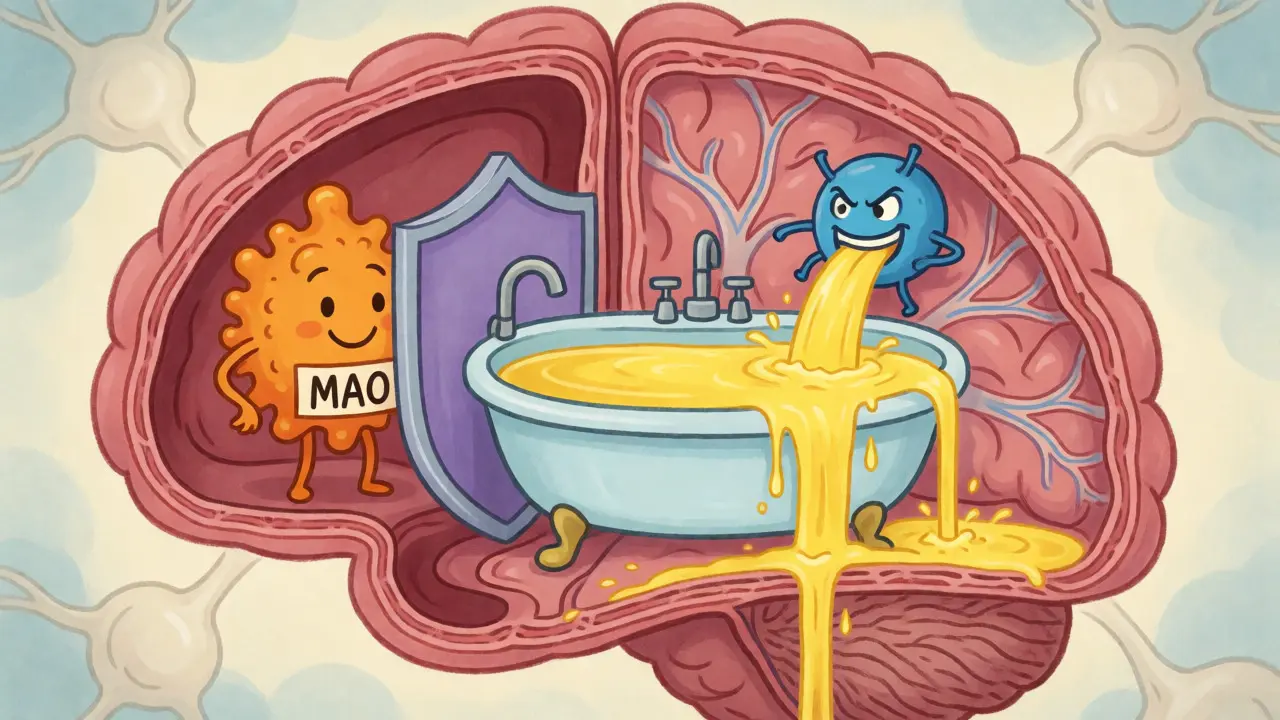
When you combine an MAOI (which stops serotonin breakdown) with an opioid that increases serotonin release or blocks its reuptake, you get a massive buildup of serotonin. It’s like turning off the drain in a bathtub while cranking up the faucet. The result is serotonin syndrome, a toxic state where too much serotonin overwhelms the nervous system. Research shows that combining meperidine with MAOIs can spike serotonin levels by 300-500% beyond normal ranges in under an hour.
The High-Risk List: Which Opioids Are Dangerous?
Not all opioids are created equal when it comes to MAOI interactions. Some are absolute "no-go" zones, while others require caution. The U.S. Food and Drug Administration maintains black box warnings for several drugs due to documented fatalities.
| Opioid Name | Risk Level | Primary Mechanism of Danger | Documented Issues |
|---|---|---|---|
| Meperidine (Demerol) | Extreme | Releases serotonin directly | 37 documented fatalities (1960-2010); absolutely contraindicated |
| Tramadol | High | Inhibits serotonin reuptake | 21+ case reports of serotonin syndrome; 68 cases reported to WHO (2010-2022) |
| Methadone | Moderate-High | NMDA antagonism and serotonin reuptake inhibition | 17 cases of serotonin syndrome reported to WHO |
| Tapentadol (Nucynta) | Moderate | Norepinephrine reuptake inhibition | Litigation over inadequate warnings; requires careful monitoring |
| Dextromethorphan | High | Serotonin reuptake inhibition | Often found in cough syrups; frequently overlooked by patients |
| Morphine / Oxycodone | Low-Moderate | Indirect serotonergic effects | Generally safer but still require caution and monitoring |
Meperidine is the most notorious offender. A review in CNS Drugs highlighted that it has caused dozens of deaths since the 1960s. Tramadol is tricky because many people think of it as a "weaker," safer alternative to stronger narcotics. However, its mechanism makes it highly dangerous for MAOI users. Even dextromethorphan, a common ingredient in over-the-counter cough medicines, acts as a serotonin reuptake inhibitor and can trigger issues.
Serotonin Syndrome vs. Hypertensive Crisis
The two main threats from mixing MAOIs and opioids are serotonin syndrome and hypertensive crisis. They present differently but both require immediate medical attention.
Serotonin Syndrome happens when serotonin builds up excessively. Symptoms usually appear within 1-2 hours of taking the opioid. Look for:
- High fever (hyperpyrexia), sometimes exceeding 104°F
- Muscle rigidity or twitching (myoclonus)
- Confusion, agitation, or hallucinations
- Rapid heart rate and high blood pressure
- Dilated pupils and heavy sweating
A 2019 systematic review noted that mortality rates for severe serotonin syndrome range from 2% to 12%. Dr. Kenneth Gillman, a leading expert in drug interactions, testified before the FDA that progression to fatal hyperthermia can happen within 6-12 hours if untreated.
Hypertensive Crisis involves a sudden, severe spike in blood pressure. This occurs because MAOIs block the breakdown of tyramine and other pressor amines. If an opioid triggers norepinephrine release (like fentanyl might), blood pressure can skyrocket. One anesthesiologist shared a case where a patient on Parnate given Demerol hit a blood pressure of 240/140 mmHg, requiring intravenous medication to bring it down.
The Washout Period: Timing Matters
Stopping an MAOI doesn’t mean the risk disappears immediately. Your body needs time to regenerate the enzymes that were blocked. This is known as the washout period.
For irreversible MAOIs like phenelzine (Nardil), tranylcypromine (Parnate), and isocarboxazid (Marplan), you need a full 14-day gap before starting any high-risk opioid. During these two weeks, the enzyme activity gradually returns to normal. Starting an opioid too soon means the residual MAOI activity is still strong enough to cause a reaction.
Reversible inhibitors like moclobemide (Aurorix) are different. Because they bind loosely to the enzyme, the effect wears off faster. A 24-hour washout is typically sufficient for these medications. However, even with reversible inhibitors, case reports show serotonin syndrome can occur at standard doses if combined with tramadol, so caution remains necessary.
Safe Alternatives for Pain Management
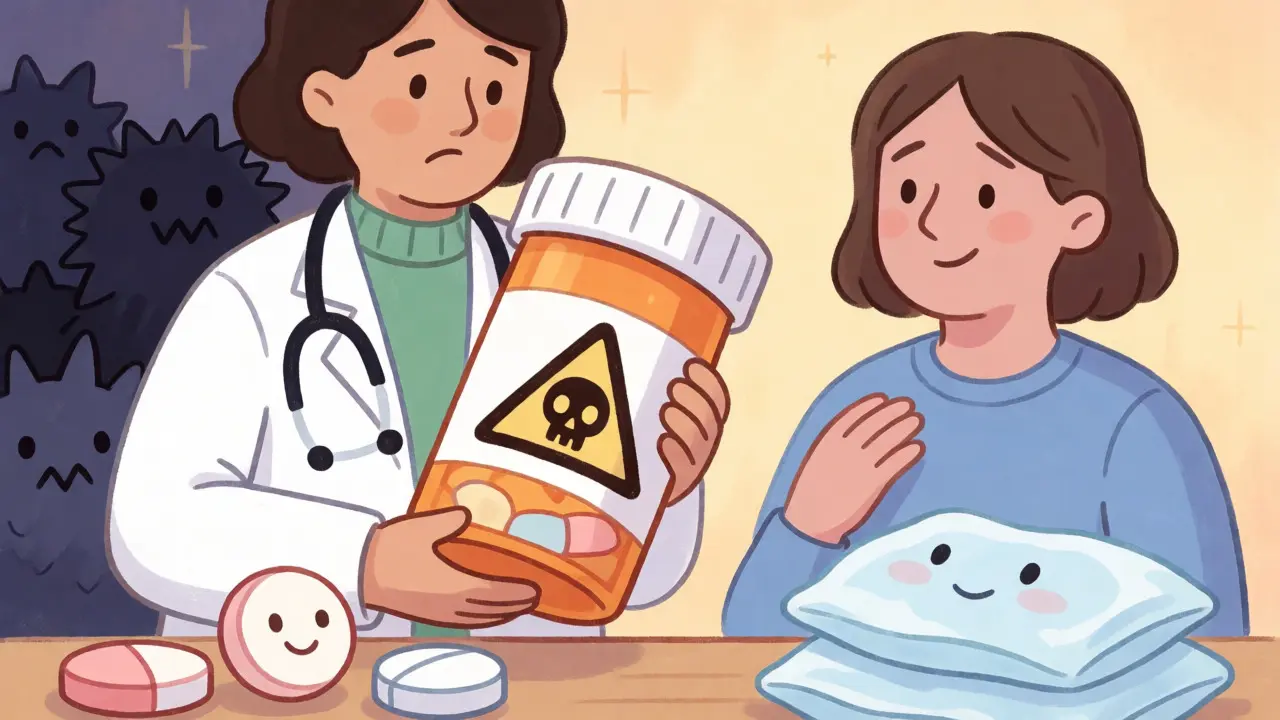
If you are on an MAOI and need pain relief, you aren’t out of options. You just need to choose carefully. The American Society of Anesthesiologists recommends sticking to non-serotonergic analgesics whenever possible.
Non-Opioid Options:
- Acetaminophen (Tylenol): Safe for mild to moderate pain.
- NSAIDs: Ibuprofen, naproxen, or aspirin are generally safe, provided you don’t have stomach or kidney issues.
Opioid Options with Caution:
- Buprenorphine: Recent research suggests low-dose buprenorphine (0.2-0.4mg sublingual) may be safe for acute pain in MAOI patients. A pilot study monitored 147 administrations with no serotonin syndrome cases.
- Morphine and Hydromorphone: These are considered lower risk than tramadol or meperidine because they have minimal direct effects on serotonin reuptake. However, they should still be used at the lowest effective dose.
Always inform every healthcare provider-dentists, surgeons, ER doctors-that you are taking an MAOI. Many prescribing errors happen because primary care physicians or specialists forget to check the patient’s psychiatric medication list. A 2022 study found that 63% of dangerous prescriptions occurred because the prescriber didn’t know the patient was on an MAOI.
What to Do in an Emergency
If you suspect a reaction, seek help immediately. There is no home remedy for serotonin syndrome. Hospitals treat it by stopping the offending drugs and providing supportive care. Protocols often include:
- Cyproheptadine: An antihistamine that blocks serotonin receptors, often given as a 12mg loading dose.
- Benzodiazepines: To control agitation and muscle spasms.
- Cooling Measures: Ice packs or cooling blankets to manage high fever.
- ICU Monitoring: Patients usually need observation for at least 24 hours.
Carry a wallet card listing your medications. The National Alliance on Mental Illness provides cards that list contraindicated meds, and 78% of surveyed patients report carrying them. This simple step can prevent a pharmacy error or a mistaken prescription in an urgent care setting.
Can I take codeine with an MAOI?
Codeine is generally considered lower risk than tramadol or meperidine because it does not significantly inhibit serotonin reuptake. However, it is metabolized into morphine, and individual responses vary. Most guidelines suggest using codeine with caution and monitoring for side effects, but it is not strictly contraindicated like meperidine.
How long after stopping an MAOI can I take tramadol?
You must wait at least 14 days after discontinuing an irreversible MAOI (like Nardil or Parnate) before taking tramadol. This allows your body to regenerate the monoamine oxidase enzymes. For reversible MAOIs like moclobemide, a 24-hour washout is typically sufficient, but always consult your doctor.
Is dextromethorphan safe with MAOIs?
No, dextromethorphan is often unsafe. It is a common ingredient in cough suppressants and acts as a serotonin reuptake inhibitor. Combining it with an MAOI can lead to serotonin syndrome. Always check labels for "DM" or "dextromethorphan" before taking cold medicine.
Why is tramadol considered dangerous with MAOIs?
Tramadol inhibits the reuptake of serotonin, meaning it keeps serotonin active in the brain longer. Since MAOIs also stop serotonin from breaking down, the combination leads to excessive serotonin levels, potentially causing serotonin syndrome. Despite being marketed as a "safer" opioid, this mechanism makes it high-risk for MAOI users.
What are the signs of serotonin syndrome?
Key signs include high fever, rigid muscles, confusion, rapid heart rate, dilated pupils, heavy sweating, and shivering. Symptoms can develop rapidly, often within 1-2 hours of taking the interacting drug. If you experience these symptoms, seek emergency care immediately.
Curtis Surpless
September 1, 2026 AT 11:34people always act shocked when this happens but its basic pharmacology if you block maos and dump serotonin with tramadol you get toxicity its not rocket science just bad prescribing habits and lazy med recs
Aaron Gragg
September 2, 2026 AT 08:33The complexity of monoamine oxidase inhibition is often underestimated in clinical practice, particularly regarding the irreversible nature of agents like phenelzine and tranylcypromine which necessitate a rigorous two-week washout period to allow for de novo enzyme synthesis. It is fascinating yet troubling that despite decades of literature detailing the catastrophic potential of combining these antidepressants with serotonergic opioids such as meperidine or tramadol, prescribers continue to overlook the synergistic risk of serotonin syndrome. The mechanism involves the blockade of MAO-A leading to decreased degradation of serotonin while certain opioids simultaneously inhibit reuptake or stimulate release, creating a perfect storm of neurotransmitter accumulation. We must advocate for better integration of psychiatric medication histories into dental and surgical workflows because the consequences of missing this interaction are not merely uncomfortable side effects but potentially fatal hyperthermic crises requiring intensive care intervention.
Rose Boerner
September 3, 2026 AT 14:25It is absolutely shameful that medical professionals still fail to check patient histories properly, exposing vulnerable individuals to life-threatening risks simply due to negligence and lack of diligence.
One would think that after so many documented fatalities, the standard of care would mandate a thorough review of all psychotropic medications before prescribing any analgesic, yet here we are, reading about another preventable tragedy. The arrogance of assuming that a routine dental procedure does not require checking for MAOI usage is precisely why patients end up in the ICU fighting for their lives against iatrogenic harm. We demand higher accountability from our healthcare providers who treat prescribing as a casual administrative task rather than a critical safety checkpoint.
Akeem Feiton
September 4, 2026 AT 01:07These doctors are useless idiots playing god with peoples lives!! They dont give a damn about us regular folks they just want to push pills and go home early
Why do we have to carry cards like criminals just so some overpaid quack knows what hes doing?? Its disgusting how much money they make while killing patients with stupid mistakes like this!! Wake up America!! Stop letting them walk all over us with their ignorance and greed!!!
Lolo Del
September 4, 2026 AT 13:50Hey there! Just wanted to chime in and say that carrying that wallet card is genuinely a game changer for safety.
I know it feels like extra work sometimes, but honestly, it’s the easiest way to ensure everyone on your care team is on the same page. It’s not just about avoiding interactions; it’s about advocating for yourself in a system that can be pretty fragmented. You’re doing great by staying informed!
Patrick van der Velde
September 5, 2026 AT 14:30The sheer mediocrity of modern medical education is laid bare when one considers that practitioners cannot reliably identify contraindications that were established in the mid-twentieth century. It is a testament to the decline of intellectual rigor in the profession that we must rely on patients to police the competence of those entrusted with their physiological well-being. This is not merely an oversight; it is a systemic failure of training and institutional culture that prioritizes throughput over precision.
Tobi Oyewole
September 5, 2026 AT 23:57Greetings to all participants in this discourse.
It is essential to approach this topic with a balanced perspective, acknowledging both the necessity of pain management and the critical importance of drug interaction awareness. While the frustration expressed by others is understandable, we must also consider the cognitive load placed upon healthcare providers who manage numerous patients daily. Perhaps the solution lies not in blame, but in improved electronic health record interoperability and standardized alert systems that function seamlessly across different specialties. Let us strive for a collaborative environment where information flows freely between psychiatrists, dentists, and general practitioners to safeguard patient outcomes.
Vivek Chaturvedi
September 6, 2026 AT 16:24this is exactly why self-medication is dangerous and why we need strict regulation of prescription practices no excuses for careless doctors
Harry Falk
September 7, 2026 AT 21:03Good points. Safety first always.
Kristina Rhodes
September 9, 2026 AT 11:23Perhaps the universe reminds us through these chemical collisions that our bodies are delicate ecosystems requiring mindful stewardship rather than brute force intervention.
While the anger is justified, let us remember that healing begins with understanding the interconnectedness of our mental and physical states. If we approach medicine with curiosity rather than fear, we might find that the constraints imposed by MAOIs are actually guides toward more holistic pain management strategies. Stay strong, stay aware, and trust that knowledge is the best antidote to uncertainty.
Eryn Manchego
September 10, 2026 AT 06:17ugh the dextromethorphan thing gets me every time cause its literally in everything and nobody checks labels ugh
its like walking through a minefield of cough syrup trying to avoid a serotonin trip lol
Sarah Kinch
September 11, 2026 AT 12:48honestly its kinda sad how people still fall for the 'natural' or 'mild' opioid trap with tramadol thinking its safer than oxycodone when chemically its basically asking for trouble with maois
like did anyone actually read the fine print or just nod along at the pharmacy counter? whatever works i guess
Crystal Torres
September 11, 2026 AT 21:12Thank you for highlighting the specific mechanisms involved.
Could you please elaborate on whether buprenorphine is considered entirely safe for all types of MAOIs, including reversible inhibitors like moclobemide, or does the caution level remain elevated regardless of the MAOI type?