Launching a new product only to be hit with an infringement lawsuit can freeze a company's growth overnight. For many businesses, the goal isn't to win a decades-long legal battle, but to find a way to enter the market without getting bogged down in court. This is where patent settlements is a strategic agreement where parties resolve intellectual property disputes without proceeding to a full trial come into play. Whether it's a licensing deal or a strategic truce, knowing how to navigate these waters is the difference between a successful launch and a bankrupt venture.
The reality of the legal landscape is that trials are rare. A 2022 Stanford Law School study of 10,000 cases found that 85.7% of patent disputes settle before they ever reach a judge. Why? Because litigation is a money pit. For cases involving damages under $25 million, the average cost to get through a trial is between $3 million and $5 million. When you factor in that 38.4% of asserted patents are eventually invalidated during post-grant proceedings, the risk of fighting to the end often outweighs the benefit of a settlement.
The Playbook for Negotiating Market Entry
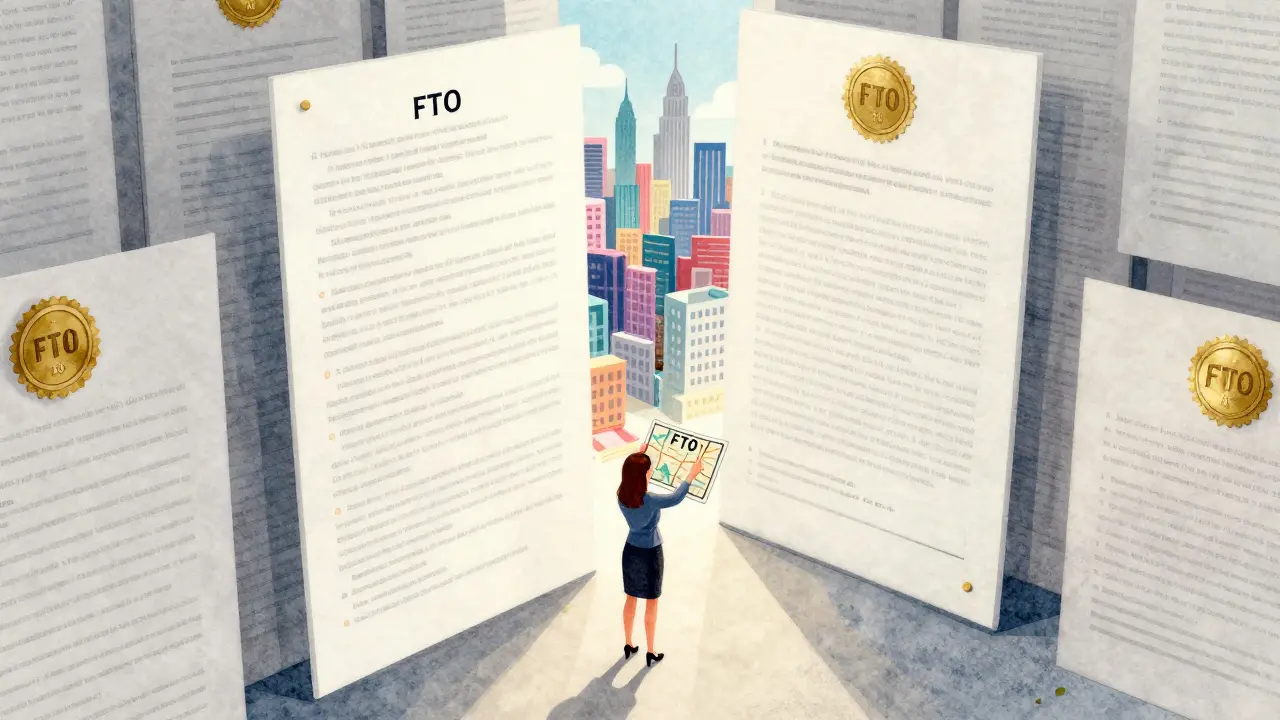
When a company wants to enter a space guarded by patents, they don't just send a check. They follow a structured process to gain leverage. The first step is almost always a Freedom-to-Operate (FTO) analysis, which maps out every existing patent that could block their product. If a conflict is found, the company must decide whether to design around the patent or negotiate a way in.
Effective negotiations usually happen in a specific window. According to Lex Machina, 68% of settlements occur between the Markman hearing (where the court defines what the patent claims actually mean) and the summary judgment phase. This is the "danger zone" where both sides have enough information to realize their risks but haven't spent their entire budget on trial prep yet. Most large firms allocate 6 to 9 months for these discussions.
To get a fair deal, companies perform a "stress test" on the patents in question. This involves spending anywhere from $150,000 to $300,000 on validity analyses to find prior art-evidence that the invention wasn't actually new. If you can prove the patent is weak, your settlement cost drops significantly.
Common Settlement Frameworks and Their Trade-offs
Not all settlements look the same. Depending on who you're fighting-a direct competitor or a Non-Practicing Entity (NPE) (often called a patent troll)-your strategy will change. While a competitor might want a long-term peace treaty, an NPE just wants a lump sum of cash.
One modern approach is the "high-low" settlement structure. Instead of arguing over the value of every single patent, parties pick 2 to 5 key legal disputes to serve as proxies for the whole case. They agree on a payment range based on how those specific disputes are resolved. This method has a 78% success rate among rational competitors but almost always fails with NPEs, who have no interest in business synergy.
| Approach | Typical Terms | Success Rate | Best For |
|---|---|---|---|
| Traditional Lump Sum | One-time payment / fixed royalty | 52% | NPEs / Simple disputes |
| High-Low Structure | Tiered payments based on key rulings | 78% | Direct business competitors |
| Cross-Licensing | Mutual use of patent portfolios | High (73% in Tech) | Large firms (Semiconductors/Telco) |
| Mediation | Facilitated by a neutral third party | 65% | Fast resolution needs |
Deep Dive into Cross-Licensing and Royalty Stacking
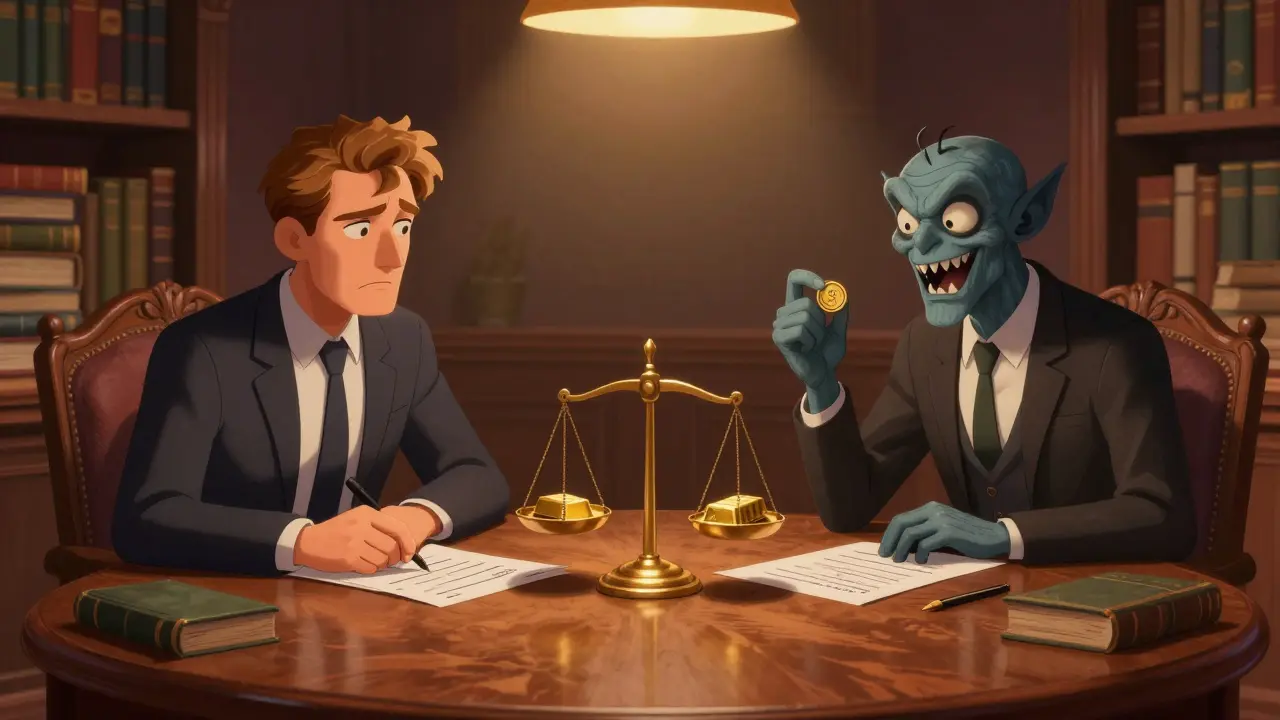
In high-tech industries like semiconductors, a single chip might rely on thousands of patents. It's impossible to negotiate each one individually. Instead, companies use Cross-Licensing, where two companies trade access to their respective portfolios. This turns a legal battle into a business partnership.
However, this introduces the problem of "royalty stacking." If you owe 2% to Company A, 2% to Company B, and 2% to Company C, your profit margins vanish. To prevent this, negotiators use royalty stacking analyses to cap the total percentage of revenue paid to all patent holders. For standard-essential patents (SEPs), these terms must be FRAND (Fair, Reasonable, and Non-Discriminatory) to avoid antitrust fines. For example, the European Commission famously fined Qualcomm €242 million for violating these principles in their settlement practices.
Some companies go beyond licensing to joint R&D. Intel's 2018 settlement with MediaTek is a prime example; they moved past the legal fight to co-develop 5G tech, resulting in over $200 million in R&D savings. This proves that a settlement isn't just about stopping a lawsuit-it's about unlocking future value.
The Role of New Technology in Patent Challenges
The way we negotiate is changing thanks to AI and new regulatory tools. The USPTO recently introduced the Patent Evaluation Express (PEX) program, which allows companies to get a non-binding validity assessment at 60% less cost than traditional reviews. This gives companies a cheaper way to gauge their leverage before sitting down at the negotiating table.
AI is also slashing the time it takes to prepare. Tools like PatentSight can reduce the time spent on a portfolio assessment from a month to just a few days. However, humans are still essential. AI still misses nearly 19% of relevant prior art, which could be the one piece of evidence that breaks a case wide open.
Looking forward, blockchain is entering the fray. IBM and Microsoft are testing smart contracts that automate royalty payments based on real-time sales data. This removes the "trust gap" and the need for expensive audits, potentially cutting post-settlement disputes by nearly 40%.

Pitfalls to Avoid During Negotiations
One of the biggest mistakes negotiators make is falling for the "anchoring effect." This happens when one side makes an absurdly high opening demand, which subconsciously pulls the final settlement price upward. Research from the University of Chicago shows that plaintiffs who demand three times their actual target often end up with 28% higher settlements.
Another trap is the "moral hazard" of high-low settlements. When parties can bet on specific claims, they sometimes litigate marginal points they would otherwise drop, simply to see if they can win a payout. This can inflate overall system costs by 12-15%.
Finally, many companies forget the power of conditional concessions. Instead of just arguing over money, successful negotiators offer "give and take" terms. For example, agreeing to a slightly higher royalty rate in exchange for a longer licensing term or access to a complementary technology. These strategic trades often close the gap when the numbers alone don't work.
What is the most common time for a patent settlement to happen?
Most settlements (about 68%) occur after the Markman hearing-where the court defines the patent's claims-but before the summary judgment phase. This is when both parties have a clear understanding of their legal strengths and weaknesses.
How much does it typically cost to litigate a patent case through trial?
For cases involving damages under $25 million, the average cost is between $3 million and $5 million. This high cost is a primary driver for why 85.7% of cases settle out of court.
What is a "high-low" settlement?
A high-low settlement is a framework where parties agree on a minimum and maximum payment. The final amount is determined by the outcome of a few selected "proxy" legal disputes rather than the entire complex case.
What are FRAND terms in patent settlements?
FRAND stands for Fair, Reasonable, and Non-Discriminatory. These terms are required for standard-essential patents (SEPs) to ensure that the patent holder doesn't use their position to block competition or charge unfair prices.
How does AI help in negotiating patent entry?
AI tools significantly speed up the portfolio assessment phase, reducing the time to analyze potential infringements from weeks to days. However, they are best used as a supplement to human experts who can find missing prior art.
Next Steps for Companies
If you're facing a potential patent challenge, don't panic and don't sign the first agreement you're offered. Start by conducting a thorough validity analysis to see if the patent can be challenged. If you're a smaller entity, consider using the USPTO's PEX program for a low-cost assessment.
For larger firms, look beyond simple cash payments. Explore cross-licensing or joint R&D collaborations that can turn a legal threat into a competitive advantage. Remember to set a strict "bottom line" based on the cost of litigation versus the cost of the settlement before you enter the room.
dallia alaba
April 18, 2026 AT 18:23The mention of the PEX program is such a game-changer for startups. Most small teams just assume they're doomed the moment they get a cease and desist, but having a low-cost validity check helps level the playing field. I've seen so many founders panic-buy licenses that were basically worthless because they didn't do a proper stress test first.
Charlotte Boychuk
April 19, 2026 AT 23:41Total nightmare fuel for anyone trying to launch something fresh!
Don Drapper
April 20, 2026 AT 22:09The sheer audacity of suggesting that a 'high-low' structure is a viable strategy for anything other than a desperate gamble is laughable. One must acknowledge that the systemic failure of the patent system isn't just about the cost of litigation, but the inherent instability of claim construction. To believe that a few proxy disputes can capture the essence of a complex technological infringement is a fantasy born of corporate laziness. The statistical success rate cited is likely skewed by survivors' bias, ignoring the catastrophic failures that occur when a proxy ruling swings the wrong way. It is an absolute tragedy that we prioritize these makeshift truces over rigorous legal adjudication. The legal profession has devolved into a game of poker where the stakes are innovation itself. We are essentially rewarding mediocrity by allowing companies to 'settle' their way into a market they didn't actually innovate for. The lack of intellectual rigor here is staggering. One would think that in an era of precision, we'd actually want the law to be precise. Instead, we have this messy, fragmented landscape of 'danger zones' and 'stress tests.' It is a farce.
Truman Media
April 21, 2026 AT 21:04It is wonderful to see how companies can find a middle ground and work together for the greater good. :)
Lynn Smith
April 23, 2026 AT 06:02I totally agree with the point about cross-licensing. It just seems so much more pleasant to be partners than enemies, right?
caesar simpkins
April 24, 2026 AT 08:48Man, the 'patent troll' aspect is just wild. Imagine making a whole career out of just waiting for someone else to actually build something and then shaking them down for a check. Absolute madness.
Shalika Jain
April 26, 2026 AT 02:47Please, as if 'royalty stacking' is some new revelation. Any first-year business student knows about margin erosion. The obsession with FRAND terms is just a way for the EU to feel like they're actually controlling the tech giants while the giants just bake the fines into their operating costs. It's a performative dance of regulation that does absolutely nothing for the actual innovator.
Mike Beattie
April 28, 2026 AT 02:13The lack of focus on the heuristic delta between AI-driven prior art searches and manual review is glaring here. We're talking about a paradigm shift in the cognitive load of the discovery phase. If you aren't leveraging a semantic-search layer to mitigate the 19% miss rate, you're basically playing with fire in a high-stakes litigation environment. Most of these 'negotiators' are just using legacy frameworks and calling it a strategy.
Bob Collins
April 29, 2026 AT 15:14Fair point on the anchoring effect. I've seen a few deals fall apart because one side tried to be too clever with the opening bid and just ended up offending everyone at the table.
Aman Tomar
April 30, 2026 AT 23:40The cost of litigaton is simply heart breaking... imagine spending 5 million dollars only to find out the patent was invalid all along. Such a tragedy for any small business tryin to grow!!
Tokunbo Elegbe
May 1, 2026 AT 12:52Doing an FTO analysis is absolutely critical... I cannot stress this enough!!! Many people skip this step... and it is a recipe for disaster...!!
aman motamedi
May 1, 2026 AT 16:47The provided data regarding the Markman hearing windows is most informative. I appreciate the structured approach to these complex legal matters.
Lucy Kuo
May 2, 2026 AT 05:55It is truly heartening to observe the transition from adversarial litigation to the collaborative spirit of joint R&D. The Intel and MediaTek example serves as a beacon of hope for all industries, proving that mutual prosperity is far more valuable than a hollow legal victory. May we all strive for such diplomatic resolutions in our professional endeavors.