For decades, the goal of treating type 2 diabetes is a chronic condition that affects how your body processes blood sugar (glucose) was simple: lower the numbers. If your A1c dropped, you were winning. But today, doctors are looking beyond the glucose meter. They are asking a different question: will this medication keep you out of the hospital? Will it protect your heart and kidneys?
The answer for many patients lies in a class of drugs called SGLT2 inhibitors are a group of medications that help remove excess sugar from the body through urine while protecting the heart and kidneys. These pills, often ending in "-flozin," have shifted from being just another blood-sugar tool to becoming essential shields against heart failure and kidney decline. If you or a loved one has type 2 diabetes, understanding these benefits could change how you view your treatment plan.
How SGLT2 Inhibitors Actually Work
To understand why these drugs work, we need to look at your kidneys. Your kidneys filter your blood constantly. Normally, they reabsorb almost all the glucose (sugar) back into your bloodstream because your body needs it for energy. This happens in a part of the kidney called the proximal tubule, where a protein named SGLT2 does the heavy lifting.
SGLT2 inhibitors block this protein. When you take a pill like empagliflozin is an SGLT2 inhibitor sold under the brand name Jardiance or dapagliflozin is an SGLT2 inhibitor sold under the brand name Farxiga, you stop that reabsorption process. The sugar stays in the urine and leaves your body. This lowers your blood sugar levels without relying on insulin, which is helpful if your pancreas isn't producing enough.
This mechanism creates a few side effects that are actually benefits in disguise:
- Weight loss: You lose calories when you excrete sugar. Most people drop 2-3 kg (4-6 lbs) on average.
- Blood pressure reduction: Sugar pulls water with it. Losing extra fluid lowers systolic blood pressure by 3-5 mmHg.
- Glycemic control: Expect an A1c reduction of 0.5% to 1.0%.
But the real magic isn't just about losing weight or lowering sugar. It’s about what happens inside your blood vessels and organs.
Heart Protection: More Than Just Blood Sugar
People with type 2 diabetes are at higher risk for cardiovascular events. For years, we assumed that controlling blood sugar would automatically protect the heart. We were wrong. Studies showed that even with good glucose control, heart attacks and strokes still happened.
Then came the EMPA-REG OUTCOME trial in 2015. Researchers looked at patients taking empagliflozin. The results were shocking. The drug reduced the risk of cardiovascular death by 38%. It also lowered all-cause mortality by 32%. This wasn't just about preventing heart attacks; it was about keeping people alive.
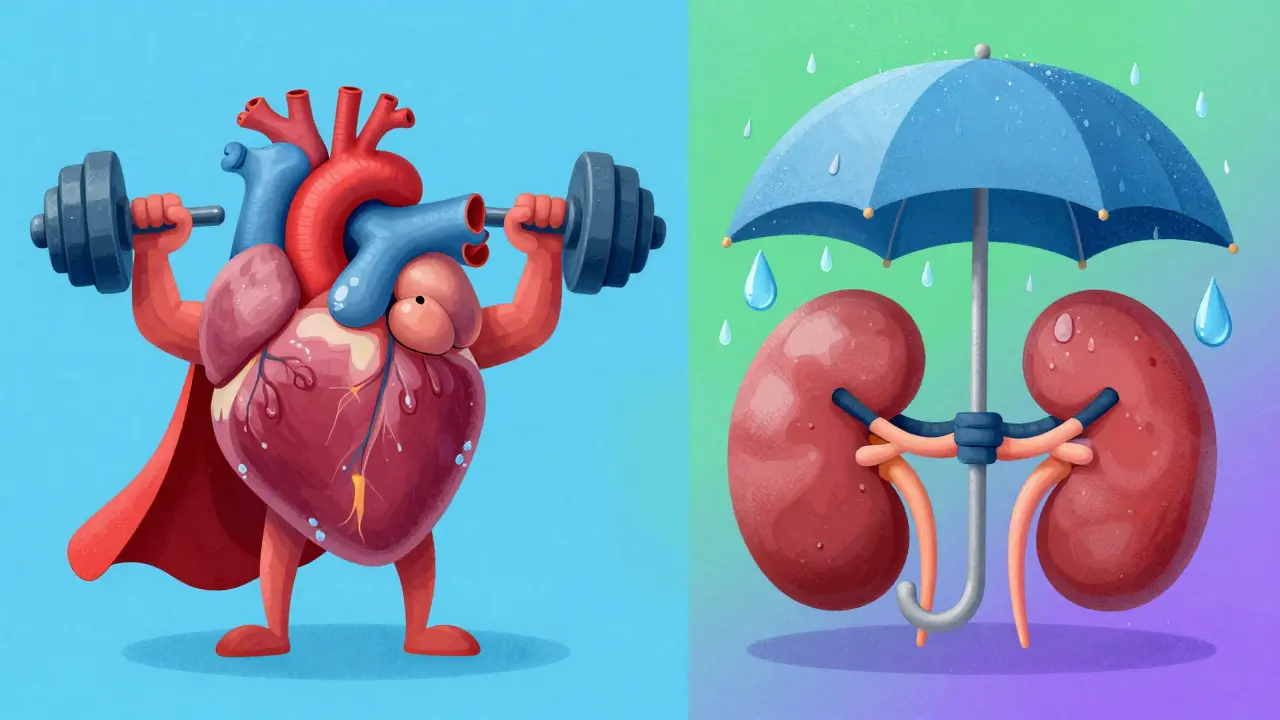
Since then, other trials like CANVAS and DECLARE-TIMI 58 have confirmed these findings across different SGLT2 inhibitors. The American Heart Association now recommends these drugs for patients with heart failure, regardless of whether they have diabetes. Why? Because SGLT2 inhibitors improve how the heart pumps blood. They reduce the workload on the heart muscle by managing fluid balance and improving energy efficiency in heart cells.
If you have heart failure with reduced ejection fraction (HFrEF), adding an SGLT2 inhibitor can cut your risk of hospitalization by 25-30%. That is a massive improvement in quality of life.
Kidney Benefits: Slowing Down Decline
Your kidneys are hard workers, but high blood sugar damages them over time. Diabetic kidney disease is the leading cause of kidney failure worldwide. Once damage starts, it usually gets worse. Until recently, there were few ways to slow it down besides controlling blood pressure.
SGLT2 inhibitors change that story. The CREDENCE trial focused on patients with diabetic kidney disease. Those taking canagliflozin had a 30% lower risk of reaching end-stage kidney disease, doubling of serum creatinine, or dying from kidney causes. Similarly, the DAPA-CKD trial showed dapagliflozin protected kidneys even in people without diabetes.
How does this happen? It comes down to pressure. Inside each kidney, tiny filters called glomeruli handle blood filtration. High pressure in these filters damages them over time. SGLT2 inhibitors reduce this internal pressure. Interestingly, when you start these drugs, your kidney function (eGFR) might dip slightly at first. Don’t panic. This initial drop is normal. It reflects the reduction in harmful pressure. After 2-3 months, it stabilizes, and long-term protection kicks in.
| Brand Name | Generic Name | Key Trial | Primary Benefit Highlighted |
|---|---|---|---|
| Jardiance | Empagliflozin | EMPA-REG OUTCOME | Cardiovascular death reduction |
| Farxiga | Dapagliflozin | DECLARE-TIMI 58 | Broad cardiorenal protection |
| Invokana | Canagliflozin | CANVAS Program | Kidney disease progression slowing |
| Steglatro | Ertugliflozin | VERTIS CV | Neutality in cardiovascular safety |
Who Should Consider SGLT2 Inhibitors?
Not everyone with type 2 diabetes needs an SGLT2 inhibitor immediately. Metformin remains the first-line therapy for most people because it is cheap and effective. However, guidelines have shifted. The American Diabetes Association now suggests starting SGLT2 inhibitors early if you have specific conditions:
- Established cardiovascular disease: If you’ve had a heart attack or stroke, these drugs offer proven protection.
- Chronic kidney disease (CKD): Even mild kidney damage makes these drugs a strong candidate.
- Heart failure: Regardless of diabetes status, if you have heart failure, these drugs are recommended.
- Obesity or hypertension: The modest weight loss and blood pressure drops can be beneficial adjuncts.
However, they are not for everyone. If you have severe renal impairment (eGFR below 30 mL/min/1.73m²), some agents may not be effective or approved. Also, they are contraindicated in type 1 diabetes due to the risk of ketoacidosis.
Potential Risks and Side Effects
No medication is perfect. While SGLT2 inhibitors are generally safe, you should know what to watch for.
Genital yeast infections: Since more sugar is in your urine, yeast thrives. About 4-5% of users experience genital mycotic infections. Good hygiene and staying hydrated can help mitigate this. It’s annoying but rarely dangerous.
Diabetic Ketoacidosis (DKA): This is a rare but serious condition. Unlike typical DKA, blood sugar levels might not be extremely high (sometimes only 100-250 mg/dL), which is called "euglycemic DKA." Symptoms include nausea, vomiting, abdominal pain, and trouble breathing. If you feel sick during an illness or before surgery, tell your doctor you are on an SGLT2 inhibitor. You may need to pause the medication temporarily.
Volume depletion: Because these drugs make you urinate more, you can get dehydrated. Elderly patients or those on diuretics need to monitor their fluid intake closely to avoid dizziness or low blood pressure.
Amputation risk: Early studies with canagliflozin showed a slight increase in lower-limb amputations. Later data suggested this risk might be related to pre-existing foot issues rather than the drug itself. Still, if you have poor circulation or neuropathy, discuss this carefully with your doctor.

Cost and Access
One major barrier is cost. Brand-name SGLT2 inhibitors can cost $500-$600 per month without insurance. Generic versions are expected to enter the US market between 2025 and 2028, which should drive prices down significantly. Check with your pharmacist about patient assistance programs or mail-order options. Many insurers cover these drugs if you have documented heart or kidney disease, so ensure your doctor codes your prescription correctly.
Real-Life Patient Experiences
What does this look like in daily life? Patients report mixed but mostly positive experiences. On diabetes forums, users frequently mention improved energy levels and welcome weight loss. One user noted dropping 12 pounds in three months. Another shared that their heart failure symptoms improved dramatically, allowing them to walk further without getting winded.
On the flip side, increased urination is a common complaint, especially at night. Some users struggle with recurrent yeast infections despite preventive measures. Cost remains a significant stressor for those with high deductibles. Yet, for many, the peace of mind knowing their heart and kidneys are protected outweighs these inconveniences.
Next Steps for Patients
If you are curious about SGLT2 inhibitors, here is how to proceed:
- Talk to your doctor: Ask if you qualify based on your heart and kidney health, not just your A1c.
- Review your current meds: Ensure there are no interactions with diuretics or other diabetes drugs.
- Monitor your hydration: Drink plenty of water, especially in hot weather.
- Watch for warning signs: Know the symptoms of DKA and genital infections.
- Check your insurance: Verify coverage before filling the first prescription.
The landscape of diabetes care is changing. It is no longer just about sugar. It is about survival and quality of life. SGLT2 inhibitors represent a powerful tool in that fight. By protecting your heart and kidneys, they offer benefits that extend far beyond the glucose meter.
Do SGLT2 inhibitors work if I don't have diabetes?
Yes. Recent trials like DAPA-CKD and EMPA-KIDNEY show that SGLT2 inhibitors protect kidneys and hearts in people without diabetes who have chronic kidney disease or heart failure. FDA approvals for non-diabetic uses are expanding.
Can I take SGLT2 inhibitors with metformin?
Absolutely. They are commonly prescribed together. Metformin works primarily in the liver and gut, while SGLT2 inhibitors work in the kidneys. Their mechanisms complement each other without increasing hypoglycemia risk.
Why did my kidney function drop when I started the drug?
An initial small drop in eGFR is expected. It reflects a healthy reduction in pressure inside the kidney's filtering units. This is not damage. The value typically stabilizes within a few months, and long-term kidney protection improves.
Are SGLT2 inhibitors safe for elderly patients?
They are generally safe but require caution. Older adults are more prone to dehydration and low blood pressure due to the diuretic effect. Doctors may start with lower doses and monitor volume status closely.
Will generic SGLT2 inhibitors be available soon?
Yes. Patent expirations for major brands like Jardiance and Farxiga are occurring between 2025 and 2028. Generic versions should become widely available in the US market during this period, likely reducing costs significantly.