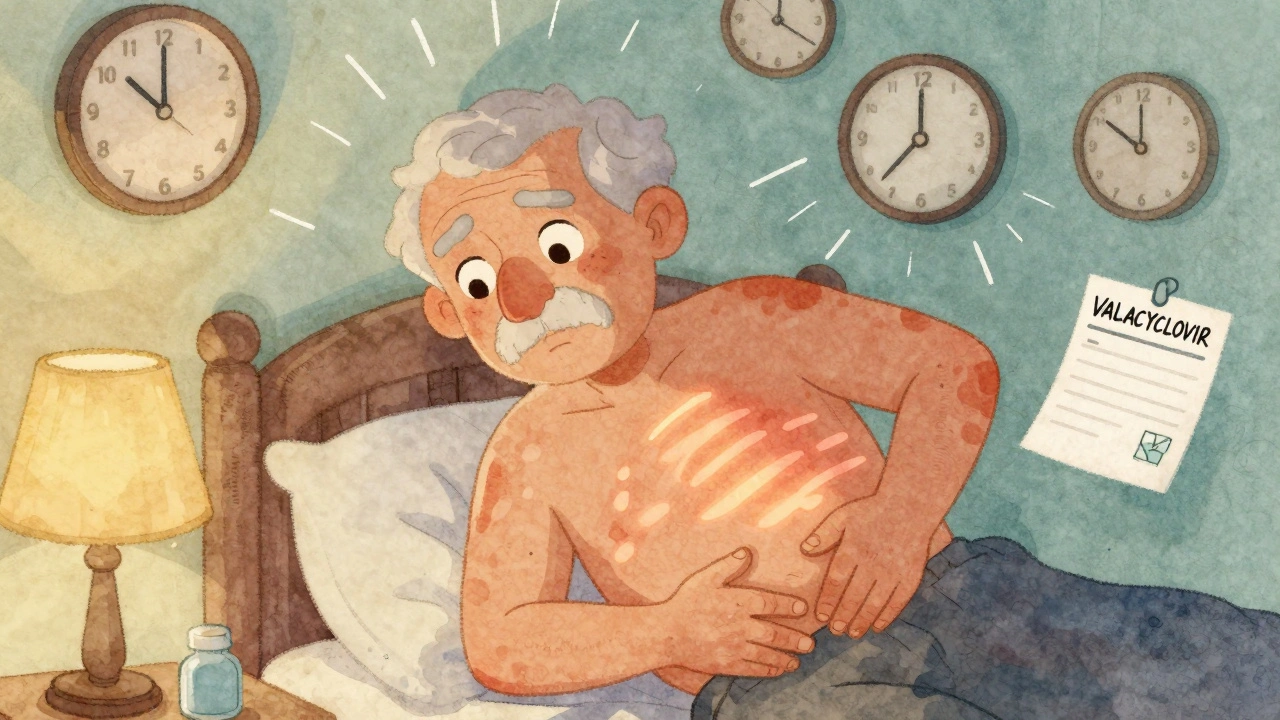
Shingles isn’t just a rash. It’s a sharp, burning, sometimes electric pain that can linger for months-even years-after the blisters fade. If you’ve ever felt that kind of pain, you know why getting treatment fast matters. The virus behind it, varicella-zoster, has been sleeping in your nerves since you had chickenpox as a kid. Now, for reasons doctors still don’t fully understand, it’s woken up. And when it does, time is everything.
Why Timing Is Everything with Antivirals
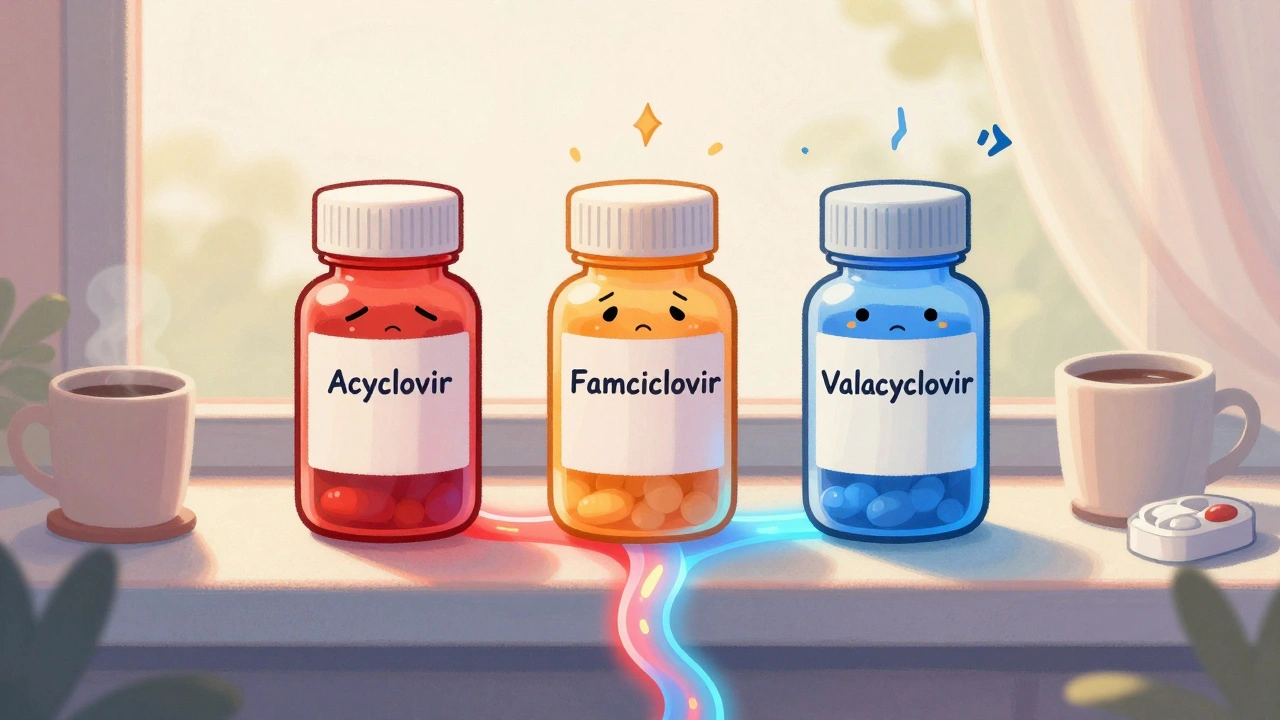
The three main antiviral drugs for shingles-acyclovir, famciclovir, and valacyclovir-work best when started within 72 hours of the first sign of rash. That’s not a suggestion. It’s the cutoff. After that, the virus has already spread through nerve tissue, and the drugs lose much of their power. Studies show that starting treatment early cuts the length of the rash by two to three days and reduces acute pain by about 30%. For some people, that means skipping the worst of it entirely.
Valacyclovir is often the first choice because it’s easier to take: just three pills a day for seven days. Acyclovir requires five doses daily, which makes it harder to stick with. Famciclovir falls in between. All three are equally effective at healing blisters, but valacyclovir has shown slightly better pain control in some trials. That matters because pain is what drives people to the doctor in the first place.
And if you’re over 50, immunocompromised, or have shingles near your eye? Delaying treatment isn’t just risky-it’s dangerous. People with weakened immune systems are more likely to get severe outbreaks, skin infections, or even vision damage. A major study from NYU in 2023 found that low-dose valacyclovir (500 mg daily) for months after the initial outbreak cut eye complications by 26% and reduced the need for nerve pain meds by 22%. That’s not a small win. It’s life-changing for someone who can’t tolerate dizziness from gabapentin.
Does It Prevent Long-Term Pain?
This is where things get messy. Many people believe taking antivirals will stop post-herpetic neuralgia (PHN)-the chronic nerve pain that can last months or years after the rash clears. But the science doesn’t fully back that up. A Cochrane review found no strong evidence that acyclovir reduces PHN at six months. Yet other studies, including a 2011 analysis of over 1,000 patients, suggest early antivirals may lower the risk.
Real-world data tells a different story. On PatientsLikeMe, 62% of 1,200 people said early antiviral treatment prevented their pain from becoming chronic. But 38% still developed PHN. Why? Because once nerve damage happens, antivirals can’t undo it. They can only slow the virus down before it does too much harm. That’s why the goal isn’t to prevent PHN entirely-it’s to reduce the chance it ever starts.
And here’s the hard truth: about 1 in 5 people over 60 will get PHN after shingles. That’s not rare. It’s common. The older you are, the higher the risk. So even if antivirals don’t guarantee protection, they’re still your best shot at avoiding the worst outcome.
How Pain Management Works Beyond Antivirals
Antivirals handle the virus. But they don’t touch the nerve pain. That’s where other tools come in.
Gabapentin and pregabalin are the go-to nerve pain meds. Doctors usually start low-300 mg of gabapentin once a day-and slowly increase it over weeks. Most people need 1,800 to 3,600 mg daily to feel relief. But side effects like drowsiness, dizziness, and brain fog are common. That’s why many patients quit before the dose gets high enough.
Amitriptyline, an old-school antidepressant, works surprisingly well for shingles pain. At low doses (25-75 mg at night), it helps calm overactive nerves without causing a high. It’s cheap, effective, and often covered by insurance. But it can cause dry mouth, constipation, and weight gain. For people with glaucoma or heart issues, it’s not safe.
Topical treatments are easier to tolerate. Lidocaine patches (5%) go on for 12 hours, then off for 12. They numb the skin without affecting the whole body. Capsaicin cream (0.075%) burns at first-yes, really-but over time, it depletes the pain-signaling chemical in nerves. Use it three to four times a day, and after a week or two, many people report less burning.
Opioids? Only for a few days. They don’t work well for nerve pain, and the risk of dependence isn’t worth it. Dermatology experts agree: save them for the worst-case scenarios, and never use them long-term.
The Role of Steroids and New Research
Some doctors add a short course of prednisone-40 to 60 mg daily-for a couple of weeks. The idea is to reduce inflammation around the nerves and ease pain faster. But this is controversial. Steroids weaken your immune system, which could let the virus spread further. The Mayo Clinic says it’s an option, but only for healthy adults with severe pain. It’s not for everyone.
And now, there’s new thinking. The Zoster Eye Disease Study showed that long-term, low-dose valacyclovir isn’t just for the eye-it may help prevent flare-ups in other high-risk patients. Doctors at UPenn are now considering extended antiviral therapy for anyone with shingles near the eye, or those with weakened immunity. But most clinics haven’t adopted this yet. Why? Cost. And fear of resistance. But with over a million shingles cases in the U.S. every year, and the population aging fast, this might become standard.
What You Should Do Right Now
If you feel tingling, burning, or itching on one side of your body-especially if it’s in a stripe pattern-don’t wait. Don’t assume it’s a bug bite or muscle strain. Call your doctor today. Even if the rash hasn’t appeared yet. Early symptoms can show up one to three days before the blisters.
Here’s what to ask for:
- Valacyclovir 1,000 mg three times a day for seven days
- A prescription for gabapentin or amitriptyline if pain is severe
- A referral to a pain specialist if symptoms don’t improve in a week
- Testing for immune issues if you’re under 50 and got shingles
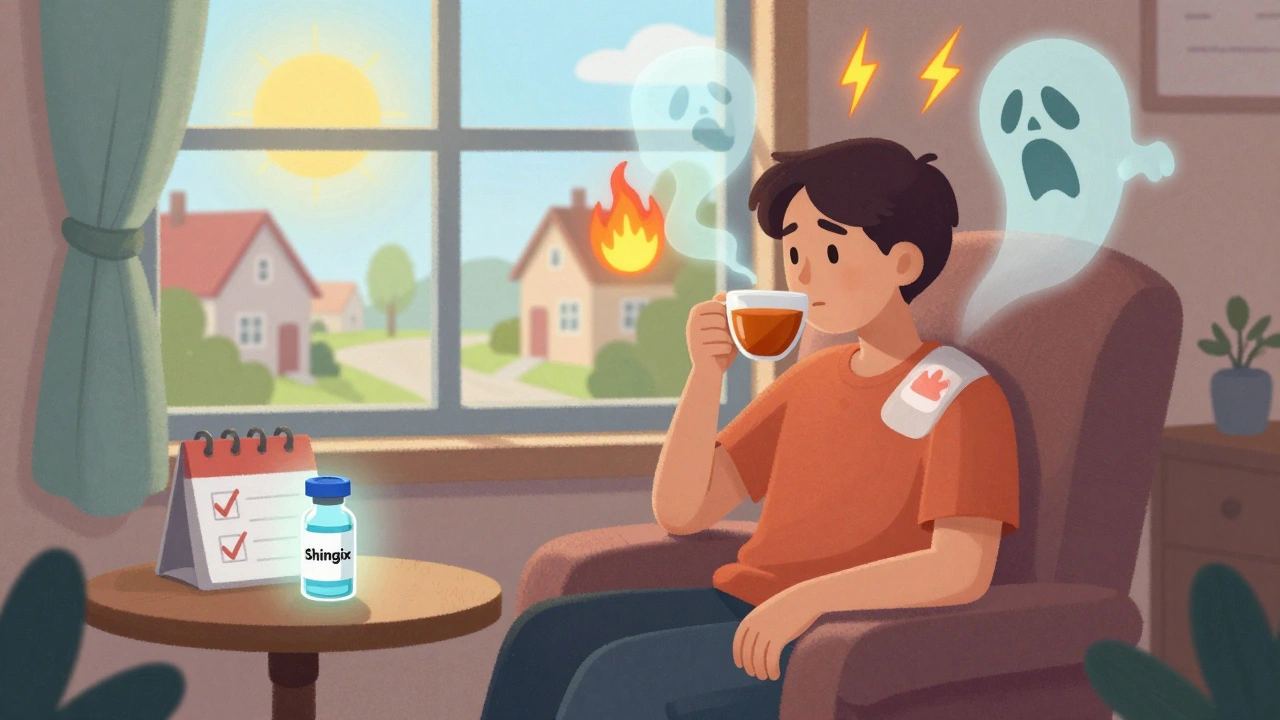
And if you’re over 50 and haven’t gotten the Shingrix vaccine? Get it. Two shots, spaced 2 to 6 months apart, cut your risk of shingles by over 90%. Even if you’ve had shingles before, it still helps. It’s the most effective shield we have.
What Not to Do
Don’t use home remedies like apple cider vinegar or essential oils on the rash. They won’t help and might irritate broken skin. Don’t skip doses of your antiviral because you feel better. The virus is still active. Don’t ignore eye symptoms-redness, light sensitivity, blurred vision? That’s an emergency. See an ophthalmologist immediately.
And don’t assume shingles is just a "bad case of poison ivy." It’s a neurological event. It can mess with your balance, your hearing, your vision, and your ability to sleep. It’s not something you just ride out.
Cost and Accessibility
A seven-day course of valacyclovir costs $85 to $150 without insurance. But most plans cover it. Generic acyclovir is cheaper-sometimes under $20. If you can’t afford it, ask your pharmacist about patient assistance programs. Many drugmakers offer free or discounted meds for low-income patients.
And here’s the surprising part: treating shingles early saves money. A 2022 study found that early antiviral use cuts total healthcare costs by $487 per person by preventing ER visits, hospital stays, and long-term pain meds. That’s not just good for your body-it’s good for your wallet.
What’s Next?
Researchers are now looking at personalized treatment. Could we test your viral load or genetic pain sensitivity to choose the best drug? Could we combine antivirals with new nerve-calming drugs in development? Early trials are promising. But for now, the best advice is simple: act fast, treat smart, and protect yourself with the vaccine.
Shingles doesn’t have to rule your life. But you have to act before it does.
Alicia Marks
December 2, 2025 AT 00:48Just got my Shingrix shot last month-felt like a tiny victory. If you’re over 50 and haven’t gotten it yet, do it. No excuses. Your future self will thank you.
Paul Keller
December 2, 2025 AT 22:11It is, without a doubt, a matter of considerable scientific and clinical significance that antiviral intervention within the 72-hour window remains the most empirically supported strategy for mitigating the acute phase of herpes zoster. The pharmacokinetic advantages of valacyclovir, particularly its bioavailability and dosing frequency, render it not merely preferable but objectively superior to acyclovir in the majority of outpatient contexts. Furthermore, the notion that long-term, low-dose antiviral therapy may confer prophylactic benefit against ocular complications-while still considered investigational-warrants serious consideration in high-risk populations, especially given the rising prevalence of immunosenescence in aging demographics. To dismiss this approach on the grounds of cost or theoretical resistance is to prioritize fiscal conservatism over patient autonomy and neurological integrity.
Shannara Jenkins
December 4, 2025 AT 12:40I had shingles last year at 58. Took valacyclovir right away and started gabapentin slow-like, really slow. Started at 100mg at night. Took me 6 weeks to get to 900mg, but by then, the burning was just a memory. The amitriptyline helped me sleep again. No magic bullet, but doing it right? It works. Don’t rush the meds. Let your body adjust. And yes, the vaccine saved me from a second round.
Elizabeth Grace
December 4, 2025 AT 14:47OMG I had shingles and it felt like someone was stabbing me with a hot nail in my rib cage for 3 weeks. I waited 5 days to go to the doctor because I thought it was a weird rash. Don’t be me. Just go. Even if you’re scared. Even if you think it’s nothing. It’s not. And yes, the lidocaine patch? Life saver. I taped one on and cried from relief. No joke.
Steve Enck
December 6, 2025 AT 07:31One must interrogate the underlying epistemological framework of this so-called "evidence." The Cochrane review is not a null result-it is a reflection of methodological limitations in pain measurement. The PatientsLikeMe data, while anecdotal, reveals a deeper truth: subjective experience trumps statistical abstraction. The pharmaceutical industry’s influence on clinical guidelines is undeniable. Why is valacyclovir pushed over acyclovir? Profit. Why is gabapentin prescribed like candy? Because it’s lucrative. The real solution? Fasting, vitamin C, and avoiding EMF exposure. But no one wants to hear that.
Jay Everett
December 8, 2025 AT 00:10Shingles hit me like a freight train wrapped in barbed wire. 😫 I took valacyclovir on day 2, gabapentin by day 3, and a lidocaine patch like my life depended on it-because it did. The capsaicin cream? Burned like hell for a week, but now? My skin feels normal again. Shingrix saved me. I got it after my first outbreak. Don’t wait for round two. And if you’re reading this and you’re still thinking "I’ll get it later"? Stop. Just… stop. Your nerves will thank you. 🙏
Arun kumar
December 9, 2025 AT 07:11yea i got shingles last year in india, doc gave me acyclovir and i was like wtf is this? but i took it 5 times a day like he said. pain went down after 4 days. vaccine? never heard of it here. but i tell everyone now. dont wait.
Zed theMartian
December 10, 2025 AT 03:20How quaint. You all treat this like a medical emergency when it’s just nature’s way of reminding us we’re mortal. You take pills, you get vaccinated, you cling to the illusion of control. The virus doesn’t care about your 72-hour window. It doesn’t care about your insurance. It’s a reminder that we are temporary vessels. Embrace the pain. Let it teach you. Or keep buying your little antiviral Band-Aids. I’ll be over here, not taking anything.
Ella van Rij
December 11, 2025 AT 21:03Ohhh so *that’s* why my cousin’s "natural remedy" of apple cider vinegar and crystals didn’t work. 🙃 Guess the 10k+ word medical paper is more credible than the 3am TikTok detox video. Who knew? Also, I misread "valacyclovir" as "valerian root" and now I’m just confused. My bad.