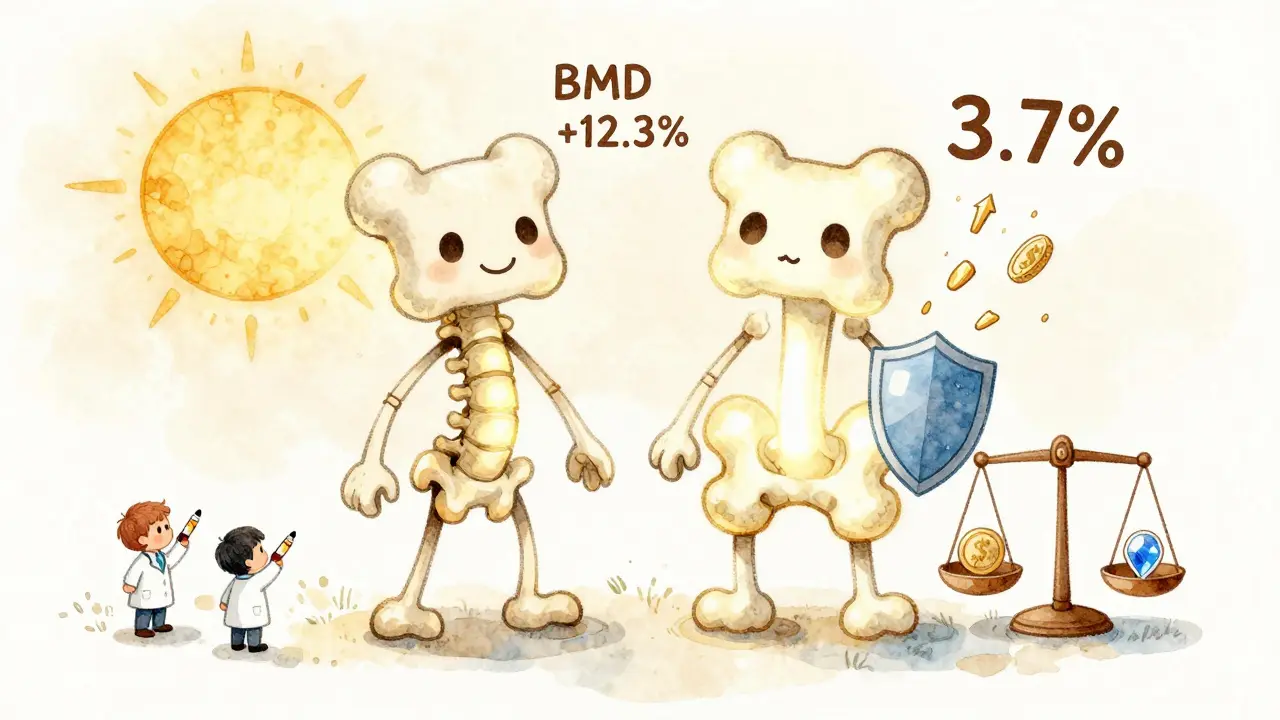
When you're dealing with severe osteoporosis, especially after a fracture or with a T-score below -3.0, just slowing bone loss isn't enough. You need to rebuild it. That's where anabolic agents like teriparatide and abaloparatide come in. Unlike bisphosphonates or denosumab that stop bone breakdown, these drugs actually stimulate your body to make new bone. They're not first-line for everyone, but for high-risk patients, they can be life-changing.
How These Drugs Work Differently
Both teriparatide and abaloparatide mimic natural signals in your body that tell bone cells to grow. Teriparatide is a synthetic version of the first 34 amino acids of parathyroid hormone (PTH). It's been around since 2002 and was the first drug of its kind approved by the FDA. Abaloparatide, approved in 2017, is a synthetic analog of a different hormone-PTH-related protein (PTHrP)-which naturally helps regulate bone formation during fetal development and lactation. The key difference lies in how they bind to the PTH1 receptor on bone cells. Teriparatide activates both the G protein and beta-arrestin pathways, which means it stimulates bone building but also triggers some bone breakdown. Abaloparatide was designed to bind more selectively to the RG conformation of the receptor, favoring the anabolic (bone-building) signal while minimizing the resorptive (bone-breaking) one. This small molecular tweak leads to measurable differences in outcomes.Fracture Reduction: What the Data Shows
The ACTIVE trial, a large randomized study with over 2,400 postmenopausal women, gave us the clearest head-to-head comparison. Over 18 months, abaloparatide reduced new vertebral fractures to just 0.58% compared to 4.22% in the placebo group. Teriparatide showed similar results in earlier trials, but direct comparisons suggest abaloparatide may have a slight edge in preventing nonvertebral fractures. A 2024 real-world study of over 43,000 women found abaloparatide users had an 17% lower risk of hip fractures than those on teriparatide. That might sound small, but for someone with a T-score of -3.2, that’s the difference between a fracture and staying fracture-free for another year. Hip fractures in older adults carry a 20% one-year mortality risk-so even a small reduction matters.Bone Density Gains: Where Each Drug Shines
At 18 months, both drugs significantly increase bone mineral density (BMD), but the pattern isn't the same. Abaloparatide consistently shows greater gains at the total hip and femoral neck-areas most critical for preventing debilitating falls. In the ACTIVE trial, total hip BMD increased by 3.41% with abaloparatide versus 2.04% with teriparatide. That’s a 1.37% difference, statistically significant and clinically meaningful. Lumbar spine gains were similar between the two after 18 months, but abaloparatide showed faster improvement at the 6-month mark. For patients who need quick results before surgery or after a recent fracture, that early boost can be reassuring. But if your main concern is spine strength, either drug will work well.Safety and Side Effects: The Real-World Trade-Off
One of the biggest advantages of abaloparatide is safety. Hypercalcemia-elevated blood calcium-occurred in 6.4% of teriparatide users versus 3.4% with abaloparatide. That’s nearly double the risk. Symptoms include nausea, fatigue, confusion, and frequent urination. In some cases, it leads to hospitalization. For patients with kidney issues or a history of high calcium, this difference isn't just a statistic-it’s a deciding factor. Patient reports back this up. On forums like Reddit and American Bone Health, users switching from teriparatide to abaloparatide commonly cite normalized calcium levels and fewer dizziness episodes. About 41% of teriparatide users reported dizziness versus 29% with abaloparatide. Injection site reactions were also more common with teriparatide (68% vs 52%).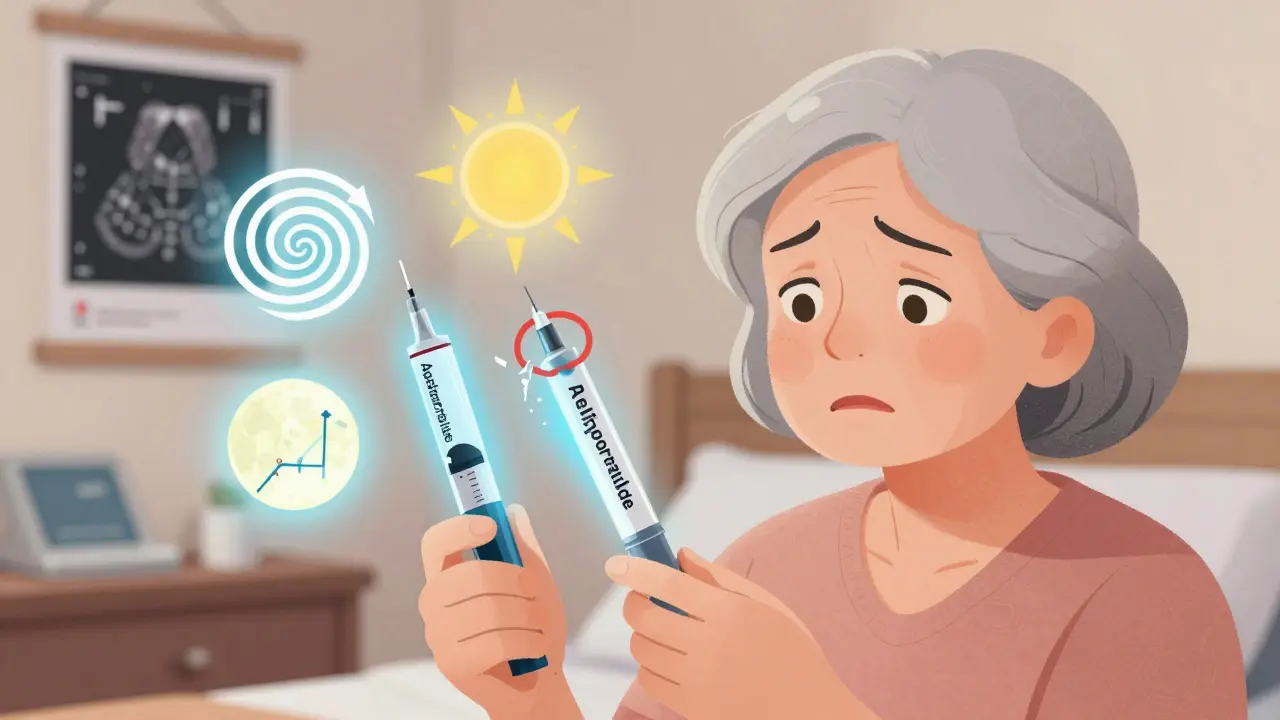
Cost and Accessibility: The Practical Reality
Let’s be honest: money matters. As of 2024, teriparatide costs about $4,200 per month. Abaloparatide runs closer to $5,750. That’s a 37% difference. And while teriparatide lost its patent in January 2024, generic versions from Teva and others have dropped the price even further-some insurance plans now cover generics for under $1,000 a month. Insurance coverage is a major hurdle. A 2023 analysis found 44% of abaloparatide users struggled with prior authorizations, compared to 28% for teriparatide. Many patients are forced to try teriparatide first, even if abaloparatide might be a better fit, just to get coverage approved.Who Gets Which Drug?
Guidelines from the American Association of Clinical Endocrinologists (AACE) in 2023 offer clear direction:- If you have severe osteoporosis with a hip T-score ≤ -3.0, abaloparatide is preferred because of its superior hip BMD gains and lower hypercalcemia risk.
- If cost is a barrier or you have no prior fractures but need strong spine protection, teriparatide remains a solid, cost-effective choice.
- If you’ve had hypercalcemia before or are sensitive to calcium fluctuations, abaloparatide is the safer bet.
What Happens After 18 Months?
Neither drug is meant for long-term use. The FDA limits treatment to 24 months total in a lifetime because of a theoretical risk of osteosarcoma (a rare bone cancer) seen in rodent studies at very high doses. That’s why doctors always follow up with an antiresorptive drug like alendronate or denosumab. The ACTIVE-EXTEND trial showed that switching to alendronate after 18 months of abaloparatide preserved 68% of the BMD gains at the hip after 3.5 years. Without that transition, bone density drops back down quickly. The same holds true for teriparatide. Timing matters-starting the next drug within 30 days after stopping the anabolic agent helps maintain results.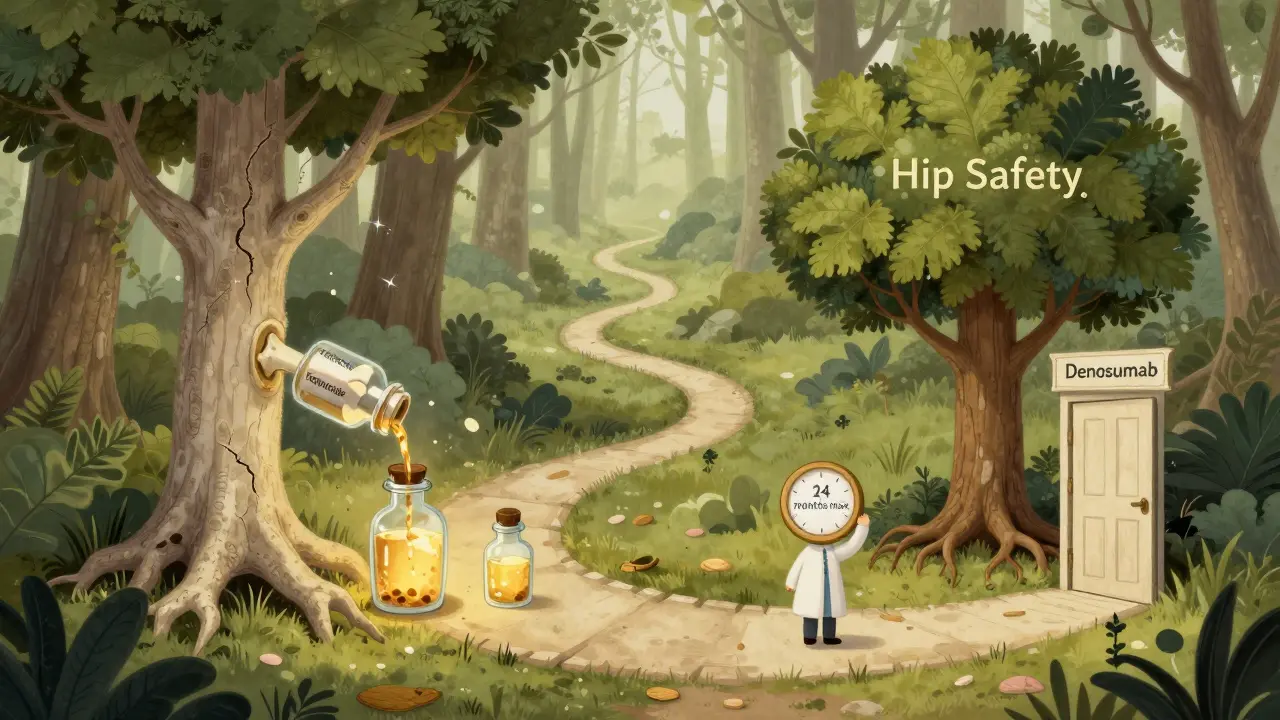
What’s Coming Next?
The future of these drugs looks promising. Radius Health is testing a weekly formulation of abaloparatide. If approved in late 2025, it could dramatically improve adherence-right now, about 24% of patients stop abaloparatide within a year, and 32% stop teriparatide, mostly due to injection burden or side effects. The FDA is also encouraging research into extending treatment beyond 24 months for high-risk patients. Early data suggests that longer use might be safe if carefully monitored. If that changes, it could shift how we treat osteoporosis entirely.Real Patient Stories
One woman, 71, fractured her hip after a minor fall. Her T-score was -3.5 at the hip. Her doctor recommended abaloparatide. After 18 months, her hip BMD rose 3.7%. She switched to denosumab and hasn’t had another fracture in two years. Another man, 68, had multiple spine fractures. He started on generic teriparatide. His spine BMD improved by 12.3%, but he developed persistent dizziness and high calcium. He switched to abaloparatide, his symptoms cleared, and his hip BMD held steady. There’s no one-size-fits-all. But knowing the differences helps you and your doctor make the best choice.Monitoring Your Progress
You won’t feel your bones getting stronger. That’s why DXA scans are critical. Get one at 6 months and again at 18 months. If your lumbar spine BMD hasn’t increased by at least 3% by 6 months, your doctor may consider switching therapies. Some people are just poor responders, and it’s better to find out early. Keep track of your calcium levels monthly during the first three months. Even if you feel fine, high calcium can sneak up on you. Drink plenty of water, avoid calcium supplements unless prescribed, and report any nausea or confusion immediately.Final Thoughts
Teriparatide and abaloparatide aren’t just two more osteoporosis drugs. They’re tools to rebuild what’s been lost. Abaloparatide offers better hip protection and fewer side effects, but teriparatide remains a reliable, affordable option. The right choice depends on your fracture history, bone density location, cost, and how your body responds. If you’re at high risk, don’t settle for just slowing bone loss. Ask your doctor about anabolic therapy. The right one could keep you standing strong for years to come.Can you take teriparatide and abaloparatide together?
No. Both drugs work through the same receptor pathway, and using them together offers no added benefit and increases the risk of side effects like hypercalcemia. Treatment guidelines strictly limit use to one anabolic agent at a time, and only for up to 24 months total in a lifetime.
Is abaloparatide better than teriparatide for spine fractures?
Both drugs are highly effective at reducing spine fractures, and after 18 months, their results are very similar. Abaloparatide shows a faster initial increase in lumbar spine bone density, but the long-term outcomes are nearly identical. If spine protection is your main goal, either drug will work well.
Why is teriparatide cheaper than abaloparatide?
Teriparatide’s patent expired in January 2024, and generic versions are now widely available. Abaloparatide is still under patent protection, meaning no generics exist yet. Generic teriparatide can cost as little as $1,000 per month, while abaloparatide remains over $5,500 without discounts.
Do you need to refrigerate these drugs?
Yes. Both teriparatide and abaloparatide must be stored between 2°C and 8°C (36°F to 46°F). They should never be frozen. Once you start using the pen, you can keep it at room temperature for up to 28 days, but always check the manufacturer’s instructions. Improper storage can reduce effectiveness.
Can men use these drugs for osteoporosis?
Yes. Both teriparatide and abaloparatide are FDA-approved for men with severe osteoporosis at high risk of fracture. Clinical trials included male participants, and results show similar improvements in bone density and fracture reduction as seen in women.
What happens if you miss a dose?
If you miss a dose, take it as soon as you remember on the same day. If it’s already the next day, skip the missed dose and return to your regular schedule. Never take two doses in one day. Consistency matters-missing more than two doses a week can reduce effectiveness.
Are there alternatives if I can’t afford either drug?
Yes. If cost is a barrier, your doctor may start with a potent antiresorptive like denosumab or intravenous bisphosphonates. These don’t build bone but stop it from breaking down rapidly. For many patients, they’re effective enough. Anabolic agents are reserved for those with very high fracture risk or who haven’t responded to other treatments.
Hakim Bachiri
December 28, 2025 AT 19:28Celia McTighe
December 29, 2025 AT 17:45Ryan Touhill
December 30, 2025 AT 09:01Teresa Marzo Lostalé
December 31, 2025 AT 20:26ANA MARIE VALENZUELA
January 2, 2026 AT 02:08Bradly Draper
January 3, 2026 AT 11:00Gran Badshah
January 3, 2026 AT 23:52Ellen-Cathryn Nash
January 5, 2026 AT 12:58Samantha Hobbs
January 7, 2026 AT 12:42Nicole Beasley
January 8, 2026 AT 15:34sonam gupta
January 9, 2026 AT 14:40