
Tetracycline Photosensitivity Risk Calculator
Tetracycline antibiotics like doxycycline can cause severe photosensitivity reactions. This tool helps you calculate your risk of a reaction based on your medication and sun exposure habits.
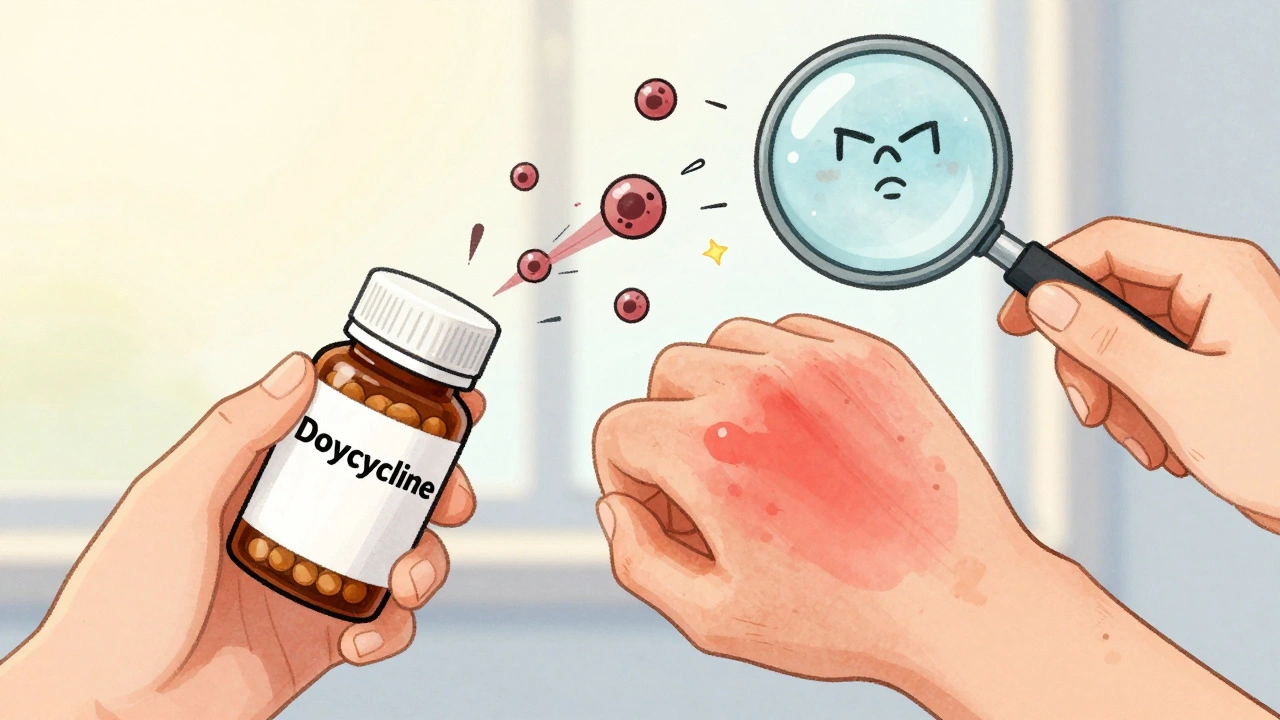
When you're prescribed tetracycline, doxycycline, or another antibiotic in this class, your doctor is likely treating a serious infection-maybe acne, Lyme disease, or a respiratory bug. But there’s something they might not tell you: tetracycline photosensitivity can turn a sunny afternoon into a painful, blistering nightmare. You don’t need to be on the beach for hours. Just 15 minutes of midday sun while on doxycycline can trigger a reaction that looks like a bad sunburn, leaves dark stains on your skin, and sometimes even lifts your nails off. And it’s not rare. About 5 to 10% of people taking these drugs experience it. For some, it’s so severe they have to stop the medication entirely.
Why Tetracycline Makes Your Skin Sensitive to Sunlight
Tetracycline doesn’t just kill bacteria-it also absorbs UV light. Specifically, it soaks up UV-A rays (320-425 nm), the kind that penetrate deep into your skin, even through clouds and windows. Once it’s activated by sunlight, it creates reactive oxygen molecules that attack your skin cells. Think of it like rust forming on metal, but inside your body. These molecules damage your cell membranes, proteins, and even your DNA. That’s what causes the redness, blistering, and long-lasting brown spots.
This isn’t an allergy. It’s phototoxicity-meaning the drug and sunlight together create direct chemical damage. You don’t need to be sensitive to the drug beforehand. If you’re taking it and get too much sun, your skin will react. The worst offenders? Doxycycline and demeclocycline. Doxycycline, the most commonly prescribed form, causes phototoxic reactions in up to 18.5% of people taking high doses. Minocycline? Much safer-under 2% of users have issues. That’s why dermatologists often choose minocycline for acne patients who spend time outdoors.
What the Reaction Looks Like
Most people notice a sunburn-like redness within hours of sun exposure. But unlike a regular sunburn, it can be more intense, more localized, and last longer. Some develop raised bumps or blisters. The worst part? The hyperpigmentation. Up to 70% of people who react end up with dark brown or gray patches on their face, neck, arms, or hands that can linger for months-even after they stop the antibiotic.
And it’s not just your skin. About 15-20% of people develop photo-onycholysis: the nail separates from the nail bed, usually starting at the tip. It’s painless at first, but the nail can become brittle or discolored-yellow, white, or brown. In rare cases, you might get pseudoporphyria: fragile skin that blisters easily from minor trauma, like hugging someone or brushing against a rough surface. These reactions often show up 3-6 weeks after starting the drug, so you might not connect them to the antibiotic right away.
Which Tetracyclines Are Safest?
Not all tetracyclines are created equal when it comes to sun sensitivity.
- Doxycycline: Highest risk. Up to 42% of people on high doses (1200 mg/day) react in controlled light tests. Even at 100 mg daily for acne, it’s the top cause of photosensitivity in this class.
- Demeclocycline: Also high risk. Less commonly used, but if you’re on it, treat sun exposure like a medical emergency.
- Tetracycline HCl: Moderate risk. Still causes reactions, and it’s the one most linked to pseudoporphyria.
- Minocycline: Lowest risk. Only about 1-2% of users get phototoxic reactions. It’s the go-to for patients who work outside, play sports, or live in sunny climates.
- Sarecycline and omadacycline: Newer options with lower phototoxic potential (3-5% vs 18% for doxycycline), but they’re expensive and not always covered by insurance.
If you’re on antibiotics for acne or rosacea, ask your doctor: Is minocycline an option? It works just as well for most skin conditions-and you won’t need to live like a vampire.
How to Protect Yourself
Preventing tetracycline photosensitivity isn’t about avoiding the sun entirely. It’s about smart, consistent protection.
- Use mineral sunscreen, not chemical. Zinc oxide and titanium dioxide physically block UV-A rays. Chemical sunscreens (like avobenzone or oxybenzone) don’t block the full range of wavelengths that trigger tetracycline reactions. Look for SPF 50+ with zinc oxide as the first active ingredient.
- Apply enough. Most people use only 25-30% of the recommended amount. For your face and neck, you need about half a teaspoon. Reapply every 2 hours, or right after swimming or sweating.
- Avoid peak sun hours. Between 10 a.m. and 4 p.m., UV-A radiation is strongest. Plan outdoor time for early morning or late afternoon.
- Wear UPF 50+ clothing. A wide-brimmed hat (3+ inches) blocks 73% of UV from your face and neck. Long-sleeved shirts made of tightly woven fabric are better than sunscreen alone.
- Protect your eyes and nails. UV-A passes through car windows. Install UV-blocking window film if you drive a lot. And if you notice your nails lifting, stop sun exposure immediately and tell your doctor.
One patient on Healthgrades reported zero reactions after 6 months on doxycycline-just by wearing SPF 50+ every single day, rain or shine. That’s not luck. That’s discipline.
What Most Doctors Don’t Tell You
A 2022 American Academy of Dermatology survey found that 68% of patients who had photosensitivity reactions said their doctor never warned them. That’s not negligence-it’s oversight. Many providers assume patients know to use sunscreen. But they don’t know why it matters with tetracycline. They don’t know that chemical sunscreens won’t help. They don’t know that a 15-minute walk to the mailbox could trigger a reaction.
Even worse, many patients think if they didn’t burn on day one, they’re safe. But reactions often build up over time. You might feel fine for two weeks, then suddenly wake up with a red, peeling neck. That’s why consistent protection from day one is critical.

What to Do If You React
If you notice redness, blistering, or nail changes:
- Stop sun exposure immediately.
- Apply cool compresses and aloe vera to soothe the skin.
- Don’t pop blisters-they increase infection risk.
- Call your doctor. They may switch you to minocycline or another antibiotic.
- Document the reaction. Take photos. Note the date and how long you were in the sun. This helps your doctor track patterns.
Severe reactions can lead to emergency room visits. In 2022, 22% of patients with tetracycline photosensitivity went to the ER. Most of those cases were preventable.
Is There a Better Alternative?
If you’re on doxycycline for acne or rosacea, minocycline is your best bet. It’s equally effective, has fewer GI side effects, and is far less likely to cause sun damage. For Lyme disease or other infections, doxycycline is still the gold standard-but if you’re going to be outside, talk to your doctor about whether the risk is worth it.
Newer antibiotics like sarecycline (Seysara) and omadacycline (Nuzyra) were designed to reduce phototoxicity. But they cost 15-40 times more than generic doxycycline. For most people, the trade-off isn’t worth it unless you’re in a high-sun environment or have had a severe reaction before.
Bottom Line: Sun Safety Isn’t Optional
Tetracycline photosensitivity isn’t a side effect you can ignore. It’s a predictable, preventable risk that affects thousands every year. The science is clear: UV-A + tetracycline = skin damage. The solutions are simple: mineral sunscreen, protective clothing, and avoiding midday sun. But none of it works if you don’t start on day one.
If you’re taking doxycycline or any tetracycline, treat every day like it’s beach day-even in winter. Wear sunscreen. Wear a hat. Don’t assume you’re safe because it’s cloudy. And if your doctor didn’t warn you? Ask them why.
Your skin will thank you.
Can I still go outside if I’m taking tetracycline?
Yes, but you need to be careful. You can go outside, but avoid direct sun between 10 a.m. and 4 p.m. Always wear broad-spectrum mineral sunscreen (SPF 50+ with zinc oxide), a wide-brimmed hat, and UV-protective clothing. Even short walks or driving in a car can trigger a reaction, so protection must be consistent.
Is minocycline safer than doxycycline for sun exposure?
Yes. Minocycline has a phototoxic reaction rate of less than 2%, compared to 15-42% for doxycycline depending on dose. For people who spend time outdoors, work outside, or live in sunny areas, minocycline is the preferred choice for acne and rosacea because it’s just as effective with far less sun risk.
Do chemical sunscreens work for tetracycline photosensitivity?
No. Chemical sunscreens like avobenzone or oxybenzone don’t block the full UV-A range (320-425 nm) that triggers tetracycline reactions. Only mineral sunscreens with zinc oxide or titanium dioxide provide reliable protection. Look for products where zinc oxide is listed as the first active ingredient.
How long does tetracycline photosensitivity last?
The immediate reaction-redness, blistering-usually fades in 1-2 weeks. But the dark pigmentation (hyperpigmentation) can last for months or even over a year. In rare cases, it may be permanent. The sooner you stop sun exposure and switch antibiotics, the better your chances of recovery.
Can tetracycline cause nail damage?
Yes. About 15-20% of people on high-risk tetracyclines like doxycycline develop photo-onycholysis, where the nail separates from the nail bed. It usually starts at the tip and can affect one or several nails. Discoloration (white, yellow, or brown) can also occur. If you notice nail changes, reduce sun exposure and talk to your doctor.
Should I stop taking tetracycline if I get sunburned?
Don’t stop without talking to your doctor. A mild reaction might be managed with better sun protection and a switch to minocycline. But if you have blisters, severe pain, or nail changes, your doctor may need to switch your antibiotic. Never stop antibiotics abruptly unless directed-this can lead to antibiotic resistance or infection relapse.
Marvin Gordon
December 4, 2025 AT 23:10Just got back from a hike and remembered I'm on doxycycline. Wore my zinc oxide sunscreen, hat, and long sleeves. No burn. No drama. Seriously, it's not that hard. Just don't be lazy.
Deborah Jacobs
December 6, 2025 AT 04:55My skin turned the color of a burnt toast sandwich after two days on doxycycline. I thought I was just sunburned. Turns out? My skin was screaming. Now I wear UPF 50+ shirts like they're pajamas. And yes, I look like a camp counselor in July, but at least my face isn't peeling off. Also, mineral sunscreen is non-negotiable. Chemical ones? They might as well be glitter.
Lucy Kavanagh
December 7, 2025 AT 06:31Did you know the FDA knew about this for decades? But they let Big Pharma keep pushing doxycycline because it's cheap. Meanwhile, minocycline? Too expensive to market. That’s why your doctor never warned you. They’re paid by the pill. Your skin? Just collateral damage. I saw a whistleblower report once-2003. They buried it. You think this is about health? Nah. It’s about profit.
Stephanie Fiero
December 9, 2025 AT 03:01Okay but like. I switched to minocycline after my nails started lifting. Like, literally. One day they were fine, next day they were floating. I cried. Then I googled and found this post. Now I wear sunscreen like it's my job. And guess what? My acne is still gone. So stop being lazy. Just. Wear. The. Sunscreen. 💪
Michael Dioso
December 10, 2025 AT 07:08Minocycline is ‘safer’? Lmao. It causes blue-gray skin discoloration in 10% of long-term users. You think that’s better than a sunburn? And doxycycline isn’t the only one-tetracycline itself is worse. And you’re telling people to just ‘switch’? Like it’s a flavor of yogurt. You’re not a doctor. Don’t give medical advice on Reddit.
Krishan Patel
December 11, 2025 AT 17:56Human beings were not meant to be chemically manipulated by pharmaceuticals. The body, when left in harmony with nature, heals itself. Tetracycline is a synthetic abomination. Sunlight is sacred. To poison the body with antibiotics and then fear the sun? This is the spiritual decay of modern medicine. Seek herbal alternatives. Sun exposure is not the enemy-fear is.
sean whitfield
December 12, 2025 AT 16:11Wear sunscreen. Big deal. Next you'll tell me to brush my teeth. Wow. Groundbreaking. I'm shocked the FDA didn't include this in the warning label. Oh wait-they did. But nobody reads the tiny print. Like I'm supposed to care. I'm on antibiotics. I'm not going to turn into a vampire. I'll take my chances.
Jennifer Patrician
December 13, 2025 AT 08:18They’re hiding the truth. The UV-A damage? It’s not just skin. It’s your mitochondria. They’ve been studying this since the 90s. The photosensitivity isn’t a side effect-it’s a warning sign your cells are being hijacked. And the ‘mineral sunscreen’ fix? That’s just a bandage. The real fix? Stop taking the damn drug. But they won’t tell you that because the patent’s still active.
Mellissa Landrum
December 14, 2025 AT 21:39my friend took doxy for acne and her neck looked like a map of africa. like. actual dark patches. she thought it was just a tan. took 18 months to fade. now she only wears hats and a mask. i told her to quit the drug but she said her doc said it was fine. doc is a clown. also, why is minocycline so expensive? because they want you to suffer. capitalism.
Mark Curry
December 14, 2025 AT 22:02It’s wild how something so simple-sunscreen-can prevent so much pain. I’ve been on minocycline for 8 months. Wore sunscreen every day. No burns. No stains. Just… life. I used to think I was being paranoid. Turns out, I was just paying attention. 🙏
Ali Bradshaw
December 15, 2025 AT 08:08Had a patient last week-28, outdoor firefighter, on doxycycline. Got a full-body blister reaction after a 20-minute break. They didn’t know about the UV-A thing. I showed them this post. Now they’re on minocycline. Changed their life. Just… please, people. Read the fine print. Your skin isn’t replaceable.
an mo
December 15, 2025 AT 11:39Phototoxicity is a pharmacokinetic artifact of tetracycline’s chromophore absorption spectrum. The reactive oxygen species cascade triggers NF-kB-mediated inflammation and melanogenesis via tyrosinase upregulation. Mineral sunscreens inhibit this via physical photonic scattering. Chemical filters fail due to inadequate UVA-PF. This is not ‘sun safety’-it’s biophysical risk mitigation. Your dermatologist should have explained the quantum yield of doxycycline’s photoexcitation. But they didn’t. Because they’re not scientists. They’re billers.