
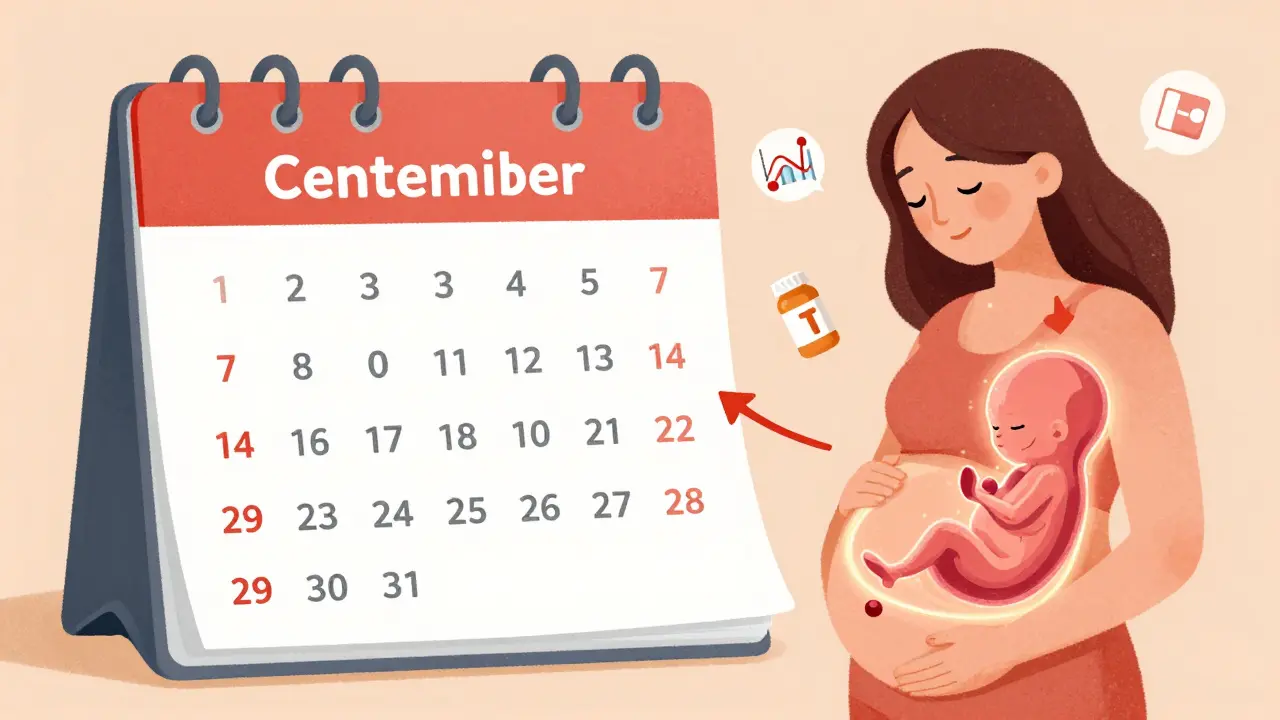
When you find out you're pregnant, your body changes in ways you can't always see. One of the most important but often overlooked changes is how your thyroid works. If you're already taking thyroid medication-usually levothyroxine-your dose likely needs to change. Right away. Not next month. Not at your next appointment. Levothyroxine is the only thyroid medication recommended during pregnancy, and getting the dose wrong can affect your baby’s brain development.
Why Thyroid Hormone Matters in Pregnancy
Your baby doesn’t make its own thyroid hormone until about 12 weeks into pregnancy. Before that, it relies entirely on you. Thyroid hormone isn’t just about energy or weight-it’s critical for building your baby’s brain and nervous system. Studies show that untreated or poorly managed hypothyroidism during pregnancy can lower a child’s IQ by 7 to 10 points. It also increases the risk of miscarriage, preterm birth, and preeclampsia.Here’s the hard truth: 85% of women with pre-existing hypothyroidism need a higher dose of levothyroxine during pregnancy. And 75% of those increases are needed by the end of the first trimester. That means if you’re taking the same dose you were before pregnancy, you’re likely undermedicated-sometimes dangerously so.
How Much More Do You Need?
There’s no one-size-fits-all answer, but guidelines give us clear starting points.If you already have hypothyroidism and just found out you’re pregnant, most experts recommend increasing your dose by 20% to 30% as soon as possible. That’s about 12.5 to 25 micrograms more per day. For someone taking 100 mcg daily, that means jumping to 120-125 mcg. Some doctors, especially those following ACOG guidelines, recommend an immediate 50 mcg increase, regardless of current dose.
For women newly diagnosed with hypothyroidism during pregnancy, the starting dose depends on how high their TSH is:
- If TSH is 10 mIU/L or higher: start at 1.6 mcg per kg of body weight per day
- If TSH is under 10 mIU/L: start at 1.0 mcg per kg per day
A 2021 NIH study tracked 280 pregnant women and found their average levothyroxine dose went from 85.7 mcg before pregnancy to 100.0 mcg in the first trimester-an increase of 16.7%. That’s not small. That’s the difference between a healthy pregnancy and a risky one.
When to Adjust the Dose
Don’t wait for your first prenatal visit. Thyroid hormone demand spikes within days of conception. By the time you miss your period, your body already needs more. Waiting until week 6 or 8 to adjust your dose is too late for your baby’s brain.Many women report having to push back against their OB-GYNs who say, “Let’s wait and see.” But guidelines from the American Thyroid Association are clear: increase the dose immediately upon confirmation of pregnancy. If you’re unsure, ask for a copy of the 2017 ATA guidelines. Most doctors have access to them.
One patient shared on a support forum: “My doctor waited until 8 weeks. My TSH was 4.2. I had to get another increase. I was terrified the whole time.” That fear is real-and avoidable.
How Often Should You Get Tested?
Testing TSH every 4 weeks is the standard. But timing matters.Here’s a practical schedule:
- Test TSH as soon as pregnancy is confirmed
- Recheck every 4 weeks until TSH stabilizes
- After stabilization, test again at 24-28 weeks and 32-34 weeks
Some doctors skip the first test entirely. A 2019 survey found that 68% of OB-GYNs don’t check TSH at the first prenatal visit for women with known hypothyroidism. That’s a gap in care. Don’t assume it’s being done. Ask for it.
What TSH Level Is Target?
This is where opinions split. The American Thyroid Association says TSH should stay at or below 2.5 mIU/L throughout pregnancy. The Endocrine Society agrees for the first trimester but allows up to 3.0 mIU/L in the second and third. Other experts argue that pushing TSH below 2.5 might lead to overtreatment.But here’s what the data says: women with TSH above 2.5 in the first trimester have a 69% higher risk of miscarriage. That’s not a small risk. It’s a reason to aim for the tighter target.
There’s no perfect number, but if your TSH is over 2.5, especially in early pregnancy, your doctor should consider increasing your dose-even if you feel fine. Symptoms don’t always match your lab results.
How to Take Levothyroxine Correctly
Taking your pill right matters just as much as how much you take.- Take it on an empty stomach, first thing in the morning
- Wait 30 to 60 minutes before eating or drinking anything except water
- Avoid calcium, iron, prenatal vitamins, or antacids for at least 4 hours after taking it
These supplements can block up to half the absorption of your medication. If your prenatal vitamin has iron or calcium, take it at dinnertime, not with your thyroid pill.
Some patients try to make up for missed doses by taking extra pills on weekends. That’s risky. Taking two extra doses on Saturday and Sunday can cause your TSH to spike on Monday. Better to spread the extra 12.5-25 mcg over the week-take an extra 1/4 tablet every other day.
What About Breastfeeding?
Good news: levothyroxine is safe during breastfeeding. Only tiny amounts pass into breast milk, and studies show no effect on the baby’s thyroid function or development. You can keep your pregnancy dose or return to your pre-pregnancy dose after delivery. Your doctor will likely check your TSH 6 weeks postpartum to make sure you’re back on the right track.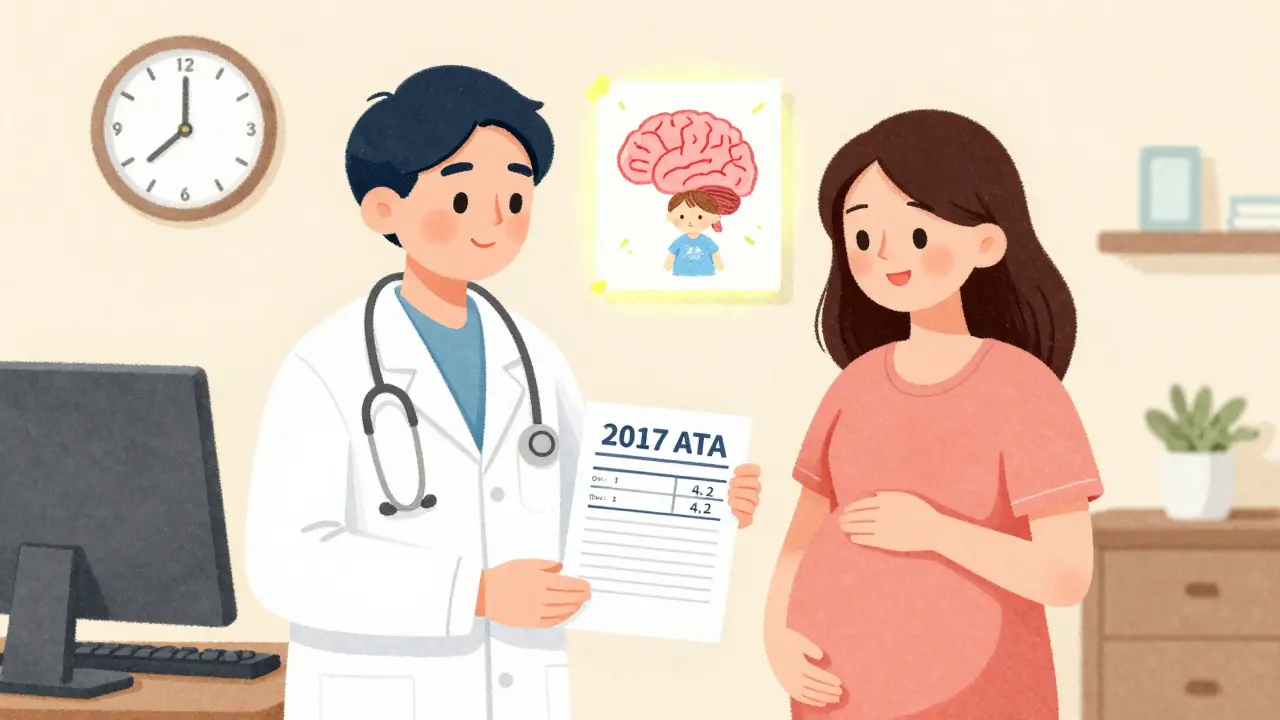
Real Challenges and How to Overcome Them
Even with clear guidelines, things go wrong. Patients report delays, dismissals, and confusion. Here’s how to protect yourself:- Keep a copy of your pre-pregnancy TSH and dose
- Write down your target TSH range (2.5 or below)
- Ask for your labs to be sent to you-don’t wait for a call
- If your doctor says “wait,” ask: “What’s the risk if I don’t adjust now?”
Technology is helping. Apps like MyThyroid have been used by over 12,500 pregnant women and helped 87% improve their medication adherence. Electronic health records like Epic now have alerts that pop up when a pregnant patient is on thyroid medication-prompting doctors to check TSH.
What’s Changing in 2026?
The field is moving fast. In 2023, the ATA reversed its stance and now recommends universal TSH screening for all pregnant women in early pregnancy-not just those with symptoms or history. That’s a big shift.AI tools are being tested to predict the exact dose a woman needs based on her weight, TSH, and thyroid antibodies. One 2022 trial showed AI-guided dosing improved TSH control by 28% compared to standard methods. Clinical trials are ongoing, and precision dosing could become standard within the next few years.
But for now, the rules are simple: increase your dose early. Test often. Take your pill right. Advocate for yourself. Your baby’s brain is counting on it.
What Happens If You Don’t Adjust?
The risks aren’t theoretical. A 2021 study found that women whose doses were adjusted within 4 weeks of pregnancy confirmation had 23% fewer preterm births than those who waited. Delayed adjustments also correlate with lower cognitive scores in children at age 2.And it’s not just about IQ. Babies born to mothers with uncontrolled hypothyroidism are more likely to have low birth weight, respiratory problems, and developmental delays. These aren’t rare outcomes-they’re preventable ones.
Can I take my thyroid medication with my prenatal vitamin?
No. Calcium and iron in prenatal vitamins can block up to 50% of levothyroxine absorption. Take your thyroid pill on an empty stomach, wait 30-60 minutes, then eat. Take your prenatal vitamin at dinnertime, at least 4 hours after your thyroid dose.
How soon after pregnancy confirmation should I increase my dose?
As soon as possible-ideally within 24 to 48 hours. Thyroid hormone demand increases immediately after conception. Waiting until your first prenatal appointment (often at 8-10 weeks) puts your baby at risk during the most critical window for brain development.
Is it safe to breastfeed while taking levothyroxine?
Yes. Levothyroxine passes into breast milk in extremely small amounts-far below what a newborn naturally produces. It does not affect the baby’s thyroid function. You can continue your pregnancy dose or return to your pre-pregnancy dose after delivery.
Why do I need more thyroid medication during pregnancy?
Pregnancy increases thyroid hormone demand because your body produces more binding proteins, your kidneys clear hormone faster, and your baby relies on your supply until 12 weeks. Your thyroid gland can’t keep up on its own, so you need more medication.
What if my TSH is normal but I still feel tired?
Feeling tired is common in pregnancy-even with normal TSH. But if your TSH is above 2.5, especially in the first trimester, your dose may still need adjustment. Symptoms don’t always match lab values. Ask your doctor to recheck your TSH and consider a small dose increase.
Can I stop my thyroid medication during pregnancy?
Never. Stopping levothyroxine during pregnancy puts your baby’s brain development at serious risk. Even if you feel fine, your body needs the hormone for fetal growth. Always consult your doctor before making any changes.
What to Do Next
If you’re pregnant and on thyroid medication:- Call your endocrinologist or doctor today and ask: “Should I increase my dose now?”
- Request a TSH test within the next week
- Review your dosing schedule with your pharmacist
- Download the MyThyroid app to track your doses and labs
- Keep a printed copy of the 2017 ATA guidelines to show your provider if needed
Thyroid health in pregnancy isn’t optional. It’s essential. And with the right steps, you can protect your baby’s future-and your own peace of mind.
Shelby Marcel
January 24, 2026 AT 21:00ok so i just found out im preggo and my doc said keep taking my 75mcg like normal?? like wtf?? i read this and now im panicking. why didnt they tell me to up it??
Luke Davidson
January 25, 2026 AT 23:35bro this is wild. i had no idea thyroid stuff was this intense during pregnancy. my wife’s been on levothyroxine for years and we just assumed it was ‘set and forget’. now i’m scrambling to get her into an endo before her next appt. this post just saved our baby’s brain. thank you.
asa MNG
January 26, 2026 AT 13:14sooo… is this all just a big pharma scam?? 🤔 i mean… why would they make you take more pills if your body was fine before?? i think they just want to sell more synthroid. also my cousin’s friend’s neighbor’s dog got thyroid cancer after taking this stuff. 🐶💉
Alexandra Enns
January 27, 2026 AT 18:47OMG I’M SO GLAD I READ THIS BEFORE MY 8-WEEK APPT. MY DOCTOR TOLD ME TO WAIT. I WENT TO MY ENDO ON MY OWN. TSH WAS 4.1. I’M NOW ON 112.5 MCG. I WASN’T EVEN TIRRRRRED. BUT MY BABY’S BRAIN WAS STARVING. THIS ISN’T ‘CAUTION’-THIS IS SURVIVAL. CAN WE PLEASE MAKE OB-GYNS TAKE A MEDICAL ETHICS TEST BEFORE LETTING THEM PRACTICE??
Jenna Allison
January 29, 2026 AT 02:57Just to clarify-when they say 20-30% increase, that’s based on pre-pregnancy dose. So if you’re on 50 mcg, go to 60-65. If you’re on 150, go to 180-195. Don’t guess. Do the math. Also, TSH should be checked within 72 hours of confirmation, not ‘when you feel like it.’
And yes, your prenatal vitamin with iron? Take it at dinner. No exceptions. I’ve seen too many women with ‘normal’ TSH because their meds weren’t absorbed. It’s not magic. It’s chemistry.
Amelia Williams
January 29, 2026 AT 11:10Y’all. I was the person who waited until week 10. I felt fine. My TSH was 3.8. My baby’s IQ test at age 2 was in the 85th percentile. But I still cry thinking about what could’ve happened. Don’t wait for symptoms. Don’t wait for your doctor to bring it up. Be the person who asks ‘what if I’m wrong?’
And if your doctor rolls their eyes? Find a new one. Your baby deserves a warrior, not a bureaucrat.
Viola Li
January 29, 2026 AT 20:00Why are we all so obsessed with IQ scores? My grandma had hypothyroidism in the 70s and never took meds. I turned out fine. Now we’re medicating women like they’re lab rats. This is medical overreach wrapped in fear porn. What about natural thyroid support? Acupuncture? Why is the pill the only answer?
Tiffany Wagner
January 30, 2026 AT 06:58Thank you for writing this. I was so scared after my first TSH came back high. I didn’t know what to do. I printed out the ATA guidelines and showed them to my OB. She didn’t know them either. We got me on the right dose. My baby is now 6 months old and thriving. You’re not alone. Ask for help. You got this.
Sharon Biggins
February 1, 2026 AT 03:33Just wanted to say-I did exactly what this says. Increased dose day one, tested every 4 weeks, took my pill before coffee, kept the vitamin for dinner. My TSH stayed under 2.0. My son is 18 months and talking in full sentences. This isn’t hype. It’s science. And you’re worth the effort.
Chloe Hadland
February 2, 2026 AT 23:24I’m not a doctor, but I’m a mom of two. First pregnancy: I ignored everything. TSH was 5.2. Second pregnancy: I read this exact post. Increased dose day one. TSH was 1.8. My second kid is a genius. I’m not saying it’s all because of this, but… it helped. Don’t risk it.
John McGuirk
February 3, 2026 AT 08:29so who funds these ‘guidelines’? let me guess-big pharma. and the ‘studies’? all funded by the same people who make synthroid. and now you’re telling women to take more pills? what if the real problem is inflammation? or gut health? or toxins? why are we always medicating instead of healing? 🤔
Dolores Rider
February 4, 2026 AT 02:00my OB told me to wait. then my endo said if i don’t up my dose, my baby could be autistic. now i’m convinced the whole system is rigged. i think they’re tracking us through our prenatal vitamins. i stopped taking mine. now i just take my thyroid pill with water and pray. 🙏
Vatsal Patel
February 5, 2026 AT 20:32Interesting how we’ve turned motherhood into a compliance test. You’re not a mother if you don’t follow the 2.5 mIU/L rule. You’re not a good woman if you don’t take your pill at 6am with no coffee. Where’s the freedom? Where’s the trust in the body? We’ve turned biology into a spreadsheet.
Marie-Pier D.
February 6, 2026 AT 11:35My heart goes out to every woman reading this who’s been dismissed. I was one of them. I cried in the parking lot after my doctor said ‘you’re fine.’ I called my endo at midnight. I got my dose increased. My daughter is 3 now and reading chapter books. She’s brilliant. Don’t let anyone make you feel crazy for fighting for your baby. You’re not being dramatic-you’re being a mom.
❤️ You’re doing great.
Heather McCubbin
February 7, 2026 AT 09:21Let me just say… I had a miscarriage at 7 weeks. My TSH was 5.6. My doctor said ‘it happens.’ Now I know it didn’t have to. I’m pregnant again. I’m on 125 mcg. I test every 2 weeks. I’m not taking any chances. If you’re reading this and you’re not on the right dose? You’re not just risking your baby’s IQ-you’re risking your future. I lost one. I won’t lose another.