
The Science of Sound Masking
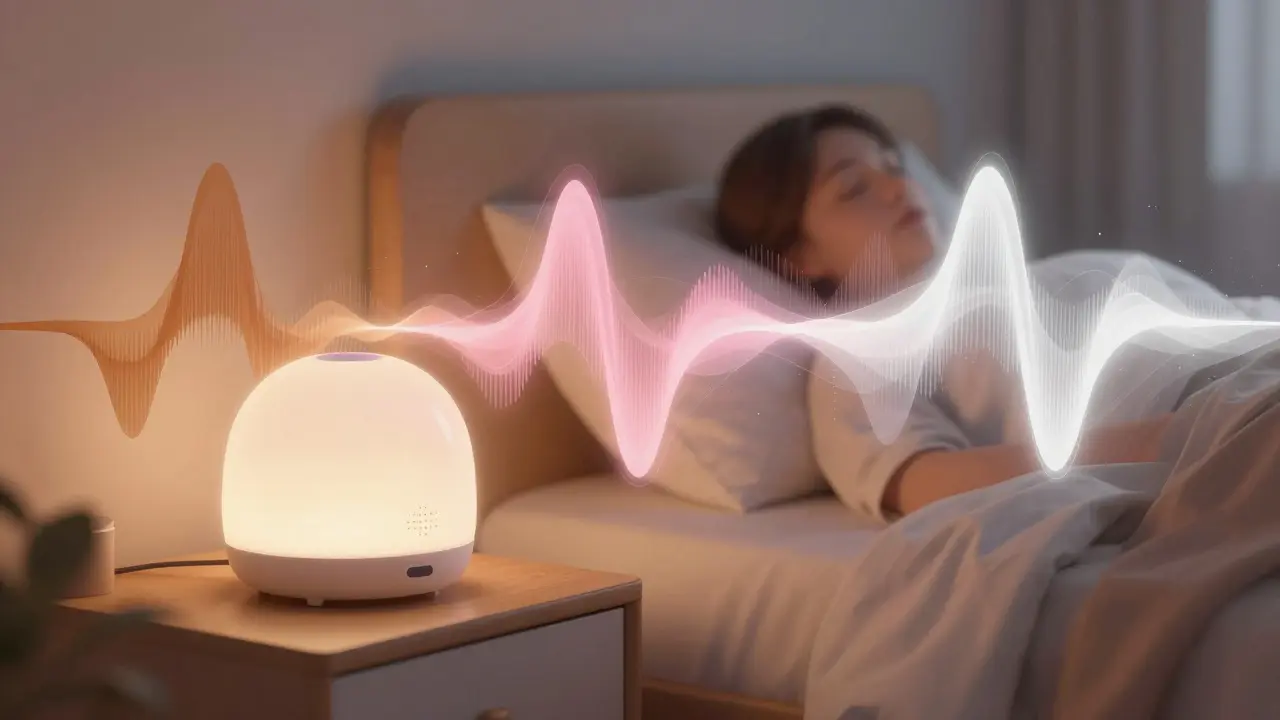
One of the most effective ways to quiet the noise is, ironically, by adding more noise. This is called sound masking. The goal isn't to drown out the tinnitus completely-which can sometimes make your brain "hunt" for the sound even more-but to create a baseline of sound that makes the ringing less prominent.When setting up your sound masking, the volume is the most critical factor. You want the external sound to be just slightly below the volume of your tinnitus. This creates a "wall of sound" that can reduce the perceived loudness of the ringing by 30% to 50% without adding extra stress to your auditory nerves.
Not all noise is created equal. Depending on the frequency of your ringing, some "colors" of noise work better than others:- White Noise is a flat sound across all frequencies (20Hz to 20,000Hz). It sounds like static and is great for general masking.
- Pink Noise balances the energy per octave, emphasizing lower frequencies. It sounds more like steady rain.
- Brown Noise is even deeper and bass-heavy, sounding like a distant rumble or a low roar. Surprisingly, about 68% of sufferers find this the most soothing for nighttime use.
- Green Noise focuses on mid-frequencies, often mimicking the sound of wind in trees.
Choosing the Right Tools for the Job
Depending on your budget and how sensitive your ears are, you have several options for delivering these sounds. A simple desk fan is a classic choice, usually putting out 45-55 decibels of consistent ambient noise. However, fans are limited because the sound is fixed. For those who need more control, dedicated sound machines like the LectroFan Classic allow you to customize the sound and volume up to 60 decibels. Many users find that a high-quality machine is superior to smartphone apps, which can suffer from battery drain or inconsistent audio quality. For example, some users report that a dedicated machine set to brown noise at 52dB can cut their time to fall asleep from over 90 minutes to under 30.| Method | Best For | Typical Efficacy Score | Main Drawback |
|---|---|---|---|
| Dedicated Machines | Consistent, high-quality masking | 4.3/5 | Higher initial cost |
| Smartphone Apps | Testing different noise colors | 3.8/5 | Battery/Performance issues |
| Household Fans | Basic, low-cost ambient noise | 3.5/5 | Fixed noise patterns |
Optimizing Your Sleep Sanctuary
Your bedroom environment plays a bigger role in tinnitus perception than most people realize. When your body is stressed or uncomfortable, your nervous system becomes more reactive, which can make the ringing feel louder. Keep your bedroom temperature between 60-67°F (15.6-19.4°C). This range is generally considered optimal for deep sleep. Humidity also matters; keeping it between 40-60% prevents the nasal and auditory passages from drying out, which some specialists believe can reduce auditory nerve sensitivity. Beyond the physical room, you need a "buffer zone." The 90 minutes before you hit the pillow are crucial. Avoid screens, as the blue light and mental stimulation keep your brain alert. Combining sound masking with a strict "no-screen" rule before bed has been shown to improve sleep outcomes by 47% compared to using sound masking alone.Mental Strategies and Long-Term Relief
While sound machines help the immediate symptom, they don't address the emotional distress. This is where Cognitive Behavioral Therapy (CBT) comes in. CBT for tinnitus isn't about making the sound go away; it's about changing how your brain reacts to it. By retraining your brain to perceive the tinnitus as a neutral background noise rather than a threat, you lower your cortisol levels. Since cortisol spikes during tinnitus flare-ups, reducing this stress hormone is essential for maintaining a healthy sleep architecture. Clinical data suggests that CBT is significantly more effective at reducing nighttime distress-with a 72% success rate-than sound therapy alone. If you're struggling, try a 60-minute pre-sleep ritual: 20 minutes of meditation to lower stress, 20 minutes of screen-free reading to wind down, and 20 minutes of adjusting your sound therapy levels. It takes a few weeks for the brain to adapt to this routine, but the consistency pays off.
Advanced Medical Options
For those who find that basic masking and sleep hygiene aren't enough, there are medical-grade interventions. Modern hearing aids now often include integrated notch therapy, which targets the specific frequency of your tinnitus to "filter" it out. This is particularly effective for people who have concurrent hearing loss. More recently, the FDA cleared the Lenire device. This is a neuromodulation system that uses bimodal stimulation-combining sound therapy with mild electrical pulses to the tongue-to help the brain ignore the tinnitus signal. It is also worth noting that the future of this field is moving toward biometric feedback. Researchers are developing systems that use EEG monitoring to detect brainwave patterns in real-time and automatically adjust the frequency and volume of the masking sound to keep you in a deep sleep state.Will using white noise every night make my tinnitus worse?
Generally, no. However, some specialists warn against "total masking," where you try to completely silence the tinnitus. The goal should be partial masking-keeping the external sound just below the ringing. This prevents your brain from becoming overly focused on the internal noise when the machine is turned off.
Which noise color is actually the best?
There is no one-size-fits-all answer, but Brown noise is frequently reported as the most effective for nighttime use because of its deeper, lower frequencies. It's best to test 3-5 different noise types over a week to see which one your brain finds most soothing.
How long does it take for these strategies to work?
While sound masking can provide immediate relief, systemic changes-like consistent sleep scheduling and CBT-usually take 2-3 weeks of strict adherence before you see a significant decrease in sleep disturbances.
Can I use earplugs if I also have a sound machine?
Does a strict wake-up time actually help the ringing?
Yes. Maintaining identical bedtimes and wake times within a 30-minute window, even on weekends, helps regulate your circadian rhythm. This stability can reduce tinnitus-related sleep disturbances by about 33%.
Stephen Luce
April 6, 2026 AT 23:26I totally get how draining this is. The silence is honestly the worst part of the whole experience.
GOPESH KUMAR
April 8, 2026 AT 11:45The obsession with 'noise colors' is just a modern attempt to categorize the chaos of existence. We try to label a rumble as 'brown' to feel like we have control over a biological glitch, but in reality, the brain is just projecting its own void. Most of these machines are just overpriced fans with a marketing budget. If you actually understand the nature of auditory perception, you'd realize that the external sound is just a distraction from the internal silence we all fear. It's all just a psychological game of hide and seek with your own nerves.
jack hunter
April 8, 2026 AT 14:50brown noise is a joke... who actually thinks a 'rumble' helps?? its just more noise for the sake of noise. we are just masking the sympton and pretendin the problem is gone. its a loop of copeing mechanisms that never actually solves the core void of the humn condition.
Michael Flückiger
April 10, 2026 AT 08:28Don't give up hope everyone!!! Just keep trying different things until it clicks!!! It really does get better with time and patience!!!
Windy Phillips
April 12, 2026 AT 01:15It is truly exhausting to witness so many people neglecting their spiritual alignment while chasing electronic fixes...!! Your environment is a reflection of your internal clutter, and no amount of 'brown noise' will fix a soul that is out of balance...!! Proper mindfulness is the only sustainable path, though few possess the discipline for it...!!
Benjamin cusden
April 12, 2026 AT 04:55The mention of the Lenire device is the only part of this discussion that borders on actual science. Most people are content with the primitive application of white noise, which is essentially the auditory equivalent of putting a band-aid on a broken leg. If you haven't looked into bimodal neuromodulation, you are simply wasting your time with consumer-grade gadgets. The efficacy of CBT is well-documented, but it requires a level of cognitive rigor that the average user simply doesn't possess.
Ethan Davis
April 13, 2026 AT 22:56Funny how they push these 'FDA cleared' devices. You ever wonder why we're suddenly seeing a spike in tinnitus across the board? It's not just 'aging'. Look into the new 5G tower deployments and the frequencies they're using for signal penetration. They want us buying these expensive machines to mask the frequencies they're pumping into our neighborhoods. The 'science' in this post is just a cover for the real cause of the ringing.
Ruth Swansburg
April 15, 2026 AT 16:14Stay strong! You can overcome this. Try the 60-minute ritual tonight. It works!