
When you take a medication, you expect it to help - not hurt. But sometimes, even when you follow the prescription exactly, your body reacts in ways you didn’t sign up for. That’s an adverse drug reaction (ADR). Not all reactions are the same. Some are common, predictable, and tied to the dose. Others are rare, mysterious, and can turn life-threatening overnight. Understanding the difference between Type A and Type B reactions isn’t just academic - it’s what keeps patients safe.
What Are Type A Adverse Drug Reactions?
Type A reactions are the most common. They make up 85 to 90% of all adverse drug reactions. These are predictable. They happen because the drug does exactly what it’s supposed to do - just too much, or in the wrong person. Think of it like this: if a blood pressure pill lowers your pressure, then too much of it can drop it too low. That’s a Type A reaction. It’s not a bug - it’s a feature gone wrong. Common examples include:- Stomach upset from NSAIDs like ibuprofen - affects 15-30% of users
- Dizziness or fainting when starting a new beta-blocker - happens in 10-20% of patients
- Liver damage from taking more than 4 grams of acetaminophen in a day
- Low sodium levels from carbamazepine, especially at doses over 600 mg/day
What Are Type B Adverse Drug Reactions?
Type B reactions are the opposite. They’re unpredictable. They don’t follow the dose. They don’t make sense based on how the drug works. And they’re terrifying because they can strike out of nowhere. Only 5 to 10% of all adverse reactions are Type B. But they’re responsible for about 30% of hospitalizations and serious outcomes. That’s the scary math: rare, but deadly. Examples include:- Stevens-Johnson syndrome from sulfonamides - about 1 to 6 cases per million prescriptions
- Malignant hyperthermia triggered by anesthesia - 1 in every 15,000 to 50,000 exposures
- Drug-induced lupus from hydralazine or procainamide
- Anaphylaxis to penicillin - happens in 0.01 to 0.05% of courses
Type A vs Type B: The Key Differences
Here’s how they stack up side by side:| Feature | Type A | Type B |
|---|---|---|
| Frequency | 85-90% of all ADRs | 5-10% of all ADRs |
| Predictability | High - based on pharmacology | Low - no clear pattern |
| Dose Relationship | Direct - higher dose = worse reaction | No threshold - even tiny doses can trigger it |
| Onset | Usually immediate or within hours | Delayed - days to weeks |
| Mortality Rate | Less than 5% | 25-30% |
| Prevention | Dose adjustment, monitoring | Avoidance in susceptible individuals |
| Common Mechanism | Pharmacological extension | Immune or metabolic idiosyncrasy |
The Expanded Six-Type System (A-F)
The Type A/B system is simple. Too simple, sometimes. That’s why experts now use a six-type model - and it’s becoming the global standard. Here’s what the extra types mean:- Type C: Chronic effects from long-term use. Think adrenal suppression from years of prednisone. Or osteoporosis from prolonged corticosteroids. These don’t show up on day one - they creep in over months.
- Type D: Delayed reactions. The classic example is diethylstilbestrol (DES), a drug given to pregnant women in the 1950s to prevent miscarriage. Decades later, their daughters developed a rare vaginal cancer. This is why we now track drug effects for years after approval.
- Type E: Withdrawal reactions. Stop opioids suddenly? You’ll get nausea, sweating, anxiety - within 12 to 30 hours. Same with antidepressants or blood pressure meds. It’s not the drug hurting you - it’s your body missing it.
- Type F: Therapeutic failure. This isn’t a side effect - it’s the drug not working. Like when rifampin makes birth control pills useless. Or when a patient’s antibiotics stop working because of a hidden infection. It’s easy to miss, but it’s just as dangerous as a reaction.
Why Immunological Classification Matters Too
Some Type B reactions are immune-driven. That’s where the Types I-IV system comes in. It breaks down allergic and immune responses with surgical precision.- Type I (IgE-mediated): Immediate allergic reactions. Think anaphylaxis from penicillin. Happens within minutes. Requires epinephrine.
- Type II (Cytotoxic): Antibodies attack your own cells. Like drug-induced hemolytic anemia from methyldopa or penicillin. Your immune system destroys your red blood cells.
- Type III (Immune Complex): Antibodies and drugs form clumps that clog small blood vessels. Causes serum sickness - fever, joint pain, rash - often after taking cefaclor or other antibiotics.
- Type IV (Delayed T-cell): Not IgE. Not antibodies. Just your T-cells going rogue. This is the most common type of drug rash - like the itchy, red spots from amoxicillin. Appears 7-14 days after starting the drug.
What Clinicians Really Think
A 2022 survey of over 1,200 doctors found that 78% found the Type A/B system “moderately useful” - but not enough. Why? Because real life is messy. One Reddit thread had 42 physicians arguing whether carbamazepine-induced hyponatremia was Type A or Type B. Half said Type A - because it’s dose-dependent. The other half said Type B - because not everyone gets it, even at high doses. The truth? It’s probably both. And that’s the problem. About 15% of reactions don’t fit neatly into either box. They’re hybrids. Some reactions start as Type A - like mild nausea - and then trigger an immune response that turns into Type B - like a full-blown rash. Experts like Dr. Alasdair Dearman say the A/B system is still essential for initial prescribing. But for serious cases, you need the six-type model. And increasingly, you need genetics.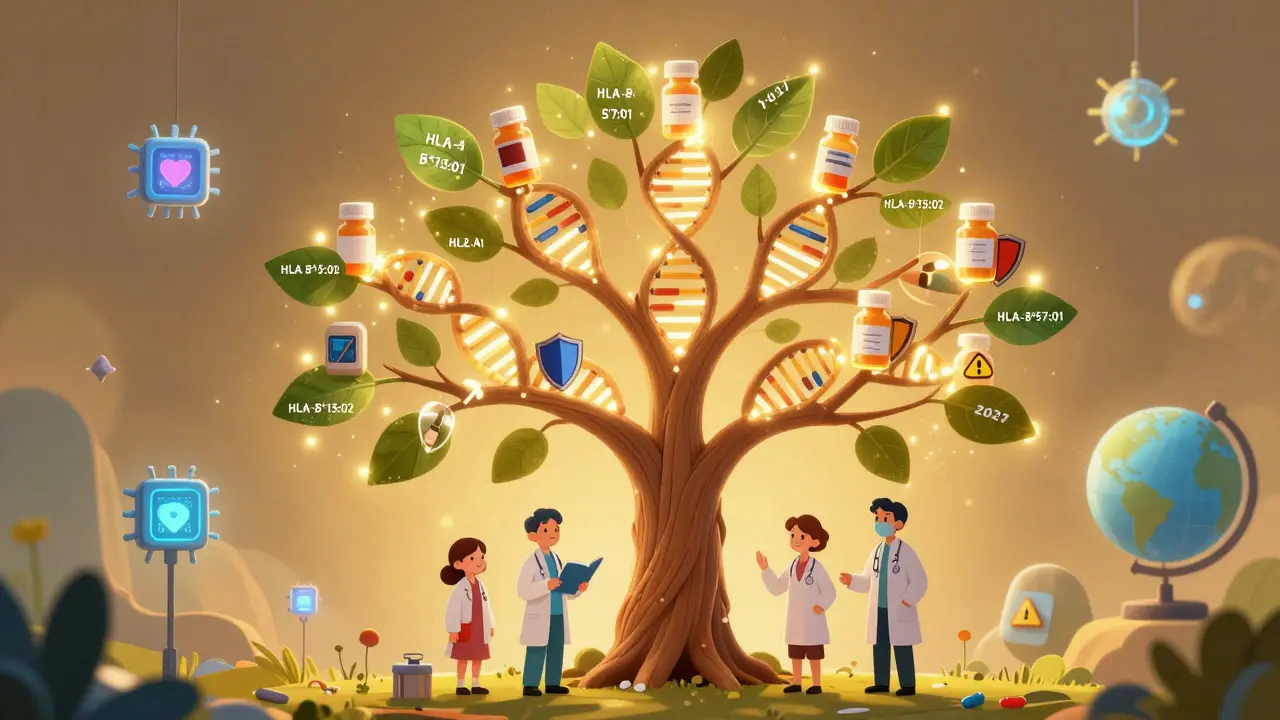
The Future: Genetics and AI Are Changing Everything
Ten years ago, a reaction like Stevens-Johnson syndrome was called “idiosyncratic.” Meaning: we didn’t know why it happened. Now we know. People with the HLA-B*15:02 gene are at massive risk of this reaction when taking carbamazepine. Same with abacavir and the HLA-B*57:01 gene. These aren’t Type B anymore - they’re predictable. We test for them before prescribing. The FDA and WHO are already testing systems that combine genetic data with ADR classification. By 2027, McKinsey predicts 60% of Type B reactions will have known genetic markers. That means the line between Type A and Type B is blurring. What was once “unpredictable” is becoming “personalized.” The World Health Organization’s 2024 pilot program is already linking pharmacogenomics to drug safety alerts. And by 2025, the ICH will require the six-type classification as the global standard for reporting.What You Can Do
You don’t need to be a doctor to stay safe.- Know your meds. If you’re on a drug that causes dizziness, don’t drive until you know how it affects you.
- Report weird symptoms. That rash? The swelling? The chest tightness? Tell your doctor - even if it seems minor.
- Ask about genetics. If you’ve had a bad reaction before, ask if testing is available.
- Keep a list. Write down every medication you’ve taken and any reaction you had. Bring it to every appointment.
Frequently Asked Questions
Are Type A reactions always harmless?
No. While Type A reactions are predictable and often mild - like nausea or dizziness - they can be serious or even deadly if not managed. For example, taking too much acetaminophen can cause acute liver failure. Overdosing on blood thinners can lead to uncontrolled bleeding. The key is that they’re dose-dependent, so adjusting the dose or stopping the drug usually resolves them.
Can you predict Type B reactions before taking a drug?
Usually not - but that’s changing. For a few drugs, genetic tests can identify people at high risk. For example, testing for the HLA-B*15:02 gene before prescribing carbamazepine can prevent life-threatening skin reactions. But for most Type B reactions, there’s no test. That’s why watching for early warning signs - like rash, fever, or swelling - is critical.
Why do some people get a rash from amoxicillin but others don’t?
That’s a classic Type B reaction - specifically Type IV, which is a delayed immune response. It’s not an allergy in the traditional sense. It’s your T-cells reacting to the drug. About 5-10% of people taking amoxicillin develop this rash, especially children. It’s usually harmless and goes away after stopping the drug. But it’s unpredictable - you can’t know who it will affect until it happens.
Is a withdrawal reaction like Type A or Type B?
Withdrawal reactions are classified as Type E - a separate category from A and B. They happen because your body adapted to the drug over time. When you stop it, your system goes into imbalance. Examples include opioid withdrawal, rebound hypertension after stopping beta-blockers, or seizures after stopping benzodiazepines. These are predictable in people who’ve used the drug long-term, but they’re not caused by the drug’s direct effect - so they’re not Type A.
Can a drug cause both Type A and Type B reactions at the same time?
Yes. A drug might cause mild dizziness (Type A) in most people, but in a small group, trigger a severe immune reaction like Stevens-Johnson syndrome (Type B). This is why doctors monitor patients closely - especially when starting a new medication. Sometimes, a Type A reaction can trigger a cascade that leads to a Type B response. These mixed reactions are why the six-type system is becoming the standard.
How common are Type F reactions, and why are they dangerous?
Type F reactions - therapeutic failures - are underreported but very dangerous. For example, rifampin can make birth control pills fail, leading to unintended pregnancy. Antibiotics can lose effectiveness due to interactions, allowing infections to spread. These aren’t side effects - they’re missed treatments. About 25% of these cases go undetected, which is why doctors always ask about all medications you’re taking, including over-the-counter pills and supplements.
Charles Barry
December 22, 2025 AT 11:23Let me tell you something the FDA doesn't want you to know - Type B reactions aren't random. They're orchestrated. Big Pharma knows who's genetically vulnerable and still pushes the drugs. HLA-B*15:02? That's not science - it's a cover-up. They test for it in Asia but not here. Why? Because profit > lives. You think your doctor's watching out for you? Nah. They're paid by the pill companies. I've seen it. I've seen the emails. They bury the data. Stay off all CNS meds. Seriously. Your brain isn't yours anymore.
Rosemary O'Shea
December 23, 2025 AT 11:54Oh please. Charles, you sound like a 4chan thread with a PhD in paranoia. The HLA testing protocols are *exactly* why pharmacovigilance has improved 300% since 2010. The WHO’s 2024 pilot program? It’s transparent, peer-reviewed, and globally coordinated. You’re not being suppressed - you’re being *protected*. If you truly cared about safety, you’d advocate for better reporting systems, not conspiracy theories wrapped in capital letters. The science is here. It’s just not as dramatic as your bedtime stories.
Kathryn Weymouth
December 24, 2025 AT 22:46Thank you for the thorough breakdown - this is one of the clearest summaries of ADR classification I’ve seen. I especially appreciated the distinction between Type E (withdrawal) and Type F (therapeutic failure), which are so often conflated. The immunological subtypes (I–IV) are critical for dermatologists and allergists, but rarely taught to primary care providers. I hope this gets shared in med schools. Also - minor typo: 'orthography' is misspelled as 'orthography' in the traits list of one commenter. Just saying. :)
Nader Bsyouni
December 24, 2025 AT 23:38So you're telling me the whole A/B thing is outdated because now we have six types and genetics and AI and WHO mandates and blah blah blah? Newsflash - the body isn't a spreadsheet. You can't categorize suffering. That rash? That tremor? That sudden panic when you take a pill? It's not a checkbox. It's your soul screaming. You think a gene test will save you? Try living in a body that hates you. The system doesn't care. It just labels. And labels are how they bury the truth.
Julie Chavassieux
December 26, 2025 AT 17:17Ajay Brahmandam
December 27, 2025 AT 06:23Good writeup man. I’ve been on carbamazepine for 8 years now - no issues. But my cousin got that SJS thing after one dose. Scared the hell out of us. Point is - don’t panic, but don’t ignore weird symptoms. If you get a rash or fever after starting a new med, just call your doc. No shame. Better safe than sorry. And yeah, keep a list. I use Google Keep. Simple works.
Aliyu Sani
December 29, 2025 AT 00:58Yo, this is fire. Type F is the silent killer bro. I seen so many peeps on OTC meds, supplements, even herbal teas - they don’t tell the doc, then their BP spikes or their seizure comes back. It’s not the Rx that’s bad - it’s the silence. Also, Type E? Man, quitting SSRIs cold turkey? That’s not withdrawal, that’s a damn neurological earthquake. You need tapering like a pro. No cap. If you feel like your brain is rewiring? You’re not crazy. You’re just detoxing. Respect the process.
Herman Rousseau
December 30, 2025 AT 05:41Wow, this is exactly the kind of clarity we need in healthcare. Thank you for breaking this down without jargon overload. I work with elderly patients and Type A reactions are SO common - dizziness, nausea, confusion - they just think it’s ‘getting old.’ But it’s not! It’s the meds piling up. I always say: less is more. And for Type B? If someone says ‘I had a rash once on penicillin’ - we avoid ALL beta-lactams. Better safe than sorry. Also - if you’re on multiple meds, ask for a med review. Most pharmacies offer it for free. Seriously. Do it. ❤️
jenny guachamboza
December 30, 2025 AT 10:05