
Imagine waking up every morning with a metallic taste in your mouth that makes breakfast feel like swallowing sand. Now add an itch so deep it feels like it’s coming from your bones, not your skin. For many people living with advanced chronic kidney disease (CKD), this is daily reality. These are uremic symptoms, the physical signs that your kidneys are struggling to filter waste products from your blood.
When kidneys fail, toxins like urea and creatinine build up. This buildup doesn’t just show up on a lab test; it manifests physically. The two most common complaints are nausea and severe itching, known as uremic pruritus. But when do these symptoms mean it’s time to start dialysis? Is it when you feel terrible, or when a number hits a certain threshold? The answer isn't always simple, but understanding the signals can help you advocate for yourself.
What Are Uremic Symptoms and Why Do They Happen?
Uremia is a multisystem syndrome caused by the accumulation of nitrogenous waste products in the bloodstream due to kidney failure. Historically, this condition was often fatal before treatments existed. Today, we know that when the kidneys stop filtering effectively, specific molecules stay in the body longer than they should. Two key culprits are p-cresyl sulfate and indoxyl sulfate. Research from the University of California, San Francisco shows that high levels of these toxins directly correlate with how bad your nausea feels. Essentially, your brain's vomiting center gets triggered by these chemical imbalances.
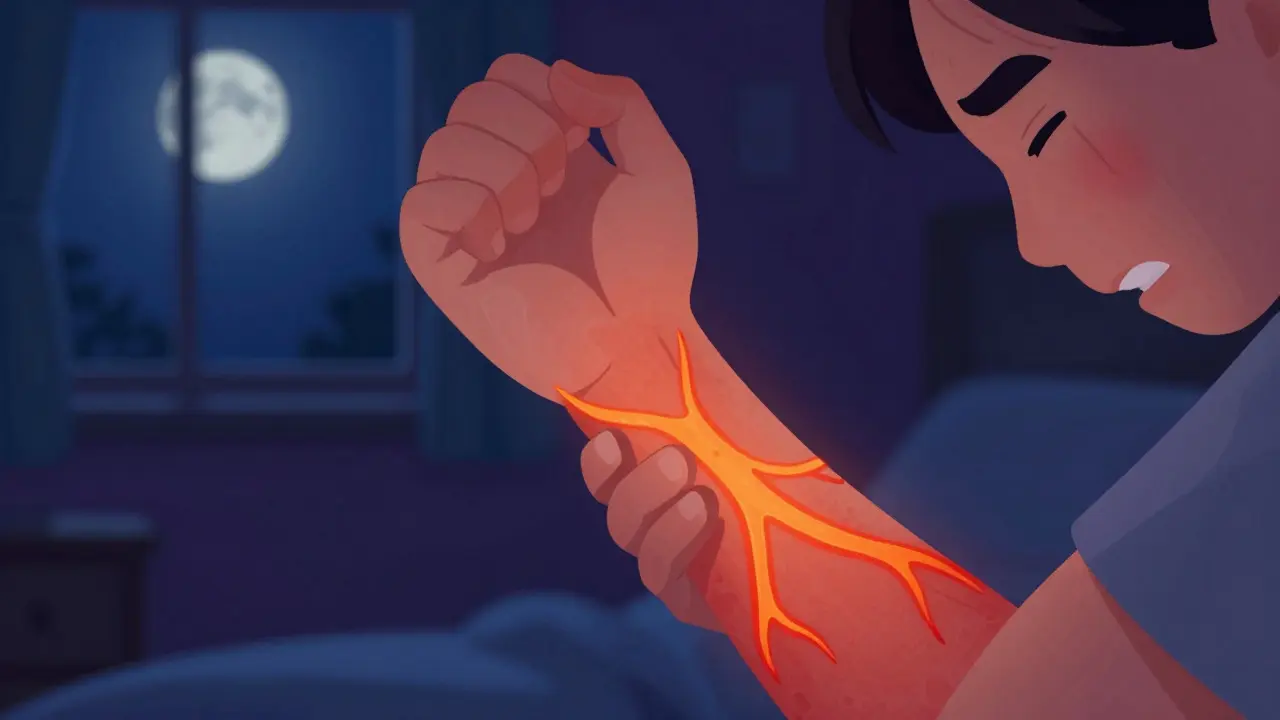
The itching, or pruritus, works differently. It’s not just dry skin. In kidney patients, it’s linked to inflammation. Patients with severe itching often have higher levels of C-reactive protein in their blood. This suggests that the immune system is reacting to the toxin buildup. Unlike normal eczema, uremic pruritus usually affects large areas of the body symmetrically and gets much worse at night, disrupting sleep significantly.
Nausea and Metallic Taste: More Than Just Stomach Issues
Nausea is one of the first major red flags. About 68% of people in stage 5 CKD report feeling sick to their stomach. It often starts subtly, maybe after eating a heavy meal, but eventually, it becomes constant. Many patients describe a metallic or ammonia-like taste. This changes food preferences drastically. Meat might become unpalatable, leading to weight loss. If you’ve lost more than 5% of your body weight over three months due to poor appetite, that’s a clinical sign that your body is under significant stress from the toxin load.
This symptom usually appears when your Blood Urea Nitrogen (BUN) levels exceed 80 mg/dL. While BUN alone isn't the only factor, it serves as a useful marker. If you’re experiencing persistent nausea that interferes with your ability to eat enough protein or fluids, it’s a strong indicator that conservative management (diet and medication) might no longer be enough.
Understanding Uremic Pruritus: The Itch That Won't Stop
If nausea affects your digestion, uremic pruritus affects your quality of life. According to recent data, nearly 70% of hemodialysis patients suffer from this intense itching. It’s described as burning, crawling, or stinging. Scratching provides temporary relief but often leads to skin breaks, infections, and scarring. A significant portion of patients report scratching until they bleed, especially during the night.
Doctors use tools like the 5-D Itch Scale to measure severity. This scale looks at Duration, Degree, Direction, Disability, and Distribution. A score above 12 indicates severe pruritus that typically requires pharmacological intervention rather than just moisturizers. If the itch is keeping you awake or preventing you from working, it has moved beyond a nuisance into a medical emergency for your well-being.
When Should You Start Dialysis?
This is the million-dollar question. There is no single eGFR (estimated Glomerular Filtration Rate) number that applies to everyone. However, guidelines from the National Kidney Foundation suggest looking at a combination of factors. Generally, doctors consider starting dialysis when:
- eGFR falls below 10-15 mL/min/1.73m².
- BUN exceeds 70-80 mg/dL and Creatinine is above 8 mg/dL.
- Symptoms become refractory to treatment (medications don't help).
- You experience specific complications like fluid overload, high potassium, or pericarditis.
Recent trials, such as the IDEAL study, showed that starting dialysis slightly earlier didn't necessarily save lives compared to waiting, but starting too late increased hospitalizations. The consensus now is individualized. If your nausea is causing malnutrition or your itch is destroying your sleep, waiting for a specific lab number might not be wise. Your symptoms are part of the equation.
Managing Symptoms Before and During Dialysis
Waiting for dialysis doesn't mean suffering in silence. There are effective ways to manage these symptoms while you prepare. For nausea, standard anti-nausea medications like ondansetron can help, but they need to be used carefully due to heart rhythm risks. Dietary changes, such as smaller, more frequent meals and avoiding high-potassium foods, also play a role.
For itching, the approach is tiered. First, ensure your dialysis is adequate if you're already on it. Second, medications like gabapentin are commonly prescribed. It helps calm the nerves involved in the itch sensation. Newer options like difelikefalin have shown promise in reducing itch scores significantly within days. Topical creams help with surface dryness but rarely touch the root cause of uremic pruritus.
| Symptom | First-Line Treatment | Second-Line/Advanced | Key Indicator for Severity |
|---|---|---|---|
| Nausea | Dietary modification, Ondansetron | Dialysis initiation, Domperidone | >5% weight loss in 3 months |
| Pruritus (Itch) | Moisturizers, Gabapentin | Difelikefalin, Nalfurafine | 5-D Itch Score > 12 |
| Metallic Taste | Flavoring foods, Smaller meals | Dialysis optimization | Inability to maintain nutrition |

Red Flags That Require Immediate Attention
While nausea and itch are common, some symptoms signal that your body is in crisis. These require urgent medical evaluation and likely immediate dialysis. Watch for:
- Confusion or Drowsiness: High toxin levels can affect brain function.
- Chest Pain or Shortness of Breath: Could indicate fluid around the heart (pericarditis) or lungs.
- Seizures: A rare but serious complication of severe uremia.
- Persistent Vomiting: Leading to dehydration and electrolyte imbalance.
Frequently Asked Questions
Can uremic symptoms go away without dialysis?
Yes, but only if the underlying kidney function improves. In acute kidney injury, symptoms may resolve as kidneys heal. In chronic kidney disease (stage 4-5), symptoms usually persist and worsen as filtration declines. Medications can mask them, but they won't cure the toxin buildup unless dialysis or transplant is performed.
Does dialysis stop the itching completely?
Not always. While dialysis removes many toxins, some middle molecules that cause itch remain. However, regular dialysis combined with medications like gabapentin or difelikefalin significantly reduces severity for most patients. It shifts the problem from 'unmanageable' to 'manageable.'
What is the best diet for managing uremic nausea?
A low-protein, low-phosphorus, low-potassium diet is standard. Eating small, bland meals throughout the day helps prevent overwhelming the stomach. Cold foods often smell less, which can reduce nausea triggers. Work with a renal dietitian to tailor this to your specific labs.
How soon does dialysis help with nausea?
Many patients notice improvement within the first few sessions. As toxins like urea are cleared, the stimulation of the vomiting center decreases. Appetite often returns within one to two weeks of consistent dialysis treatment.
Is gabapentin safe for long-term use in kidney patients?
It is generally safe but requires careful dosing. Because kidneys clear gabapentin, doses must be adjusted based on your eGFR. Too high a dose can cause dizziness or confusion. Always follow your nephrologist's specific dosage instructions.