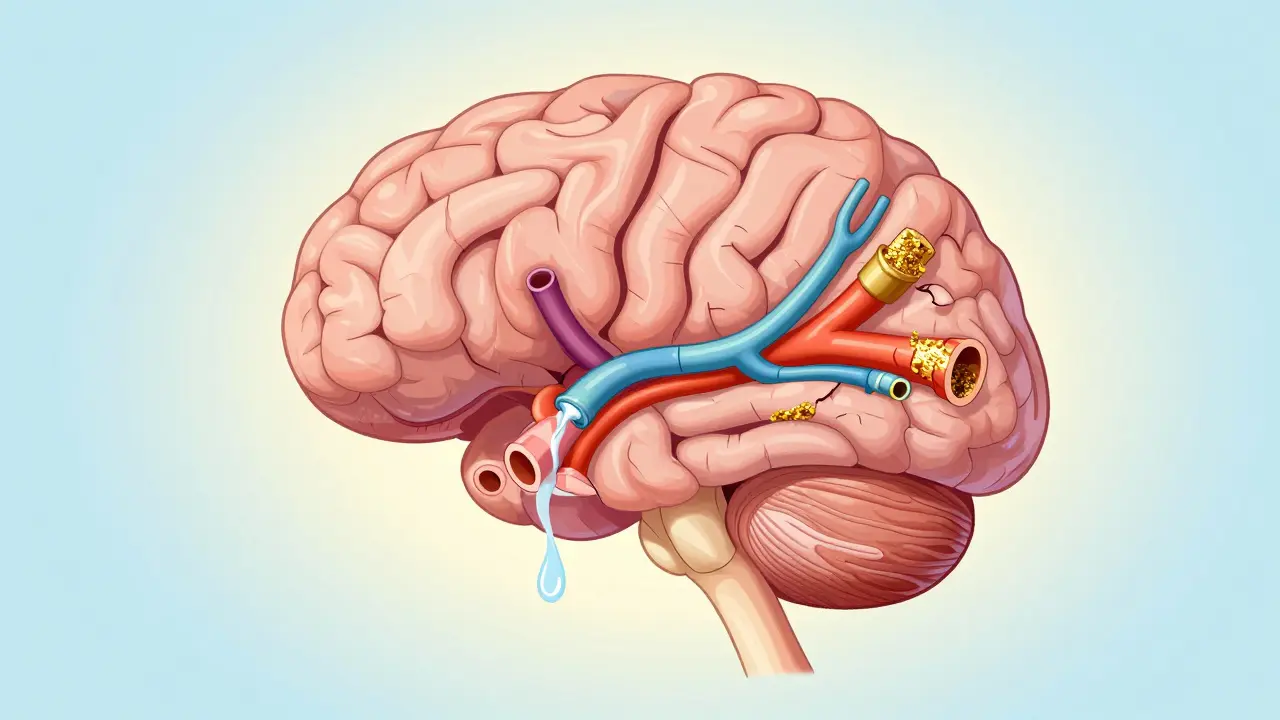
Most people hear the word "dementia" and immediately think of Alzheimer's. While that is the most common version, dementia is actually an umbrella term, not a single disease. It describes a group of symptoms-like memory loss, confusion, and personality changes-that are severe enough to get in the way of daily life. But here is the catch: not all dementias are the same. If you mistake one for another, you might use the wrong medication, which in some cases can be dangerous.
Understanding the specific type of cognitive decline is the only way to get the right care. Whether it is a problem with blood flow to the brain, a build-up of abnormal proteins, or a mix of movement and memory issues, the path forward depends entirely on the diagnosis. Let's break down three of the most distinct types: Vascular Dementia is a condition caused by impaired blood flow to the brain, often linked to strokes or chronic vascular issues. It differs significantly from the protein-based decay seen in other forms of the disease.
The Step-Like Decline of Vascular Dementia
Unlike some forms of dementia that glide slowly downhill, vascular dementia often moves in "steps." A person might stay stable for months, then suddenly drop in ability after a small stroke or a series of mini-strokes (TIAs). This happens because the brain isn't getting enough oxygen and nutrients due to damaged blood vessels.
Common causes include long-term high blood pressure, diabetes, and high cholesterol. These conditions stiffen or clog the arteries, eventually leading to tissue death, also known as infarcts. You might notice a loved one struggling to follow simple instructions or suddenly becoming confused about where they are. Because it's tied to the circulatory system, the focus here is on heart health. Managing blood pressure-aiming for a target below 130/80 mmHg-can actually slow the progression. Using antiplatelet therapies like aspirin is also a common strategy to keep blood flowing and prevent further strokes.
Frontotemporal Dementia: When Personality Changes First
If you see someone in their 50s who seems to have "lost their filter," it might not be a mid-life crisis or a psychiatric break. Frontotemporal Dementia (or FTD) is a neurodegenerative disease that primarily attacks the frontal and temporal lobes of the brain. Unlike Alzheimer's, memory often stays perfectly fine in the early stages. Instead, the person's personality shifts.
FTD is the most common form of dementia for people under 60. It's caused by a buildup of proteins like tau and TDP-43, which lead to brain shrinkage. The symptoms usually fall into three buckets:
- Behavioral changes: A sudden lack of empathy, impulsive spending, or socially inappropriate comments.
- Language struggles: Forgetting common words or struggling to understand speech.
- Movement issues: Shaky hands or a loss of balance.
Because these symptoms look like depression or bipolar disorder, up to 50% of FTD cases are misdiagnosed at first. Since there is no cure to stop the brain shrinkage, treatment focuses on managing behaviors, often using SSRIs to help with mood and impulsivity.

Lewy Body Dementia: The Intersection of Memory and Motion
Lewy Body Dementia (LBD) is a complex disorder characterized by abnormal deposits of alpha-synuclein protein, called Lewy bodies, in the brain. It creates a confusing overlap between dementia and Parkinson's disease. It is the third most common type of dementia and affects about 1.4 million people in the US alone.
LBD is a bit of a chameleon. One day the person is sharp and alert; the next, they are deeply confused and unable to concentrate. These "cognitive fluctuations" are a hallmark of the disease. You will also often see vivid visual hallucinations-like seeing people or animals that aren't there-and a disorder where the person physically acts out their dreams during REM sleep.
There is a specific rule for diagnosis: if the dementia happens before or within one year of the Parkinson's-like motor symptoms (like muscle rigidity), it's called Dementia with Lewy Bodies (DLB). If the Parkinson's symptoms have been there for years before the memory fades, it's Parkinson's Disease Dementia (PDD). A critical warning here: many antipsychotic drugs used for other dementias can cause severe, even life-threatening reactions in people with LBD. This is why an accurate diagnosis is non-negotiable.
Comparing the Three Types
When you look at these side-by-side, the patterns become clear. Vascular dementia is about the "pipes" (blood flow), FTD is about "social filters" and language, and LBD is about "fluctuations" and movement.
| Feature | Vascular Dementia | Frontotemporal (FTD) | Lewy Body (LBD) |
|---|---|---|---|
| Primary Cause | Blood flow restriction / Strokes | Tau & TDP-43 proteins | Alpha-synuclein (Lewy bodies) |
| Typical Onset Age | 65+ (linked to health) | 40-65 (younger onset) | 50+ |
| Early Red Flag | Sudden cognitive drops | Personality/Behavior changes | Visual hallucinations |
| Progression | Step-wise decline | Gradual behavioral decay | Fluctuating alertness |
| Key Risk/Focus | Hypertension & Diabetes | Misdiagnosed as psychiatric | Sensitivity to antipsychotics |

How Doctors Tell Them Apart
You can't tell these apart just by chatting with a patient; you need a combination of imaging and testing. For vascular dementia, an MRI or CT scan is the gold standard to find those old strokes or "white matter" damage. For FTD, doctors look for specific shrinkage (atrophy) in the front and sides of the brain, often using FDG-PET scans to see where the brain isn't using glucose properly.
LBD is the trickiest to pin down. Doctors use the McKeith criteria, looking for a combination of visual hallucinations, REM sleep issues, and Parkinsonism. Some may use a DaTscan, which is a specialized imaging test that looks at the dopamine system in the brain with about 85-90% sensitivity.
Practical Care and Next Steps
Caring for someone with dementia requires a custom game plan. If you're dealing with vascular dementia, your biggest win is stabilizing the physical health-blood pressure and sugar levels. If it's FTD, you'll need to focus on safety and boundaries, as the person may do things that are socially embarrassing or risky.
For LBD, the environment is key. Since hallucinations are common, removing mirrors or confusing patterns in the room can help. It's also vital to coordinate closely with a neurologist to ensure no "typical" antipsychotics are prescribed, as these can lead to severe sedation or muscle stiffness.
Can you have more than one type of dementia?
Yes. This is called mixed dementia. For example, it's very common for someone to have Alzheimer's and also have Lewy bodies or vascular damage from high blood pressure. About 40% of Alzheimer's patients also show signs of Lewy bodies in their brain tissue.
Is frontotemporal dementia hereditary?
It has a stronger genetic link than some other types. Many cases of FTD are familial, meaning they run in the family. This is why it often strikes people much younger, sometimes in their 40s or 50s.
What is the life expectancy for someone with Lewy Body Dementia?
While every case is different, the average survival time after a diagnosis of LBD is typically between 5 and 8 years.
Can vascular dementia be reversed?
Why are antipsychotics dangerous for Lewy Body Dementia?
People with LBD have a severe sensitivity to certain antipsychotic medications. These drugs can trigger a massive increase in Parkinson-like symptoms, extreme sedation, or a rare, life-threatening condition called neuroleptic malignant syndrome.