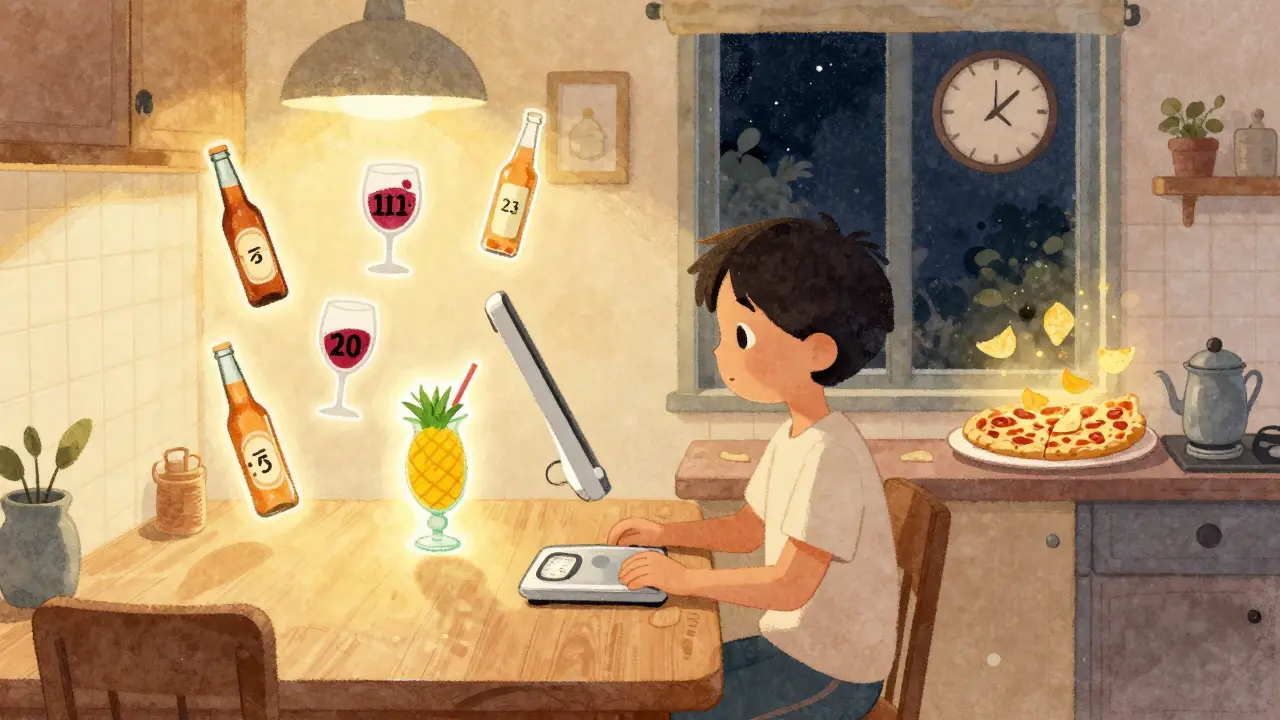
Want to lose weight but keep drinking? You’re not alone. Millions of people try to shed pounds while still enjoying a beer after work or a glass of wine on weekends. The problem? Alcohol doesn’t play nice with weight loss. It’s not just about the calories-it’s about how your body handles them, what it makes you eat afterward, and how it slows down fat burning. If you’re stuck in a cycle of eating less but not losing weight, alcohol might be the hidden culprit.
Alcohol Is Full of Empty Calories
One gram of alcohol has 7 calories. That’s almost twice as much as protein or carbs, and close to fat. But unlike those nutrients, alcohol gives you zero vitamins, fiber, or protein. It’s pure energy with no nutritional payoff. A 12-ounce beer? About 150 calories. A 5-ounce glass of wine? Around 120. Sounds harmless, right? Until you realize that’s like eating a slice of pizza or a small ice cream sundae-without feeling full.
And it gets worse with cocktails. A piña colada can hit 500 calories. Some fancy drinks? Over 700. That’s a full meal’s worth of calories in one glass. And because alcohol doesn’t trigger the same fullness signals as food, you’re likely to eat more after drinking. Studies show people consume 20% more food after alcohol than after non-alcoholic drinks. So you’re not just adding calories-you’re multiplying them.
Your Body Prioritizes Alcohol Over Fat
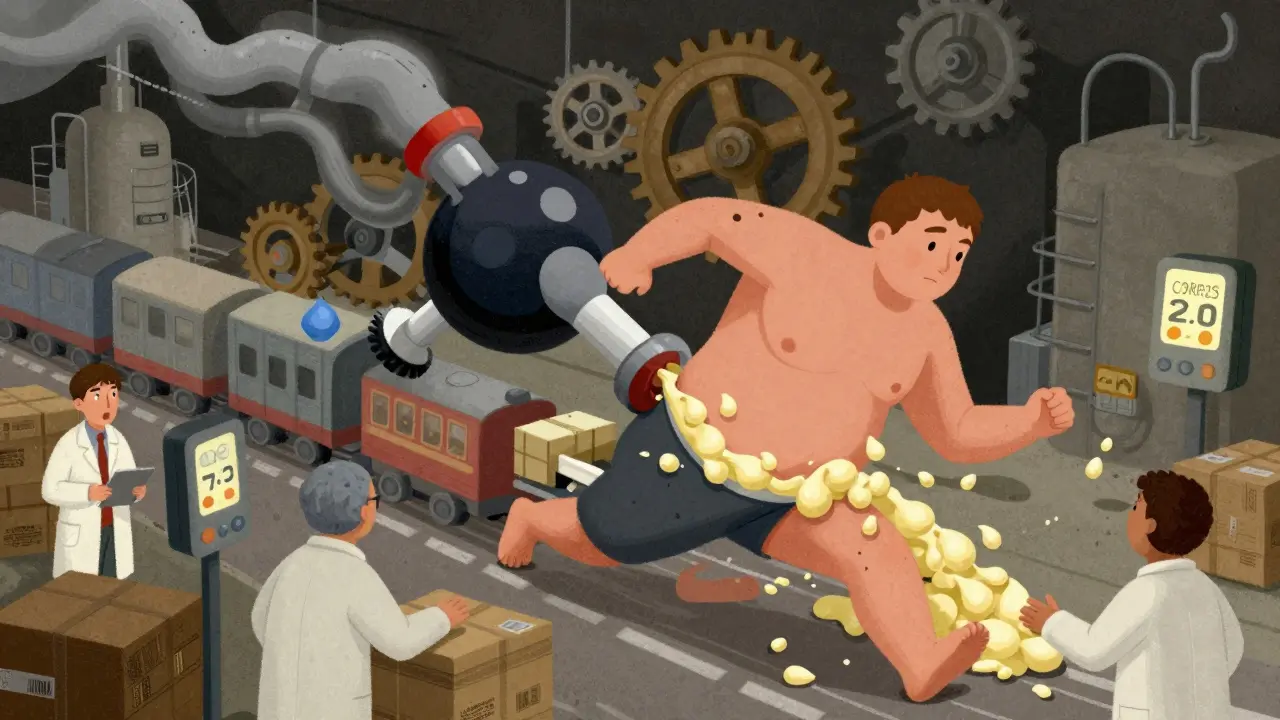
When you drink, your body treats alcohol like poison. It doesn’t wait. It doesn’t store it. It stops everything else to break it down. That means fat burning shuts down for 1-2 hours per drink. During that time, any fat you ate-whether it was from your dinner or a late-night snack-is more likely to be stored, especially around your belly.
Research from the American Journal of Clinical Nutrition found that alcohol consumption increases fat storage by 30-40% during metabolism. This isn’t theoretical. People who cut alcohol while keeping their diet the same lost 3.2% more body fat over 12 weeks than those who only cut other calories. The difference? Alcohol was blocking their fat-burning engine.
Alcohol Makes You Hungrier-Even When You’re Not
It’s not just about what you drink. It’s about what you eat afterward. Alcohol lowers your inhibitions and disrupts hunger hormones. A 2021 review in the European Journal of Clinical Nutrition found that 78% of studies showed alcohol increases appetite. You don’t just feel hungrier-you crave junk food. Late-night chips, pizza, fries. Studies from UC San Diego show alcohol increases late-night snacking by 45% on average.
And here’s the kicker: people consistently underestimate how many calories are in their drinks. In one weight loss program, participants underreported cocktail calories by 47%. They thought they were having a “light” drink. In reality, they were consuming the equivalent of a dessert.
Who’s Most Affected?
The data doesn’t lie. People who drink 8 or more drinks a week are 23% more likely to be obese than non-drinkers-even when controlling for diet and activity. That’s not correlation. That’s causation. A 5-year study tracking 12,500 adults found that simply cutting from heavy to moderate drinking (from over 14 drinks a week to 7 or fewer for men, and over 7 to 4 or fewer for women) led to an average weight loss of 3.7 pounds in a year-without changing anything else.
For people aged 25-45, alcohol accounts for 10-12% of their daily calories. That’s enough to wipe out the 500-calorie daily deficit most experts recommend for steady weight loss. You can’t out-exercise a beer habit. You can’t out-diet a wine habit. The math doesn’t work.
What Can You Actually Do?
You don’t have to quit alcohol cold turkey. But you do need to be smarter about it. Here’s what works:
- Choose lower-calorie options. Vodka with club soda and lime (100 calories) beats a piña colada (500). Skip the sugary mixers. They’re liquid sugar with extra calories.
- Control your portions. Pouring wine at home? You’re likely giving yourself 30% more than a standard 5-ounce glass. That’s 35 extra calories per glass-add up to over 200 extra per week. Use a measuring cup once to see how much a real serving looks like.
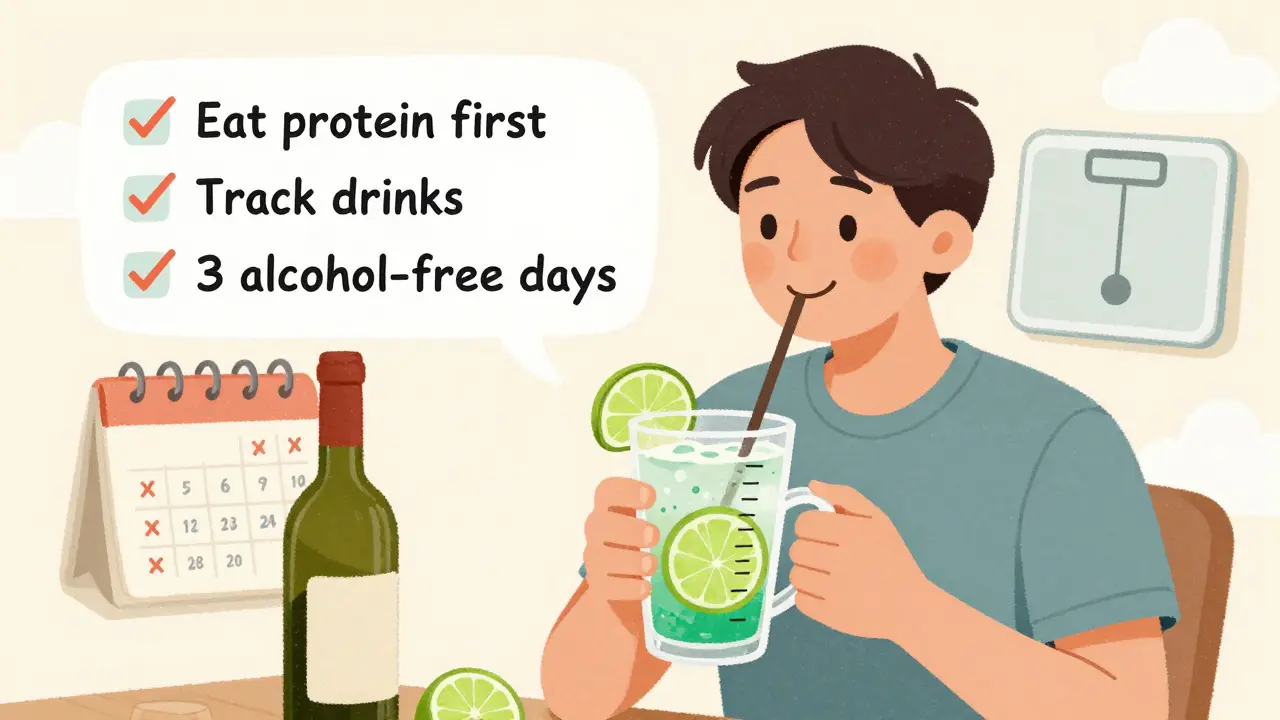
- Drink on a full stomach. Eat 20-30 grams of protein (like eggs, chicken, or Greek yogurt) before drinking. Research from the Cleveland Clinic shows this cuts post-drinking food intake by 18%.
- Take alcohol-free days. Aim for 3-4 days a week without alcohol. For a moderate drinker, that cuts 750-1,200 calories per week. That’s over 3,000 calories a month-roughly the equivalent of losing 1 pound of fat.
- Track your drinks. Use an app. Write it down. Don’t rely on memory. Most people forget or downplay how much they drink. If you’re serious about losing weight, treat alcohol like any other food: count it.
Why Some People Can Drink and Still Lose Weight
Some people swear they drink wine every night and still lose weight. It’s true-for some. The American Society of Nutrition acknowledges that a small minority can fit moderate alcohol into a weight loss plan if they’re meticulous about tracking calories and eating nutrient-dense foods.
But here’s the catch: those people are the exception. Most people who think they’re doing fine with alcohol are underestimating their intake. And even for those who manage it, the metabolic slowdown from alcohol still happens. It’s just that their overall calorie deficit is large enough to overcome it.
For most people, the risk isn’t worth the reward. Alcohol doesn’t just add calories. It makes you hungrier, slows fat burning, and clouds your judgment. That’s a triple threat to weight loss.
What’s the Long-Term View?
Reducing alcohol can lead to quick wins. But keeping the weight off? That’s where most people fail. A 2023 study in the International Journal of Obesity found that 68% of people who lost weight by cutting alcohol regained it within a year-unless they added structured meal planning and consistent habits.
At the Iowa Weight Loss Center, 82% of patients who reduced alcohol and followed a simple meal plan kept the weight off. The key wasn’t just cutting drinks. It was building a new routine.
The future of weight loss is personal. Scientists are now studying how genetics affect how people metabolize alcohol. Some people burn it faster. Others store more fat from it. In the next few years, metabolic testing might tell you whether alcohol is a dealbreaker for your body.
But you don’t need a DNA test to know this: if you’re trying to lose weight and you’re drinking regularly, you’re working against your body. The science is clear. The solutions are simple. The only question is: are you ready to change your relationship with alcohol?
Does alcohol make you gain belly fat specifically?
Yes. When you drink alcohol, your body prioritizes breaking it down and stores fat more easily-especially around the abdomen. This is why heavy drinkers often develop what’s called a "beer belly." The effect isn’t just from calories; it’s from how alcohol changes your metabolism. Studies show fat storage increases by 30-40% during alcohol metabolism, and the liver processes it in a way that promotes abdominal fat accumulation.
Can I still drink wine and lose weight?
You can, but only if you’re very careful. A 5-ounce glass of wine has about 120 calories. If you’re drinking one glass a night, that’s 840 calories a week. That’s a lot when you’re trying to create a calorie deficit. To make it work, you’d need to cut other calories elsewhere, avoid eating after drinking, and stick to dry wines (less sugar). Most people can’t maintain that level of discipline. Cutting back to 2-3 nights a week is a more realistic and effective strategy.
Are low-alcohol beers better for weight loss?
Yes, but not because they’re magic. Low-alcohol beers (under 3% ABV) typically have 50-100 fewer calories than regular beer. A 12-ounce regular beer has 150 calories; a low-alcohol version might have 80-100. That’s a savings of 50-70 calories per drink. If you drink 3 beers a week, switching to low-alcohol saves you 150-210 calories a week-about 1 pound a month. It’s not a huge win, but it’s a step in the right direction. Combine it with portion control and you’ll see better results.
Why do I feel hungrier after drinking alcohol?
Alcohol lowers levels of leptin, the hormone that tells your brain you’re full. It also increases ghrelin, the hunger hormone. Plus, alcohol affects your prefrontal cortex-the part of your brain that controls impulse and decision-making. That’s why you suddenly want fries, pizza, or ice cream even if you ate dinner an hour ago. It’s not weakness. It’s biology.
How long does it take to lose weight after quitting alcohol?
Most people start seeing changes in 2-4 weeks. If you were drinking 3-4 drinks a week, cutting them out can save you 1,000-1,500 calories a week. That’s 1-1.5 pounds of fat loss every 2 weeks, even without changing anything else. People who combine quitting alcohol with better sleep and protein-rich meals often lose 3-5 pounds in the first month. The biggest drop usually comes from reduced bloating and water retention, not just fat loss.
Is it better to quit alcohol completely or just cut back?
For most people trying to lose weight, cutting back is more sustainable than quitting cold turkey. Complete abstinence works for some, but it’s not necessary for everyone. The goal is to reduce alcohol enough that it no longer interferes with your calorie deficit and fat-burning. For many, that means 3-4 alcohol-free days a week and sticking to low-calorie drinks on the other days. This approach is easier to maintain long-term and still leads to significant weight loss.
Jodi Harding
January 17, 2026 AT 17:45Stacey Marsengill
January 17, 2026 AT 21:07Zoe Brooks
January 18, 2026 AT 10:48Pat Dean
January 18, 2026 AT 15:00Jay Clarke
January 19, 2026 AT 10:43Eric Gebeke
January 19, 2026 AT 23:36Dayanara Villafuerte
January 21, 2026 AT 22:23Tyler Myers
January 22, 2026 AT 19:47Robert Cassidy
January 23, 2026 AT 15:24rachel bellet
January 25, 2026 AT 00:10Ryan Otto
January 26, 2026 AT 23:09