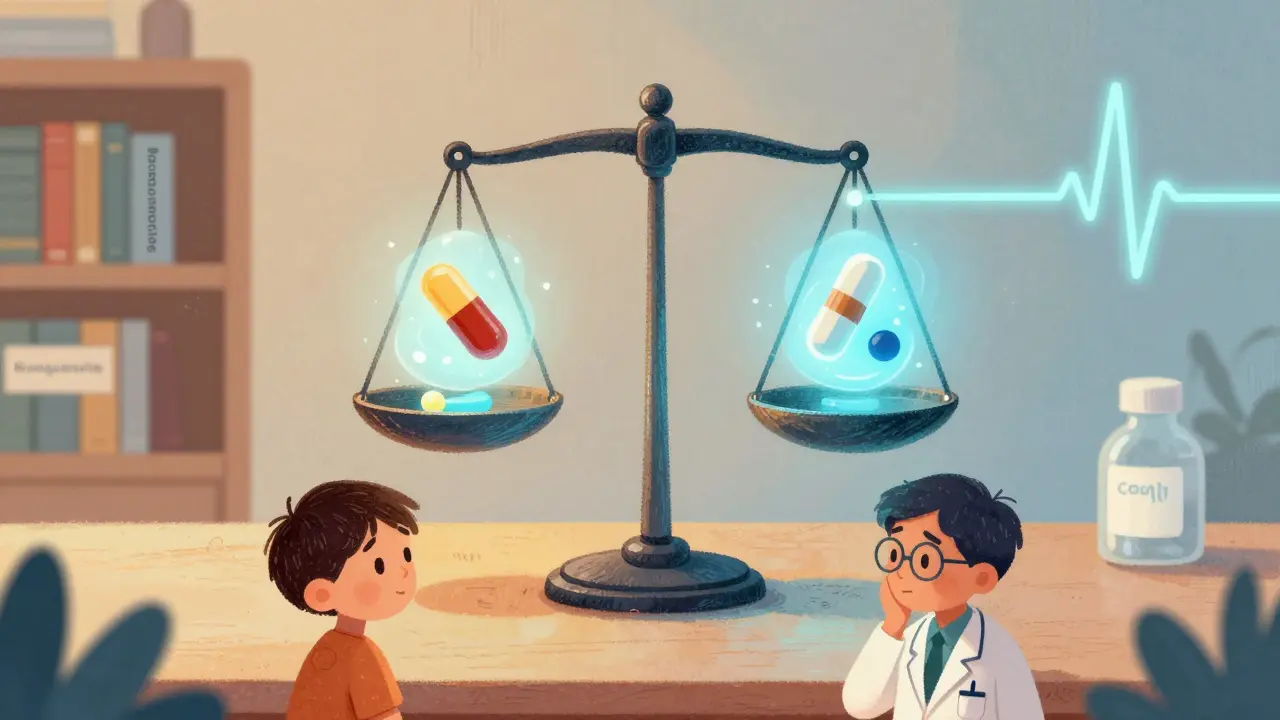
When a patient is prescribed a combination of cancer drugs-say, paclitaxel and carboplatin for ovarian cancer-it’s not just about two drugs working together. It’s about how each one is absorbed, how they interact with each other, and whether switching to a generic version changes the outcome. For decades, generic drugs have been trusted to save money without sacrificing safety. But in cancer care, where the difference between life and death can hinge on milligrams and minutes, bioequivalence isn’t just a technical checkbox-it’s a clinical lifeline.
Why Bioequivalence Matters More in Cancer Treatment
Bioequivalence means a generic drug delivers the same amount of active ingredient into the bloodstream at the same rate as the brand-name version. For most conditions, a 20% variation in absorption is acceptable. But in oncology, that margin is too wide. Many chemotherapy drugs have a narrow therapeutic index-meaning the dose that kills cancer cells is dangerously close to the dose that harms healthy tissue. A small shift in how quickly methotrexate or vincristine enters the blood can mean the difference between controlled toxicity and life-threatening side effects. The standard bioequivalence rule-90% confidence interval between 80% and 125% for AUC and Cmax-was designed for chronic conditions like high blood pressure or diabetes. It doesn’t fit cancer. Drugs like doxorubicin or etoposide are given in precise, timed cycles. If a generic version peaks 15% higher or 20% slower, it can disrupt the entire treatment rhythm. That’s why experts like Dr. James McKinnell at Johns Hopkins argue that for these drugs, the acceptable range should be tighter: 90-111%.The Problem with Combination Regimens
About 70% of cancer treatments today involve combinations. Think FOLFOX (5-FU, leucovorin, oxaliplatin), R-CHOP (rituximab, cyclophosphamide, doxorubicin, vincristine, prednisone), or TC (paclitaxel, carboplatin). Each component must be bioequivalent. But here’s the catch: when you swap out one generic drug in a combo, you don’t just change one variable-you change the whole system. Drug-drug interactions are unpredictable. A generic version of oxaliplatin might have a slightly different salt form or excipient, which alters how it’s metabolized. That change could affect how 5-fluorouracil is processed by the liver. Even if each drug individually meets bioequivalence standards, together they might behave differently than the original combo. A 2023 study from the Gulf Cancer Consortium found 42% of oncologists had seen unexpected toxicity or reduced efficacy after substituting one generic component in a combination regimen. That’s more than double the rate seen with single-agent switches.Biologics Complicate Things Even More
Not all cancer drugs are small molecules. Many are biologics-complex proteins like trastuzumab, cetuximab, or rituximab. These can’t be copied like aspirin. Instead, we get biosimilars. And biosimilarity is not bioequivalence. While bioequivalence relies on blood levels, biosimilarity requires full clinical testing to prove safety, purity, and potency match the original. The FDA requires biosimilars to show no clinically meaningful differences in efficacy and safety through head-to-head trials. But even then, when a biosimilar replaces a branded drug in a combo like R-CHOP, the interaction with chemo agents may shift. A 2022 analysis of 1,800 patients on biosimilar trastuzumab in combination with chemotherapy showed equivalent survival rates-but only after rigorous monitoring. Without that, there’s risk. Some hospitals won’t allow substitution unless the biosimilar is part of a pre-approved, fixed-dose combo.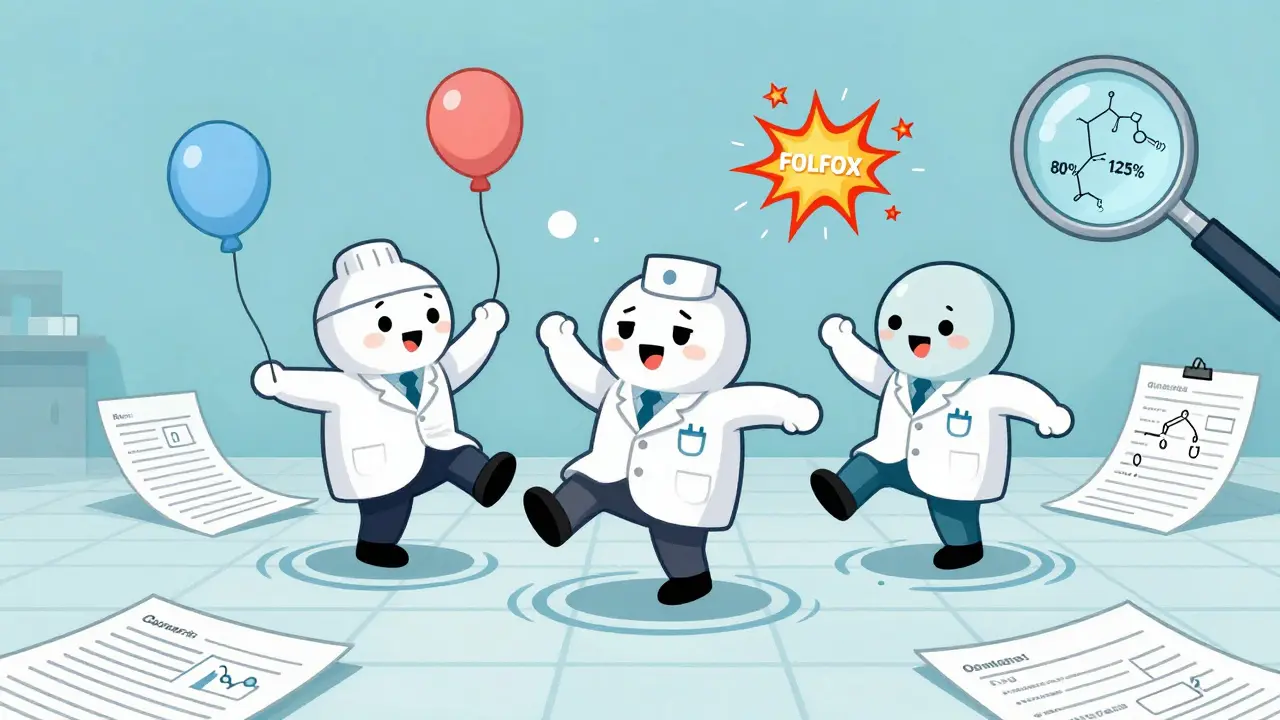
Real-World Consequences
Behind the data are real patients. Dr. Michael Chen, an oncologist in New Jersey, documented a case where switching to a generic vincristine in an R-CHOP regimen led to increased peripheral neuropathy. The generic had a different stabilizer, which changed how the drug was released into the bloodstream. Peak concentrations spiked higher than expected. The patient had to pause treatment for two weeks. On the flip side, there are success stories. At MD Anderson, a study of 1,247 patients using generic capecitabine instead of Xeloda in combination with oxaliplatin showed no difference in survival or side effects. The key? The generic was manufactured by a company with a proven track record in oncology, and the hospital had a strict procurement policy. But patients are nervous. A 2024 survey by Fight Cancer found 63% of patients worried about generic substitution in combination therapies. Even though 82% understood the cost savings, 41% said they’d ask for brand-name drugs if given the choice. That’s not just fear-it’s a lack of trust in the system.How Health Systems Are Adapting
Hospitals aren’t just guessing anymore. Many have built decision tools to guide substitution. UCSF created an algorithm that flags high-risk combinations in real time. If a doctor tries to substitute a generic for a narrow therapeutic index drug like methotrexate in a combo, the system blocks it unless the pharmacist approves with clinical justification. The Gulf Cooperation Council developed a scoring system that weighs 12 factors: manufacturing quality (30%), regulatory approval (25%), cost (20%), supply reliability (15%), and patient trust (10%). A generic might be cheap, but if it’s from a factory with past recalls, it gets a low score. That’s how you avoid a crisis. Pharmacists are getting more training too. The Hematology/Oncology Pharmacy Association now requires 40+ hours of bioequivalence education in accredited residencies. That’s a big shift. Ten years ago, most pharmacists learned how to dispense generics-not how to evaluate their impact in complex regimens.
Regulatory Gaps and Global Differences
The U.S. FDA and the European EMA are moving in different directions. The FDA still mostly relies on pharmacokinetic studies for small-molecule generics. But the EMA requires clinical endpoint studies for many oncology combinations-meaning they need to prove survival or response rates aren’t affected, not just blood levels. India accepts standard bioequivalence for 92% of oncology generics. The EU requires extra studies for 83%. That’s why a generic drug approved in India might not be used in Germany. Patients in one country get access to affordable treatment. In another, they’re stuck with expensive brands. The FDA’s new Oncology Bioequivalence Center of Excellence, launched in early 2024, is trying to close that gap. They’re testing new methods like physiologically based pharmacokinetic (PBPK) modeling-computer simulations that predict how drugs behave in the body based on chemistry, physiology, and interactions. It’s not perfect yet, but it’s faster and cheaper than running 500-patient trials.The Economic Pressure and the Path Forward
The math is clear. Branded cancer drugs cost $150,000 a year per patient. Generics cost $45,000. That’s a $105,000 difference. The U.S. healthcare system could save $14.3 billion a year if generics were used safely in appropriate combinations. But savings mean nothing if patients suffer. The goal isn’t just to cut costs-it’s to cut costs without cutting corners. That means updating regulations to match the science. The International Consortium for Harmonisation of Bioequivalence Standards in Oncology now recommends tighter margins for narrow therapeutic index drugs and mandatory food-effect studies for all oral components in combinations. By 2030, the National Cancer Institute predicts 35-40% of current combination regimens will need specialized bioequivalence protocols. We’re not there yet. But we’re moving. The future lies in smarter testing, better data, and more collaboration between regulators, manufacturers, and clinicians.For now, the message to patients, doctors, and pharmacists is simple: not all generics are the same. In cancer, the devil isn’t just in the details-it’s in the interaction between them.
What does bioequivalence mean for cancer generics?
Bioequivalence means a generic cancer drug delivers the same amount of active ingredient into the bloodstream at the same rate as the brand-name version. For most drugs, a 20% variation is acceptable. But in cancer, where doses are precise and side effects can be deadly, even small differences can impact treatment success or safety.
Why are combination therapies harder to make generic?
Each drug in a combination must be bioequivalent on its own, but they also interact. Swapping one generic component can change how the others are absorbed or metabolized. For example, a generic version of oxaliplatin might affect how 5-FU is processed, even if both drugs meet individual standards. These interactions are hard to predict without testing the full combo as a unit.
Are biosimilars the same as generic drugs?
No. Generic drugs are exact chemical copies of small-molecule drugs like chemotherapy agents. Biosimilars are highly similar versions of complex biologic drugs like trastuzumab or rituximab. They can’t be copied exactly, so they require full clinical testing to prove they work the same way. The approval path is different, and so are the risks.
Can switching to a generic cancer drug cause side effects?
Yes, in some cases. A 2023 survey found 57% of oncology pharmacists reported unexpected toxicity or reduced effectiveness after switching one component in a combination regimen. This often happens with narrow therapeutic index drugs like vincristine or methotrexate, where tiny changes in blood concentration affect safety. Formulation differences-like stabilizers or coatings-can alter how the drug is released.
How do hospitals decide which generics to use?
Many hospitals use decision tools that weigh multiple factors: manufacturing quality (30%), regulatory approval (25%), cost (20%), supply reliability (15%), and patient trust (10%). Some systems block substitutions for high-risk combinations unless a pharmacist approves. Others require additional clinical data beyond standard bioequivalence studies before allowing use in cancer treatment.
Is it safe to use generic cancer drugs in combination?
Yes, if the right generics are chosen and used properly. Studies at MD Anderson showed equivalent survival and safety with generic capecitabine in combination with oxaliplatin. The difference isn’t between brand and generic-it’s between a well-vetted generic from a reliable manufacturer versus one with unknown quality. The key is oversight, not avoidance.
What’s being done to improve bioequivalence testing for cancer combos?
The FDA launched the Oncology Bioequivalence Center of Excellence in 2024 to develop better methods. New guidelines recommend tighter bioequivalence margins (90-111%) for narrow therapeutic index drugs and mandatory food-effect studies. Researchers are also using computer modeling (PBPK) to predict drug interactions without running large trials. The goal is to make testing faster, cheaper, and more accurate.
pradnya paramita
February 2, 2026 AT 12:47From a pharmacokinetic standpoint, the current 80-125% AUC/Cmax window is fundamentally inadequate for NTDs in oncology. The therapeutic index for drugs like vincristine and methotrexate is so narrow that even a 10% deviation in Cmax can trigger grade 4 neutropenia or neurotoxicity. We need to adopt the 90-111% range proposed by McKinnell et al. - and enforce it via PBPK modeling pre-approval. The FDA’s new Oncology Bioequivalence Center is a step, but it’s still reactive, not predictive.
Manufacturers are gaming the system by tweaking excipients to meet bioequivalence thresholds while altering dissolution profiles. This isn’t ‘generic’ - it’s subterfuge. We need batch-level bioequivalence testing, not just single-batch comparability. And for combos? We must test the entire regimen as a unit. No more siloed drug assessments.
India’s 92% acceptance rate of standard generics for oncology? That’s not access - it’s a public health liability. We’re exporting risk under the guise of affordability.
Jhoantan Moreira
February 3, 2026 AT 14:50Wow, this is such an important conversation 🙏
I’ve seen patients panic when their chemo med switches - even if it’s ‘the same drug.’ It’s not just about science, it’s about trust. Maybe we need a ‘green light / yellow light / red light’ system for generics in oncology, like traffic signals. Green = safe swap, red = block unless approved, yellow = monitor closely.
Also, shoutout to MD Anderson for proving generics *can* work when done right. Let’s celebrate the wins too 💪❤️
Meenal Khurana
February 4, 2026 AT 13:39Generic vincristine caused neuropathy in my aunt. Stopped. Switched back. Improved in 3 days.
Joy Johnston
February 5, 2026 AT 05:07While the economic imperative to reduce cancer drug costs is undeniable, the clinical implications of suboptimal bioequivalence standards in combination regimens demand a paradigm shift in regulatory policy. The current FDA framework, predicated on pharmacokinetic equivalence derived from healthy volunteer studies, is fundamentally misaligned with the pathophysiological realities of oncologic pharmacology.
It is imperative that regulatory agencies mandate in vivo clinical endpoint studies - not merely AUC and Cmax comparisons - for all combination therapies involving narrow therapeutic index agents. Furthermore, the use of physiologically based pharmacokinetic modeling should be standardized and validated across jurisdictions to ensure cross-regional consistency.
Without such reforms, we risk institutionalizing therapeutic inequity under the banner of cost containment.
Coy Huffman
February 6, 2026 AT 01:46so like… if the generic is cheaper but makes you puke harder or your nerves go haywire… is it really a win? 🤔
also why do we even let companies make these if they can’t get the math right? like… c’mon.
Nathan King
February 7, 2026 AT 06:18It is lamentable that the commodification of oncologic therapeutics has outpaced the sophistication of our regulatory science. The notion that a 20% variation in plasma concentration is tolerable in the context of cytotoxic agents - substances designed to induce apoptosis in rapidly dividing cells - represents not merely a scientific oversight, but an ethical failure.
One cannot reduce precision medicine to a commodity transaction without sacrificing patient autonomy and clinical integrity. The FDA’s reluctance to mandate clinical endpoint studies for combination regimens betrays a fundamental misunderstanding of therapeutic complexity.
Harriot Rockey
February 8, 2026 AT 01:44This is such a heavy topic but so important 💛
I’ve had patients cry because their insurance switched their chemo to a generic and they didn’t know why they suddenly felt worse. We need better communication - not just better science.
Also, props to UCSF’s decision tool! That’s the kind of innovation we need more of. Maybe one day we’ll have a ‘generic safety score’ on every prescription like nutrition labels 🙏
rahulkumar maurya
February 9, 2026 AT 22:15Let’s be real - most generic manufacturers in India and Southeast Asia are barely regulated. Their QC labs are run by guys who passed high school chemistry. You think they care about AUC curves? They care about how many vials they can crank out before lunch.
And don’t get me started on biosimilars. ‘Highly similar’? That’s corporate-speak for ‘we didn’t bother to test it properly.’
Patients in the U.S. are being used as guinea pigs for cost-cutting. This isn’t progress - it’s negligence dressed in a white coat.
Alec Stewart Stewart
February 10, 2026 AT 18:42My cousin got chemo with generics. Felt fine. No issues.
But then again, she’s got a great team that checks everything. Maybe it’s not the generic - it’s the lack of care.
People need to talk to their docs and pharmacists. Don’t just assume. Ask questions. It’s okay to say ‘I want the brand.’
Also, hugs to all the oncology pharmacists. You’re the real MVPs 🙌
Demetria Morris
February 12, 2026 AT 13:41Of course the system is rigged. Big Pharma owns the FDA. They let generics in so they can charge more for the next ‘breakthrough’ drug next year.
You think they care if someone dies from a bad batch? No. They just raise the price on the brand version and call it ‘innovation.’
Wake up. This isn’t medicine. It’s a money game.
Geri Rogers
February 13, 2026 AT 00:52HOW DARE YOU SAY GENERICS ARE SAFE?!
I read a Reddit post from a guy whose mom died because of a generic paclitaxel. The hospital didn’t even tell her it was switched.
THIS IS MURDER BY BUREAUCRACY. YOU PEOPLE ARE COMPLICIT.
STOP HIDING BEHIND ‘STUDIES.’ I KNOW WHAT HAPPENS. I’VE SEEN IT.
THEY’RE KILLING PEOPLE TO SAVE $105K.
WHY AREN’T YOU IN JAIL?!
Caleb Sutton
February 13, 2026 AT 18:46They’re testing this on poor people in India first. That’s why they’re okay with 92% approval. It’s a trial run. When it kills enough people here, they’ll ‘improve’ it… and charge you $200K for the ‘new and improved’ version.
They’ve been doing this since the 80s. You think this is new? It’s not. It’s just getting more polished.
Jamillah Rodriguez
February 14, 2026 AT 07:09So… what’s the point of all this? We’re just gonna keep arguing about numbers while people suffer?
I mean, I get it. Science is hard. But at some point, do we just… stop? Like, if it’s too risky, don’t use it. Simple.
Why do we need a whole center? Just say no to generics in combos. Done.
Susheel Sharma
February 15, 2026 AT 05:51The entire bioequivalence paradigm is a charade. The 80-125% interval was designed for antihypertensives, not cytotoxics - yet we’ve institutionalized it as gospel. This isn’t science; it’s bureaucratic inertia dressed in academic jargon.
Moreover, the EMA’s clinical endpoint requirement is the only scientifically defensible approach. The FDA’s PBPK modeling? A computational fantasy. You can’t simulate human variability in tumor microenvironments, hepatic metabolism in comorbid patients, or drug-drug interactions in polypharmacy regimens with a model trained on healthy volunteers.
And let’s not forget: biosimilars are not generics. They’re ‘biological knock-offs’ with higher variability. Yet we allow them to be substituted like aspirin. This is not innovation - it’s pharmaceutical colonialism.
Janice Williams
February 17, 2026 AT 00:18You’re all missing the point. This isn’t about science. It’s about control.
The pharmaceutical industry wants you to believe generics are safe so they can keep raising prices on the *real* drugs - the ones that aren’t generic yet. They’re not trying to save money. They’re trying to make you dependent on their next $500K drug.
And the FDA? They’re just the PR arm. They’ve never turned down a drug because it was unsafe. Only because the lobbying budget ran out.
Don’t trust the system. Never have. Never will.