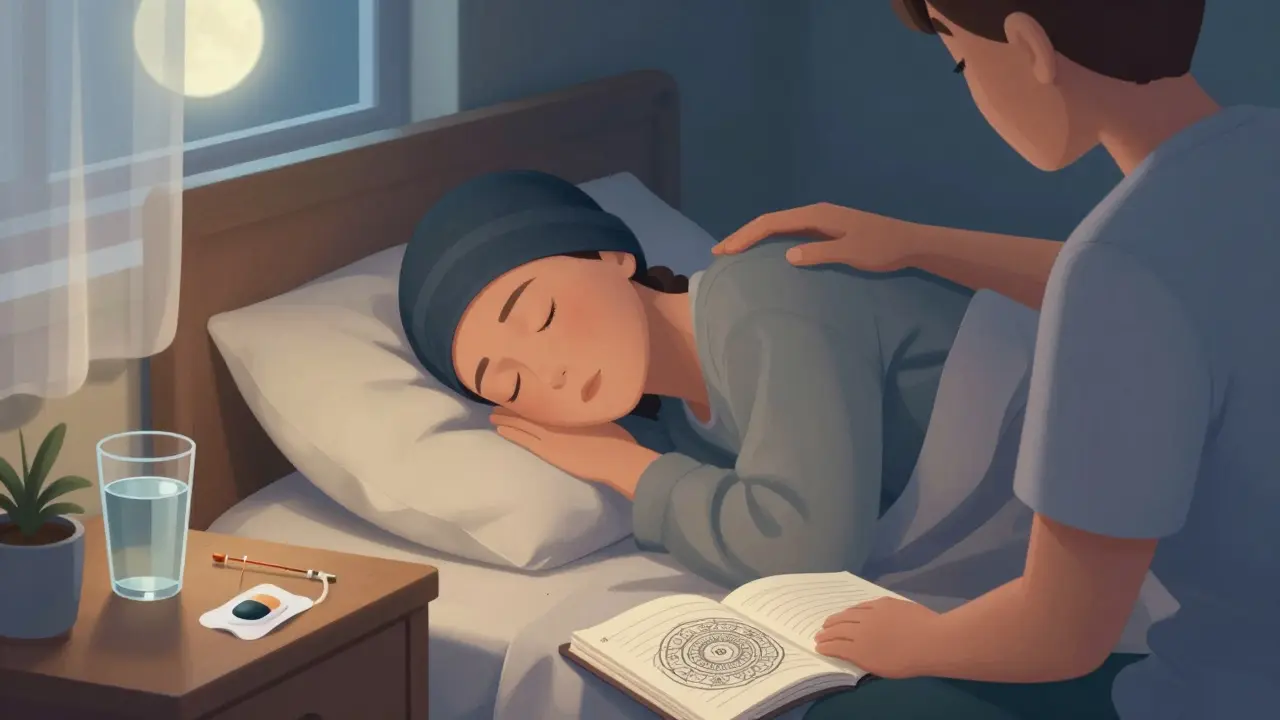
When someone is fighting cancer, pain isn’t just a side effect-it’s a constant shadow. It can come from the tumor pressing on nerves, from surgery, radiation, or even chemotherapy. And while many assume pain means reaching for stronger pills, the truth is far more nuanced. Effective cancer pain management isn’t about one magic solution. It’s about stacking tools-medications, procedures, and mind-body techniques-into a plan that fits the person, not just the diagnosis.
How the WHO Ladder Still Shapes Pain Care Today
Back in 1986, the World Health Organization introduced a simple idea: treat cancer pain in steps. Step 1 for mild pain: acetaminophen or NSAIDs. Step 2 for moderate pain: add a weak opioid like tramadol. Step 3 for severe pain: strong opioids like morphine or oxycodone. It sounds basic, but it changed everything. Before this, many patients were left untreated because doctors feared addiction. Now, over 70% of cancer patients get relief using this framework.But here’s the catch: it’s not a rigid ladder anymore. A 2023 PLOS One analysis of 81 trials showed that skipping Step 2-going straight from NSAIDs to strong opioids-works just as well for many. And in places where cost matters, skipping weak opioids saves about $188 per patient. Still, the ladder’s real value is in its rhythm: around-the-clock dosing, not just "as needed." Pain that’s managed before it spikes is easier to control. Dosing adjustments happen every 24 to 48 hours based on a simple 0-10 scale. If pain stays above a 3, the dose goes up by 25-50%.
Opioids: Powerful, But Not Without Trade-Offs
For severe cancer pain, opioids are still the gold standard. Morphine, oxycodone, and fentanyl patches can drop pain scores by over 4 points on a 10-point scale. That’s life-changing. But every benefit comes with a cost.Constipation hits 81% of patients-even with laxatives. Nausea? 56%. Drowsiness? 43%. And let’s not forget the fear: patients and families often worry about addiction. But for those with active cancer, the risk of addiction is extremely low. The bigger issue is tolerance. As the disease progresses, the body needs more to get the same relief. That’s why dose titration isn’t failure-it’s necessary.
Some opioids have hidden quirks. Codeine, for example, needs to be converted by the liver into morphine. But 6-10% of people have a genetic variant (CYP2D6 poor metabolizer) that makes this conversion fail. For them, codeine is practically useless. A 2024 ASCO presentation showed these patients get 63% less pain relief. That’s why some clinics now test for this before prescribing. Tramadol? It’s hit or miss. Patient reviews on cancer forums average just 3.2 out of 5 stars, with nearly half saying it didn’t help enough and they had to switch within two weeks.
Nerve Blocks: Targeting Pain at the Source
Sometimes, pain isn’t everywhere-it’s in one place. A tumor pressing on the pancreas? A bone metastasis in the spine? That’s where nerve blocks shine.A celiac plexus block, for instance, injects numbing medicine and steroids near the nerves around the pancreas. For pancreatic cancer patients, this can cut pain from an 8/10 to a 3/10-and keep it there for over four months. Success rates? Between 65% and 85%. Epidural blocks, where medicine is delivered near the spinal cord, are another go-to for back or pelvic pain. And peripheral nerve catheters? Tiny tubes placed next to nerves that drip pain medicine for days. These aren’t one-time fixes. Most need repeating every 3 to 6 months. But they’re often safer than high-dose opioids.
Here’s the problem: only 22% of patients who could benefit from nerve blocks actually get them. Why? Access. Not every hospital has trained pain specialists. Not every insurance plan covers them. And some doctors still think they’re too risky. But a 2023 review in the Journal of Pain Research found that when done right, these procedures are extremely safe. One patient on Reddit described it: "The block gave me back my appetite. I hadn’t eaten in days. Afterward, I slept through the night for the first time in weeks."
Integrative Care: The Quiet Heroes
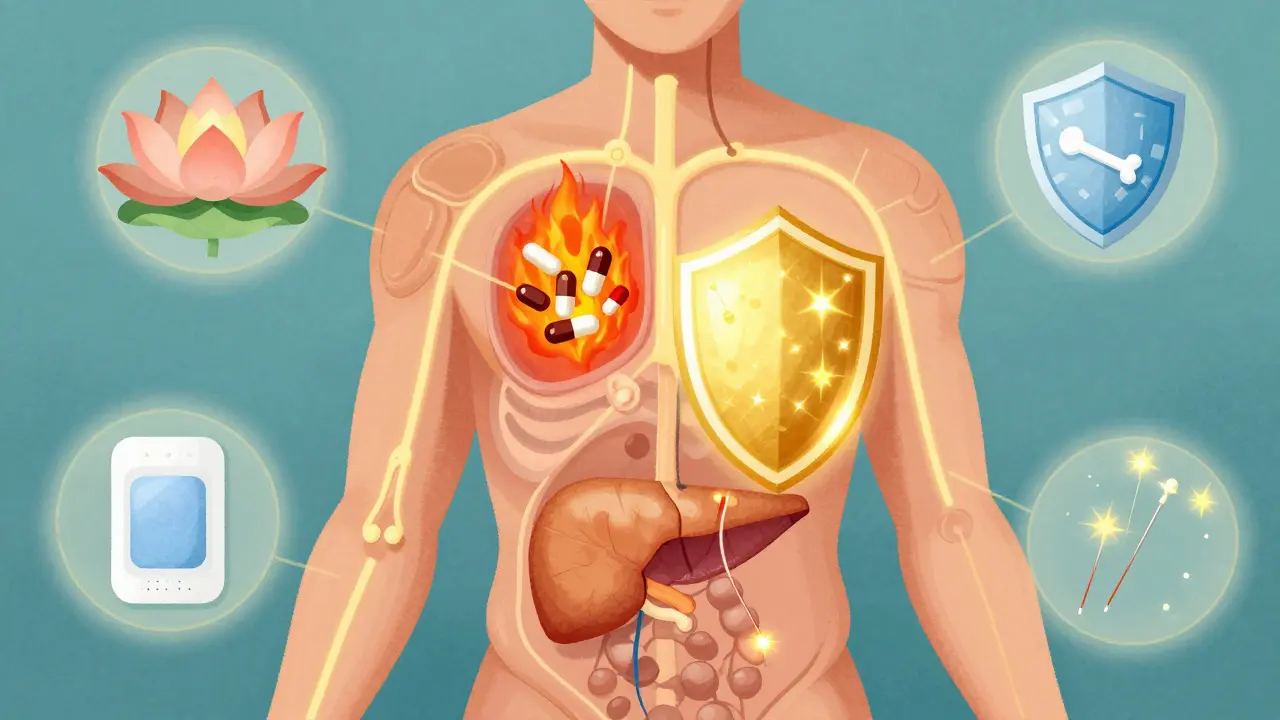
While pills and needles get the spotlight, non-drug therapies quietly change lives. Acupuncture, massage, mindfulness, and even acupressure wristbands aren’t "alternative"-they’re evidence-backed partners.A 2024 review of 54 studies on mindfulness-based stress reduction found 87% of patients reported meaningful pain reduction. Acupuncture? In 81.5% of studies, it cut pain intensity by nearly 39%. And it doesn’t just help pain-it helps the side effects. One patient said her nausea from chemo dropped 70% with wristbands, and she cut her opioid use in half. Massage therapy helped 54.7% of patients in a 2024 CancerCare survey. Reflexology and aromatherapy? Less data, but many report better sleep and less anxiety.
Even cannabinoids have a place. A 2023 meta-analysis showed they reduced pain 32% more than placebo. But they didn’t beat opioids. And 41% of users quit because of dizziness or brain fog. Still, for some, it’s worth a try.
And then there’s the new kid: monoclonal antibodies. Drugs like denosumab (Xgeva) target bone pain directly. Approved by the FDA in March 2024, they reduced pain by 45.7% in trials-better than placebo, with fewer stomach issues than opioids. Sales hit $3.2 billion in 2024. They’re not for everyone, but for bone metastases? A game-changer.
What Doesn’t Work-and Why
Pain management isn’t one-size-fits-all. And some approaches are being misused.As-needed dosing? That’s outdated. Pain that’s treated after it starts is harder to control. Around-the-clock is better. Skipping integrative care? Big mistake. A 2024 Society for Integrative Oncology survey found cancer centers offering these therapies had 37.8% better treatment adherence. Not using nerve blocks for localized pain? Costly. Patients end up on higher opioid doses with more side effects.
And then there’s the myth that opioids are always the answer. A 2023 commentary in Pain Medicine pointed out that 42% of cancer patients have mixed pain-both tissue damage (nociceptive) and nerve damage (neuropathic). Opioids don’t touch neuropathic pain well. That’s why gabapentin or amitriptyline often need to be added from day one.
Real Challenges: Access, Cost, and Stigma
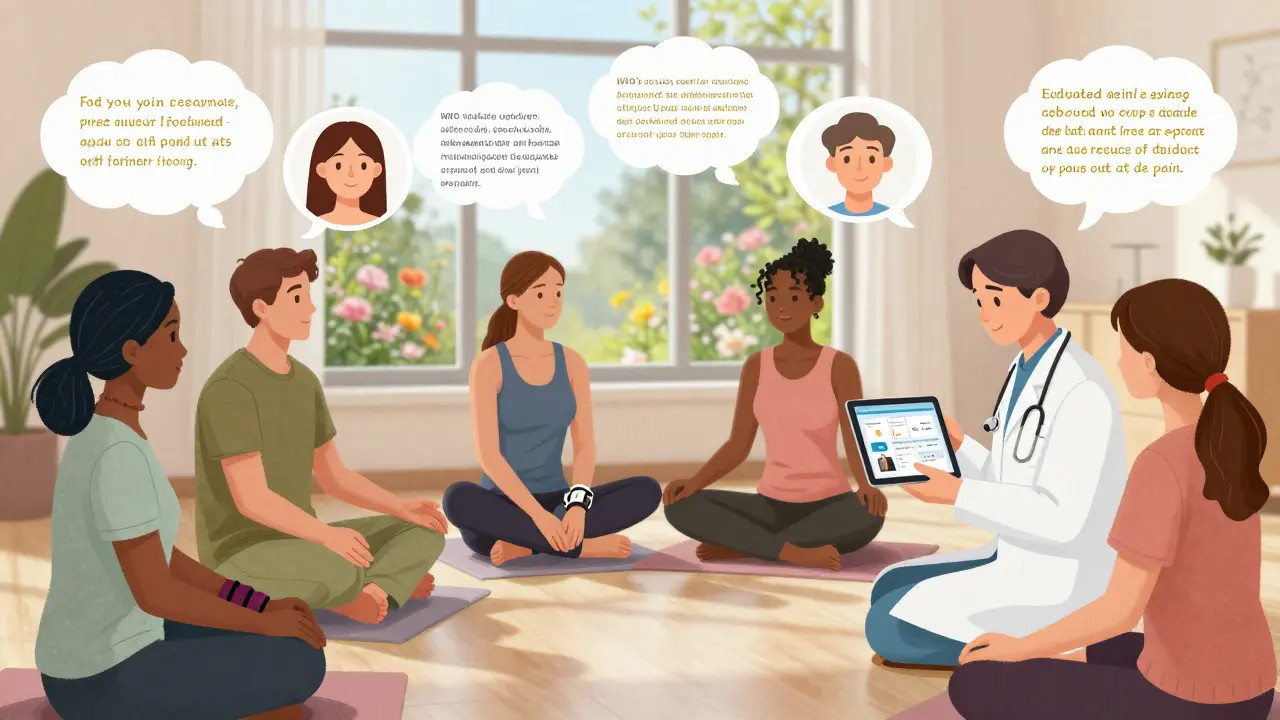
Even with all this science, real-world barriers remain.Eighty-seven percent of low- and middle-income countries struggle to get opioids. In some places, doctors need special permits just to prescribe morphine. In the U.S., insurance often won’t cover acupuncture or massage. A single session can cost $85-$120. Over 30% of patients in a 2024 survey said cost stopped them from trying integrative care.
And stigma? Still real. Some patients feel guilty asking for stronger pain relief. Others fear being labeled "drug-seeking." Doctors, too, sometimes hesitate. But guidelines from the NCCN and ASCO are clear: pain control is part of cancer care. Not a bonus. Not a luxury. A right.
The Future: Personalized, Predictive, and Accessible
What’s next? It’s getting smarter.AI is now predicting pain before it happens. A 2024 study in the Journal of Clinical Oncology showed AI models using EHR data improved pain control by 32.7%. Imagine a system that notices your vitals, sleep, and opioid use-and adjusts your dose before you even call for help.
Genetic testing for CYP2D6 metabolism? Already used in 63% of European cancer centers. Soon, your pain plan could be built around your DNA.
Blockchain systems are being tested to track opioid prescriptions, cutting down misuse without blocking access for cancer patients. South Korea’s 2025 rollout aims to reduce prescription errors by nearly half.
And the WHO? In September 2024, they officially added integrative therapies to their cancer pain guidelines. Acupuncture got a strong recommendation. Mindfulness? Conditional. That’s not just policy-it’s validation.
The goal isn’t to eliminate all pain. It’s to give people back their days. To let them eat, sleep, talk to loved ones, and feel like themselves-even while fighting cancer. That’s what matters.
Are opioids the only option for severe cancer pain?
No. While strong opioids like morphine and oxycodone are highly effective, they’re not the only tool. Nerve blocks-such as celiac plexus or epidural blocks-can provide long-lasting relief for localized pain. Integrative therapies like acupuncture and mindfulness reduce pain intensity and opioid side effects. Monoclonal antibodies like denosumab are now approved for bone pain and offer strong relief with fewer gastrointestinal issues. A multimodal approach combining these often works better than opioids alone.
Do nerve blocks work for all types of cancer pain?
No. Nerve blocks are most effective for localized pain caused by tumors pressing on specific nerves or nerve bundles. For example, celiac plexus blocks help pancreatic cancer pain, epidural blocks help spine or pelvic pain, and peripheral nerve blocks target limb pain from bone metastases. They’re not useful for widespread or diffuse pain. If pain is all over, medications or integrative therapies are better first steps. A pain specialist can determine if a block is right based on pain location and cancer type.
Can integrative therapies replace opioids?
Not entirely, but they can significantly reduce the need for them. Acupuncture, massage, and mindfulness don’t eliminate severe pain on their own, but they improve sleep, reduce anxiety, and cut opioid side effects like nausea and constipation. Studies show patients using these alongside opioids often need lower doses. For mild to moderate pain, integrative methods alone may be enough. For severe pain, they’re best used as partners-not replacements-to improve quality of life and reduce medication burden.
Why is constipation such a big problem with opioids?
Opioids slow down the digestive system by binding to receptors in the gut. This reduces bowel movements and makes stools hard and dry. Unlike nausea or drowsiness-which often fade after a few days-constipation doesn’t improve with tolerance. In fact, 78% of cancer patients on opioids report moderate to severe constipation, even with laxatives. That’s why preventive stool softeners and stimulant laxatives are started on day one. Without them, constipation can lead to bowel obstruction, severe discomfort, and even hospitalization.
Is acupuncture safe for cancer patients?
Yes, when done by a trained professional. Studies show acupuncture is safe for cancer patients, even those with low platelet counts or on blood thinners. Practitioners use sterile, single-use needles and avoid areas near tumors or surgical sites. The most common side effect is minor bruising. A 2024 review of over 1,000 patients found no serious complications. Many cancer centers now offer it as part of standard care. Always choose a provider experienced in oncology settings.
What should I ask my doctor about pain management?
Ask these five questions: 1) What type of pain do I have (nociceptive, neuropathic, or mixed)? 2) What’s my pain score on a scale of 0-10? 3) What are the side effects of each option, and how will we manage them? 4) Are nerve blocks or integrative therapies like acupuncture an option for me? 5) Can we reassess my pain plan every few days as it changes? Don’t be afraid to request a referral to a palliative care specialist. They’re trained to manage complex pain and can coordinate all your treatments.
For those managing cancer pain, the path isn’t linear. It’s messy, personal, and sometimes frustrating. But it’s also full of options. You don’t have to suffer. You don’t have to choose between pain relief and side effects. The right combination is out there. It just takes asking the right questions-and refusing to accept pain as inevitable.
Lou Suito
February 21, 2026 AT 12:30Joseph Cantu
February 23, 2026 AT 07:10Lisandra Lautert
February 25, 2026 AT 04:59Cory L
February 25, 2026 AT 19:14Bhaskar Anand
February 25, 2026 AT 21:08William James
February 27, 2026 AT 20:42David McKie
February 28, 2026 AT 20:38Southern Indiana Paleontology Institute
March 1, 2026 AT 16:17Anil bhardwaj
March 3, 2026 AT 01:27lela izzani
March 3, 2026 AT 20:35Nick Hamby
March 5, 2026 AT 09:18John Smith
March 6, 2026 AT 13:02