
NSAID Heart Failure Risk Checker
Check Your Painkiller's Risk Level
Select an NSAID below to see its specific risk profile for heart failure patients based on clinical data.
Advil, Motrin
Aleve
Voltaren
Celebrex
Description goes here.
Recommended Alternative:
Alternative information goes here.
Disclaimer: This tool is for educational purposes only and does not constitute medical advice. Always consult your cardiologist before taking any pain medication if you have heart failure.
It starts with a simple headache or a sore knee. You reach for the bottle of ibuprofen or naproxen sitting in your medicine cabinet. It’s an over-the-counter staple, trusted by millions to stop pain fast. But if you have heart failure, defined as a condition where the heart cannot pump sufficient oxygen-rich blood to meet the body's needs, that same pill can trigger a medical emergency within days.
The connection between non-steroidal anti-inflammatory drugs (NSAIDs) and worsening heart health is not just theoretical; it is a documented physiological crisis. For patients managing chronic cardiac conditions, taking NSAIDs is akin to pouring water into a leaking bucket while trying to keep it dry. The result is often rapid fluid retention, skyrocketing blood pressure, and a significantly higher chance of ending up in the hospital. Understanding this mechanism is the first step in protecting your heart from common pain relievers.
How NSAIDs Trigger Fluid Retention
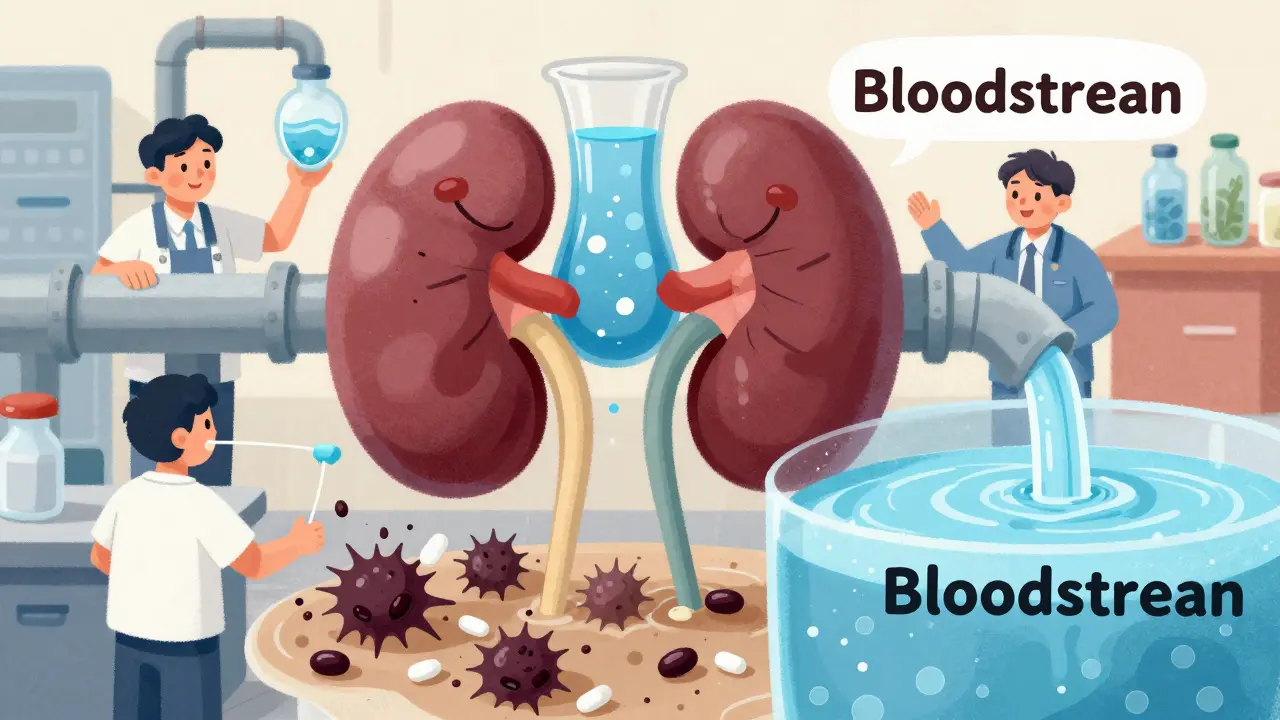
To understand why these drugs are dangerous for heart failure patients, we have to look at what happens inside your kidneys. Your kidneys rely on tiny hormone-like substances called prostaglandins to maintain proper blood flow and filter waste. These prostaglandins help keep the blood vessels in the kidneys wide open, allowing them to process sodium and water efficiently.
NSAIDs, including non-steroidal anti-inflammatory drugs, work by inhibiting cyclooxygenase (COX) enzymes, reducing inflammation and pain by blocking prostaglandin synthesis.
When you take an NSAID, it blocks the production of these protective prostaglandins. Without them, the blood vessels in your kidneys constrict. This leads to two immediate problems:
- Reduced Blood Flow: Renal blood flow can drop by 20-30% in susceptible patients, as shown in research by Bleumink et al. (2003).
- Sodium and Water Retention: The kidneys stop excreting sodium properly. Since water follows salt, your body holds onto excess fluid.
This extra fluid has nowhere to go but back into your bloodstream, increasing the volume your heart must pump. For a healthy heart, this might be manageable. For a failing heart, it is overwhelming. The increased preload forces the weakened heart muscle to work harder, leading to acute decompensation-a state where the heart can no longer cope with the circulatory demands.
The Hospitalization Risk: Data from Real Patients
You might think that taking one or two pills occasionally won’t hurt. However, recent large-scale studies prove otherwise. A pivotal study published in the European Heart Journal in 2022 by Holt et al. examined a nationwide Danish cohort of patients with type 2 diabetes mellitus (T2DM), a group often at high risk for cardiovascular issues.
The researchers used a case-crossover design, looking at short-term exposure windows. They found that even brief use of NSAIDs-specifically celecoxib, diclofenac, ibuprofen, and naproxen-significantly increased the risk of heart failure hospitalization. The odds ratios ranged from 1.24 to 1.88 depending on the specific drug and timing. The highest risk appeared during the first week of use, with an odds ratio of 1.88 (95% CI 1.54-2.30). This means nearly double the risk of being admitted to the hospital compared to when those patients were not taking the medication.
This isn't just about statistics. In clinical settings, patients report gaining significant weight rapidly due to fluid accumulation. One account from the r/heartfailure community described a patient who gained 4.5 kg (10 lbs) in just 72 hours after taking two 400mg doses of ibuprofen for minor pain. Symptoms like swelling in the legs, sudden weight gain, and shortness of breath often appear within 24 to 72 hours of ingestion. This rapid onset catches many people off guard because they associate the side effects with long-term use, not a single weekend of pain relief.
Are All NSAIDs Equally Dangerous?
A common misconception is that newer, COX-2 selective inhibitors are safer for the heart than traditional NSAIDs. Early marketing suggested that drugs like celecoxib (Celebrex) would spare the stomach and potentially the kidneys. However, current medical consensus debunks this safety myth.
| Drug Name | Type | Risk Profile for Heart Failure | Key Consideration |
|---|---|---|---|
| Ibuprofen | Traditional NSAID | High | Commonly available OTC; high risk of renal impairment and fluid retention. |
| Naproxen | Traditional NSAID | Moderate-High | Some meta-analyses suggest a slightly better profile (RR 0.92) compared to others, but still risky for HF patients. |
| Diclofenac | Traditional NSAID | High | Associated with higher cardiovascular event rates in various studies. |
| Celecoxib | COX-2 Selective | High | Does not spare the kidneys; causes similar fluid retention risks as traditional NSAIDs. |
Dr. Gysèle S. Bleumink, whose seminal 2003 review established much of our understanding of this interaction, noted that putative renal-sparing NSAIDs have similar effects on renal function as traditional ones. The New Zealand Medicines and Medical Devices Safety Authority (Medsafe) reinforced this in 2019, stating that cardiotoxicity is multifactorial and applies across the class. No NSAID is considered completely safe for someone with heart failure. While naproxen may have a marginally lower relative risk in some broad population studies, it still poses a significant threat to individuals with compromised cardiac function.
Why Doctors Still Prescribe Them (And What to Do Instead)
If the risk is so clear, why do patients still end up taking these drugs? Part of the problem is unintentional use. Many patients don’t realize that over-the-counter cold medicines, arthritis creams, or prescription painkillers contain NSAIDs. Additionally, primary care physicians sometimes prescribe them for joint pain without fully assessing the patient’s latest cardiac status. A 2020 study in the Journal of the American Geriatrics Society found that 15.7% of heart failure patients received NSAID prescriptions within a year of diagnosis.
So, how should you manage pain? The European Society of Cardiology’s 2021 guidelines explicitly recommend avoiding NSAIDs in all heart failure patients, assigning a Class III recommendation (meaning harm is proven). Instead, clinicians generally point toward alternative strategies:
- Acetaminophen (Paracetamol): This is often the first-line choice for mild to moderate pain. It does not inhibit prostaglandins in the kidneys to the same extent, meaning it carries a much lower risk of fluid retention. However, it lacks anti-inflammatory properties, so it may not help with swollen joints.
- Topical Treatments: For localized pain like osteoarthritis in the knees or hands, topical NSAIDs (gels or patches) absorb less into the bloodstream than oral pills. While not zero-risk, they are generally safer than oral versions. Non-NSAID topical options like capsaicin cream are also effective.
- Physical Therapy and Lifestyle Changes: Strengthening muscles around painful joints can reduce reliance on medication. Weight management also decreases stress on both the heart and joints.
- Opioids (With Caution): In severe cases, doctors may consider low-dose opioids, though these come with their own set of risks, including sedation and constipation, which can strain the heart.
Dr. Michael A. Chen from the University of Washington Medical School warns that inadvertently taking sodium-retaining medicines can cause heart failure to worsen. He emphasizes that family members play a crucial role in monitoring medication intake and helping patients avoid harmful substances.

Red Flags: When to Seek Immediate Help
If you have heart failure and accidentally take an NSAID, do not panic, but do monitor yourself closely. The effects can manifest quickly. Watch for these specific signs of fluid overload:
- Rapid Weight Gain: Gaining more than 2 pounds (1 kg) in a day or 5 pounds (2.3 kg) in a week.
- Peripheral Edema: Swelling in the ankles, feet, or abdomen that leaves an indent when pressed.
- Shortness of Breath: Especially when lying flat or during minimal exertion.
- Fatigue: Unusual tiredness caused by reduced cardiac output.
If you experience any of these symptoms after taking an NSAID, contact your healthcare provider immediately. You may need temporary adjustments to your diuretic (water pill) dosage to flush out the excess fluid. Never adjust your medications on your own; always consult your doctor.
The Path Forward: Advocacy and Awareness
The medical community is becoming increasingly vocal about this issue. The 2023 American Heart Association Scientific Statement designated NSAIDs as "absolutely contraindicated" in all stages of heart failure. Regulatory bodies like the U.S. Food and Drug Administration updated labels in 2020 to highlight the increased risk of heart failure for all NSAIDs. Despite this, awareness gaps remain. Only 43% of primary care physicians routinely screen heart failure patients for NSAID use during medication checks, according to a 2021 survey.
Patients must become their own advocates. Bring a complete list of all medications, including over-the-counter supplements and creams, to every appointment. Ask your doctor: "Is this medication safe for my heart?" If you are prescribed an NSAID, ask if there are safer alternatives. Technology is also stepping in; the American College of Cardiology plans to release a mobile health app in 2025 that includes NSAID risk alerts for heart failure patients.
Managing heart failure requires a holistic approach where every pill counts. By recognizing the hidden dangers of common painkillers, you can protect your heart from unnecessary strain and stay out of the hospital.
Can I take acetaminophen if I have heart failure?
Yes, acetaminophen (paracetamol) is generally considered safe for heart failure patients. Unlike NSAIDs, it does not significantly affect kidney function or cause fluid retention. However, it is important to follow dosage instructions carefully to avoid liver damage, especially if you consume alcohol or have existing liver conditions.
How quickly do NSAIDs cause fluid retention?
Fluid retention can occur very rapidly, often within 24 to 72 hours of taking an NSAID. Some patients report noticeable weight gain and swelling within just a few days of starting treatment. This rapid onset is why even short-term use poses a significant risk for those with compromised heart function.
Are topical NSAIDs safer than oral ones for heart failure?
Topical NSAIDs are generally safer than oral versions because less of the drug enters the bloodstream. However, they are not completely risk-free. For patients with severe heart failure, even topical absorption can pose a concern. Always consult your cardiologist before using any topical NSAID products.
Which NSAID is the safest for heart patients?
There is no truly safe NSAID for heart failure patients. While some studies suggest naproxen may have a slightly lower cardiovascular risk profile compared to other NSAIDs like diclofenac or ibuprofen, it still carries a significant risk of fluid retention and kidney impairment. Medical guidelines recommend avoiding all NSAIDs in favor of alternatives like acetaminophen.
What should I do if I accidentally took an NSAID?
If you accidentally take an NSAID, do not panic, but monitor your symptoms closely. Watch for rapid weight gain, swelling in your legs, or shortness of breath. Contact your healthcare provider immediately if you notice these signs. They may adjust your diuretic medication temporarily to help your body eliminate the excess fluid.
Do COX-2 inhibitors like Celebrex cause less fluid retention?
No, COX-2 inhibitors such as celecoxib do not cause less fluid retention. Research shows that they have virtually identical effects on renal function and fluid balance as traditional NSAIDs. The belief that they are safer for the kidneys was disproven by comprehensive reviews and clinical data.